
Reviewed · PASTEL DE NATA WORKSHOPS
Lisbon: Pastel de Nata Baking Class
Lisbon’s famous pastel de nata is much more than a quick pastry stop. In this two-hour class, you work through the main stages yourself, from handling the dough to filling the tart shells, then eat the results warm from the oven. Marta, Beatrice, Miyuki, Miguel, and other rotating chefs lead the sessions in English.
I like the hands-on format, which gives you enough real work to understand the method without turning the class into a stressful baking exam. I also like the Portuguese touches: coffee, Porto wine, homemade juice, water, and a tasting of ginjinha, the country’s sweet cherry liqueur.
The main thing to consider is location. The Homecooking Lisbon HUB is easy to find for many people, but one recent participant found it less central than expected and used a taxi. The class is also officially unsuitable for children under six and for people with mobility impairments.
Key details before you book
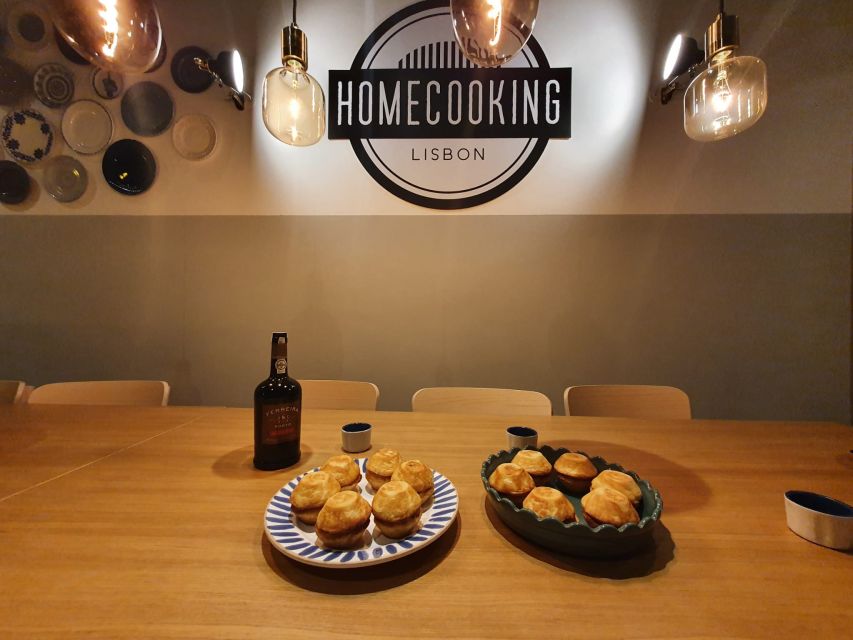
- Warm pastries at the finish: Eat your own pastel de nata fresh from the oven, with drinks served during and after the class.
- A practical Portuguese recipe: You learn about pastry dough, custard, shaping, and baking rather than simply watching a demonstration.
- Friendly groups: One class had 12 people, a size that allowed plenty of help while keeping the session social.
- Rotating English-speaking chefs: Marta, Beatrice, Miyuki, Miguel, Bea, and others have led classes, with clear instruction and plenty of encouragement.
- Two hours well used: The schedule gives you a compact food activity that fits neatly into a morning or afternoon in Lisbon.
- Good value at $64: Ingredients, utensils, instruction, drinks, insurance, and the finished pastries are included, but transport is not.
Starting at the Homecooking Lisbon HUB
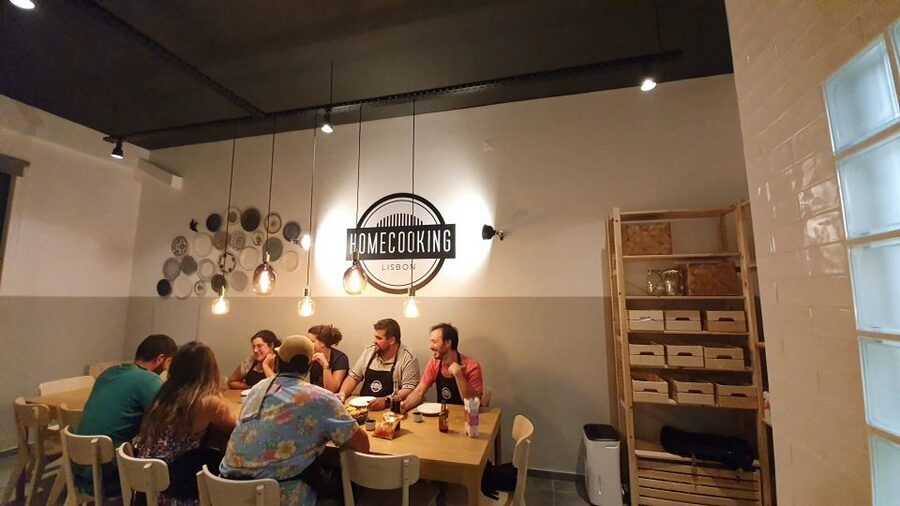
The class begins at the Homecooking Lisbon HUB, a clean, modern kitchen set up for teaching. You do not need to bring ingredients, baking tools, or special equipment. The fee covers everything needed for the class, including the cooking utensils and insurance.
The setting matters. A pastry class can feel awkward if everyone is squeezed around a small counter or waiting for one instructor. Here, the available feedback points to a well-prepared kitchen and a group size that can work comfortably, with one class numbering about 12 people. That is large enough to meet people from different countries, but still small enough for the chef to step in when your pastry needs help.
Give yourself time to find the meeting point. The HUB is not necessarily close to the parts of central Lisbon where many people stay. One participant found a taxi convenient and inexpensive, while another noted that a bus stop sits right outside. Check the exact meeting details before leaving your hotel, especially if you are booking close to the start time.
One practical wrinkle appeared during a period when the usual location was under construction and the class had moved. That issue was sorted out quickly, but it is a good reason to check your confirmation on the day rather than relying only on an old map pin.
More Cooking Classes in Lisbon
- Lisbon: Traditional Portuguese Cooking Class
★ 4.9 · 592 reviews - Lisbon: 2-Hour Pastel de Nata Cooking Class
★ 4.8 · 461 reviews - Lisbon Portuguese Cooking Class with 3-Course Dinner
★ 5.0 · 445 reviews
The first lesson: why pastel de nata takes care
Your chef starts with an explanation of the pastry and its place in Portuguese food culture. This is not a long lecture. It gives the cooking a useful frame, so you understand why the pastry has such a crisp shell and why the custard must be handled with care.
The exact balance of hands-on work may vary. Ingredients are pre-measured, and some elements can be prepared in advance. That might disappoint you if you want to make every single component from an entirely empty counter, but it is a sensible choice for a two-hour class. It keeps the session moving and leaves enough time for you to shape, bake, taste, and ask questions.
You still do the important work. You handle the dough, learn how it is folded or shaped, prepare or work with the custard, and fill the pastry cases. Several chefs have been praised for explaining why certain steps are done in advance, rather than quietly skipping them.
This is especially useful for first-time bakers. You do not need pastry experience, and the class is designed to make the process manageable. At the same time, anyone who has baked before will pick up useful details about technique and timing.
Handling the dough and shaping the shells
The pastry stage is where the class becomes more than a food tasting. You feel the dough in your hands and learn how it is shaped into the small tart cases. It is a tactile job, and the texture tells you more than a recipe card alone can.
The chefs demonstrate each move, then give you time to copy it. Marta has been praised for keeping everyone involved, while Beatrice has been noted for showing the steps clearly and helping people stay on track. Miyuki has also been singled out for making the work fun and approachable.
You may work in pairs. That is worth knowing if you arrive alone. One participant was paired with someone they had never met and found the arrangement easy and enjoyable. If you are traveling solo, this class gives you a natural way to meet people without having to force conversation over a restaurant table.
Pairs also help with the practical side of baking. One person can hold or shape while the other checks the next step, and there is usually a chef nearby to correct a small mistake before it ruins the batch. You are not simply handed a finished tart and told that you helped make it.
Custard, filling, and the trip to the oven
The custard is the heart of the pastel de nata. In class, you learn how it fits into the pastry and why careful preparation matters. The recipe and method are explained in plain English, with chefs adjusting their pace when someone needs another demonstration.
This is where the value of instruction becomes clear. A recipe can tell you what to add, but it does not always show you the texture you should be aiming for or how full the pastry cases should be. A patient teacher can make those points easy to grasp.
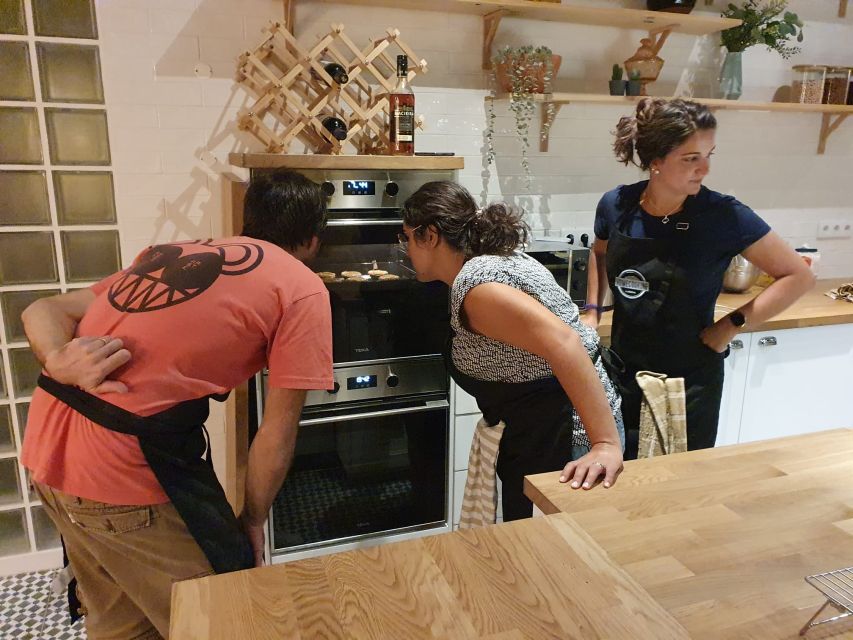
The oven work is partly handled by the staff, which keeps the class on schedule. You prepare the pastries and see them through the important steps, but the chef manages the baking stage. That arrangement means you may not operate every piece of equipment yourself. In return, you get a reliable finish within the two-hour timetable.
As the tarts bake, the room fills with the smell of pastry and custard. This waiting period is part of the fun, especially because you have just handled the ingredients and can see the result taking shape. It also gives the chef time to share more about Portuguese gastronomy and suggest places in Lisbon where you can continue tasting pastel de nata.
More Pastel de Nata Workshops in Lisbon
- Pastel de Nata Masterclass at a Real Bakery in Downtown Lisbon
★ 5.0 · 491 reviews - Pastel de Nata Pastry Class: Bake and Enjoy Your Own Treats
★ 5.0 · 485 reviews - Lisbon: Pasteis de Nata Baking Class
★ 5.0 · 134 reviews - Lisbon: Pastel de Nata Masterclass at a Real Bakery
★ 4.9 · 132 reviews
Eating the warm tarts with Portuguese drinks
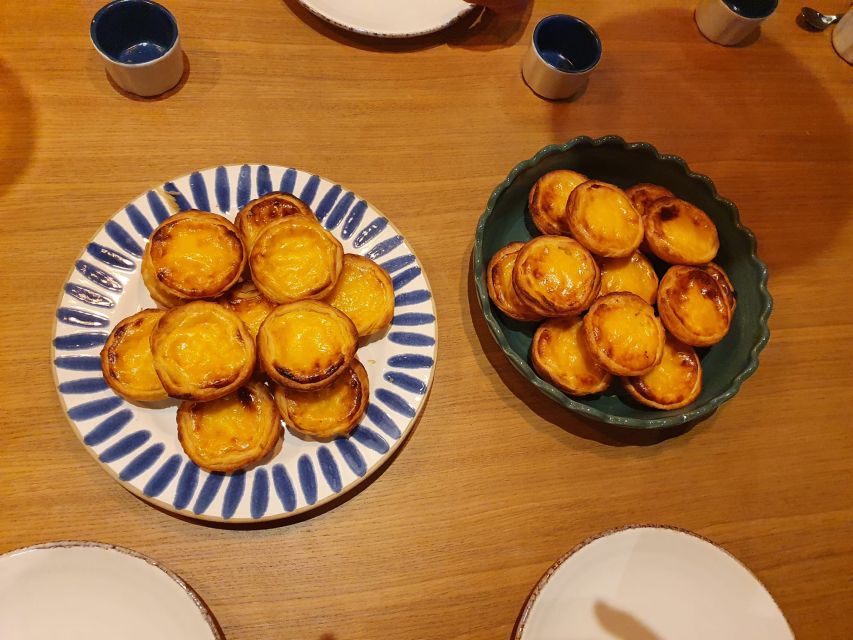
The best moment comes at the end, when the pastries are ready to eat. You taste your own batch while it is still warm, with crisp pastry and soft, sweet custard. Some participants have taken extra tarts back to their hotel, though the supplied information does not promise a specific number to take away.
Drinks are part of the experience. Depending on the session, you can expect homemade juice, coffee, water, Porto wine, and a ginjinha tasting. Ginjinha is a sweet cherry liqueur commonly associated with Portugal, so this small pour adds a local touch that you would miss in a standard baking lesson.
Do keep expectations flexible about every drink. One participant said wine was not served during their class, even though it is included in the general activity details. The core of the experience is the baking, while the drink selection may vary by session or availability.
The final tasting can feel a little rushed if the class has run right up to its two-hour limit. One person wished for more time to sit, eat, and chat at the end. If you want a long leisurely coffee afterward, plan to continue somewhere else rather than expecting a full restaurant-style finish.
The chefs make the difference
The staff are a major part of this class. Names appearing across the sessions include Marta, Beatrice, Bea, Miyuki, Miguel, Pedro, Rachel, and Cynthia. You may not get to choose your chef, but the pattern is clear: the instructors are expected to explain the work, answer questions, and keep the room relaxed.
Marta is associated with a warm, funny approach and clear guidance. Beatrice has been praised for explaining each stage while keeping everyone involved, and for sharing food history and family connections. Miyuki has earned particular praise for her hospitality and for making the class feel easy even when someone arrived alone.
Miguel’s enthusiasm and cooking tips have also made an impression. Pedro has led family groups, and other chefs have been credited with strong English and an ability to switch between languages when needed. The official teaching language is English, so you should be comfortable following an English-speaking lesson.
The best part is that the chefs do not treat baking as a performance. They step in when needed, but you still get to make decisions and handle the process. That balance suits people who want to learn without being judged for uneven pastry or a slightly untidy tart shell.
How much value do you get for $64?
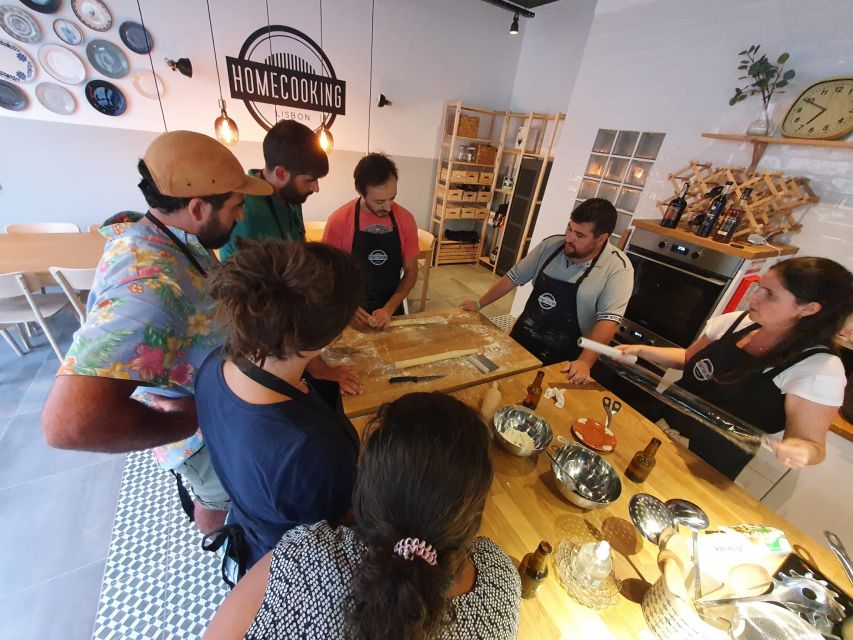
At $64 per person, this is not the cheapest way to eat a pastel de nata in Lisbon. You can buy the pastry itself for far less. The question is what you are paying for, and here the answer is a two-hour activity, instruction, ingredients, utensils, drinks, a cultural explanation, and the chance to eat what you made.
I think the price works best for visitors who enjoy food activities and want more than another item checked off a sightseeing list. The class gives you a recipe and enough practical instruction to try the pastry at home. Several participants left feeling confident about recreating it, while others simply valued the chance to learn the method with an expert nearby.
The value is less convincing if you only want to sample the pastry or if you are already an accomplished pastry chef. You are also paying for the social setting, so a quiet private lesson is not what this activity offers. A group of around 12 can be lively, and pair work is part of the format.
The included drinks help round out the price, but I would not book the class mainly for the Porto wine or ginjinha. Those are pleasant additions. The real return is the guided baking and the fresh tarts at the finish.
Who will enjoy this class most?
I would recommend it to couples, solo visitors, families with older children, and friends who want a relaxed activity between sightseeing stops. It works particularly well early in a Lisbon visit because the history and tasting advice give you a better sense of Portugal’s food culture for the rest of your stay.
Teenagers are likely to enjoy it because they can take part in real preparation and see a finished result in a short time. The official age restriction is under six, so younger children should not be booked into the class. One family review described children aged seven, nine, and 12 following the process well, but the stated restriction remains the safest guide.
It is also a good choice for solo visitors. You may be paired with another participant, but that creates an easy social opening rather than a problem. The atmosphere is designed for people with different skill levels, and the chefs are there to keep you moving.
I would think twice if you have a mobility impairment, since the activity is not listed as suitable for you. I would also skip it if you want a fully private experience, a long sit-down meal, or an advanced pastry workshop with every ingredient prepared from scratch in front of you.
Timing, cancellation, and what to bring
The class lasts two hours, with starting times available on selected dates. Since the session includes teaching, preparation, baking, and tasting, arrive ready to work rather than treating it as a quick demonstration.
You do not need to bring ingredients or utensils. Hotel pickup and drop-off are not included, so arrange your own way to the Homecooking Lisbon HUB. A taxi may be the simplest choice if you are staying far from the venue, while a nearby bus stop can help if you prefer public transport.
The activity allows free cancellation up to 24 hours before the start for a full refund. You can also reserve now and pay later, which is useful when your Lisbon plans are still shifting.
Wear clothes you do not mind using in a kitchen. The provided information does not list a dress code, so I would keep it simple and comfortable. Most of all, arrive hungry enough to enjoy several sweet bites, but not so hungry that you cannot concentrate on the pastry work.
Should you book the pastel de nata class?
Book it if you want a friendly, hands-on food experience with clear English instruction and a strong sense of place. The chefs, especially names such as Marta, Beatrice, Miyuki, and Miguel, appear to be central to the experience, and the format gives you real participation without demanding advanced baking skills.
Skip it if your only goal is the cheapest pastel de nata in Lisbon, or if transport, group work, or the official mobility and age limits are a problem. For most food-minded visitors, though, $64 is fair for two hours of instruction, local drinks, warm pastries, and a recipe you can try again at home.
FAQ
Where does the pastel de nata class take place?
The meeting point is the Homecooking Lisbon HUB in the Lisbon District, Portugal.
How long does the class last?
The class lasts two hours.
What language is the class taught in?
The instructor teaches in English.
What is included in the price?
The price includes ingredients, cooking utensils, chefs or instructors, drinks, and insurance. Drinks include homemade juice, coffee, water, Porto wine, and a ginjinha tasting, although the exact selection may vary.
Is hotel pickup included?
No. Hotel pickup and drop-off are not included, so you must make your own way to the Homecooking Lisbon HUB.
Can children attend?
The activity is officially not suitable for children under six. Older children may take part, provided they can follow the cooking instructions.
Is the class suitable for people with mobility impairments?
No. The activity is listed as unsuitable for people with mobility impairments.
Can I cancel for a refund?
Yes. You can cancel up to 24 hours in advance for a full refund. You can also reserve now and pay later.
The newest listings around Lisbon
- The Real Lisbon Street Art Private Guided Tour by Minivan★ 4.8 · 49 reviews
- Lisbon: Historical Walking Tour with Jeronimos Monastery★ 4.5 · 71 reviews
- Lisbon: Port Wine Tasting at Taylor’s Shop and Tasting Room★ 4.6 · 490 reviews
- Lisbon: Tagus River Cruise With Brunch★ 3.2 · 73 reviews
- South Lisbon: 3-Hour Christ the King Electric Bike Tour★ 4.8 · 97 reviews
- Oeiras Coast: Stand Up Paddleboarding near Lisbon★ 4.9 · 56 reviews
- Small Group Walking Tour of Belém★ 4.9 · 80 reviews
- Lisbon: 3-Hour Secret Food Tour★ 4.7 · 53 reviews
Pastel de Nata Workshops, compared.

Pastel de Nata Cooking Class with Grandma’s Recipe
Read our review →
Pastel de Nata Cooking Class with Port Wine – Sé
Read our review →
Pastel de Nata Masterclass at a Real Bakery in Downtown Lisbon
Read our review →
Pastel de Nata Pastry Class: Bake and Enjoy Your Own Treats
Read our review →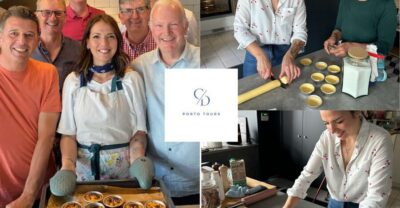

Pastel de Nata Cooking Class with Porto Wine (Sé do Porto)
Read our review →Browse the lists this tour appears in