
Reviewed · PASTEL DE NATA WORKSHOPS
Lisbon: 2-Hour Pastel de Nata Cooking Class
Lisbon’s most famous pastry is easier to eat than to make, and this two-hour pastel de nata class gives you a practical look at what goes into those flaky shells and blistered custard tops. You work in a proper kitchen with English-speaking instructors, then sit down to taste the results.
I like two things right away: you make a second Portuguese recipe, and you leave with both recipes to try at home. The friendly teaching style of Anna and Marta also gets repeated praise, with clear instructions, pastry tips, and stories about the dessert’s monastery beginnings.
One thing to know before booking: this is not a full chef-training session. The dough is prepared in advance, and the custard is simple, so much of the class involves shaping, mixing, listening, and waiting for the pastries to bake. The advertised light meal is mainly the food you prepare, not a substantial lunch.
Key points to know before you book

- Pastel de nata is the main event: Learn the shaping and filling techniques behind Portugal’s iconic egg tart.
- A second local treat is included: Depending on the class, this has included farófios, a meringue dessert, or cod fritters.
- Anna and Marta lead the class: Their energetic, patient teaching and food stories are a major part of the experience.
- The class is social and hands-on: You cook alongside other participants, then share the food at the end.
- Plan for about 1 hour and 20 minutes standing: Comfortable shoes are a must, and the class is not suitable for people with back problems.
- The $64 price buys more than pastries: You get ingredients, equipment, instruction, insurance, two recipes, tea, and a cultural food lesson.
Why pastel de nata makes a good Lisbon cooking class
Pastel de nata is not just a sweet snack to grab with coffee. It is one of Portugal’s best-known food symbols, with origins tied to nineteenth-century monasteries. The little tart combines crisp laminated pastry with a soft egg custard, often finished with browned spots from a very hot oven.
That combination looks simple on a bakery counter. The hard part is getting the pastry shell thin and even while leaving enough structure for the custard. A short class cannot turn you into a professional baker, but it can show you the key movements and proportions that make the result work.
I like this choice of subject because it connects a small everyday food with Portuguese culture. You learn why the pastry matters, how it fits into local eating habits, and how to recreate it after your trip. For a first visit to Lisbon, that gives you a useful souvenir: a recipe rather than another trinket.
The class also suits people who do not normally cook. Instructions are broken into manageable steps, and the finished pastries provide an immediate reward. You do not need to arrive with baking experience.
More Cooking Classes in Lisbon
- Lisbon: Pastel de Nata Baking Class
★ 4.9 · 2,106 reviews - Lisbon: Traditional Portuguese Cooking Class
★ 4.9 · 592 reviews - Lisbon Portuguese Cooking Class with 3-Course Dinner
★ 5.0 · 445 reviews
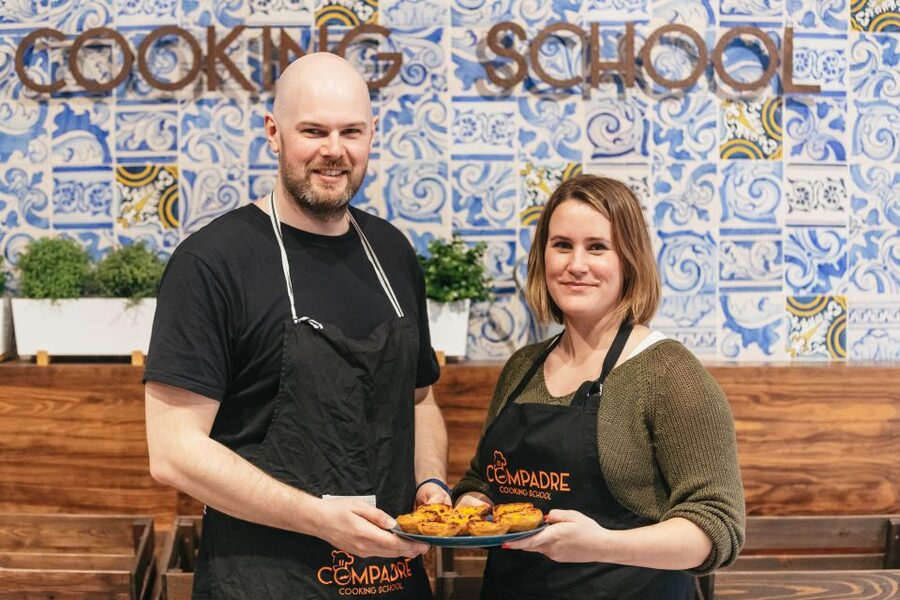
Arriving at the Compadre Cooking School kitchen
The meeting point is the local partner’s kitchen in Lisbon. When entering the address in a navigation app, make sure you select Lisbon as the city. Pickup and drop-off are not included, so you make your own way there.
The kitchen has been described as clean, modern, and well equipped. Air conditioning is especially useful during Lisbon’s hot summer months, since you will spend much of the class on your feet near food preparation areas.
The session is conducted in English. Anna and Marta are the instructors most often associated with the class, and their approach combines demonstrations, explanations, and hands-on work. You can expect a casual group setting rather than a formal culinary-school lesson.
At the beginning, you receive the ingredients and equipment needed for the recipes. You do not need to bring cooking tools. Wear comfortable shoes, since standing is part of the experience and the class is not recommended for people with back problems.
The social side matters here. You cook beside other people from different places, then share the finished food. If you are traveling alone, this is one of the easier activities in Lisbon for meeting people without having to force conversation. One useful improvement would be a quick round of introductions at the start, but the shared cooking naturally helps people talk.
Shaping the pastry shells

The first major stage focuses on the pastry. This is where the class offers its most useful baking lesson.
The dough is prepared before the session, so you do not spend time making laminated pastry from scratch. That may disappoint serious bakers, but it is sensible for a two-hour class. Making and resting the dough properly can take far longer than the activity itself, and rushed pastry would weaken the whole lesson.
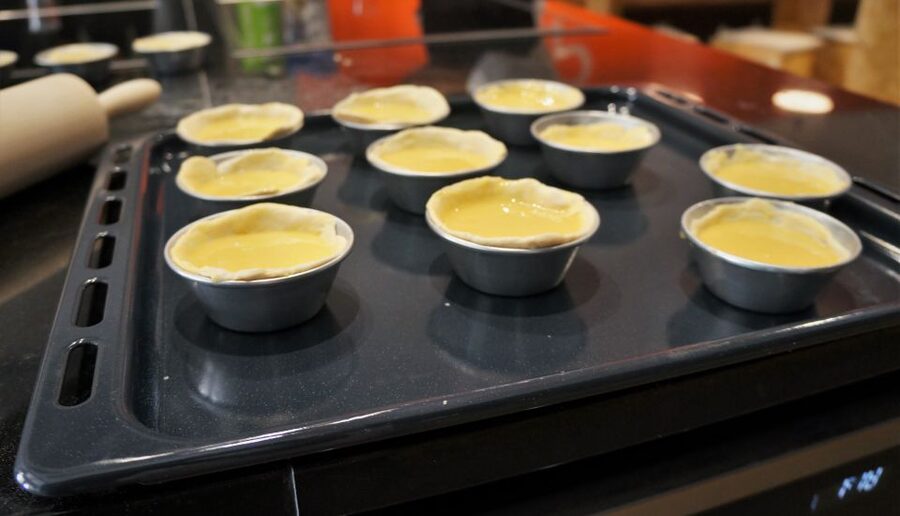
Instead, you learn how to work the prepared dough into the small tart molds. This is a more practical skill for home baking. The thickness of the pastry, how it is pressed into the tin, and how the base and sides meet all affect the final bite.
The instructors explain the small tricks that help produce a good shell. You get to see the process at close range, copy it yourself, and ask questions as you work. Past participants have taken particular interest in these pastry techniques, including how to get a result close to what you find in Lisbon bakeries.
Do not expect every tart to look identical. That is part of the fun. The class is designed for participation, not a silent demonstration where every item has been prepared in advance. You will make your own pastries, and small variations are normal.
Making the custard and learning the backstory

The custard is the other essential part of pastel de nata. In this class, it is described as very simple, which is useful to know. The magic is less about a long list of ingredients and more about correct preparation, texture, and timing.
Anna and Marta explain the steps while sharing the pastry’s background. The monastery connection gives the recipe a sense of place, but the teaching remains practical. You are not sitting through a long history lecture. You learn enough to understand why the tart became such a national favorite, then get back to cooking.
This balance is one of the class’s strongest points. The food story adds meaning, while the clear instructions keep the session moving. Past participants have especially valued the way the instructors explain both the history and the small details of pastry and custard preparation.
The recipe is also realistic for home cooks. You are not being asked to recreate a complicated restaurant dessert with specialist equipment. After the class, you should have a better idea of how to make the tarts in your own kitchen, even if your first batch needs a little practice.
More Pastel de Nata Workshops in Lisbon
- Pastel de Nata Masterclass at a Real Bakery in Downtown Lisbon
★ 5.0 · 491 reviews - Pastel de Nata Pastry Class: Bake and Enjoy Your Own Treats
★ 5.0 · 485 reviews - Lisbon: Pasteis de Nata Baking Class
★ 5.0 · 134 reviews - Lisbon: Pastel de Nata Masterclass at a Real Bakery
★ 4.9 · 132 reviews
The second Portuguese recipe adds real value

The class includes another traditional Portuguese recipe, so pastel de nata is not your only cooking project. The second dish has varied in the reported sessions. Examples include farófios, a light dessert made with meringue and custard, and cod fritters.
That variety is useful. If you only made egg tarts, the session might feel like a narrow pastry demonstration. A second recipe gives you another taste of Portuguese cooking and helps fill the two-hour format.
The cod fritters are a particularly good addition for anyone curious about Portugal’s love of salted cod. They offer a savory contrast to the sweet tarts. Farófios keep the lesson on the dessert side but introduce a different texture and method.
Because the exact second recipe can vary, check the current details if one particular dish matters to you. The key point is that you will learn two recipes, not just watch one pastry being made.
Families can enjoy this format too. An eight-year-old has taken part successfully, and teenagers may find cooking a more memorable way to connect with Lisbon than another sightseeing stop. Younger children still need close supervision, of course, especially around hot equipment.
Sitting down to taste what you made

After the cooking, you sit together and eat the food. Tea is included, while other beverages are not. Water has been available at the tables, but you should not count on a full drinks service.
The tasting is more than an afterthought. It lets you compare the finished pastry with the techniques you just practiced. You can see how the shell holds up, how the custard sets, and which pieces browned most attractively.
The atmosphere is informal. You share the table with the group and get a light meal from the food prepared during the class. Bring a little perspective to the phrase light meal: this is not the place to replace lunch before an afternoon of sightseeing. One useful way to plan is to have a proper meal before or after the activity.
You may be offered a bag for leftover pastries. That is handy if you want to bring some back to your accommodation or share them with friends. In practice, the pastries may disappear before you get the chance.
What the $64 price includes

At $64 per person, the class is not the cheapest way to eat pastel de nata in Lisbon. You can buy the finished pastry at a bakery for very little. The price makes sense only if you value the instruction, the social setting, the second recipe, and the chance to make the food yourself.
The fee includes cooking equipment, utensils, ingredients, an instructor, insurance, tea, and two recipes. You also get a prepared activity that combines food, local culture, and a meal at the end. For a couple or family looking for something active, that is a fair use of two hours.
I would not book this solely to save money on pastries. You are paying for the process, not the raw ingredients. I would book it if you want to understand the food and carry the skill home.
The value improves if you use the recipes afterward. Past participants have been keen to make the tarts for family, friends, or colleagues after returning home. The class becomes more worthwhile when it starts a new cooking habit rather than ending with the final bite.
Who will enjoy this class most

I recommend the activity for:
- First-time visitors who want a food-centered introduction to Portugal
- Couples looking for a relaxed activity beyond monuments and museums
- Families with older children or teenagers
- Solo visitors who enjoy meeting people in a small group setting
- Beginner cooks who prefer clear guidance
- Pastel de nata fans who want to understand the pastry rather than only eat it
It is less suitable for anyone seeking advanced baking instruction. Since the dough is premade and the custard is straightforward, experienced pastry cooks may want a longer class with more technical work.
It is also a poor fit if you have back problems or dislike standing. You will be on your feet for around 1 hour and 20 minutes. Comfortable shoes are important, and the activity does not allow pets or smoking.
Portuguese cuisine is not especially vegan-friendly, so contact the local supplier before booking if you are vegan. Vegetarian needs have been accommodated in the past, but it is still best to discuss dietary requirements ahead of time.
Timing, flexibility, and practical planning

The activity lasts two hours, though the available starting time depends on the date. That makes it easy to fit into a Lisbon itinerary, but give yourself enough time to reach the kitchen since transportation is not included.
I would avoid placing the class immediately before a major timed attraction on the other side of the city. Cooking sessions can run at a natural pace, and you will want time to finish eating and collect any leftovers.
Free cancellation is available up to 24 hours before the activity for a full refund. You can also reserve and pay later, which is useful if your Lisbon schedule is still changing.
English is the listed teaching language. The cooking terms are practical, and the instructors demonstrate each stage, so you do not need specialist food vocabulary.
Should you book the Lisbon pastel de nata class?
Book this class if you want hands-on food culture, friendly instruction, and a recipe you can use after Portugal. Anna and Marta bring energy and humor to the lesson, and the combination of history, pastry technique, a second local dish, and shared tasting gives the two hours a clear purpose.
Skip it if you want a full meal, advanced pastry training, or a quiet activity with little standing. The light meal is really a tasting of what you make, and some preparation is done before you arrive.
For most visitors, the class is a good match for a free morning or afternoon in Lisbon. You get to eat the city’s signature pastry, learn why it matters, and leave with a better chance of making it at home. That is more useful than simply checking another bakery off your list.
FAQ
How long is the pastel de nata cooking class?
The class lasts two hours. You should expect to spend about 1 hour and 20 minutes standing during the activity.
What recipes will I learn?
You will learn how to make pastel de nata and one other traditional Portuguese recipe. The second recipe can include dishes such as farófios or cod fritters, depending on the session.
Is tea included?
Yes. Tea is included, but beverages not specifically listed are not included.
Is the class taught in English?
Yes. The instructor language is English, and the class includes spoken guidance through the recipes.
Do I need to bring cooking equipment?
No. Cooking equipment, utensils, and ingredients are provided. You should bring comfortable shoes.
Is the class suitable for vegans or people with back problems?
Portuguese cuisine is not very vegan-friendly, so vegans should contact the local supplier before booking. The activity is not recommended for people with back problems because of the extended standing.
More 2-Hour Experiences in Lisbon
- 2 Hour Lisbon Sunset and Wine Sailing Tour
★ 5.0 · 2,680 reviews - 2-Hour Lisbon Traditional Boats Sunset Cruise with White Wine
★ 4.5 · 2,091 reviews - Lisbon: 1 or 2-Hour Cruise along the Tagus River
★ 4.8 · 1,079 reviews - Lisbon Small Group 2h Sunset Sailing- Live Commentary & a Drink
★ 5.0 · 620 reviews
The newest listings around Lisbon
- The Real Lisbon Street Art Private Guided Tour by Minivan★ 4.8 · 49 reviews
- Lisbon: Historical Walking Tour with Jeronimos Monastery★ 4.5 · 71 reviews
- Lisbon: Port Wine Tasting at Taylor’s Shop and Tasting Room★ 4.6 · 490 reviews
- Lisbon: Tagus River Cruise With Brunch★ 3.2 · 73 reviews
- South Lisbon: 3-Hour Christ the King Electric Bike Tour★ 4.8 · 97 reviews
- Oeiras Coast: Stand Up Paddleboarding near Lisbon★ 4.9 · 56 reviews
- Small Group Walking Tour of Belém★ 4.9 · 80 reviews
- Lisbon: 3-Hour Secret Food Tour★ 4.7 · 53 reviews
Pastel de Nata Workshops, compared.

Pastel de Nata Cooking Class with Grandma’s Recipe
Read our review →
Pastel de Nata Cooking Class with Port Wine – Sé
Read our review →
Pastel de Nata Masterclass at a Real Bakery in Downtown Lisbon
Read our review →
Pastel de Nata Pastry Class: Bake and Enjoy Your Own Treats
Read our review →

Pastel de Nata Cooking Class with Porto Wine (Sé do Porto)
Read our review →Browse the lists this tour appears in