

Reviewed · PASTEL DE NATA WORKSHOPS
Lisbon: Pasteis de Nata Baking Class
The best part of this Lisbon food class is that you make the famous pastéis de nata from scratch, including the pastry. Chef Miguel guides you through the process in a small class of no more than eight, then serves the warm tarts with a drink while you hear how this Portuguese favorite came to be.
I like the hands-on format and the relaxed pace. You are not simply watching a demonstration, and the two-hour length fits neatly into a sightseeing day. The main consideration is the $76 price, which is fair if you value instruction and a social activity, but higher than the cost of buying several pastéis at a bakery.
Key points at a glance

- Make the pastry and custard yourself: The class covers the full process, not just the final baking step.
- Chef Miguel leads the lesson: His clear, patient instruction suits beginners as well as people who already bake.
- Eight-person limit: A small group leaves room for questions and individual help.
- Taste your work with a drink: Coffee, tea, bottled water, and one alcoholic drink are included.
- Takeaway treats are part of the fun: The exact amount can vary, but past participants describe taking extra tarts home.
- Morning or afternoon timing: The two-hour session leaves plenty of Lisbon time before or after.
Making Lisbon’s signature tart from scratch

Pastéis de nata are more than a sweet snack in Portugal. They are one of the country’s best-known foods, with crisp pastry wrapped around a soft custard center. You will likely eat several during your time in Lisbon, so learning how they are made gives those bakery stops a little more meaning.
This class takes place in the Lisbon area where the pastry was created. The exact original recipe is not part of the lesson, but the chef teaches a practical house version designed for a home cook to follow. That is useful for you: the aim is not to protect a professional secret, but to show you a process you can understand and try again.
The class is fully hands-on. You work with the pastry and the filling rather than simply watching someone else prepare them. That makes the session a good choice if you want an activity with a clear result at the end, especially on a rainy morning or during a break from museums and monuments.
More Cooking Classes in Lisbon
- Lisbon: Pastel de Nata Baking Class
★ 4.9 · 2,106 reviews - Lisbon: Traditional Portuguese Cooking Class
★ 4.9 · 592 reviews - Lisbon: 2-Hour Pastel de Nata Cooking Class
★ 4.8 · 461 reviews
Finding the kitchen behind the green gate
The meeting point is inside a private yard, with the entrance marked by a green gate. That detail matters because the kitchen is not described as a large public cooking school with an obvious storefront. Give yourself enough time to locate the entrance rather than arriving at the last minute.
The setting is described as clean, comfortable, and pleasant. The kitchen is prepared before the class begins, so you can get started without waiting for equipment or ingredients to be arranged. You will work in a compact setting rather than a huge teaching room, which helps keep the group involved.
The location is in a peaceful street and can be reached from central Lisbon by bus or a ride-hailing car. Exact transport details are not provided, so check your route before setting out. The activity does not include hotel pickup or drop-off, and you will need to make your own way to the green gate.
The pastry lesson: the part worth paying for

The first practical stage is the pastry. This is where the class offers more than a tasting stop. You learn how the dough is handled and shaped for the small tart molds, with the chef explaining the steps and the reasons behind them.
For a beginner, that guidance can save a lot of guesswork. Pastéis de nata look simple in a bakery case, but the crisp shell and creamy filling depend on getting several small details right. Chef Miguel’s role is to keep the process manageable, show each step, and help when a hand needs correcting.
The lesson is suited to people with little or no baking experience. It also works for experienced home cooks who want to understand a Portuguese specialty. You are not expected to arrive with technical skills, and the relaxed setting makes it easier to ask questions.
The small group helps here. With a maximum of eight people, the chef can pay attention to the work in front of him instead of giving one large demonstration from across the room. Some sessions have been smaller, including a private class for two, while a full group of eight can also work well as a team activity.
Preparing the custard and filling the shells

The next stage covers the custard filling. You will learn how the smooth center is made and how it is combined with the prepared pastry before baking. The class places equal weight on the two parts, which is important because a good tart needs both a flaky shell and a creamy center.
Chef Miguel is described as patient, encouraging, and easy to talk with. That combination matters in a cooking class. You can follow the recipe, but you also need someone who can explain what you are looking for at each stage. The instruction is presented in English and Portuguese.
The work is done in pairs in at least some sessions. One useful detail is that a pair may produce around 10 tarts, with the exact amount depending on the session. If you are booking with a partner, expect to share the preparation and the finished batch rather than making an entirely separate set each.
That shared work makes the class social without turning it into a loud party activity. You can chat with the other people at your table while still keeping your hands busy. Solo participants are also welcome, and the small format makes it easier to join in.
More Pastel de Nata Workshops in Lisbon
- Pastel de Nata Masterclass at a Real Bakery in Downtown Lisbon
★ 5.0 · 491 reviews - Pastel de Nata Pastry Class: Bake and Enjoy Your Own Treats
★ 5.0 · 485 reviews - Lisbon: Pastel de Nata Masterclass at a Real Bakery
★ 4.9 · 132 reviews
Waiting for the oven with coffee and conversation

Once the tarts go into the oven, the pace changes. You have time to sit down with coffee or tea, enjoy bottled water, and learn a little about the pastry’s background. One alcoholic drink is also included, with port or Portuguese liqueur mentioned as part of the tasting.
This waiting period is not dead time. It gives the chef a chance to explain the food beyond the recipe and gives you a natural moment to talk with the group. The result is part cooking lesson and part food conversation, without taking up an entire day.
The class lasts two hours, so this pause is kept fairly short. You will not spend half a day waiting for a complicated menu to finish. That compact schedule is one of the strongest practical points for a Lisbon visit. Book a morning start before sightseeing, or choose the afternoon if you want to begin your day with a bakery-style activity.
Eating the finished pastéis de nata

The reward is tasting the tarts you made. The class gives you your own pastéis de nata, and the warm result lets you see how the pastry and custard came together. You also get the chance to take some away, depending on how many are made and how the batch is divided.
That takeaway option adds real value. You can eat a few at the table, then save the rest for later instead of trying to finish everything at once. A box of extra pastries is also handy if you are staying in an apartment or want to share with someone who did not attend.
The outcome is not guaranteed to look perfectly uniform. That is part of the charm of a hands-on class. You are learning a technique, not buying a display case of identical pastries. The important point is that the class provides guidance through the full process and gives you a finished food to enjoy.
What the $76 price includes

At $76 per person, this is not the cheapest way to eat pastéis de nata in Lisbon. Bakeries offer the pastry for far less. The price makes sense only if you want the instruction, ingredients, kitchen setting, drinks, and social experience as well as the food.
I see the value in three parts. First, you get a complete pastry-making lesson rather than a short demonstration. Second, the group limit keeps the instruction personal. Third, you receive the finished tarts and can take some with you, so the class includes both an activity and a snack.
The price is easier to justify for couples, solo visitors who want a scheduled social activity, and small groups looking for something different from a walking tour. It may feel expensive if your only goal is to taste the pastry or if you already bake at home and do not need instruction.
A two-hour class also has a time advantage. You are not giving up a full morning or afternoon, and you can fit the session around other plans. That matters in Lisbon, where a short food class can work well between neighborhoods, museums, or a longer day trip.
Who will enjoy this class most

This is a strong choice for food lovers, first-time bakers, couples, families with an interest in cooking, and small groups. It also suits solo visitors. The group is small enough for you to speak with the chef and the other participants, without needing to organize a private booking.
You do not need advanced kitchen skills. The instruction is structured and encouraging, and the process is designed to be followed by beginners. People who already know their way around pastry may find the class less challenging, but they can still enjoy learning a local specialty and hearing the reasoning behind the method.
The activity is wheelchair accessible. Language support is available in English and Portuguese. Those details make it easier to recommend to a mixed group, although you should still confirm any personal access needs when booking.
This may not suit you if you prefer a quiet, self-guided food stop or if you want a long professional cooking course. It is a short introduction with tasting, not a full culinary program.
Morning or afternoon: choosing the better time

The morning session is useful if you like to start with an activity and then spend the rest of the day exploring. You will have fresh pastries in hand and plenty of time afterward for lunch, museums, or another part of Lisbon.
The afternoon session works well after a morning of sightseeing. It gives you a break from walking and ends with something to eat, although you should avoid scheduling a major timed attraction immediately afterward. The class is only two hours, but the meeting point and your return journey add some extra time.
Because the schedule offers both morning and afternoon starts, you can fit it into different travel plans. Check the available times for your date before building the rest of your day around it.
Useful things to know before you book
Arrive with the green gate and private-yard meeting point in mind. The entrance may not look like a large cooking school, so use the directions carefully.
The class is conducted in English and Portuguese. The kitchen supplies the pastry-making lesson and the drinks listed, including coffee, tea, bottled water, and one alcoholic beverage. Hotel pickup and drop-off are not included.
Cancellation is free up to 24 hours before the start time for a full refund. You can also reserve now and pay later, which helps if your Lisbon schedule is still changing.
The experience has a perfect five-star rating from 134 reviews, with repeated praise for the clean kitchen, clear preparation, friendly instruction, and relaxed atmosphere. The most consistent strength is the teaching style: Miguel is repeatedly described as patient, welcoming, funny, and good at explaining each stage.
Should you book the Lisboa Food Studio class?
Book it if you want more than another pastry stop. You will make the shell and filling yourself, work in a small group, taste the result with a drink, and usually have extra tarts to take away. Chef Miguel’s calm instruction is a major reason this works for beginners.
Skip it if you only want the lowest-cost taste of pastéis de nata, or if $76 feels high for a two-hour activity. For everyone else, the class offers a useful mix of Portuguese food culture, practical cooking, and easy social time without taking over your day.
FAQ
How long does the pastéis de nata class last?
The class lasts two hours.
How many people can join the class?
The group is limited to a maximum of eight participants.
Who teaches the class?
Chef Miguel leads the baking class.
Is the class offered in English?
Yes. Instruction is available in English and Portuguese.
Do I make the pastry from scratch?
Yes. The lesson includes making the pastry and preparing the custard filling.
What food and drinks are included?
You receive your own pastéis de nata, coffee, tea, bottled water, and one alcoholic beverage.
Is hotel pickup included?
No. You must make your own way to the meeting point.
Can I cancel for a full refund?
Yes. You can cancel up to 24 hours in advance for a full refund.
The newest listings around Lisbon
- The Real Lisbon Street Art Private Guided Tour by Minivan★ 4.8 · 49 reviews
- Lisbon: Historical Walking Tour with Jeronimos Monastery★ 4.5 · 71 reviews
- Lisbon: Port Wine Tasting at Taylor’s Shop and Tasting Room★ 4.6 · 490 reviews
- Lisbon: Tagus River Cruise With Brunch★ 3.2 · 73 reviews
- South Lisbon: 3-Hour Christ the King Electric Bike Tour★ 4.8 · 97 reviews
- Oeiras Coast: Stand Up Paddleboarding near Lisbon★ 4.9 · 56 reviews
- Small Group Walking Tour of Belém★ 4.9 · 80 reviews
- Lisbon: 3-Hour Secret Food Tour★ 4.7 · 53 reviews
Pastel de Nata Workshops, compared.


Pastel de Nata Cooking Class with Grandma’s Recipe
Read our review →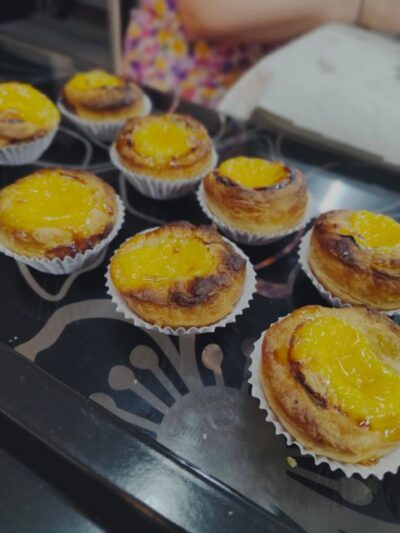
Pastel de Nata Cooking Class with Port Wine – Sé
Read our review →
Pastel de Nata Masterclass at a Real Bakery in Downtown Lisbon
Read our review →
Pastel de Nata Pastry Class: Bake and Enjoy Your Own Treats
Read our review →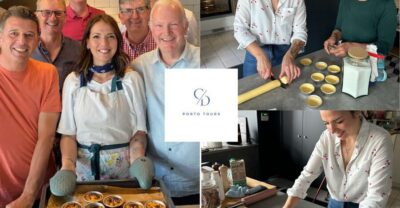
Browse the lists this tour appears in