
Reviewed · WALKING TOURS
Évora: Private walking tour with tickets to main monuments
Évora’s most striking surprise is how much history fits inside one walk. In about two and a half hours, you move from a Roman temple to a Gothic cathedral, a bone-lined chapel, royal ruins, and a 16th-century aqueduct. The city feels less like a museum you visit and more like a place where different centuries share the same narrow streets.
I especially like the private format, which gives you room to ask questions and adjust the pace. I also like that the two major paid sights, the Cathedral of Évora and the Chapel of Bones, are included, along with the cathedral roof, where you get a fine view over the old city.
The main consideration is time. This is a brisk overview, not a slow study of every church and alley. The price is also high for one person, though it makes more sense for a couple or family splitting the private guide cost.
Key points to know before you book

- The private guide changes the feel: Guides including João, Paulo, Paolo, John, and Elsa have led tours, with English service and time for questions.
- Two key admissions are included: Your ticket covers the Cathedral of Évora, its cloisters and roof, plus the Chapel of Bones.
- You see Évora’s main eras in one route: Roman, medieval, Renaissance, royal, religious, and military history all appear within the old city.
- The pace is easy but full: Most stops last between five and 15 minutes, with 30 minutes set aside for each major interior.
- The tour begins and ends at Giraldo Square: The starting point is Praça do Giraldo 7, beside the square’s fountain.
- You need moderate walking ability: This is a city walk through historic streets, with stairs involved at some sights, especially the cathedral roof.
Why this walk works well as your Évora introduction

Évora can seem compact on a map, yet its story is wide-ranging. Roman rule, Muslim influence, medieval kings, the Portuguese maritime age, religious persecution, Renaissance architecture, and Napoleonic defenses all left marks here.
A good guide helps you connect those pieces instead of seeing them as unrelated stones. João, Paulo, Paolo, John, and Elsa are among the guides associated with this experience. The strongest feedback centers on their ability to explain Portuguese history clearly, answer questions, add humor, and tailor the walk to a group’s interests.
That flexibility matters. If you want architecture, you can spend more time on the cathedral and Igreja da Graça. If you prefer political history, the guide can connect Giraldo Square, the Inquisition, the royal palace, and the Order of Avis. If you care about daily life, the traditional shopping street and Alentejo crafts add a useful local touch.
The route is in English and is private, so only your group participates. That is a better setup than a large group if you have older family members, children, or very specific interests. It also means you can ask for restaurant, winery, souvenir, or onward travel advice during the walk. Several guide comments indicate that practical recommendations are part of the conversation when time allows.
More Walking Tours in Evora:
- Évora: Private walking tour, By Local Guide
★ 5.0 · 87 reviews - 2hr Walk in a Cork Forest
★ 4.5 · 42 reviews - Lisbon: History, Stories and Lifestyle Walking Tour
★ 4.8 · 10,902 reviews
Giraldo Square sets the stage
The walk begins at Praça do Giraldo, the social and political center of Évora. Start here and the city’s layout quickly makes sense. The square has served as the heart of local commerce and public life for centuries, and it remains the natural place to get your bearings.
Your guide uses the square to place Évora in Portuguese and European history. This is one of the most useful parts of the tour because later monuments make more sense once you understand the city’s position in Alentejo and its links to Portugal’s wider story.
Nearby, a memorial recalls victims of the Portuguese Inquisition. The subject is grim, but it is important. The Inquisition lasted for almost 300 years, beginning in Portugal in 1536, and Évora had the deadliest of the country’s four courts. Praça do Giraldo was the setting for public executions, including burnings at the stake.
This stop is short, yet it gives the city’s elegant center a more complicated meaning. Évora is beautiful, but its past was not always gentle.
Traditional shops and Alentejo craftwork
The walk continues along a traditional commercial street where you can see examples of regional goods. Look for cork objects, pottery, painted furniture, chocalhos, which are traditional rattles, and capotes, the heavy Alentejo cloaks.
This portion is easy to overlook when you focus only on famous monuments. I like it because it connects the old city to working traditions that still shape the region’s identity. If you want to buy something, note the shops during the tour and return later at your own pace. The scheduled walk moves on fairly quickly.
The cathedral gives you the best architectural payoff

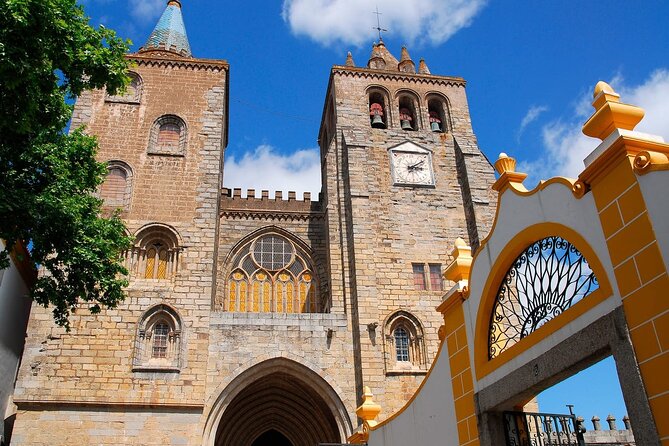
The Sé de Évora is the largest Portuguese Gothic cathedral, and it is one of the tour’s two main interior visits. Built in the style of major French Gothic churches, it has a stern, fortress-like exterior and a more detailed interior.
Your admission includes the cathedral, cloisters, and roof. That last part is particularly valuable. From above, you can look across Évora’s tiled roofs and see how compact the walled center remains. The roof visit also turns the city into a visual map, helping you understand the relationship between the cathedral, Roman temple, churches, and defensive walls.
The cathedral is also presented as a place where older beliefs and symbols appear beneath a Christian structure. Some of those connections may interest visitors who enjoy religious art, architecture, and the way different cultures reuse older sites.
Allow for stairs and uneven historic surfaces. The 30-minute stop is enough for a focused visit, but not for lingering over every chapel or decorative detail. If the cathedral is your main interest, you may want to return independently after the tour.
A few more Evora options worth putting side by side
- Évora and Megaliths Full-Day Tour from Lisbon
★ 4.7 · 456 reviews - Marble Tour in Vila Viçosa
★ 5.0 · 308 reviews - From Lisbon: Évora and Monsaraz Day Tour with Wine Tasting
★ 4.8 · 279 reviews - 2-Hour Surf Lesson in Alentejo
★ 5.0 · 243 reviews
The Roman Temple anchors ancient Évora
The Templo Romano de Évora, often called the Temple of Diana, is one of the city’s clearest links to the ancient Roman world. Its surviving columns and elevated platform have endured for roughly two millennia.
The guide explains the monument as part of Roman Évora and connects it to the city’s foundation and to Julius Caesar. You only spend about ten minutes here, but the stop is well placed after the cathedral. In a few steps, you move from medieval Christianity to Roman power.
The temple is also a good example of why a guide helps. On your own, you can admire the columns and take photographs. With context, you begin to see the monument as part of a long cycle of reuse, survival, and changing ideas about the past.
Páteo de São Miguel reveals a quieter side

Páteo de São Miguel is one of the less obvious stops. It is somewhat tucked away and was once a fortified part of the old city, connected with governors and visiting kings.
The site is also linked to the Knights of Évora and the later Order of Avis. That order played a major role in the second Portuguese royal dynasty, a period tied to the country’s strongest years of overseas expansion.
This is the kind of stop that can get lost on a standard sightseeing route. It may appeal most to you if you enjoy political history, medieval power structures, or art history. The visit lasts only about ten minutes, so listen closely while the guide explains what you are looking at.
Renaissance Évora appears in fountains and churches

A 16th-century fountain on the route introduces Portuguese Mannerist design and the period’s interest in civic display. It was inaugurated in 1556 under Cardinal D. Henrique, an important patron of Évora and the last king of the Avis dynasty.
At Igreja da Graça, the focus shifts to Portuguese Renaissance architecture with Mannerist features. The church is known for its unusual façade and the famous boys of Graça, whose story adds a human and symbolic layer to the stonework.
These short stops are not grand in the same way as the cathedral, but they help explain Évora’s golden age. The city was not only a religious center. It was also a place where rulers and church officials used architecture to express wealth, authority, and progress.
The Chapel of Bones is memorable, but not for everyone
The Capela dos Ossos is the most unusual interior on the route. Its walls are covered with human bones from thousands of people who lived in Évora. The chapel was built in the 17th century and presents mortality in a direct, unsettling way.
The experience is not a quick photo stop. About 30 minutes are allotted, giving the guide time to explain the chapel’s purpose, stories, and legends. Some visitors will find it fascinating; others may find the display disturbing. If you are sensitive to macabre religious art, this is the one stop to consider carefully before booking.
The chapel’s message is tied to the temporary nature of life, and the setting is more reflective than sensational when explained properly. I would not treat it as a novelty attraction. It is part of Évora’s religious and social past, and the guide’s context makes a meaningful difference.
Franciscan royalty and romantic ruins
Igreja de São Francisco was known in the 16th century as the golden convent. Built over a 14th-century Franciscan complex, it became a royal church and hosted royal weddings and baptisms with consequences for Portuguese history.
The visit is brief, about ten minutes, so expect an introduction rather than a full architectural study. Still, it gives you a useful connection between religious buildings and the monarchy.
The nearby remains of the Paço de São Francisco include the Ladies’ Gallery, part of an old royal palace. You then reach the Ruínas Fingidas, a deliberately romantic arrangement of architectural fragments from an earlier palace. Created in the 19th century, it reflects the era’s taste for poetic ruins.
This is a fun reminder that not every old-looking feature is ancient in its present form. Ask the guide to take your photograph here, as the setting was designed with romance and theatrical atmosphere in mind.
Évora’s walls and aqueduct complete the picture
The old city’s defensive walls bring several periods together. Roman walls from the third and fourth centuries were reused by later rulers, including Visigothic and Muslim communities. Medieval walls followed in the 14th century, while bastioned defenses were added in the 17th century and strengthened again during the early 19th century.
You will not walk every section of the fortifications, but seeing the walls helps explain Évora’s shape. The historic center was protected, controlled, and repeatedly adapted as military technology changed.
The final major sight is the Aqueduto da Água de Prata, or Aqueduct of Silver Water. Opened in 1537, it stretches about 18 kilometers and is considered one of Portugal’s finest Renaissance civil works.
Only five minutes are scheduled here, so the stop is mainly for orientation and photographs. The most appealing feature is the way houses fit between the aqueduct arches. It is a practical structure, but also a striking piece of urban design.
What the $105.26 price really buys you
At $105.26 per person, this is not a bargain-priced city walk. The value depends heavily on your group size and how much you want personal attention.
For one person, the cost is difficult to justify unless you place a high value on a private historian-style guide. For two or more people, the price becomes easier to defend because you are sharing the guide rather than paying for separate individual service. Group discounts are available, though the exact reduction is not specified.
Your admission to the cathedral and Chapel of Bones is included. Meals are not included, but that is reasonable for a short walking tour. The larger value is the route design and the explanation linking the sights. You could visit several of these places alone, but you would need to research the connections beforehand and manage the route yourself.
The tour is especially worthwhile for a first visit to Évora, a family group with mixed interests, or anyone who wants restaurant and onward travel suggestions from a local guide. If you already know the city well and mainly want quiet time inside the monuments, a self-guided visit may cost less and suit you better.
Timing, meeting point, and walking demands
The tour lasts about two hours and 30 minutes and starts at the Giraldo Square Fountain, Praça do Giraldo 7. It ends back at the same meeting point, which is convenient if you plan to continue exploring, shop for crafts, or stop for lunch nearby.
The route includes many short stops, with 30 minutes each at the cathedral and Chapel of Bones. That structure keeps the walk moving, but it also means you should not expect long unstructured breaks.
You need a moderate level of physical fitness. Historic Évora includes uneven paving and stairs, and the cathedral roof visit requires climbing. Wear comfortable shoes and bring water, particularly in warm weather. The activity is offered in English and requires no meal planning during the walk.
Free cancellation is available up to 24 hours before the start time. Changes or cancellations inside that period are not accepted for a refund, and the cut-off follows local time.
Who should book this Évora tour?
I would book it if you want a strong first look at the city without spending a full day on a guide. The private setting is the main advantage. You can ask about Portugal’s monarchy, Roman remains, the Inquisition, cork production, local food, or whatever catches your eye.
It is also a good fit if your group includes people with different interests. One person can focus on architecture, another on royal history, and another on local life. Guides such as João, Paulo, Paolo, John, and Elsa are praised for clear explanations, humor, a relaxed pace, and willingness to answer questions.
I would hesitate if you dislike bone displays, have trouble with stairs, or prefer to spend long periods inside each monument. The tour covers a lot in a short time, so it works best as an introduction rather than a final word on Évora.
If that sounds right for your trip, the private format and included admissions make the higher price easier to accept, especially for a couple or small group. You will leave with a usable map of the city and enough context to explore the places that caught your attention.
FAQ
Where does the tour begin?
It begins at the Giraldo Square Fountain, Praça do Giraldo 7, 7000-508 Évora, Portugal.
Where does the tour end?
The activity ends back at the meeting point in Giraldo Square.
How long does the walking tour last?
The tour lasts approximately two hours and 30 minutes.
Is this a private tour?
Yes. Only your group participates in the activity.
Is the tour offered in English?
Yes, the experience is offered in English.
Are admission tickets included?
Yes. Entry to the Chapel of Bones and the Cathedral of Évora is included.
Does the cathedral ticket include the roof?
Yes. The cathedral admission includes the cathedral, cloisters, and roof visit.
Are meals included?
No. Meals are not included in the tour price.
What level of fitness is needed?
A moderate level of physical fitness is recommended. The experience is a walking tour through the historic city and includes the cathedral roof visit.
Can I cancel for a full refund?
Yes. You can cancel at least 24 hours before the experience begins for a full refund. Cancellations or changes made less than 24 hours before the start time are not accepted for a refund.
The newest listings around Evora
- 2hr Walk in a Cork Forest★ 4.5 · 42 reviews
- Grande Prova Honrado Vineyards★ 5.0 · 46 reviews
- From Lisbon: Small-Group Day Tour to Évora and Monsaraz★ 4.6 · 54 reviews
- Évora (with Sé & Bones), Evoramonte & Arraiolos: From Lisbon★ 4.7 · 57 reviews
- Évora: Private tour with entrance tickets to main monuments★ 5.0 · 57 reviews
- Tour Évora and Alentejo in a private tour★ 5.0 · 124 reviews
- From Lisbon to Alentejo: Évora and Megaliths Full-Day Group Tour★ 4.5 · 111 reviews
- From Lisbon to Alentejo: Évora and Megaliths Full-Day Tour★ 4.5 · 131 reviews
Walking Tours, compared.
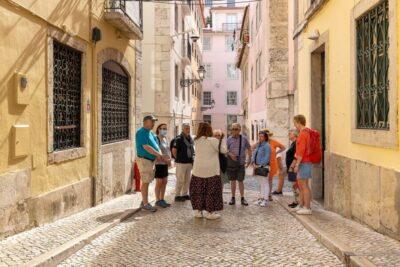

Best of Lisbon Small-Group Guided Walking Tour
Read our review →
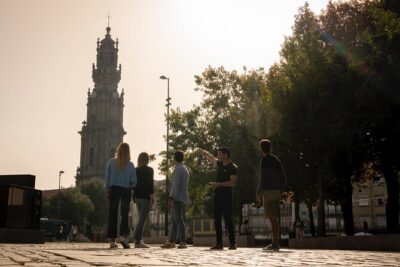
Porto Walking Tour, Lello Bookshop, River Cruise and Cable Car
Read our review →

Best of Lisbon Walking Tour: Rossio, Chiado & Alfama
Read our review →
Experience Porto’s Charm: 3-Hour Guided Walking Tour
Read our review →
Enjoy a Guided Levada Walk in the Rabaçal Valley
Read our review →Browse the lists this tour appears in