
Reviewed · WALKING TOURS
Best of Lisbon Small-Group Guided Walking Tour
Lisbon’s best introduction may be on foot, with one practical route linking Rossio, Chiado, Baixa, Alfama, and the Tagus waterfront. This tour packs the city’s central story into three to four hours, moving from medieval lanes to earthquake-rebuilt streets and the square where Portugal welcomed ships from the Atlantic.
I like the small maximum of 14 people, which gives you a fair chance to ask questions and keep up with your guide. I also like the edible stops: a classic pastel de nata, then wine and a tapa, small touches that make the history feel connected to daily Portuguese life. The main drawback is that this is an overview, not an in-depth visit inside Lisbon’s monuments, and the hills and paving call for good shoes.
Key points at a glance
- A 14-person maximum: Small enough for questions, guide interaction, and a more personal pace.
- A full central-Lisbon sweep: Walk from Rossio and Restauradores through Chiado, Baixa, Alfama, and Commerce Square.
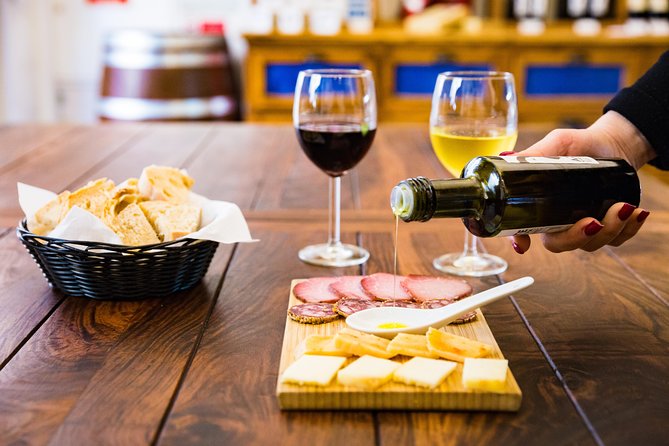
- Food built into the route: Try a pastel de nata, followed by wine tasting and a tapa.
- History with a clear storyline: The walk links Portuguese independence, the 1755 earthquake, and the 1974 Carnation Revolution.
- Useful first-day orientation: Finish with a better sense of where Lisbon’s central districts sit and how they connect.
- Real walking, including hills: Baixa is relatively flat, but Alfama and the viewpoints require a moderate level of fitness.
Why this route works for a first day in Lisbon
The smart idea here is the route. Rather than parking you in one neighborhood, it traces Lisbon’s changing character across several districts. You begin in the formal center, pass through elegant shopping streets, climb toward older quarters, and finish beside the Tagus.
That sequence gives you a useful mental map. Baixa is the orderly heart rebuilt after the 1755 earthquake, Chiado is the polished district of cafés and culture, and Alfama is the older quarter of narrow lanes and fado houses. After the walk, you will have a better idea of where to return for dinner, shopping, viewpoints, or a longer wander.
The price, $23.94 per person, is reasonable for a three to four hour guided experience with a pastry, wine tasting, and tapa. You are mainly paying for the guide’s time and local context, not admission tickets. Since the route uses public streets and viewpoints, there are no major monument entry fees built into the cost.
The tour is offered in English and begins at Praça Dom Pedro IV, commonly called Rossio Square. It ends at Praça do Comércio, so you are released in a useful part of town rather than returned to the starting point. That is handy if you want to continue along the waterfront or explore Baixa on your own.
More Walking Tours in Lisbon
- Lisbon: History, Stories and Lifestyle Walking Tour
★ 4.8 · 10,902 reviews - Lisbon: Food and Wine Small Group Walking Tour
★ 4.9 · 4,082 reviews - Best of Lisbon Walking Tour: Rossio, Chiado & Alfama
★ 4.9 · 2,700 reviews
Rossio Square and Lisbon’s central stage
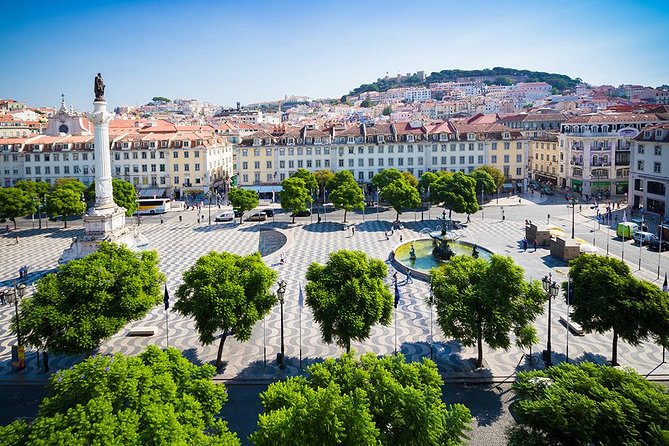
Your guide starts in Rossio, Lisbon’s central meeting place. The square is officially Praça D. Pedro IV, and its patterned Portuguese pavement is one of the first details worth noticing. The black and white stones form wave-like designs, echoing the nearby Atlantic and giving the square a distinctly Portuguese surface.
This is a good place for an opening explanation because Lisbon’s history often feels scattered when you first arrive. Here, your guide can set the scene for the city’s royal past, its commercial center, and the neighborhoods you will cross later.
The stop is brief, around 10 minutes, but that is appropriate. Rossio is best understood as a starting point rather than a site where you need a long visit. You will have time to return later for photos, people-watching, or a closer look at the pavement.
Nearby, you visit São Domingos Church on the square of the same name. The stop is only about five minutes, so expect an exterior-focused introduction rather than a long church visit. Its location helps show how tightly Lisbon’s religious buildings, public squares, and daily streets fit together.
Restauradores and the Rossio train station
The route continues toward Restauradores Square, where a tall obelisk commemorates Portugal’s restoration of independence from Spain in 1640. The monument records battles from the Portuguese Restoration War, giving your guide a chance to explain a major turning point in the country’s past.
The square also opens onto Lisbon’s grandest avenue, Avenida da Liberdade. The description of this section is brief, so do not expect a long architectural survey. Still, the contrast is useful: Lisbon can shift from compact old squares to a broad, formal boulevard within a few steps.
Next comes Rossio Central Station, one of the city center’s most eye-catching buildings. Its façade draws on Manueline forms, a decorative Portuguese style associated with the 16th century. Your guide also explains the railway engineering behind the tunnel toward Sintra, a reminder that Lisbon’s story is not only about palaces and churches. It is also about the infrastructure that connected the capital with the surrounding region.
These stops are short, usually about five minutes each. That keeps the walk moving, but it means you should listen closely. If you want detailed railway history or a full look inside the station, save that for another visit.
Carmo Square and the memory of 1974

Largo do Carmo is one of the most meaningful stops on the route. The square is linked both to a 14th-century convent and to the Carnation Revolution of 1974, when Portugal’s long dictatorship collapsed after 48 years.
This is where the tour shifts from old stone and royal power to modern political history. The Carnation Revolution is especially easy to remember because ordinary people placed carnations in the rifles of soldiers. Your guide can connect the square’s physical setting with the peaceful imagery associated with the change in government.
The walk allows about 10 minutes here. That is enough for a focused explanation and a look around, but not enough for a museum visit. The tour’s strength is the broad timeline: you are not studying one period in isolation. You are seeing how Lisbon’s public spaces carry several layers of memory.
More small group days in Lisbon:
- Lisbon Small-Group Food Tour with 18 Tastings in Alfama District
★ 5.0 · 1,967 reviews - Lisbon Roots – Small group Food & Culture Walking Tour w/tastings
★ 5.0 · 910 reviews - Lisbon: Dolphin Watching with Marine Biologist – Small Group
★ 4.9 · 867 reviews - Lisbon Small Group 2h Sunset Sailing- Live Commentary & a Drink
★ 5.0 · 620 reviews
Santa Justa, Chiado, and the city’s literary side

The Santa Justa Lift is one of central Lisbon’s most recognizable structures. Its metal form rises from the lower streets toward the higher part of town, and the route uses the area as a viewpoint and urban landmark.
The tour does not include an admission ticket or promise a ride to the top. You should understand this as a stop to admire the structure and view, not a guaranteed elevator visit. Depending on the route and conditions, your guide may use public elevators or escalators where available, a detail that can make the walk easier.
From there, you enter Chiado, the elegant 19th-century district once favored by wealthy residents and intellectuals. The neighborhood is known for boutiques, theaters, bookstores, and long-running cafés. It is a good place to slow down and notice façades, signs, and shopfronts rather than simply chase monuments.
The Chiado stop lasts about 10 minutes. That gives you an introduction, not a shopping break. If you like cafés or bookstores, mark the neighborhood for a return visit after the tour.
Rua Augusta and the logic of Baixa
Rua Augusta leads you toward the center of Baixa, Lisbon’s lower downtown. It is the main street through this part of town, lined with shops and busy pedestrian traffic. The stop is short, but it helps you see the relationship between Chiado’s higher streets and the more regular grid below.
Baixa is the tour’s clearest lesson in urban planning. The district was rebuilt after the 18th-century earthquake according to new rules, with wider streets and anti-seismic construction methods that were innovative for their time.
Your guide explains how the rebuilding changed Lisbon from a maze of medieval streets into a more ordered center. That does not mean Baixa feels bland. The long streets, tiled façades, grand squares, and repeated building fronts give it a strong visual identity.
A 15-minute stop here lets you absorb the plan and the scale. I find this part especially useful because it explains why central Lisbon feels so different from Alfama. The contrast is not accidental. It comes from rebuilding after disaster.
Chão do Loureiro and the practical value of a viewpoint

The Miradouro de Chão do Loureiro provides a panoramic pause. Lisbon is easier to understand from above, and a viewpoint helps you connect the streets you have already walked with the slopes and rooftops ahead.
The stop is scheduled for about five minutes, so treat it as a quick orientation and photo break. You may want to take your own picture rather than count on the guide to photograph everyone. One piece of practical feedback is worth following here: if you are traveling alone, simply ask the guide or another participant for a photo.
Viewpoints also give your legs a short rest. This matters because the walk is not difficult in the way a mountain hike is difficult, but Lisbon’s paving and inclines add up over several hours.
Alfama’s lanes, fado, and the uphill portion
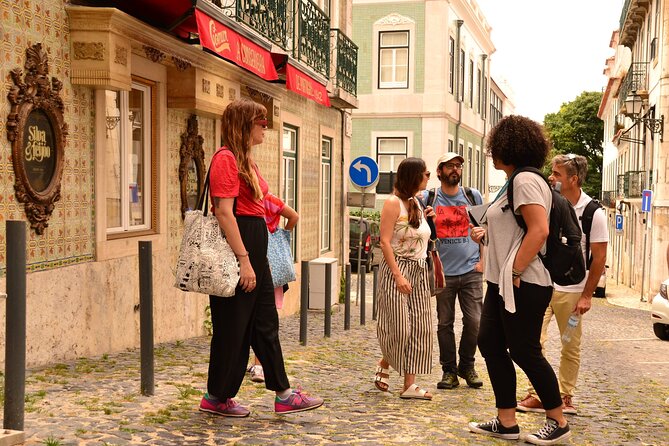
Alfama is the oldest neighborhood on the route and one of its most atmospheric sections. Its narrow, winding streets reflect a very different city from the straight lines of Baixa. You pass alleys, older buildings, and fado restaurants tucked into the neighborhood.
The guide uses Alfama to explain Moorish influence and Portugal’s famous fado tradition. Fado is often described as melancholic music, and the setting helps explain why. The lanes, tight corners, and small dining rooms create a very different mood from the open squares below.
This is also where the walk can feel most physical. The route is described as requiring moderate fitness, and that is fair. Some people find the pace easy, especially with well-timed stops. Others will notice the slopes and uneven paving, particularly in Alfama.
Wear shoes with firm soles. Bring water, and avoid treating this as a polished flat-city stroll. Baixa is relatively level, but Lisbon as a whole is not. The guide may use public elevators and escalators where possible, yet you should still expect real walking.
The Alfama section lasts about 20 minutes, longer than most individual stops. That makes sense because the neighborhood needs time to make sense. You are not just checking off a viewpoint. You are learning how older Lisbon streets work and where fado fits into local life.
The final stop at Commerce Square
The walk finishes at Praça do Comércio, the monumental square beside the Tagus. It was once the site of the Royal Ribeira Palace, destroyed in the 1755 earthquake. The square was then rebuilt as part of the Pombaline plan for downtown Lisbon.
Its open scale makes a strong ending after Alfama’s tight lanes. Your guide explains how the reception hall once welcomed people arriving from the Atlantic, linking the square to Portugal’s maritime past.
The final stop lasts about 10 minutes. Since the tour ends here, you can continue without backtracking. Walk along the waterfront, return into Baixa, or use the square as a base for the rest of your day.
The route does not include Lisbon Cathedral, even though it is close to Alfama. That omission is worth knowing if the cathedral is high on your list. This tour favors a wide overview of neighborhoods and major public spaces rather than entry into every important monument.
The food breaks add more than a snack
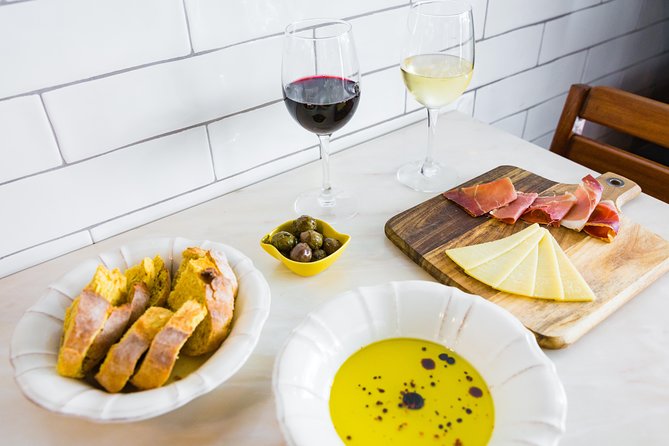
The included pastel de nata is a small but welcome part of the experience. This classic custard pastry gives you a taste of one of Portugal’s best-known everyday treats without requiring a separate bakery stop.
Later, the wine tasting and tapa provide another pause. The food and drink are not a full meal, and the tour notes that other food and drinks are not included. Plan to eat before or after the walk if you need lunch.
I like these stops because they break up the history. Three to four hours of dates, architecture, and political change can feel dense. A pastry and a small glass of wine make the route more social and give you a chance to talk with the group.
Dietary details are not fully specified, but vegetarian requests have been accommodated on at least some departures. If this matters to you, ask when booking or at the start of the tour rather than assuming the included tapa will suit your diet.
Guides, pace, and group size
The strongest part of this experience is the guide-led storytelling. Guides named Jose, Maria, Felipe, Joana, Carlos, Filipa, Flavia, Franco, Catarina, Guillermo, Daniel, and Katerina have been associated with warm, energetic, and well-organized departures.
The style can vary by guide, but the best fit is someone who welcomes questions and adds practical advice along the way. Jose, for example, has been praised for answering questions, helping solo participants feel included, and giving restaurant and activity suggestions. Maria is known for an engaging presentation, while Felipe has been associated with a patient pace and good use of lifts and escalators.
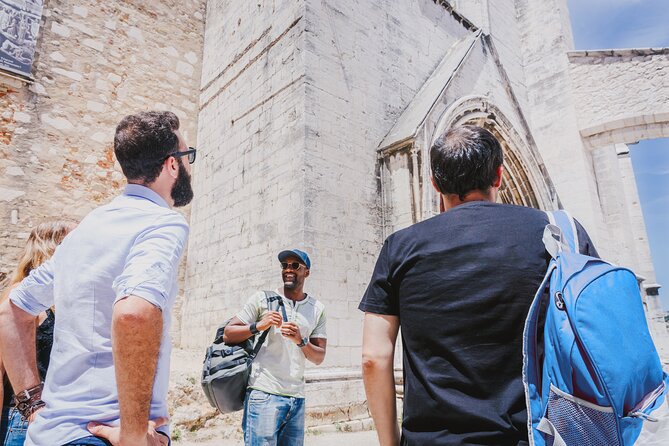
A maximum of 14 people is a real advantage. You are not in a large crowd straining to hear a flag-waving guide. You can ask about restaurants, public transport, viewpoints, and neighborhoods without turning the walk into a private tour.
The route has also been completed in rain, so weather does not automatically stop the experience. Still, your comfort depends on preparation. Lisbon’s weather can change, and wet paving can make hills less pleasant.
Who should book this Lisbon walk?
I would choose this tour if you are visiting Lisbon for the first time, have only a few days, or want a city orientation before exploring alone. It is especially useful on your first day because it gives you a clear sense of the center and several neighborhoods in one morning or afternoon.
It also suits solo visitors who like company without booking a private tour. The small group and guide interaction make it easier to ask questions and get local suggestions.
You may want something else if you already know central Lisbon well or prefer long visits inside monuments. The route covers familiar headline areas, and one person found the selection too focused on squares, the lift, and Alfama. That is a fair criticism for repeat visitors.
The tour requires moderate fitness. It is not a strenuous hike, but you will walk for several hours, deal with hills, and cross stone paving. Service animals are allowed, and the starting point is near public transport.
Free cancellation is available up to 24 hours before the local start time. Within 24 hours, the payment is not refunded, and the activity may be rescheduled or refunded if the minimum number of participants is not reached.
Should you book it?
Book this walk if you want a well-priced, English-language introduction to Lisbon’s central districts with a real guide, a manageable group, and a few local tastes along the way. The route is broad, practical, and packed with useful context.
Skip it if you want cathedral interiors, museum time, or a slow architectural study. For most first-time visitors, though, the combination of Rossio, Baixa, Chiado, Alfama, viewpoints, and Commerce Square makes this a strong first step into Lisbon.
FAQ
How long does the Best of Lisbon Small-Group Guided Walking Tour last?
The tour lasts approximately three to four hours.
Where does the tour begin?
It begins at Praça Dom Pedro IV, also known as Rossio Square, in central Lisbon.
Where does the tour finish?
The tour ends at Praça do Comércio, also called Commerce Square, near the Tagus River.
What food and drink are included?
The tour includes a pastel de nata pastry, a wine tasting, and a tapa.
Does the tour include entry to monuments or museums?
No. Entry to museums and monuments is not included.
How many people can join the group?
The group has a maximum of 14 participants.
Is the tour suitable for someone with limited walking ability?
The tour requires a moderate level of physical fitness. You should expect several hours of walking, hills, and uneven paving, especially around Alfama.
The newest listings around Lisbon
- The Real Lisbon Street Art Private Guided Tour by Minivan★ 4.8 · 49 reviews
- Lisbon: Historical Walking Tour with Jeronimos Monastery★ 4.5 · 71 reviews
- Lisbon: Port Wine Tasting at Taylor’s Shop and Tasting Room★ 4.6 · 490 reviews
- Lisbon: Tagus River Cruise With Brunch★ 3.2 · 73 reviews
- South Lisbon: 3-Hour Christ the King Electric Bike Tour★ 4.8 · 97 reviews
- Oeiras Coast: Stand Up Paddleboarding near Lisbon★ 4.9 · 56 reviews
- Small Group Walking Tour of Belém★ 4.9 · 80 reviews
- Lisbon: 3-Hour Secret Food Tour★ 4.7 · 53 reviews
Walking Tours, compared.

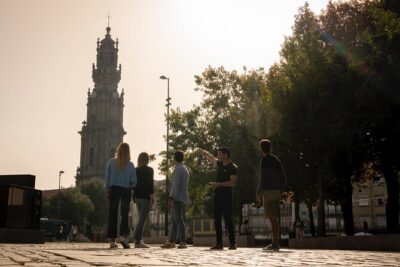
Porto Walking Tour, Lello Bookshop, River Cruise and Cable Car
Read our review →

Best of Lisbon Walking Tour: Rossio, Chiado & Alfama
Read our review →
Experience Porto’s Charm: 3-Hour Guided Walking Tour
Read our review →
Enjoy a Guided Levada Walk in the Rabaçal Valley
Read our review →
Browse the lists this tour appears in