

Reviewed · EVORA TOURS
Marble Tour in Vila Viçosa
The most interesting part of this Vila Viçosa tour is its complete chain of production: you see how marble is extracted from the ground, shaped by hand, and finished by machines. This is not just a quarry photo stop. It shows the work, risks, tools, and skill behind a stone often seen only as a polished surface.
I like the three-part route, which links quarrying, artisan work, and industrial processing. I also like the small maximum of 10 people, since guides such as João and Juaquina can explain the process in a more personal way.
The main drawback is practical: you need your own vehicle to travel from the meeting point to the marble sites. Closed footwear is mandatory, and the tour calls for a moderate level of fitness.
Key Points at a Glance

- See marble at its source: Visit the Nucleus of the Region’s Marble Quarries and learn about extraction, machinery, hazards, and economic use.
- Meet the craft behind the stone: An artisan workshop shows manual marble transformation and the personal stories of the master craftsperson.
- Compare old and new methods: An industrial mill presents mechanized cutting, processing, and finished products.
- Small groups matter: The tour accepts a maximum of 10 people, keeping explanations easier to follow.
- English is offered: Guides including João and Juaquina have led tours in clear, friendly English.
- Plan your transport: You must drive your own vehicle between the meeting point and the sites.
Why Vila Viçosa Marble Is Worth Your Time
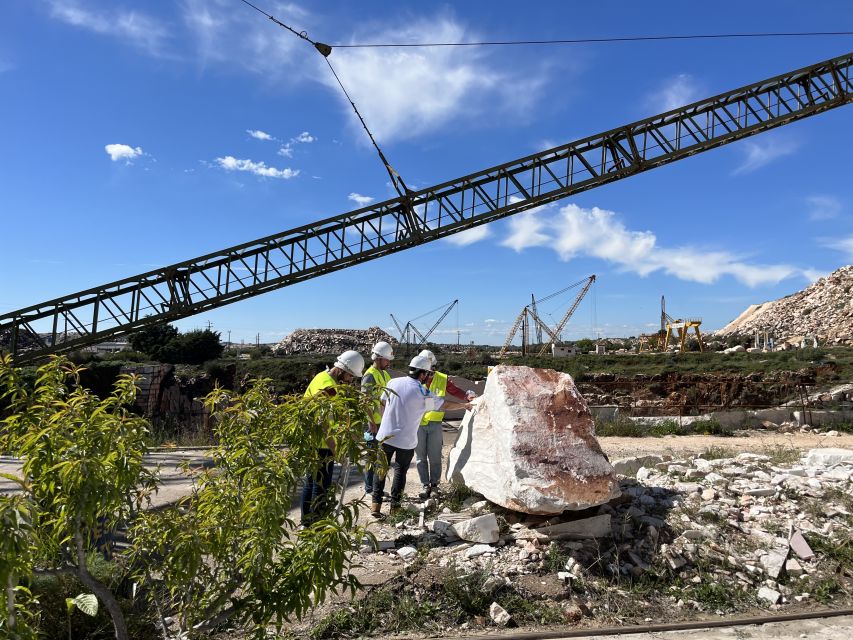
Vila Viçosa is a practical place to learn about marble because the stone is not treated as a distant museum subject. It is part of the local economy, craft tradition, and working environment. This tour gives you a view of all three.
I like experiences that explain how an everyday material reaches its final form. Marble may appear in floors, monuments, furniture, and decorative objects as a smooth, finished surface. Here, you get to consider the noisy, physical, and technical work that comes before that result.
The tour also gives you useful context without requiring a full day. At around two hours, it can fit neatly into a visit to Vila Viçosa or the wider Évora District. You will not spend the whole day at a quarry, but you will see enough stages to understand the process.
The price is $30.25 per person. For that fee, you receive a local guide and access to three connected settings. The value is strongest if you want explanation rather than only a photograph of a quarry. If you prefer a simple sightseeing stop with no industrial detail, this may feel more specialized than necessary.
A few more Evora options worth putting side by side
- Évora and Megaliths Full-Day Tour from Lisbon
★ 4.7 · 456 reviews - From Lisbon: Évora and Monsaraz Day Tour with Wine Tasting
★ 4.8 · 279 reviews - 2-Hour Surf Lesson in Alentejo
★ 5.0 · 243 reviews
Starting at Rota do Mármore AE
The meeting point is Rota do Mármore AE, at Avenida Duques de Bragança 4, 7160-209 Vila Viçosa. The activity also ends there, which keeps the beginning and finish easy to understand.
The route is not a walk from one attraction to the next. You need your own vehicle to move between the meeting point, the quarry area, and the workshops. That detail is easy to miss when planning, so treat the tour as a guided driving sequence rather than a single-site visit.
The operator does not provide hotel pickup or drop-off, and private transportation is not included. Food and drinks are also not included. Plan to arrive ready for the full outing, with your transport already arranged.
The group size is capped at 10 people. That is a useful limit for a working environment where machinery and safety instructions need to be clear. It also gives you a better chance to ask about the stone, tools, and production methods without competing with a large crowd.
At the Marble Quarry: Stone, Machinery, and Risk
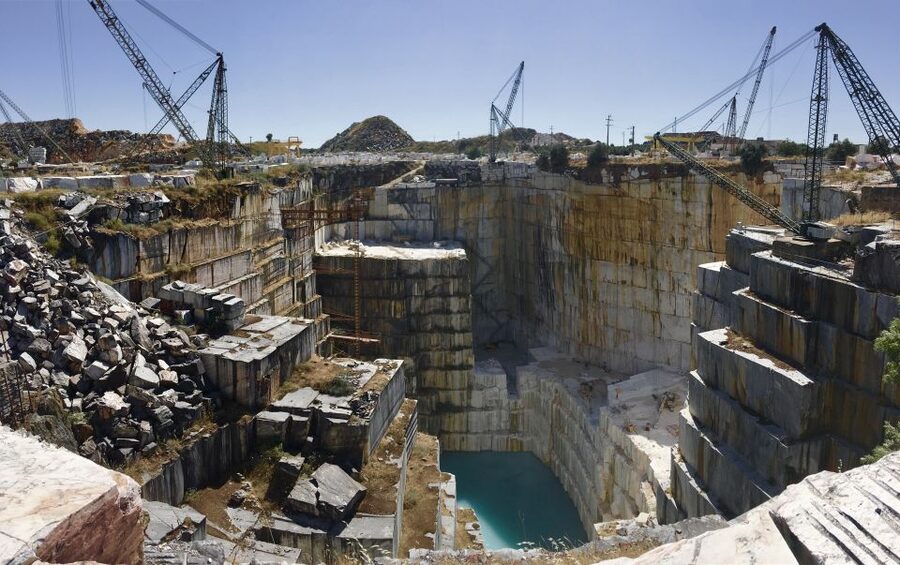
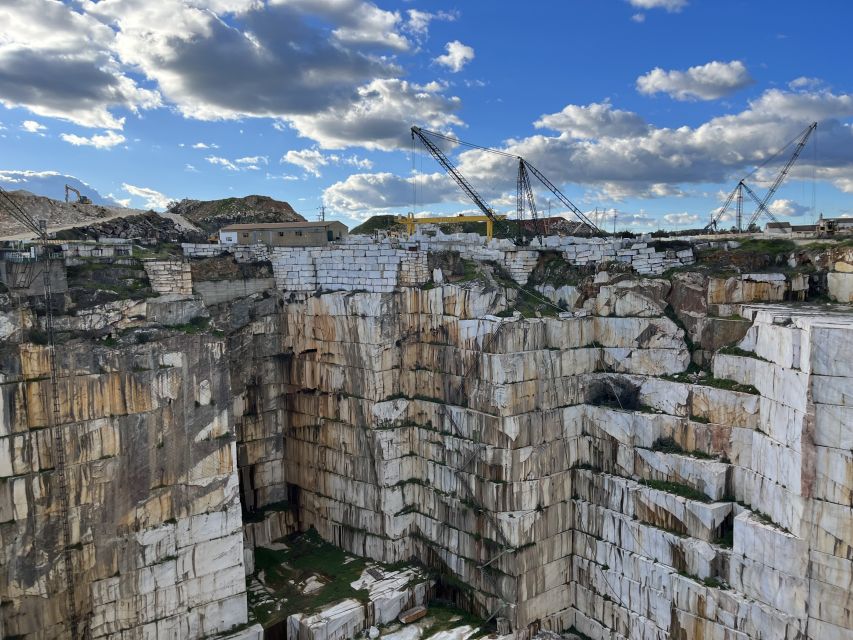
The first major stop is the Nucleus of the Region’s Marble Quarries. The guide introduces different types of stone and explains how marble is extracted from the ground.
The focus is not only on the finished block. You learn about the extraction process, the machinery used, and the hazards connected with quarry work. That safety element adds a dose of reality. Marble production is skilled industrial work, not a quiet craft performed without risk.
You also hear about the economic and artistic sides of marble. That combination is valuable because it connects the quarry to two very different uses. The stone has a commercial role as a material, but it also supports design and decorative work.
I would pay close attention to the way the guide links the quarry to the later stops. The first visit gives you the raw material. The artisan workshop then shows how a person can transform it by hand, while the industrial mill shows what happens when the process is organized around machinery and larger-scale production.
The exact experience at the quarry can depend on weather and working conditions. The activity requires good weather, and poor conditions may lead to a new date or a full refund. Wear closed footwear as required, and expect a setting where moderate physical fitness is useful.
The Artisan Workshop and the Human Touch
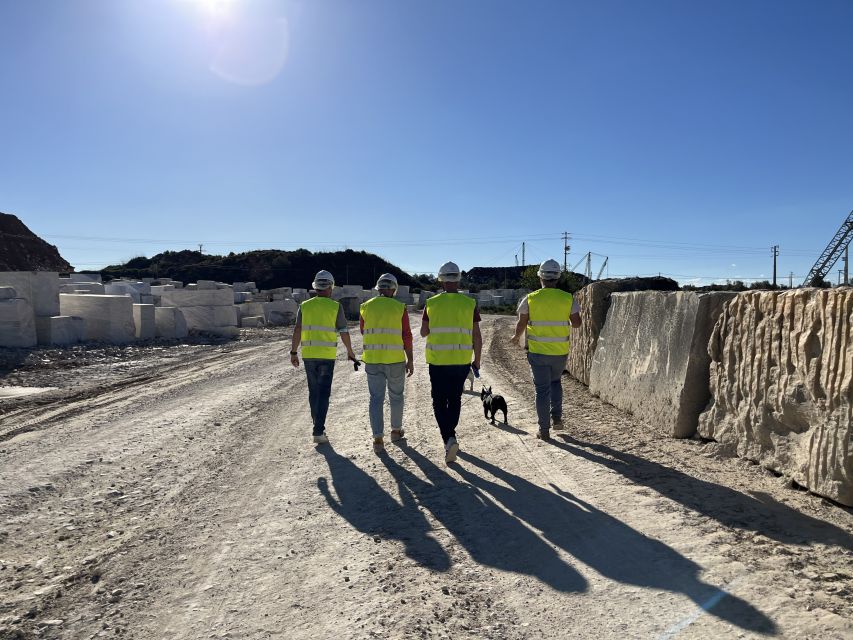
The second part takes you to an artisan workshop where marble is transformed manually. Here, the emphasis moves from large-scale extraction to individual skill.
You will see techniques, tools, machinery, and examples of finished work. The guide also explains the dangers involved in the craft. That is important because handwork can look simple when you see only the final object. The process demands control, patience, and an understanding of how the stone responds.
Personal stories from the master craftsperson are part of this stop. They give the material a human side without turning the visit into a formal lecture. You are not only looking at a workshop. You are learning how a person builds a working life around marble.
This is likely the most personal section of the tour. The quarry explains the scale of extraction, but the artisan workshop shows the decisions made by hand. You can compare the irregularities and care of manual work with the speed and repetition of industrial machinery.
Guides such as Juaquina have explained the geology and the full production process in English, while João has also led visitors through the route with an informal and enthusiastic approach. Guide assignments can vary, but the experience is designed around clear explanation rather than a scripted presentation.
Same base, a completely different sort of day:
- Évora and Monsaraz with Regional Wine Tasting from Lisbon
★ 4.5 · 229 reviews - Évora: Private walking tour with tickets to main monuments
★ 5.0 · 223 reviews - Private Day Tour With Guide to Évora and Monsaraz
★ 5.0 · 134 reviews - From Lisbon to Alentejo: Évora and Megaliths Full-Day Tour
★ 4.5 · 131 reviews
The Industrial Mill: Marble by Machine
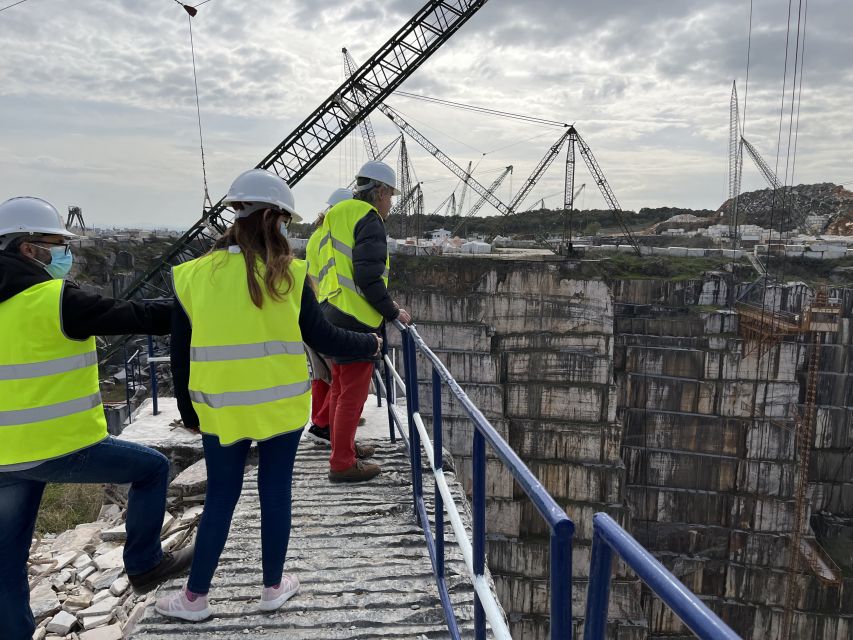
The final visit is to a marble milling or industrial processing workshop. This stop shows the mechanized side of the business, including the different machines, processing stages, safety concerns, and finished products.
The industrial mill helps you understand why machinery matters. A quarry may produce large blocks, but those blocks must be cut and shaped for practical use. The mill is where the raw stone moves toward its final form through an organized operation.
You will see examples of completed products and learn about the operational context of the mill. That phrase matters because the tour is not limited to identifying machines. It explains how the workshop functions as a working production site.
I like the contrast between the second and third stops. The artisan workshop is centered on manual transformation and personal technique. The industrial mill presents a more mechanized system. Taken together, they show that marble is not made useful by one method alone.
Expect the industrial section to be more about process than decoration. If you want a shopping visit or a showroom filled with finished pieces, this is not described as that kind of experience. Its strength is showing how marble is processed and what the machinery contributes.
What the Two-Hour Schedule Really Gives You

The stated visit lasts about two hours. That is enough time for a clear introduction to the marble industry, but it is not an all-day technical course.
The compact schedule works well for a traveler building a day around Vila Viçosa. You can learn the full sequence without giving up an entire day to a single subject. I would allow a little flexibility around the stated time, since moving between sites requires your own vehicle and each stop involves explanation.
The tour includes admission to the visit itself, with a professional but informal local guide. Food and drinks are not included, so you should handle those separately. Since the route ends back at the original meeting point, you do not need to arrange a different return location.
An average booking lead time of 16 days suggests that planning ahead is sensible, especially if your schedule in the Évora District is fixed. Confirmation is received at booking, but the experience also requires a minimum number of participants. If that minimum is not reached, the operator offers another date or experience, or a full refund.
Is the Tour Good Value at $30.25?
At $30.25 per person, the tour is reasonably priced for a guided experience that combines three settings and a specialized subject. You are paying for access, interpretation, and the connection between the stages, not just transport to a viewpoint.
The value is particularly good if you would otherwise see marble only as architecture or decoration. The guide helps you understand extraction, risk, craft, machinery, and the finished result as one story.
The price is less attractive if you are looking for a broad introduction to Vila Viçosa. This is a focused tour about marble, not a general town walk or a full cultural day. You should book it because the subject interests you, not simply because you have spare time.
The small group limit improves the value. With no more than 10 people, it is easier to hear the guide and ask questions. It also suits a working environment better than a large coach group.
Practical Preparation Before You Go
Wear closed shoes. This is mandatory, not just a suggestion for comfort. The tour includes quarry and workshop settings, machinery, and areas where sensible footwear matters.
You also need moderate physical fitness. The supplied details do not give a precise distance or number of steps, so I would avoid assuming that every part is effortless. If walking or standing for portions of the visit is difficult for you, contact the operator before booking.
Bring your own vehicle for the transfers between the meeting point and the sites. Hotel pickup, hotel drop-off, and private transportation are not included.
The tour is offered in English. If you value explanation, listen for the links between the stops and ask how each stage relates to the next. The experience is at its best when you treat it as a process, from raw stone to finished product.
Free cancellation is available up to 24 hours before the start time for a full refund. Changes or cancellations made inside that 24-hour window are not accepted for a refund. Cut-off times use local time, and weather or minimum-participant cancellations come with the choice of another date, another experience, or a refund.
Who Will Enjoy This Marble Experience Most?
I would recommend this tour to anyone interested in geology, crafts, industrial work, design, architecture, or local economies. It also suits curious visitors who like seeing how a familiar material is made useful.
It is a strong choice for adults and older children who can follow safety instructions and manage a moderate physical level. The smaller group should help people who prefer questions and conversation over a large guided crowd.
It may be less suitable if you want a relaxed, scenic outing with no industrial setting. The route includes hazards, machinery, and the practical realities of extraction and processing. That is part of its appeal, but it also means you should arrive prepared for a working environment.
I would also choose something else if you do not have access to a car. The need to drive between sites is the biggest logistical limitation. The experience is not designed as a hotel-based excursion with transport included.
Should You Book the Vila Viçosa Marble Tour?
Book it if you want to understand marble from ground level to finished piece. The quarry, artisan workshop, and industrial mill form a logical sequence, and the $30.25 price is fair for a specialized two-hour guided visit.
The strongest reasons to go are the complete production story, the small group size, and the chance to hear practical explanations from guides such as João or Juaquina. You will see both personal handwork and mechanized processing, which gives the tour more range than a simple quarry visit.
Skip it if you lack your own vehicle, need hotel transfers, or want a general tour of Vila Viçosa. For the right reader, though, this is a useful and unusually grounded way to see Alentejo through one of its most important materials.
FAQ
Where does the Marble Tour in Vila Viçosa start?
The tour starts at Rota do Mármore AE, Avenida Duques de Bragança 4, 7160-209 Vila Viçosa, Portugal.
Where does the activity end?
The activity ends back at the original meeting point.
How long does the tour last?
The tour lasts approximately two to three hours. The listed visit itself is described as lasting about two hours.
Do I need my own transportation?
Yes. You need your own vehicle to travel between the meeting point and the marble sites. Hotel pickup, hotel drop-off, and private transportation are not included.
Is the tour offered in English?
Yes. The experience is offered in English.
What should I wear?
Closed footwear is mandatory. You should also have a moderate level of physical fitness for the activity.
Can I cancel for a full refund?
Yes. You can cancel at least 24 hours before the local start time for a full refund. Cancellations or changes made less than 24 hours before the start time are not accepted for a refund.
The newest listings around Evora
- 2hr Walk in a Cork Forest★ 4.5 · 42 reviews
- Grande Prova Honrado Vineyards★ 5.0 · 46 reviews
- From Lisbon: Small-Group Day Tour to Évora and Monsaraz★ 4.6 · 54 reviews
- Évora (with Sé & Bones), Evoramonte & Arraiolos: From Lisbon★ 4.7 · 57 reviews
- Évora: Private tour with entrance tickets to main monuments★ 5.0 · 57 reviews
- From Lisbon: Évora Wine & Heritage Tour★ 4.1 · 93 reviews
- Tour Évora and Alentejo in a private tour★ 5.0 · 124 reviews
- From Lisbon to Alentejo: Évora and Megaliths Full-Day Group Tour★ 4.5 · 111 reviews
Evora Tours, compared.


Évora and Monsaraz with Regional Wine Tasting from Lisbon
Read our review →
Private walking tour with tickets to main monuments
Read our review →
Private Day Tour With Guide to Évora and Monsaraz
Read our review →
From Lisbon to Alentejo: Évora and Megaliths Full-Day Tour
Read our review →
Browse the lists this tour appears in