
Reviewed · COOKING CLASSES
Lisbon: Portuguese Cooking Class for Beginners
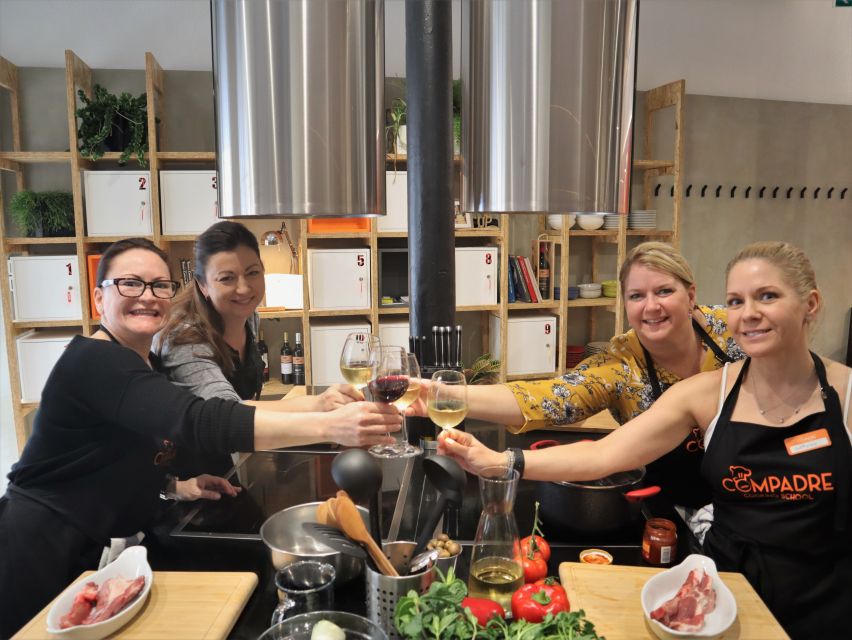
Portuguese food makes the table a meeting place, and this three-hour cooking class lets you take part rather than simply order another plate of food. At Compadre Cooking School in Lisbon, you prepare three dishes, hear the stories behind them, then sit down to eat what you made.
I especially like the small group of six and the way the class links recipes to Portuguese culture. I also like that you leave with recipes, not just a full stomach. The main consideration is physical: you’ll be standing for at least two hours, so this is not a good fit if you have serious back problems.
Key points to know
- Three dishes, one seated meal: You prepare the food and then eat it as a complete Portuguese meal.
- A cultural lesson with your cooking: The instructor explains how recipes and ingredients connect to Portuguese life and family traditions.
- Small group format: A maximum of six people gives you room to ask questions and work directly with the instructor.
- Patient, hands-on teaching: Anna and Marta have been praised for guiding beginners through each stage at a comfortable pace.
- Drinks are included: Wine, tea, and coffee are part of the meal experience.
- Recipes go home with you: You can recreate the dishes for friends after your Lisbon visit.
Why this Lisbon cooking class works for beginners
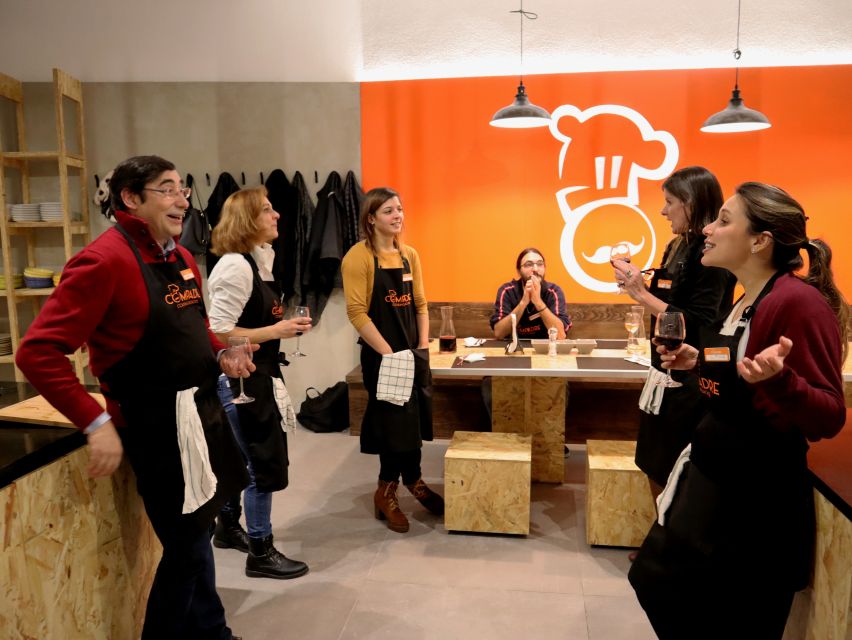
This is not a demonstration where you sit back and watch a chef do all the work. You step into the kitchen, handle the ingredients, and help prepare three Portuguese dishes from start to finish. That matters if you want more than a pleasant lunch. You get a practical sense of how the food comes together.
The class is designed for people who may not cook much. The instructors guide you through the preparation and cooking, and the small group keeps the activity from feeling like a crowded workshop. You can ask for help, watch a technique again, and keep pace with the rest of the group.
That beginner-friendly setup also makes this a good choice for mixed groups. A confident home cook can enjoy learning about Portuguese ingredients and food customs, while a less experienced cook can take part without needing to know kitchen terms or techniques in advance.
You should not expect a highly technical chef course. The value is in the combination of simple hands-on cooking, cultural background, and a shared meal. It is an approachable way to understand what you are eating in Portugal.
More Cooking Classes in Lisbon
- Lisbon: Pastel de Nata Baking Class
★ 4.9 · 2,106 reviews - Lisbon: Traditional Portuguese Cooking Class
★ 4.9 · 592 reviews - Lisbon: 2-Hour Pastel de Nata Cooking Class
★ 4.8 · 461 reviews
Entering Compadre Cooking School in Lisbon
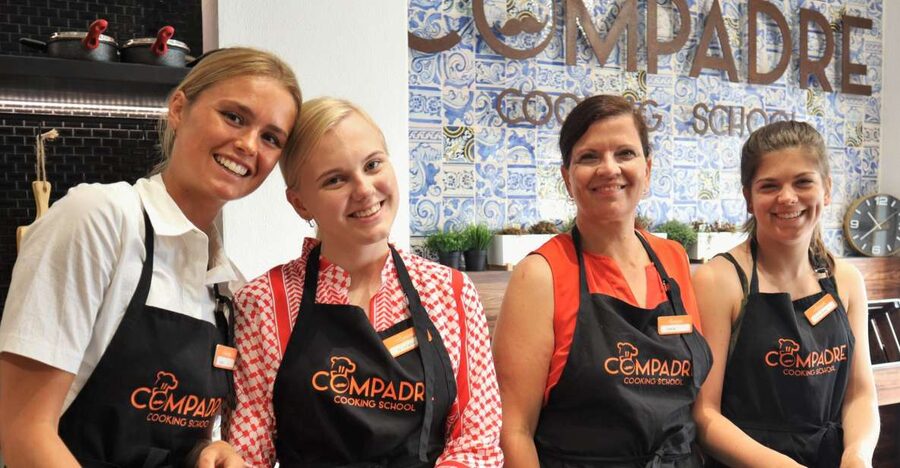
The meeting point is Compadre Cooking School in Lisbon District. Make sure you head to the Lisbon location, since the activity information specifically warns against selecting the wrong city when booking or planning your visit.
The class lasts three hours, so plan it as a substantial part of your day rather than a quick food stop. Wear comfortable shoes. You will be on your feet for at least two hours, and the kitchen work is an active part of the experience.
There is no hotel pickup or drop-off. You need to make your own way to the school, so allow time to find the address and arrive ready to cook. Pets and smoking are not allowed.
The group limit is six participants. That is a useful number for a cooking class because everyone should have a chance to take part, rather than watching from the back of a large room. It also gives the instructor space to offer individual help, which is particularly helpful when you are new to a recipe.
The opening lesson: food, family, and Portugal
The class begins with more than a list of ingredients. The instructor explains the background of the dishes and the role food plays in Portuguese culture, history, and everyday life.
This introduction gives the cooking a useful frame. Portuguese meals are tied to time around the table, where family, friends, and even new acquaintances gather. You are not just learning isolated recipes. You are learning why food matters in a country where sharing a meal is a major part of social life.
The instructors also explain how recipes and ingredients have passed through generations. That context can change the way you think about the dishes later in your trip. A plate of cod, a prawn dish, or chicken piri piri becomes easier to place within the wider Portuguese food tradition.
Past classes have been led by Anna and Marta, both praised for clear explanations and patient instruction. Anna, in particular, has been noted for working at the group’s own pace and offering useful Lisbon recommendations along the way. Since instructors can vary, treat those names as helpful possibilities rather than a guarantee for your date.
Preparing three Portuguese dishes by hand

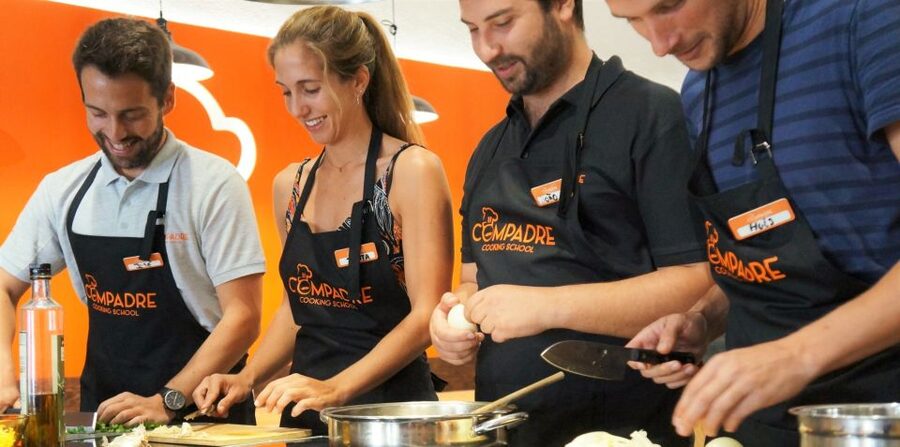
The central part of the class is practical. You prepare three different dishes with the instructor’s guidance, using the provided ingredients and equipment.
The exact menu is not listed as fixed, so you should not book this expecting a guaranteed set of recipes. Dishes mentioned in class experiences include cod, prawns, and chicken piri piri. That range gives you a sense of the food style, but the menu may change.
Seafood is worth considering before you book. Portuguese cooking makes frequent use of fish and shellfish, and some of the dishes may include them. At the same time, the class has accommodated a participant who was not a big seafood eater by offering chicken piri piri and adjusting the cod and prawn dishes. If you have a strong allergy, dietary restriction, or firm dislike, contact the school before booking rather than relying on an adjustment during class.
The cooking is hands-on, but it is not meant to test you. You receive help throughout the process, and the instructors explain each step. That makes the class useful even if your own kitchen experience is limited.
I like this format because it connects the work to the reward. You are not merely told that a dish is important in Portugal. You help make it, notice how the ingredients are handled, and then taste the result at the table.
Same base, a completely different sort of day:
- Lisbon City Center Tour – The Unmissable Lisbon
★ 5.0 · 22,234 reviews - Lisbon: Jerónimos Monastery Entrance Ticket
★ 4.1 · 14,164 reviews - Lisbon: History, Stories and Lifestyle Walking Tour
★ 4.8 · 10,902 reviews - Lisbon: Sunset Boat Party Cruise with DJ and Open Bar
★ 4.5 · 10,378 reviews
Sitting down to eat what you made

After the preparation, you sit down for a full meal featuring the dishes you cooked. This is an important part of the experience. The meal gives you time to enjoy the food without having to rush back into the kitchen.
Beverages are included, with wine, tea, and coffee available as part of the experience. Wine helps make the final meal feel social, while tea and coffee give non-wine drinkers another option. One account also described the school’s own-brand wine being available while cooking and eating, though you should regard the included beverages as the firm promise rather than assume unlimited wine.
The shared meal is also where the small group format pays off. You cook alongside people from different places, then share the finished dishes. If you are traveling alone, this is a natural way to meet people without having to force conversation at a busy bar or restaurant.
The food is prepared by the group, so the experience is not the same as dining at a polished restaurant. The reward is participation. You see the work behind the dish, and the final meal feels connected to the time spent in the kitchen.
The recipes you take home
The recipes are one of the best practical features. You receive the instructions after class, giving you a way to prepare the dishes again for friends and family.
That follow-up value matters when you compare this activity with a standard meal. A restaurant dinner ends when you pay the bill. Here, you leave with cooking ideas and a better understanding of the food you encountered in Lisbon.
A past participant also received a QR code leading to an extensive Portuguese cookbook that included the class dishes. The information provided for the activity confirms that recipes are supplied, but the exact format may vary. Bring your phone if you want to make easy use of a digital recipe collection, though do not assume a specific cookbook or QR code is guaranteed.
The recipes may also help you shop and order more confidently during the rest of your Portugal trip. You will have a clearer idea of what ingredients and cooking methods sit behind familiar dishes.
What the $88 price includes
At $88 per person, the class is not a cheap snack stop. It is priced as a three-hour activity with instruction, equipment, ingredients, a full meal, beverages, recipes, and insurance included.
I see the value in the amount of time and participation. You get a meal, but you also receive a cultural introduction, practical teaching, drinks, and recipes to use later. If you would otherwise pay for a meal plus a separate activity, this can make sense as a combined experience.
The price is less attractive if you only want to eat Portuguese food. A restaurant will give you a wider menu and less time on your feet. This class is worth the cost when you want to understand the food and take part in making it.
The group limit of six strengthens the value. You are paying for a more personal class, not a large food demonstration. Still, the price does not include transport, so factor in your own cost and time getting to Compadre Cooking School.
Who should book this experience

I would recommend this class to you if you enjoy food, want a break from sightseeing, or prefer activities that connect you with other people. It suits solo visitors, couples, friends, and families with older children who can manage several hours of kitchen work.
It is especially useful early in a Lisbon stay. The cultural introduction and instructor suggestions can help you understand Portuguese menus and food customs for the rest of your visit. You may also leave with ideas for dishes to seek out in restaurants and markets.
Beginners should feel comfortable booking. The class is built around guidance, and past instruction has been described as friendly, patient, and easy to follow. You do not need to arrive as a skilled cook.
This is less suitable if you have major back problems or cannot stand for at least two hours. It may also disappoint you if you want a fixed menu, a short tasting, or a fully passive cooking demonstration. The activity requires participation.
Practical details before you go
The class is offered in English and Portuguese. Check the available start times when you choose your date, since the three-hour session does not have one universal departure time listed.
Wear comfortable shoes. You will be standing for much of the cooking, and comfort matters more here than dressing for a restaurant meal.
There is no hotel transfer, so plan your route to the school in advance. Keep the school name, Compadre Cooking School, handy when navigating, and double-check that your destination is in Lisbon.
The activity allows free cancellation up to 24 hours before the start for a full refund. You can also reserve now and pay later, which helps if your Lisbon schedule is still taking shape. Those policies make it easier to fit the class around museum visits, day trips, and changing arrival plans.
The experience carries a 4.9 rating from 78 reviews, with repeated praise for the instructors, food, cultural explanations, and social atmosphere. The strongest pattern is clear: people value the patient teaching and the chance to eat together after cooking.
Should you book the Compadre cooking class?
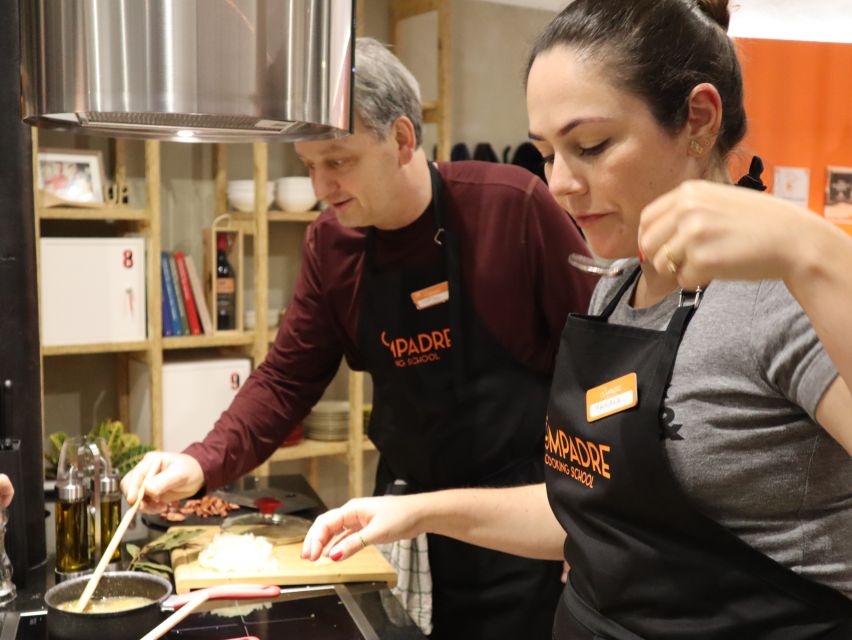
Book it if you want a hands-on Portuguese food experience rather than another restaurant meal. The combination of three dishes, cultural background, drinks, a shared table, and take-home recipes gives the $88 price real substance.
I would be more cautious if you have back problems, dislike standing, or need a guaranteed menu. Ask about seafood and dietary needs before booking. For everyone else, this is a friendly, practical way to spend three hours in Lisbon and carry a small part of Portuguese food culture home with you.
FAQ
How long is the Portuguese cooking class?
The class lasts three hours. You spend that time learning about Portuguese food, preparing three dishes, and eating the finished meal.
Where does the class meet?
The meeting point is Compadre Cooking School in Lisbon. Hotel pickup and drop-off are not included.
How many people are in the group?
The class is limited to six participants, making it a small-group cooking experience.
Which languages are available?
The instructors teach in English and Portuguese.
What is included in the price?
The $88 price includes the instructor, equipment, ingredients, a full meal, beverages, recipes, and insurance.
Is the class suitable for people with back problems?
No. You will be standing for at least two hours, so the class is not recommended for people with big back problems.
The newest listings around Lisbon
- The Real Lisbon Street Art Private Guided Tour by Minivan★ 4.8 · 49 reviews
- Lisbon: Historical Walking Tour with Jeronimos Monastery★ 4.5 · 71 reviews
- Lisbon: Port Wine Tasting at Taylor’s Shop and Tasting Room★ 4.6 · 490 reviews
- Lisbon: Tagus River Cruise With Brunch★ 3.2 · 73 reviews
- South Lisbon: 3-Hour Christ the King Electric Bike Tour★ 4.8 · 97 reviews
- Oeiras Coast: Stand Up Paddleboarding near Lisbon★ 4.9 · 56 reviews
- Small Group Walking Tour of Belém★ 4.9 · 80 reviews
- Lisbon: 3-Hour Secret Food Tour★ 4.7 · 53 reviews
Cooking Classes, compared.


Pastel de Nata Cooking Class with Grandma’s Recipe
Read our review →
Pastel de Nata Cooking Class with Port Wine – Sé
Read our review →


Lisbon Portuguese Cooking Class with 3-Course Dinner
Read our review →
Pastel de Nata Cooking Class with Porto Wine (Sé do Porto)
Read our review →Browse the lists this tour appears in