Reviewed · STREET ART
Lisbon: Street Art and Historical Walking Tour
Lisbon’s street art is not just decoration. It is a running conversation about politics, identity, history, and city life, and this three-hour walk gives you the background to read it. I like the opening view from Miradouro da Graça, and I like the way the route joins major sights with less familiar streets in Mouraria and Alfama. The main consideration is the terrain: you need comfortable shoes, steady footing, and enough mobility for uneven sidewalks and hills.
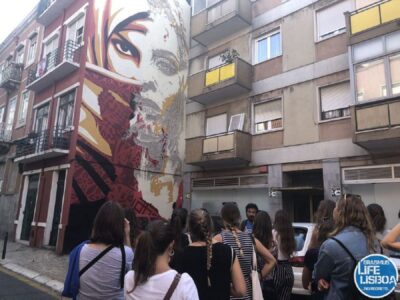
I also like the small group, limited to eight people, which gives you a better chance to ask questions. Guides such as Rui, Andriy, and Andre have led this experience, and the strongest feedback points to their personal knowledge of Lisbon’s artists and their care around traffic and broken pavement.
Key points at a glance
- Start above the rooftops: Meet by the church at Miradouro da Graça, with wide views across Lisbon.
- See named urban artists: Look for work by Vhils, Nomen, Odeith, and Gonçalo Mar.
- Walk three historic districts: The route links Graça, Mouraria, and Alfama rather than staying on the usual sightseeing circuit.
- Connect art with city life: Your guide explains the artists, their motives, and the political and cultural ideas behind the work.
- Finish with more than wall paintings: The route includes São Jorge Castle, Miradouro Portas do Sol, and other strong viewpoints.
- Keep the group personal: With no more than eight participants, questions and conversation are easier.
Why Lisbon street art makes a good city walk

Lisbon is a city of tiled façades, steep lanes, viewpoints, and old neighborhoods. It is also a city where public art can change how you read a street. A painted wall may point to a political issue, a local story, an artist’s identity, or a debate about who gets to shape the city.
That is the value of this experience. You are not simply stopping to photograph large murals. You are given context about the artists and the ideas behind their work. The guide’s role matters here. Rui, in particular, is described as someone who has made street art a career and who selects the route with care. Andriy and Andre have also led tours, so the exact personality of your guide may vary by date.
I like this approach because street art can be easy to admire and hard to understand. Without context, you see color and scale. With a good explanation, you begin to notice technique, subject matter, permission, and the relationship between a work and its neighborhood.
The tour is also useful if you are not already an art fan. The focus is broad enough to include Portuguese culture, local politics, literature, and everyday life. You get a better sense of Lisbon as a living city rather than a collection of viewpoints and monuments.
More Walking Tours in Lisbon
- Lisbon: History, Stories and Lifestyle Walking Tour
★ 4.8 · 10,902 reviews - Best of Lisbon Small-Group Guided Walking Tour
★ 5.0 · 4,869 reviews - Lisbon: Food and Wine Small Group Walking Tour
★ 4.9 · 4,082 reviews
Beginning at Miradouro da Graça
The meeting point is by the church at Miradouro Sophia de Mello Breyner Andresen, usually called Miradouro da Graça. The address is Calçada da Graça, 1100-265 Lisboa.
This is a smart place to begin. Before the walking starts, you can get your bearings from above. The viewpoint gives you striking views over Lisbon, including rooftops and the bridge, while São Jorge Castle appears as a major landmark nearby. Starting here also makes clear that this is a hill city. You are not heading out on a flat promenade.
Give yourself time to reach the meeting point. The tour does not include hotel pickup, and you are responsible for arriving at the church. Check the start time when booking, since the available departure times can vary.
The opening viewpoint helps frame the rest of the walk. You see how the neighborhoods fit together, then move into their streets and look at the city from ground level. I find that useful in Lisbon, where a map rarely shows how quickly one street can rise or drop.
Graça, where views meet working streets

Graça is often associated with its high position and classic Lisbon views, but the tour uses it as more than a photo stop. You begin to see how street art shares space with old buildings, tiled walls, narrow lanes, and ordinary residential life.
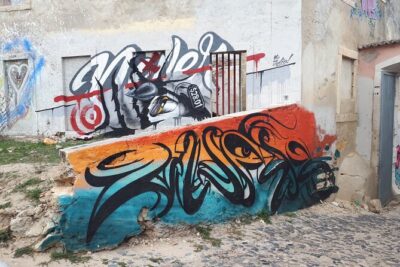
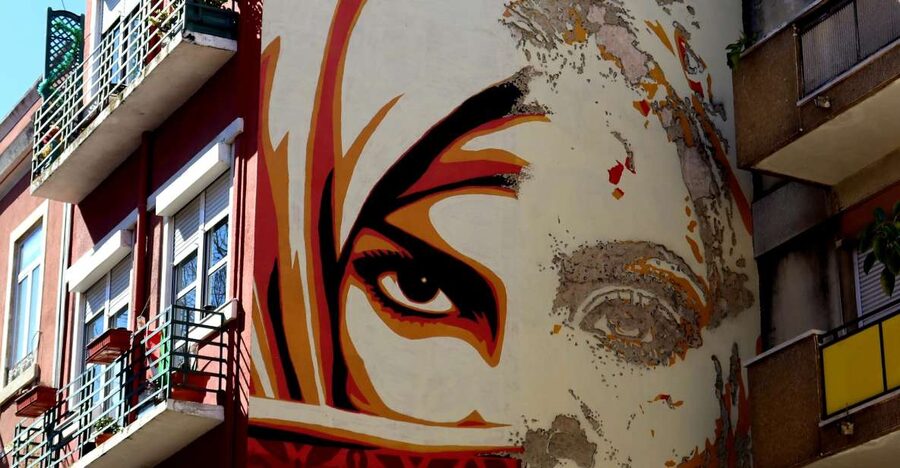
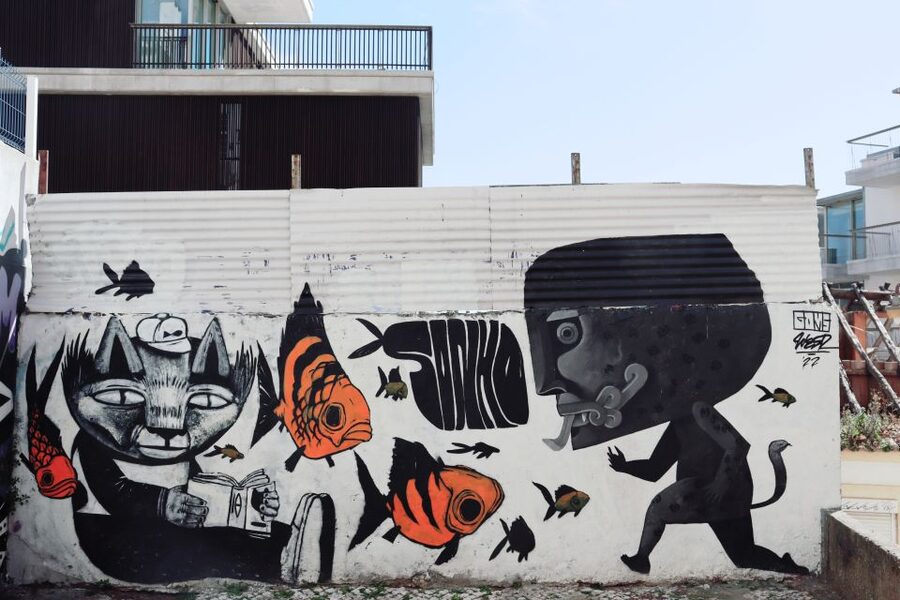
The guide points out works by local and international artists, including Vhils, Nomen, Odeith, and Gonçalo Mar. Each artist brings a different style and set of concerns, so the walk does not become a long sequence of similar murals.
Vhils is especially associated with carving or removing layers from a wall rather than simply adding paint. Seeing an artist’s work in the setting where it belongs helps you think about the material of the building and the age of the neighborhood. The point is not to memorize names. It is to understand why a work looks the way it does and how it relates to Lisbon.
This is also where a good guide can make a big difference. The best explanations connect the artwork to the life of the artist and to the city around you. You should expect interpretation, not just a list of names and dates.
Mouraria and the city beneath the postcard view
The route continues toward Mouraria, one of the districts that helps explain Lisbon beyond its most polished sightseeing areas. Here, the experience becomes more about daily life and cultural change.
The guide talks about Lisbon’s people, traditions, and the ways the city has developed. Street art gives you a useful entry point because it appears in places where local identity, public space, and outside attention meet. You may see a work that feels playful, political, personal, or deliberately provocative. The commentary helps you consider why it is there.
I appreciate that the route does not treat Mouraria as scenery. You are encouraged to pay attention to the streets themselves and to the relationship between art and neighborhood life. This makes the walk valuable for anyone who wants to see a side of Lisbon outside the main tourist route.
The practical downside is the pavement. One detailed account praised the guide for watching traffic, cracks in sidewalks, and protruding stone tiles. That is a useful warning. Lisbon’s old streets can be awkward underfoot, and you should wear shoes with good grip. Keep your attention on the ground while also looking up at the walls.
More street art walks in Lisbon:
- Lisbon: Street Art Tour
★ 4.9 · 1,324 reviews - Lisbon: Kickstart Street Art Walking Tour
★ 4.9 · 717 reviews - Lisbon: Street Art Tuk Tuk Tour
★ 4.9 · 372 reviews - Lisbon: 3-Hour Street Art Tuk Tuk Tour
★ 4.8 · 86 reviews
Alfama, São Jorge Castle, and Portas do Sol
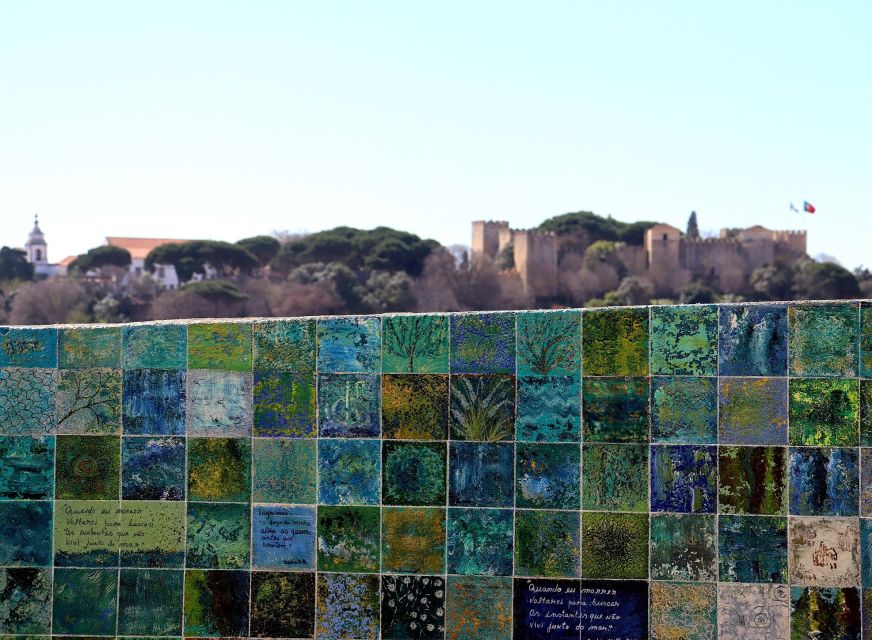
Alfama brings another shift in mood. Its winding lanes and steep passages make it one of Lisbon’s most distinctive districts, but the streets can also feel confusing if you explore alone. A local guide gives the area a clearer shape and explains how its cultural identity connects with the wider city.
The route includes views near Miradouro Portas do Sol, one of Lisbon’s best-known lookout points. From here, the city opens out again, with rooftops and broad views that contrast with the close quarters of the lanes.
São Jorge Castle is another important landmark along the way. The castle is not presented as a separate castle tour, and you should not expect an interior visit based on the information provided. Instead, you learn about its place in Lisbon and its connection to the city’s cultural heritage while seeing it from the route.
This pairing of art and historic sights is one of the strongest parts of the experience. A standard viewpoint tour can give you attractive photographs but little sense of the streets below. A street art walk can show you modern culture but miss the older city. This route puts both together.
What the guide adds to the artwork
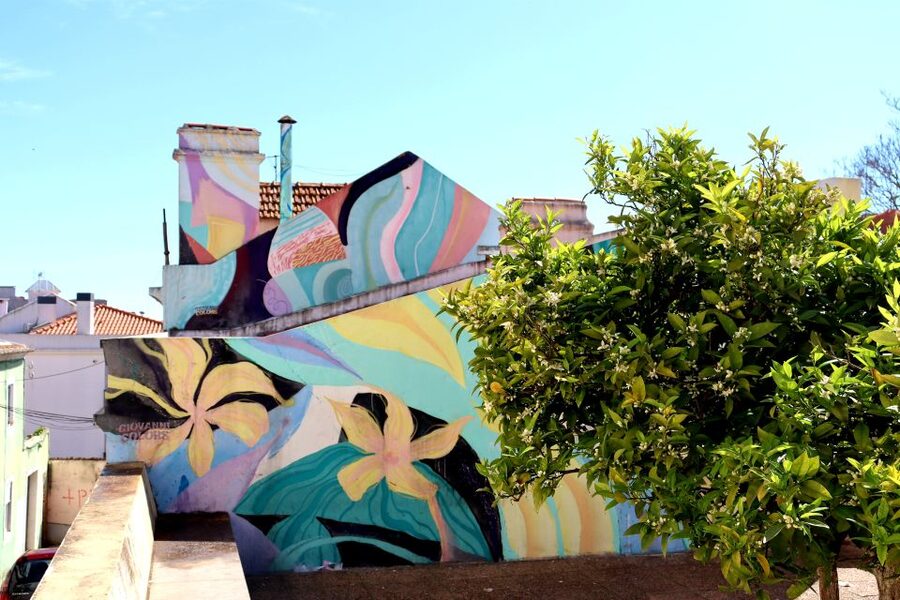
The guide is the reason to choose this tour instead of following a street art map on your own. You can find murals independently, but it is harder to know which artists matter, what a work refers to, or how Lisbon’s art scene fits into the city’s politics and culture.
The guide explains the lives and motives of the artists, not only the appearance of each piece. You may hear about local and international creators, artistic choices, and the permitted nature of the works included on the route. One recent description specifically noted that the pieces on the excursion were permitted by the city, an important distinction in a subject that often mixes public art and unauthorized painting.
The strongest guides also adjust their explanations to the group. Rui has been praised for being patient, friendly, and able to provide the right amount of information. That balance matters. A three-hour tour can become tiring if every wall receives a long lecture, but it can feel thin if the guide offers only quick labels.
You should expect a conversational walk rather than an academic class. If you are interested in politics, literature, or the reasons artists work in public spaces, ask questions. The small group makes that easier.
Pace, hills, and the three-hour format
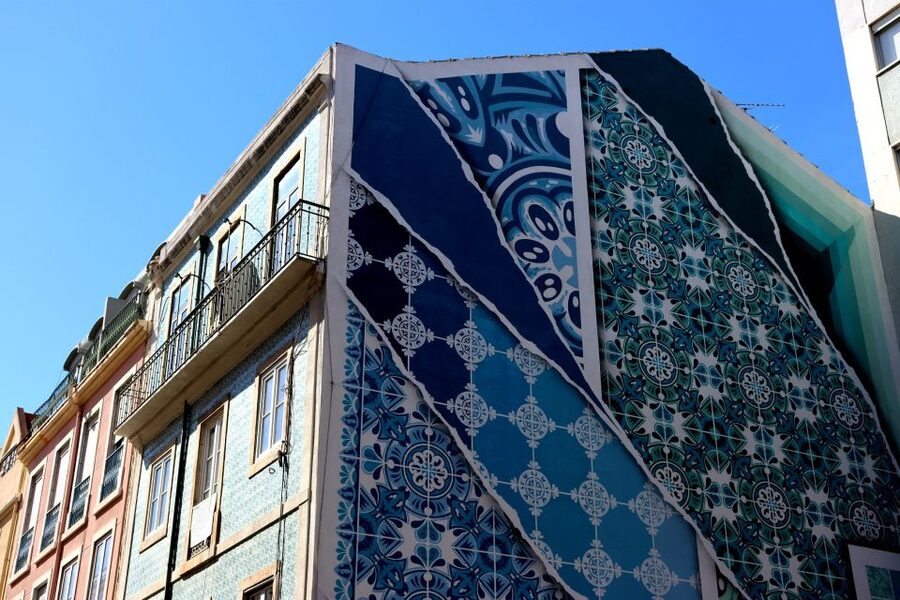
Three hours is a sensible length for this route. It gives you enough time to cover several districts without turning the experience into a full-day commitment. The walk also has a useful rhythm: viewpoint, streets, artwork, history, viewpoint, and more artwork.
Some of the route is downhill, according to one detailed account, but you should not read that as a promise of an easy walk. The starting point is high, Lisbon has uneven pavement, and the neighborhoods include slopes and steps. The experience is not suitable for people with mobility impairments.
Wear comfortable shoes and bring whatever you normally need for three hours outside. Meals and drinks are not included, so plan around the tour if you need a snack or a drink. Hotel pickup and drop-off are also not included.
The guide pays attention to safety, especially around traffic and damaged sidewalks, but that does not remove the need for care. Lisbon’s streets reward a slow pace. You will get more from the art if you are not rushing to keep up.
Is $35 a fair price?
At $35 per person, this is a reasonable price for a three-hour small-group walk in Lisbon. The fee covers the guide and local taxes and fees. It does not include food, drinks, transport, or hotel transfers.
The value comes from the combination of a limited group, several neighborhoods, city viewpoints, and specialist commentary. You are not paying only for access to a location. There is no entrance ticket listed for the castle or other attractions. You are paying for route planning and interpretation that would take time to assemble on your own.
The price makes the most sense if you care about understanding what you see. If you only want a few quick mural photographs, a self-guided walk may cost less. If you want the art connected to Lisbon’s past, present, and local culture, $35 is a fair outlay.
A rating of 4.9 from 42 reviews also suggests a strong record, though the guide you receive can vary. Rui receives especially warm attention in the feedback, while Andriy and Andre are also named as guides. The experience depends partly on who leads your group that day.
Who should book this walk?
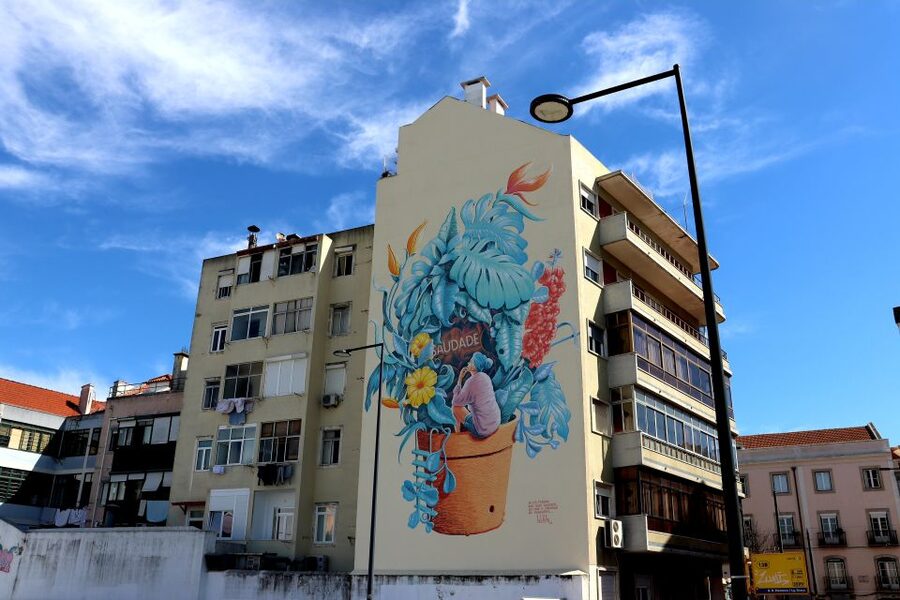
I would recommend it to first-time visitors who want a quick orientation to Lisbon’s hills and neighborhoods. It is also a good fit for returning visitors who have already seen the main monuments and want a more modern view of the city.
Art lovers will get the most obvious benefit, especially if you want to learn about Vhils, Nomen, Odeith, and Gonçalo Mar. But you do not need an art background. The guide connects the work to history, politics, literature, and ordinary city life, so the subject stays accessible.
The tour suits couples, friends, and solo visitors who enjoy conversation. A group limited to eight is small enough to feel personal without requiring a private-tour budget.
I would think twice if you have difficulty walking on uneven streets or managing hills. I would also avoid booking it if you want a relaxed seated activity. This is an active walking tour, and your attention will move between walls, traffic, pavement, rooftops, and the guide.
Booking details worth knowing
You can cancel up to 24 hours before the tour for a full refund. The reserve-now, pay-later option lets you hold a place without paying immediately, which is useful if your Lisbon plans are still shifting.
The tour is conducted in English with a live local guide. Check the starting time for your chosen date, and arrive at the church by Miradouro da Graça rather than expecting hotel collection.
Bring comfortable shoes above all else. The tour has a small group, but the streets remain public streets, with traffic, cracks, and raised stones. Good footwear will improve both your comfort and your ability to look up at the art.
Should you book this Lisbon street art tour?
Book it if you want more than a mural checklist. The strongest part of this experience is the link between modern public art and Lisbon’s older neighborhoods, with excellent viewpoints along the way. The guide gives you a way to understand the artists and the city at the same time.
Skip it if you need step-free access, dislike hills, or prefer an indoor art museum. For most able walkers, though, $35 buys a thoughtful introduction to Graça, Mouraria, and Alfama, along with views, local context, and a small group that can ask real questions.
FAQ
How long does the Lisbon street art walking tour last?
The tour lasts three hours.
What language is the tour conducted in?
The live tour guide speaks English.
Where does the tour meet?
Meet by the church at Miradouro Sophia de Mello Breyner Andresen, also known as Miradouro da Graça. The address is Calçada da Graça, 1100-265 Lisboa, Portugal.
What neighborhoods does the tour visit?
The route visits Graça, Mouraria, and Alfama.
Which artists might I see works by?
The tour includes works by artists such as Vhils, Nomen, Odeith, and Gonçalo Mar.
Does the tour include São Jorge Castle?
The route includes views and commentary about São Jorge Castle and Lisbon’s cultural heritage. An interior castle visit is not listed as part of the activity.
Is hotel pickup included?
No. Hotel pickup and drop-off are not included, so you need to reach the meeting point at Miradouro da Graça yourself.
Is food or drink included?
No. Meals and drinks are not included in the price.
Is the tour suitable for people with mobility impairments?
No. The tour is not suitable for people with mobility impairments. Comfortable walking shoes are recommended because the route includes hills and uneven streets.
More History Walks in Lisbon
- Lisbon: Live Fado Show with Port Wine in Historic Center
★ 4.7 · 4,166 reviews - Lisbon: Fado Show with Wine in a Historic Venue
★ 4.8 · 1,294 reviews - Explore Lisbon by Tuk Tuk: History and Viewpoints
★ 5.0 · 840 reviews - Lisbon: Daytime or Sunset Boat Cruise with History and Wine
★ 4.9 · 819 reviews
The newest listings around Lisbon
- The Real Lisbon Street Art Private Guided Tour by Minivan★ 4.8 · 49 reviews
- Lisbon: Historical Walking Tour with Jeronimos Monastery★ 4.5 · 71 reviews
- Lisbon: Port Wine Tasting at Taylor’s Shop and Tasting Room★ 4.6 · 490 reviews
- Lisbon: Tagus River Cruise With Brunch★ 3.2 · 73 reviews
- South Lisbon: 3-Hour Christ the King Electric Bike Tour★ 4.8 · 97 reviews
- Oeiras Coast: Stand Up Paddleboarding near Lisbon★ 4.9 · 56 reviews
- Small Group Walking Tour of Belém★ 4.9 · 80 reviews
- Lisbon: 3-Hour Secret Food Tour★ 4.7 · 53 reviews