Reviewed · STREET ART
Lisbon: Street Art Walk
Lisbon’s best street art is often tucked behind a corner, halfway up a hill, or painted on a wall you might otherwise walk past. This three-hour walk takes you through Graça, Mouraria, and historic Alfama, where artist-guide Igor, also known as Mr. Red, explains the people, methods, and rules behind the work.
I like the access to freshly painted pieces, including stops around Caracol da Graça and Rua Josefa de Obidos. I also like the way the tour connects art with Lisbon’s older neighborhoods, rather than treating murals as isolated photo stops. The main drawback is the route’s hills and uneven walking. Three hours can also feel long if your interest in street art is only casual.
Key points at a glance
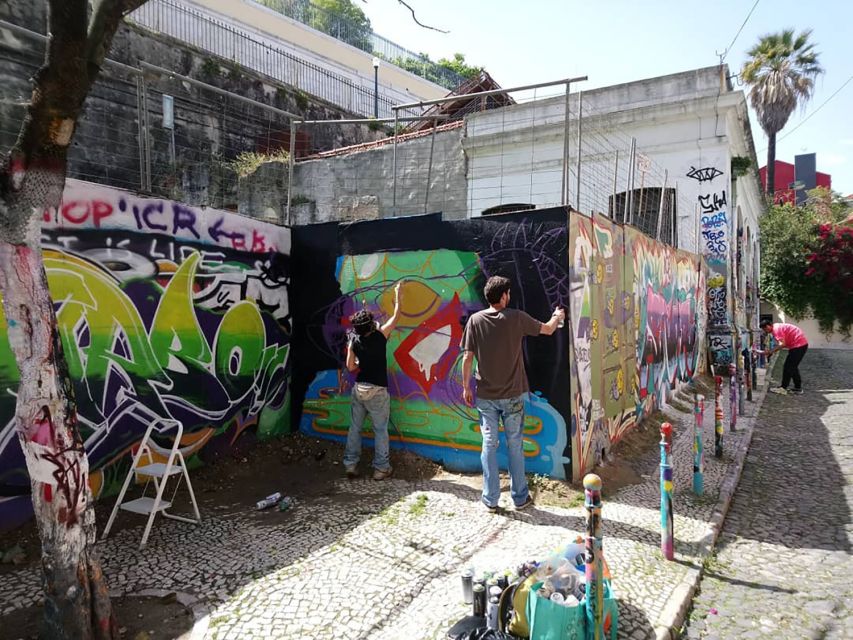
- Artist-led insight: Your English-speaking guide is listed as Mr. Red and has been identified as Igor by past participants.
- Graça and Alfama on foot: The walk covers old neighborhoods as well as art sites, giving you a useful first look at this part of Lisbon.
- Major names on the walls: Look for work by Obey Giant, Vhils, Bordalo II, Add Fuel, Mário Belem, Aka Corleone, Ozearv, and Daniel Eime.
- Art that can change: The route includes recent work and places where artists may be painting, so the exact view can shift.
- Small-group format: Private tours and groups of up to 10 are available.
- Practical warning: Lisbon’s steep streets are part of the experience, but this walk is not suited to people with mobility impairments.
Why Lisbon street art works best on foot
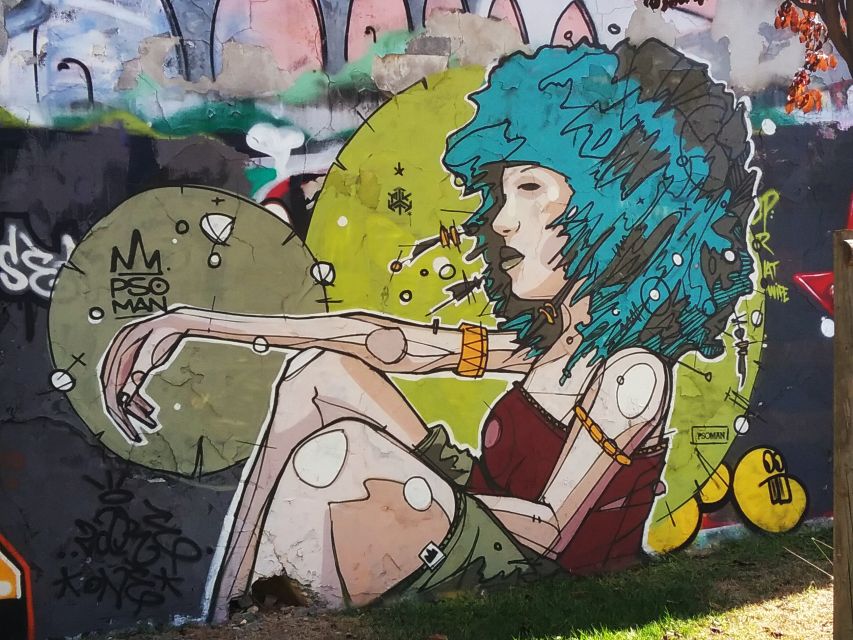
Lisbon is a city where art appears in ordinary places. A painted wall can sit beside an old residence, around a narrow bend, or on a steep street with washing hanging overhead. You get more from the scene when someone explains what you are looking at and why it is there.
That is the useful part of this walk. You are not simply driven between large murals. You move through Graça, Mouraria, and the Alfama area, keeping your eyes up and down for work on walls, shutters, stairways, and other surfaces. The tour gives you a sense of how street art fits into daily Lisbon, not just how it looks in a photograph.
The route also helps separate different forms of public art. Past participants found the explanation of the difference between street art and tagging especially useful. That distinction matters here. Some pieces are planned, highly detailed works by recognized artists. Others may be informal marks, temporary work, or paint added over an older image.
More Walking Tours in Lisbon
- Lisbon: History, Stories and Lifestyle Walking Tour
★ 4.8 · 10,902 reviews - Best of Lisbon Small-Group Guided Walking Tour
★ 5.0 · 4,869 reviews - Lisbon: Food and Wine Small Group Walking Tour
★ 4.9 · 4,082 reviews
Meeting Mr. Red, also known as Igor
The guide is described as a local artist called Mr. Red. Several bookings identify the guide as Igor, and one older account spells the name as Igore. One review also refers to Iwan, so the name shown at booking may vary, but Igor is the name most consistently associated with this experience.
That personal connection to Lisbon’s art scene is a major reason to book. An artist can explain more than the subject of a mural. You can ask about technique, the working relationship between artists, the risks of painting in public, and what happens when another artist tags or paints over an existing piece.
Igor’s approach, based on the supplied details, is lively and story-focused. He explains the artists, the meaning of the images, and the informal rules and no-go areas of street art. He also places the work in the setting around it, which helps you see Lisbon’s older streets as part of the story.
You may receive extra recommendations after the walk, including films, social media accounts, or artists to follow. That is useful if the tour sparks a lasting interest, though it is not a formal part of the advertised inclusions.
Starting at Largo da Graça
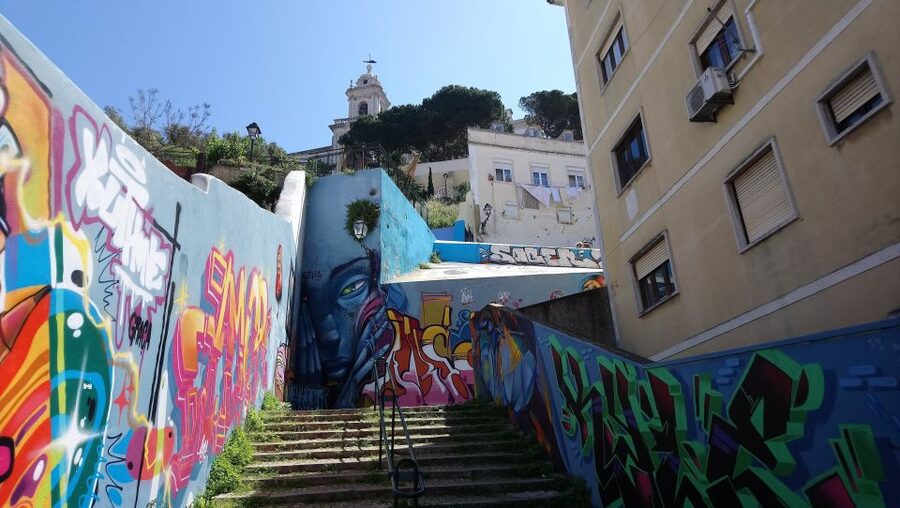
Meet your guide in front of the Coreto da Graça at Largo da Graça, outside Desgraça Restaurant. Arrive 10 minutes early. This is a public meeting point in the Graça neighborhood, so allow time to find the square before the start.
Graça is a sensible place to begin. It is one of Lisbon’s old hillside neighborhoods, and the walk immediately places you in the kind of setting where street art feels connected to local life. You are not starting at a conventional museum or gallery. You begin among streets, buildings, and everyday movement.
The first part of the walk is also where the physical demands become clear. Lisbon is famously up and down, and this tour makes no attempt to avoid that fact. Wear comfortable shoes, bring sunscreen and sunglasses, and choose clothes that let you walk freely. Leave luggage and large bags behind, since they are not allowed.
Graça: major artists and changing walls
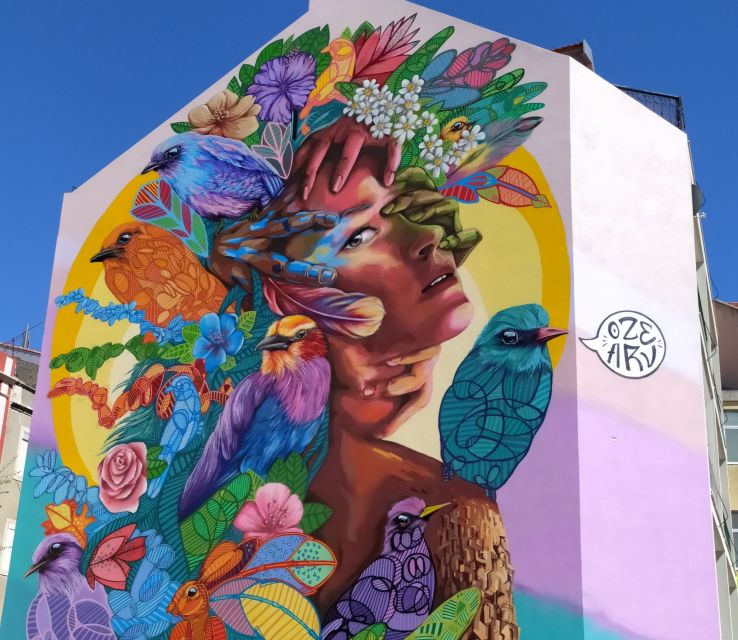
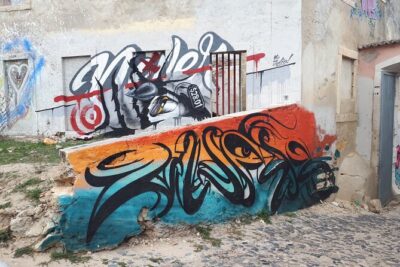
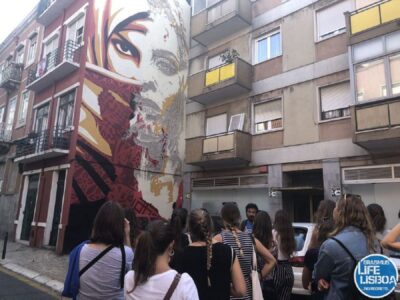
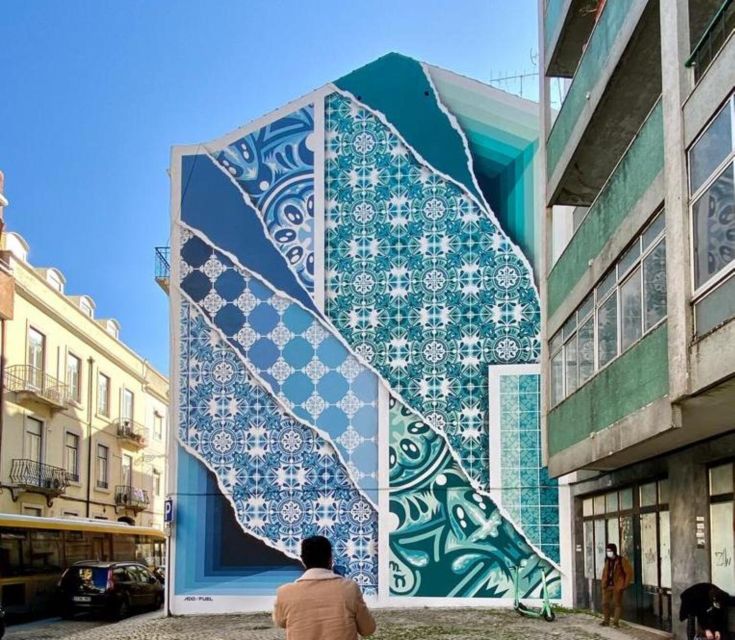
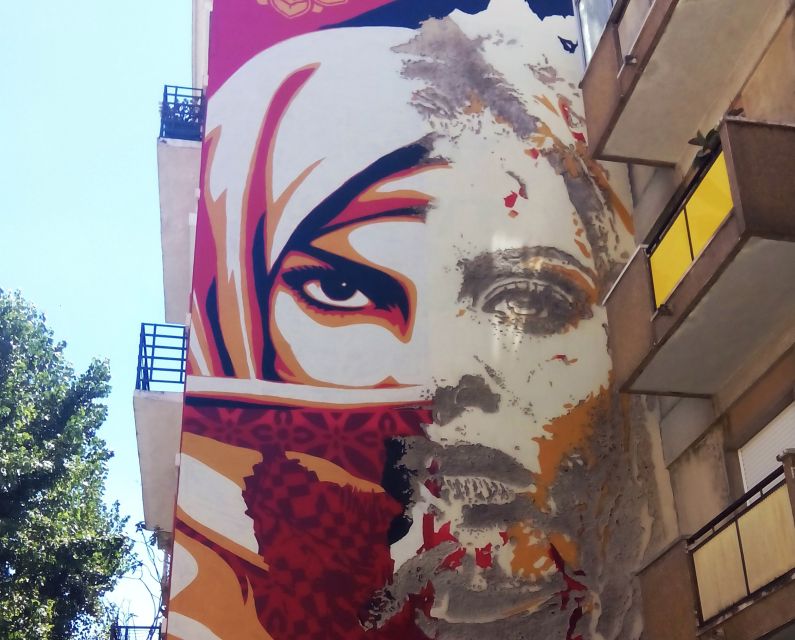
In Graça, you can expect to see work associated with names such as Obey Giant, Vhils, Bordalo II, Ozearv, and Daniel Eime. The precise order and condition of the pieces can change. Street art is temporary by nature, and fresh paint, construction, weather, or new work can alter the scene.
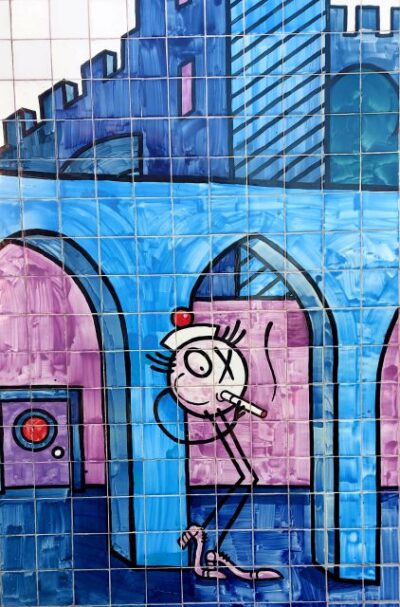
Obey Giant and Vhils give the route some major reference points. Their names help show the range of Lisbon’s public art, from large graphic images to work with a more carved or layered appearance. Bordalo II adds another important angle, with art that draws attention to waste and materials. Add Fuel, Mário Belem, Aka Corleone, and Ozearv widen the picture further.
The value is not simply ticking off famous names. Your guide can help you compare the choices each artist makes. Look at scale, line, color, surface, and the way a work uses the shape of a wall. Ask what has changed since a piece was painted, and you will get a better sense of how temporary public art can be.
Keep your eyes open at street level as well as above it. The advice to look up and down is practical, not decorative. Lisbon’s hills give you changing views of walls, steps, facades, and corners, and a small piece can be just as interesting as a large mural.
More street art walks in Lisbon:
- Lisbon: Street Art Tour
★ 4.9 · 1,324 reviews - Lisbon: Kickstart Street Art Walking Tour
★ 4.9 · 717 reviews - Lisbon: Street Art Tuk Tuk Tour
★ 4.9 · 372 reviews - Lisbon: 3-Hour Street Art Tuk Tuk Tour
★ 4.8 · 86 reviews
Caracol da Graça and Rua Josefa de Obidos

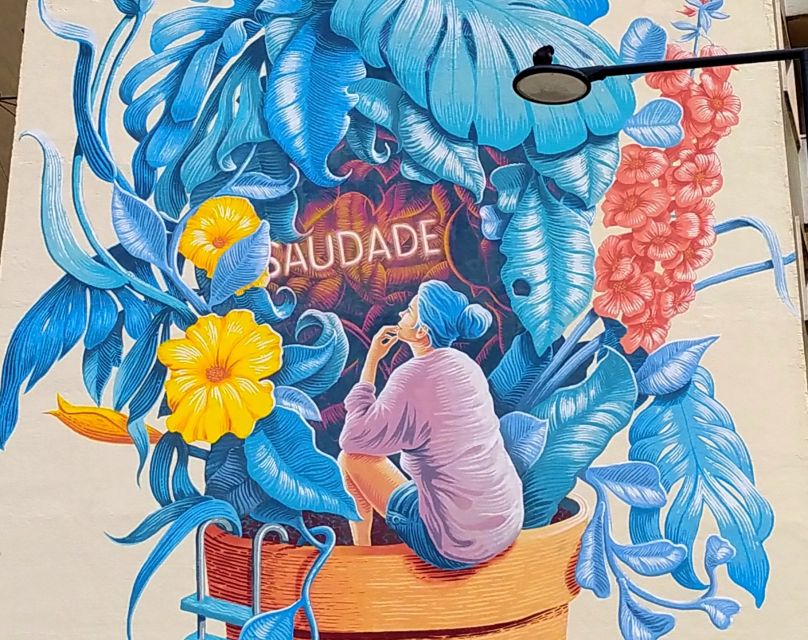
The route includes freshly painted areas such as Caracol da Graça and Rua Josefa de Obidos. These are among the most appealing stops for anyone who wants to see Lisbon’s art scene as it is now, rather than only visiting established works.
Caracol da Graça is especially promising because you might see artists working there, if timing allows. That possibility is not guaranteed, and it should not be treated as a scheduled live-painting demonstration. Still, it adds a sense of immediacy. You could see a wall before the paint has faded, been altered, or disappeared.
The tour also includes a street art gallery connected with International Women’s Day 2025. This gives the walk a social and public dimension. Instead of looking only for famous artist signatures, you get to see how a particular theme can shape a group of works.
Fresh art comes with a trade-off. The route may include pieces that are less familiar or harder to interpret than a famous mural. That is where the guide matters most. If you prefer a fixed list of permanent sights, this experience may feel unpredictable. If you enjoy discovering what is current, that uncertainty is part of the appeal.
Mouraria and the older city around Alfama
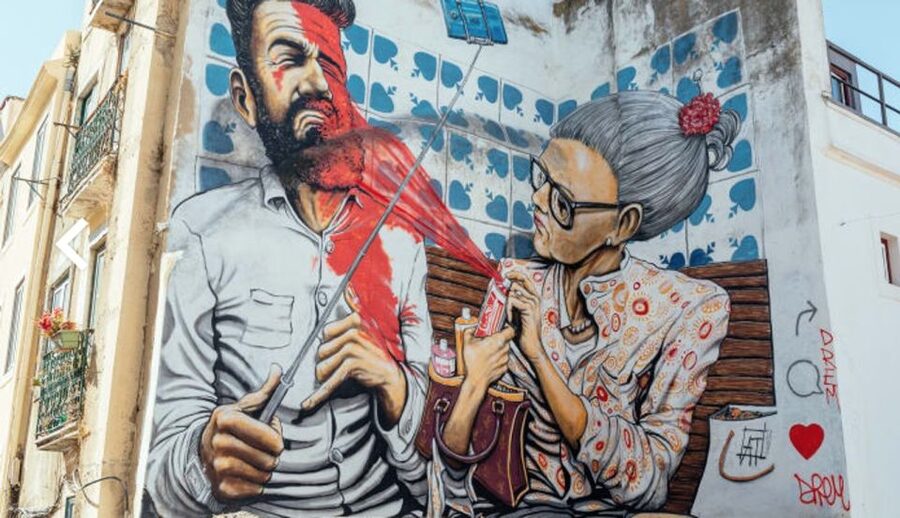
The walk also takes in Mouraria and provides an overview of the historical Alfama district. These neighborhoods are important because the surroundings give the artwork its setting. Narrow streets, steep lanes, older buildings, and small public spaces create a different backdrop from a purpose-built gallery.
You will not be entering monuments or art museums as part of the activity. Entrance fees are not included, and the focus remains on public work seen from the street. That keeps the experience simple and relatively low-cost, while still giving you a broader look at the old city.
The Alfama overview is useful even if you have already visited some of Lisbon’s major sights. A street art walk changes your attention. Instead of moving directly from one landmark to the next, you begin noticing blank walls, painted doors, small interventions, and works partly hidden by the shape of the neighborhood.
Do not expect a gentle stroll through level streets. The route is built around Lisbon’s hills. People who walk regularly and can manage slopes should be fine with the format, but the tour is specifically not recommended for people with mobility impairments.
What three hours feels like
Three hours gives the guide room to explain the work instead of rushing through a checklist. Past participants particularly valued the stories behind the artists, the techniques, and the meaning of the images. That extra context is what turns a mural stop into a real lesson in the city’s art culture.
Still, the length will not suit everyone. One participant felt that two hours would have been enough. I think that is fair for someone with only a passing interest in street art, especially if the weather is hot or the hills are tiring.
For someone who wants to understand Lisbon’s art scene, three hours makes more sense. You can see several neighborhoods, compare different artists, stop at recent work, and hear how the local scene operates. The walk is not just a short photo outing.
The group limit also matters. Private or small-group bookings are available, with groups of up to 10 people. A smaller group makes it easier to ask questions and keep close to the guide on narrow streets. It also lets the walk feel more personal than a large city tour.
The $40 price and what it buys you
At $40 per person, this is not the cheapest way to look at Lisbon’s walls. You can see public art for free on your own. The question is what you are paying for.
The answer is access to a local artist’s explanation, a planned route through several neighborhoods, and time spent finding pieces you might miss alone. You also receive a small street art souvenir. There are no monument or gallery admission charges built into the price, because those visits are not part of the walk.
I consider the price reasonable for someone who already enjoys art, photography, design, or local creative culture. The value is strongest when you ask questions and take advantage of the guide’s knowledge of artists and techniques. If you only want a quick collection of mural photographs, you may find the cost harder to justify.
The private format can also affect value. For a couple, family, or small group that wants a focused walk, the ability to book privately may be worthwhile. If you are happy with a shared group, the small-group option keeps the experience more social while retaining the guide’s personal attention.
How to prepare for the hills
Wear shoes with good grip and support. Comfortable clothes, sunglasses, and sunscreen are specifically recommended. Bring water as part of sensible preparation, though it is not listed as an included item.
Avoid arriving with a suitcase, large backpack, or other bulky bag. Large bags are not allowed, and narrow streets and stairs are easier to handle with light belongings.
The tour is in English. It is not recommended for people with mobility impairments because of the repeated climbs and uneven city streets. If steep walking is difficult for you, this is the key reason to skip it.
Weather will also affect how pleasant the route feels. Much of the experience takes place outdoors, so sun protection matters. A hot day can make three hours feel longer, especially on uphill sections.
The art changes, and that is part of the deal
A street art route is never as fixed as a museum visit. A wall may be painted over, a new piece may appear, or a work may look different from the photographs used to describe it. The inclusion of recent sites makes this especially clear.
That can frustrate anyone hoping to see every named artist in perfect condition. The advertised names include Obey Giant, Vhils, Add Fuel, Mário Belem, Aka Corleone, Ozearv, Bordalo II, and Daniel Eime, but the route should be understood as a living selection rather than a guaranteed permanent exhibition.
I see that as a strength if you enjoy the present moment. The walk may show you art that has not yet become a standard stop on city tours. It also gives you a better understanding of how public art changes, disappears, and makes room for something new.
Who should book this walk
I would choose this for someone who has already seen Lisbon’s main viewpoints and wants a different way to read the city. It also suits photographers, design fans, art students, and anyone curious about the line between commissioned street art, independent work, and graffiti.
Families with older children may enjoy it if everyone can manage the hills and stay interested for three hours. The guide’s stories should help keep the walk active, but this is not a sightseeing ride with long breaks.
I would think twice if you want a relaxed, level walk, a museum-style presentation, or a short activity between major attractions. The hills are real, the art can be temporary, and the route may take longer than two hours for someone with limited interest.
Free cancellation up to 24 hours before the activity gives you some flexibility, and you can reserve now and pay later. Hotel pickup and drop-off are not included, so plan your own way to Largo da Graça.
Should you book the Lisbon Street Art Walk?
Book it if you want more than a list of murals. The strongest feature is the guide’s connection to the art scene, especially the chance to hear about technique, local customs, artists, and the stories behind the work. The walk also gives you a useful introduction to Graça, Mouraria, and Alfama.
Skip it if steep streets are a serious problem or if you want a quick two-hour outing. For the right person, $40 buys a personal look at Lisbon’s changing walls, with a local artist helping you notice what you would probably miss alone.
FAQ
Where does the Lisbon Street Art Walk meet?
Meet your guide in front of the Coreto da Graça at Largo da Graça, in front of Desgraça Restaurant in the Graça neighborhood.
How long does the tour last?
The walk lasts three hours.
What language is the tour in?
The live tour guide speaks English.
How many people can join?
Private tours and small-group options are available. Groups can include up to 10 people.
Who guides the experience?
The guide is presented as a local artist called Mr. Red. Past booking details identify the guide mainly as Igor, with one reference to Iwan.
Which Lisbon neighborhoods does the tour visit?
The walk covers Graça, Mouraria, and the historical Alfama area, along with other nearby street art locations.
Which artists might I see?
The route may include work by Obey Giant, Vhils, Bordalo II, Add Fuel, Mário Belem, Aka Corleone, Ozearv, and Daniel Eime.
Is the tour suitable for people with mobility impairments?
No. The walk includes Lisbon’s steep streets and is not recommended for people with mobility impairments.
What should I bring?
Wear comfortable shoes and clothes, and bring sunglasses and sunscreen. Do not bring luggage or large bags.
The newest listings around Lisbon
- The Real Lisbon Street Art Private Guided Tour by Minivan★ 4.8 · 49 reviews
- Lisbon: Historical Walking Tour with Jeronimos Monastery★ 4.5 · 71 reviews
- Lisbon: Port Wine Tasting at Taylor’s Shop and Tasting Room★ 4.6 · 490 reviews
- Lisbon: Tagus River Cruise With Brunch★ 3.2 · 73 reviews
- South Lisbon: 3-Hour Christ the King Electric Bike Tour★ 4.8 · 97 reviews
- Oeiras Coast: Stand Up Paddleboarding near Lisbon★ 4.9 · 56 reviews
- Small Group Walking Tour of Belém★ 4.9 · 80 reviews
- Lisbon: 3-Hour Secret Food Tour★ 4.7 · 53 reviews