Reviewed · STREET ART
Lisbon 3-Hour Street Art Tour
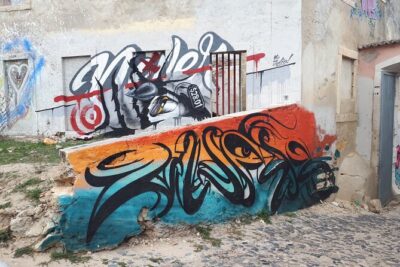
Lisbon’s street art is not tucked into one tidy gallery. It spreads across old walls, stairways, side streets, and changing neighborhoods. This three-hour walk through Mouraria and Graça shows you work you could easily miss on your own, from quick stencils and posters to large murals with social or political messages. I like the way the tour connects the art to the streets around it, and I like that it ends at a mural by Portuguese star Vhils.
The guide adds the missing piece: who made each work, what technique was used, and why the image matters. Guides such as Véro, Diogo, Diana, Ninetta, and others have brought strong local knowledge and an easy personal touch, sometimes with Diogo’s dog Billy along for the walk. The main drawback is simple: this is a brisk walk over hills and stairs, and three hours in Lisbon’s heat can be tiring.
Key points to know before booking

- Mouraria and Graça are the heart of the route: Expect old neighborhoods, steep paths, stairs, viewpoints, and art tied to local renewal.
- The tour covers many styles: You may see tags, posters, stencils, large murals, and work by both Portuguese and international artists.
- The stories matter as much as the pictures: Your guide explains artists, methods, social themes, political ideas, and Portuguese figures remembered in the art.
- The finish is a Vhils mural: The route ends with work by one of Portugal’s best-known contemporary street artists.
- The pace is active: Wear good walking shoes, bring water, and avoid luggage, large bags, folding restrictions, and bulky strollers.
- The value is strong at $33: You are paying for three hours of guiding, local context, and access to art that is hard to find by wandering without a plan.
Why Lisbon street art works best with a guide
Lisbon rewards aimless walking, but its street art can be easy to overlook. A small stencil beside a doorway, a pasted poster half-covered by another image, or a mural high on a wall may mean little without context. A guide gives you a reason to stop and look.
This is not just a photo walk. The tour explains the artists and their techniques, then places the work in the setting of Lisbon’s older neighborhoods. That matters in Mouraria and Graça, where art is tied to renovation projects, neighborhood identity, public space, and the city’s changing character.
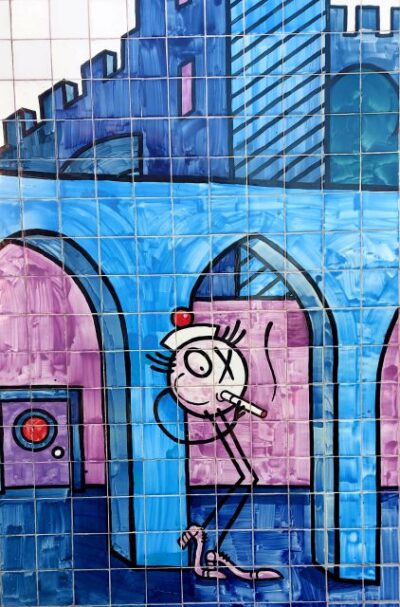
I especially like the mix of art forms. You are not shown only polished murals made for easy photographs. You can see tags, posters, stencils, and larger works by artists from Portugal and abroad. The rougher pieces help you understand street art as a living practice rather than a collection of permanent monuments.
The guide also brings balance. Some pieces carry a social or political message. Others honor important Portuguese personalities. Instead of treating every wall as decoration, the tour asks you to notice what the artist is saying and how the work fits the area around it.
More street art walks in Lisbon:
- Lisbon: Street Art Tour
★ 4.9 · 1,324 reviews - Lisbon: Kickstart Street Art Walking Tour
★ 4.9 · 717 reviews - Lisbon: Street Art Tuk Tuk Tour
★ 4.9 · 372 reviews
Martim Moniz: finding the meeting point
The tour begins in Martim Moniz Square, near the green metro line and opposite Hotel Mundial. The precise meeting point is the monument with soldier heads, bullets, and helmets, surrounded by water. Look for the team holding a board marked Lisbon Street Art Tour.
This detail is worth taking seriously. One participant had trouble finding the exact spot because the meeting information did not make the square clear enough. Give yourself extra time, especially if you are arriving by metro or walking through the square for the first time.
Martim Moniz is a useful starting point because it places you near the older central neighborhoods. Once the group gathers, you move into the walking route rather than spending time on transport. The tour is conducted in English, and the named guide may vary. Véro is identified as the guide for this experience, while past departures have also been led by Diogo, Diana, Ninetta, Margarida, and others.
Group size can vary, but one small group was reported at seven people. A group of that size makes it easier to hear explanations and ask questions. It also allows the guide to pause at a wall without blocking a busy pavement.
Mouraria and Graça: art in changing neighborhoods

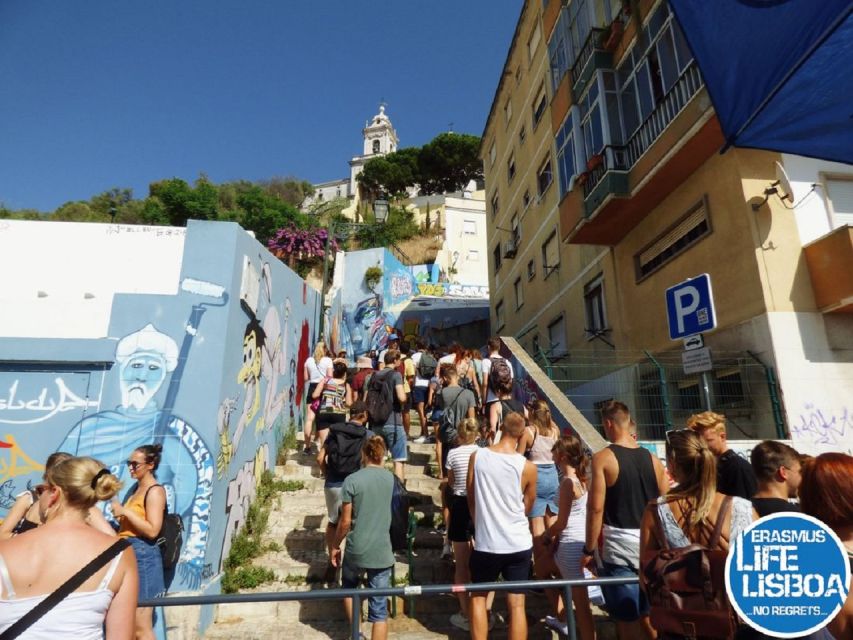
The route heads toward Mouraria and Graça, two areas where steep streets and older buildings create a natural setting for public art. You should expect plenty of uphill walking, narrow paths, and stairs. This is part of the experience, but it also explains why the tour is not suitable for people with mobility impairments.
In Mouraria, the art helps you read the neighborhood in a different way. Murals and public projects can support the renewal of older areas, but they can also raise questions about who the neighborhood is changing for. The guide’s explanations help you see those tensions instead of treating the murals as isolated attractions.
Graça adds higher streets and views over Lisbon. One of the tour’s nice bonuses is the chance to see the city from above while moving between artworks. The views are not the main purpose of the walk, but they give your legs a worthwhile reward after a climb.
You will see a range of work rather than one fixed artistic style. Tags can be quick and personal. Posters may comment on public life or popular culture. Stencils allow an image to be repeated with speed. Large murals take more space and often carry a clearer public message. Your guide explains these differences as you go, helping you notice the decisions behind the work.
The stories behind the walls

The best part of a street art tour is not simply being told the artist’s name. It is learning why the work is there, what method was used, and how the piece relates to Lisbon.
The guides on this route have been praised for building a narrative as they walk. That means the art is linked to the neighborhood, the city’s past, and current cultural life. Guides have also offered suggestions for restaurants and other places to visit, which can be useful if you schedule the tour early in your Lisbon stay.
You may hear about both national and international artists. The local focus is important because Lisbon’s street art scene is not just an imported style. Portuguese artists have left their mark across the city, and the route gives you a way to understand their place in the wider scene.
Some pieces memorialize notable Portuguese personalities. Others make a social or political point. This variety keeps the walk from becoming repetitive. You might spend one stop discussing technique, then shift to public memory or the effect of a mural on a neighborhood.
The guide’s personality also matters. Diana was praised for making the walk sociable and helping people in the group get to know one another. Ninetta was noted for staying cheerful and giving full explanations even when rain arrived. Diogo has been described as friendly, careful, and well informed, with his dog Billy sometimes joining the outing. These details suggest a tour that depends strongly on the individual guide, but the repeated praise for warmth and enthusiasm is encouraging.
A few more Lisbon options worth putting side by side
- Lisbon: 3-Hour Tour by E-Bike
★ 4.8 · 1,150 reviews - 3-Hour Lisbon 7 Hills Electric Bike Tour
★ 5.0 · 818 reviews - Lisbon: 3-Hour The Slave Trade – An Historical Walking Tour
★ 4.9 · 179 reviews - Lisbon: 3-Hour Segway Sailor Tour to Belém
★ 4.9 · 140 reviews
Ending with Vhils

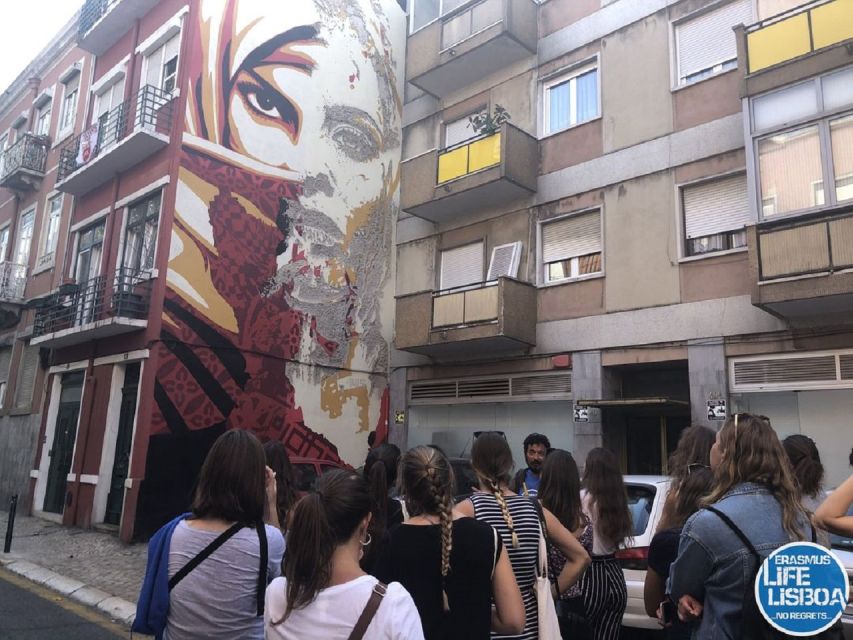
The tour ends at a mural by Vhils, the Portuguese artist known internationally for his carved and layered portraits. The supplied details do not promise a particular Vhils image, so you should not book this expecting one exact mural or a guaranteed photo angle.
Still, ending with Vhils gives the walk a clear final point. After seeing small tags, pasted posters, stencils, and neighborhood murals, you finish with work by a major national name. It is a useful way to connect Lisbon’s street-level art to the wider contemporary art world.
The ending point is not the starting point, so plan for that. One useful piece of practical feedback is that the walk does not return to Martim Moniz Square. Ask your guide where you finish if you need to catch a timed booking afterward.
Pace, weather, and what to wear

Three hours on foot is a real commitment in Lisbon. The pace has been described as fairly quick, which helps the group cover a good number of works but may feel demanding if you prefer slow sightseeing.
Wear comfortable shoes with solid grip. Lisbon’s slopes and paving can be hard on thin soles, and the route includes stairs and hilly paths. Bring water, especially in summer. One person found the final part tough after three hours in the heat, so do not treat this as a casual stroll.
Rain does not automatically stop the tour. A guide has kept the group moving and engaged during heavy rain, but weather will affect how comfortable you are and how easy it is to photograph the art. A light rain jacket is sensible, though it is not listed as a required item.
Leave luggage and large bags behind. Non-folding wheelchairs and non-folding strollers are not allowed, and prams should be avoided because of the hills and stairs. The tour is not suitable for people with mobility impairments.
Is $33 a fair price?

At $33 per person, this is a good value if you want more than a list of walls to photograph. The price includes a local expert guide, the walking tour, local art, and historical references. There is no food or drink included, so budget for water and a snack before or after.
You are paying for three hours of route planning and interpretation. Without a guide, you might see some of the same work, but you could easily miss smaller pieces or move through the neighborhoods without understanding what you are looking at. The value is strongest for first-time visitors, people interested in public art, and anyone who likes city walks with cultural context.
The price is less attractive if you dislike long walks or already know Lisbon’s street art scene well. It is also not the right choice if you need a fully accessible route or want a relaxed tour with frequent café stops.
Who should book this walk?

I would recommend it to art lovers, photographers, curious first-time visitors, and anyone who wants to explore Lisbon beyond its grand viewpoints and tiled façades. It is also a smart early-trip activity because the guides may point you toward restaurants and other places worth visiting.
You do not need specialist art knowledge. The explanations cover artists, techniques, local history, and public messages in a way that suits a general audience. The range of styles means you can enjoy the walk even if large murals are not your usual interest.
Families with young children should think carefully about the hills, stairs, pace, and stroller restrictions. The tour may work for older children who can manage three hours of walking, but the practical demands are clear.
The strongest match is someone who wants to walk actively, stop often, and understand why Lisbon’s walls look the way they do. If you want a short, flat, museum-style introduction to street art, choose something else.
Booking and cancellation details

You can reserve now and pay later, which keeps your plans flexible. Free cancellation is available up to 24 hours before the activity for a full refund.
The tour lasts three hours, but starting times depend on availability. Check the schedule before booking and leave space afterward, since the walk finishes away from the Martim Moniz meeting point.
Should you book the Lisbon Street Art Tour?
Book it if you want a guided look at Lisbon’s living art scene, not just a sightseeing loop. The route through Mouraria and Graça gives you murals, tags, stencils, posters, city views, and stories about the people and ideas behind them. The final Vhils mural gives the walk a satisfying finish.
Skip it if hills, stairs, heat, or a brisk pace will spoil your day. For everyone else, $33 buys a well-focused introduction to a side of Lisbon that is easy to miss and much more interesting once someone points out what you are seeing.
FAQ
Where does the Lisbon Street Art Tour meet?
It meets in Martim Moniz Square, by the monument with soldier heads, bullets, and helmets surrounded by water, opposite Hotel Mundial. Look for the team holding a board marked Lisbon Street Art Tour.
How long does the tour last?
The walking tour lasts three hours.
What language is the tour in?
The tour is conducted in English with a live guide.
Which Lisbon neighborhoods does the tour visit?
The route heads through Mouraria and Graça, with many hills and stairs along the way.
Where does the tour finish?
The tour ends at a mural by the Portuguese artist Vhils. It does not return to the Martim Moniz meeting point.
What types of art will I see?
You may see tags, posters, stencils, murals, and projects by Portuguese and international artists. The guide also discusses the artists, techniques, social or political messages, and Portuguese personalities represented in the work.
What should I bring?
Bring comfortable shoes and water.
Can I bring luggage or a stroller?
Luggage and large bags are not allowed. Non-folding wheelchairs and non-folding strollers are also not allowed, and prams should be avoided because of the hills and stairs.
Can I cancel or pay later?
You can reserve now and pay later. You can also cancel up to 24 hours before the tour for a full refund.
The newest listings around Lisbon
- The Real Lisbon Street Art Private Guided Tour by Minivan★ 4.8 · 49 reviews
- Lisbon: Historical Walking Tour with Jeronimos Monastery★ 4.5 · 71 reviews
- Lisbon: Port Wine Tasting at Taylor’s Shop and Tasting Room★ 4.6 · 490 reviews
- Lisbon: Tagus River Cruise With Brunch★ 3.2 · 73 reviews
- South Lisbon: 3-Hour Christ the King Electric Bike Tour★ 4.8 · 97 reviews
- Oeiras Coast: Stand Up Paddleboarding near Lisbon★ 4.9 · 56 reviews
- Small Group Walking Tour of Belém★ 4.9 · 80 reviews
- Lisbon: 3-Hour Secret Food Tour★ 4.7 · 53 reviews