Reviewed · STREET ART
Lisbon: Street Art Tour
Lisbon’s street art is not just colorful paint on old walls. It is a running conversation about Portugal’s past, local neighborhoods, politics, identity, and the artists who shape the city today. This three-hour walking tour follows that conversation from Bairro Alto to Graça, with a street artist or art specialist explaining what you might otherwise walk past.
I like two things here. First, the route links several very different parts of Lisbon, so you get a useful introduction to the city while looking at art. Second, guides such as Erica, Maria, Erika, and Laith are praised for explaining technique, artist intent, and social context rather than simply pointing at murals. The main drawback is clear: this is a hilly walk over uneven ground, and three hours can feel demanding in warm weather or rain.
Key points to know before booking
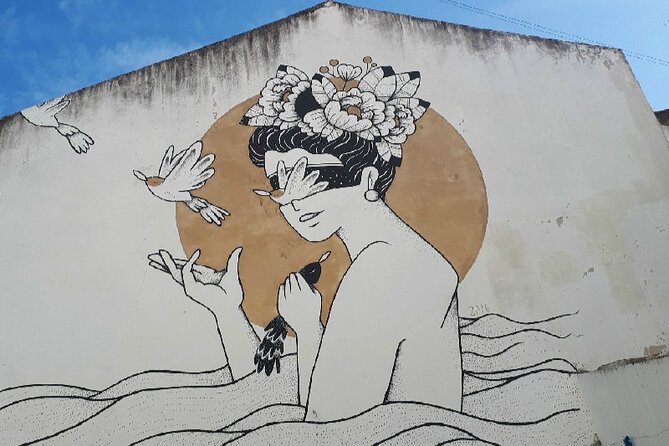
- Art with a local story: Murals and smaller pieces are explained through Lisbon’s social, political, and cultural life.
- Five central neighborhoods: The route passes through Bairro Alto, Chiado, Baixa, Mouraria, and Graça.
- Guides who bring art to life: Erica, Maria, Erika, and Laith have all led tours praised for clear explanations and strong storytelling.
- Small-group atmosphere: The experience is designed to stay away from large crowds, with time for questions and discussion.
- A proper city walk: You need comfortable shoes and the ability to manage hills, cobbles, and uneven pavement.
- Good value at $40: The fee covers three hours with a live English-speaking guide, not just a quick mural checklist.
Why Lisbon street art works best on foot

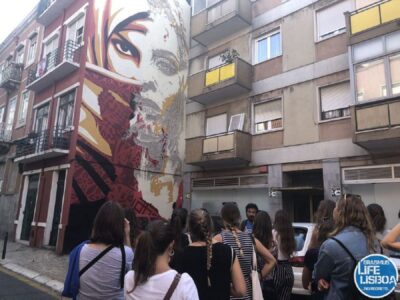
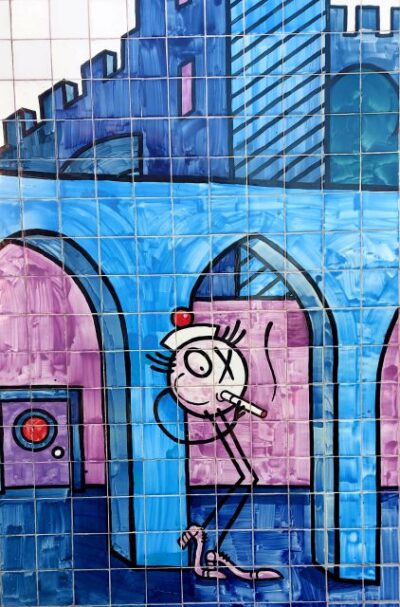
Lisbon rewards slow looking. Tile facades, steep lanes, old signs, balconies, and painted walls compete for your attention, so it is easy to miss small works tucked beside a doorway or high above eye level. A good guide changes the way you move through town. You begin looking up, checking corners, and noticing how a work fits its street.
This tour treats street art as part of Lisbon’s culture, not as a separate attraction. You can expect discussion of how artists use public walls, how styles differ, and how art connects with the communities around it. The subject is broad enough for first-time art watchers, yet detailed enough for people who already seek out murals in other cities.
I especially like that the route includes both major walls and tiny, easy-to-miss pieces. Large murals are naturally impressive, but the smaller works often reveal more about the feel of a neighborhood. One guide may discuss a technique or an artist’s working method, then point out another nearby detail you would have walked past without help.
The experience also gives you a different way to understand Lisbon. You are not only seeing pictures. You are learning how the city’s older streets and present-day creative voices sit side by side.
More street art walks in Lisbon:
- Lisbon: Kickstart Street Art Walking Tour
★ 4.9 · 717 reviews - Lisbon: Street Art Tuk Tuk Tour
★ 4.9 · 372 reviews - Lisbon: 3-Hour Street Art Tuk Tuk Tour
★ 4.8 · 86 reviews
Starting at Rua Luz Soriano 67
The meeting point is in front of the Interpress building at Rua Luz Soriano 67. This puts you in the Bairro Alto area, a practical place to begin because the opening section introduces both the city and the basic language of street art.
You should arrive ready to walk rather than expecting a short set of stops. The guide will lead you through public streets, so the pace includes pauses for explanation, questions, and photographs. Since the tour is in English, you can ask about an artist, a symbol, or a technique as you go.
The guide roster can vary. Erica is repeatedly praised for clear storytelling, warmth, and her grasp of both art and Lisbon. Maria is also described as a friendly guide who connects the artwork with neighborhood history. Other sessions have been led by Erika and Laith, both noted for explaining artistic styles and the wider culture around public art.
That variety matters. This is not a recorded route with the same fixed speech at every wall. Your experience will depend partly on the guide and the works available on the day.
Bairro Alto: a lively first hour
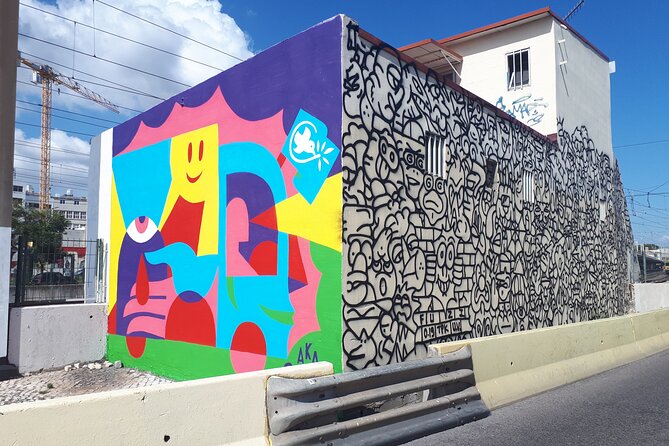
The tour spends about an hour in Bairro Alto, the longest single section. That gives the guide room to set up the story of Lisbon’s street art instead of rushing from one photograph to the next.
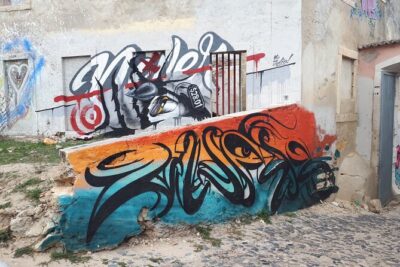
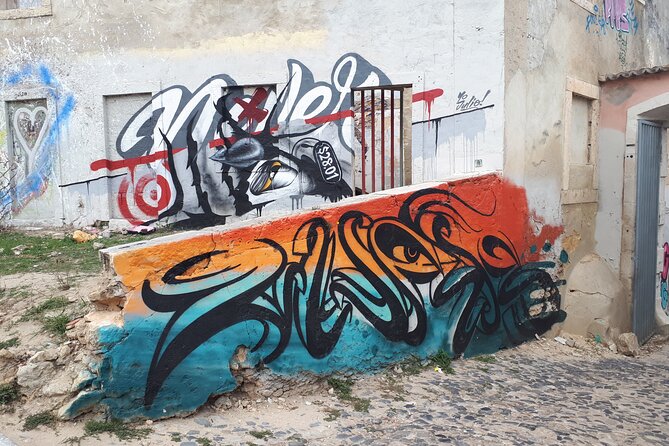
Expect to see a mix of murals, graffiti, and smaller street pieces. The important point is not simply how many works you see, but how they are read. A guide may explain the difference between styles, describe techniques, or show how an image reflects the street where it appears.
Bairro Alto is also a useful place to hear about modern Lisbon. The area has a strong nightlife identity, but the tour looks beyond bars and evening crowds. You get a sense of how a neighborhood can carry several identities at once, and how public art can be welcomed, questioned, or read differently by people who live nearby.
This is where a guide’s storytelling makes the biggest difference. Erica has been praised for discussing both famous murals and small pieces that visitors would likely miss. Laith has also been praised for connecting the art with social and political ideas while keeping the walk relaxed and approachable.
Because this is the longest section, it may feel slow if you only want a quick collection of photo stops. If you want context, it is a strong start.
Chiado and Baixa: art among Lisbon’s main streets
The Chiado portion lasts about 20 minutes, followed by roughly 20 minutes in Baixa de Lisboa. These shorter sections help you compare how street art appears in more central parts of the city.
Chiado is a natural place to notice the contrast between established city life and newer visual expression. You will be moving through streets that many people visit for shops, architecture, and cafés, while the guide directs your attention toward artwork that can be overlooked amid the ordinary flow of town.
Baixa offers another change in tone. The area is more formal and open in feel than the steep lanes of Bairro Alto, so the art is read against a different urban setting. I like this part of the route because it prevents the tour from becoming a single-neighborhood art walk. You see how location changes the way a piece is encountered.
Do not expect these stops to provide as much time as Bairro Alto or Graça. Twenty minutes passes quickly once you stop for questions and photographs. Still, the short sections are useful comparisons, especially if you are interested in how art operates in busy central districts rather than only in back streets.
A few more Lisbon options worth putting side by side
- Lisbon City Center Tour – The Unmissable Lisbon
★ 5.0 · 22,234 reviews - Lisbon: Jerónimos Monastery Entrance Ticket
★ 4.1 · 14,164 reviews - Lisbon: History, Stories and Lifestyle Walking Tour
★ 4.8 · 10,902 reviews - Lisbon: Sunset Boat Party Cruise with DJ and Open Bar
★ 4.5 · 10,378 reviews
Mouraria: art connected to community
The Mouraria section lasts about 30 minutes. This is one of the more meaningful parts of the route because the tour links public art with the people, history, and changing identity of a neighborhood.
The guide’s role here is to explain more than the image in front of you. You may hear how local culture shapes the work, how a neighborhood influences an artist’s choices, and why a particular piece can matter beyond its appearance. The goal is to read the wall as part of its surroundings.
Mouraria also helps you understand why street art is not a simple category. Some pieces are carefully planned murals. Others may be quick, small, political, playful, or personal. A guide can explain how these forms sit together, and why artists and communities may view them differently.
This part suits you if you want the tour to connect art with Lisbon’s social life. It is less suited to anyone hoping for a purely visual outing with no discussion of history or public space.
Graça: a final hour with views and detail
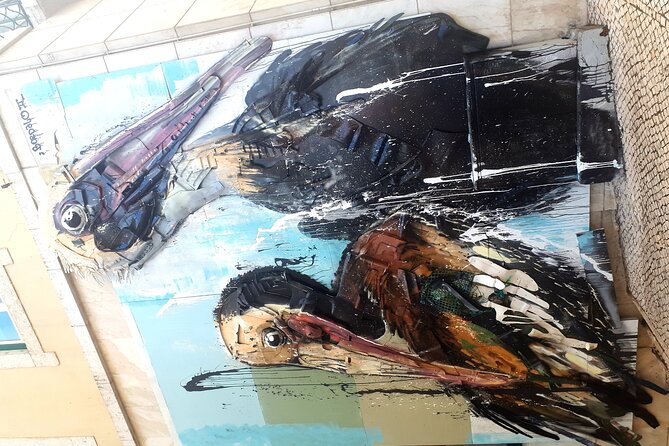
The tour ends with about an hour in the Graça Historic District. That gives the final neighborhood the same attention as Bairro Alto and makes the finish feel like more than a last stop.
Graça is known for steep streets and rewarding city views, so the walk may become more physical here. Reviews describe the route as manageable at a steady pace, but also warn that you need to be reasonably fit. The uneven surfaces and hills are not a minor footnote. They shape the experience.
The reward is a neighborhood where the guide can bring together the themes introduced earlier: art, local life, history, and the way visitors see Lisbon. You may finish with large wall works, smaller details, or both. Several participants have found themselves noticing other pieces around Lisbon after the tour, which is one of the best signs that the experience has done its job.
The ending in Graça also has a practical point. There is no hotel drop-off, and the tour does not include transport back to your accommodation. One guide helped a participant find a tram option after the walk, but you should still plan your own onward route. The nearest transport choice may not be obvious when you finish.
What the guides add to the walk
The strongest part of this experience is the guide’s explanation. The art itself is free to see, but context is what you are paying for.
Erica is praised for combining art expertise with city knowledge and for telling stories in clear English. Maria is described as warm, patient, and ready to answer questions about art, history, and neighborhoods. Erika is praised for bringing energy and passion to the subject. Laith is noted for his links with the local street art scene and for making the walk feel personal rather than formal.
You should not assume you will receive a particular guide unless your booking confirms it. Still, the repeated strengths are consistent: clear English, strong interest in art, and a willingness to discuss ideas instead of delivering only names and dates.
Some guides have pointed out works that were not part of the main route, while others have offered suggestions for nightlife, city sights, or local events. These extras can be useful early in a Lisbon stay, when you are still deciding how to spend your evenings.
The small-group format helps. You can usually hear the guide, ask questions, and stay involved without competing with a large crowd. Group size can vary, and some departures may feel almost private, but the tour is designed to avoid the feel of a mass sightseeing group.
How much walking is involved?
The advertised duration is three hours, and that is a genuine walking commitment. You cover five neighborhoods, with the route ending in Graça rather than returning to the starting point.
Wear shoes that handle cobbles and uneven pavement. Bring water, and consider sun or rain protection because the walk takes place outdoors. Rain does not automatically ruin the experience, but wet streets can make the footing less comfortable and photographs less predictable.
The route is not suitable for wheelchair users, and oversize luggage is not allowed. You should also be comfortable walking up and down Lisbon’s hills. If you have limited mobility, ask about suitability before booking rather than relying on the short stop times listed for individual neighborhoods.
The pace appears to be adjustable within reason. Guides have checked that the group is comfortable and have kept the walk conversational. That does not turn it into an easy stroll, though. If you are choosing between several tours, schedule this one when you have enough energy to pay attention.
Is $40 a fair price?
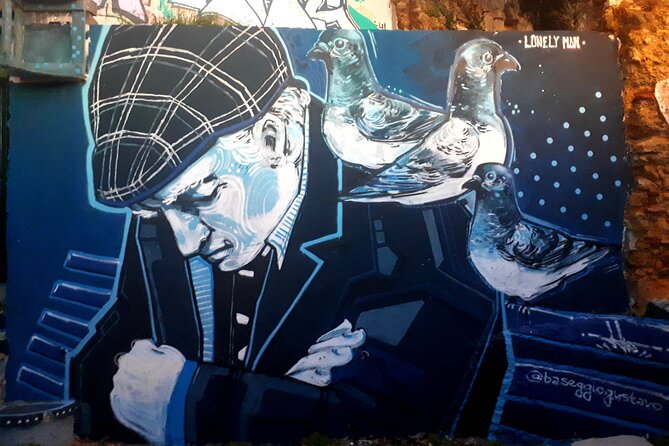
At $40 per person, this is not the cheapest way to see street art, since many works can be found without paying an entry fee. The value comes from the three hours of interpretation and the route through several districts.
I think the price works best for two kinds of visitors. First, it suits people who want to understand what they are looking at rather than collect mural photographs. Second, it is useful early in a Lisbon visit because the route introduces neighborhoods, history, culture, and city geography at the same time.
You may find it less worthwhile if you already know Lisbon’s street art scene well, prefer exploring alone, or dislike long walks. In that case, you could spend the money on a shorter guided experience or simply follow your own interests.
The reserve-now-and-pay-later option also reduces the pressure of committing early, and cancellation is allowed up to 24 hours before the start for a full refund. Check the available starting time when you book, since the tour does not list one fixed departure hour.
Who should book this experience?
I would recommend it to first-time Lisbon visitors who enjoy art, urban culture, photography, or local stories. You do not need to know anything about street art before you arrive. The explanations begin with the basics and build toward questions about technique, public space, and the role of art in a city.
It also suits repeat visitors. If you have already seen Lisbon’s famous viewpoints and historic sights, the tour gives you another way to read familiar streets. Several guides also share details that can help you notice work beyond the official route during the rest of your stay.
Families with older children may enjoy it if everyone can manage the hills and stay engaged for three hours. It is less suitable for very young children who need frequent breaks or for anyone carrying large bags.
Art fans should come with an open mind. The route includes large murals, but it also values small, unexpected pieces. If you only want monumental walls, you may wish for more time at each large work. If you want to see how street art fits into daily life, the mix is a strength.
Should you book the Lisbon Street Art Tour?
Book it if you want Lisbon explained through its walls, side streets, and local voices. The combination of five neighborhoods, a live English-speaking guide, and a strong focus on context makes this more useful than a simple photo walk.
Skip it if steep streets, uneven ground, or three hours on foot sound unpleasant. Also think twice if you prefer completely independent exploring.
For most visitors who can handle the walking, I see this as a good-value introduction to Lisbon’s creative side. Schedule it near the start of your stay, wear sensible shoes, and leave room afterward to keep looking. The best result is not only the murals you see during the tour. It is the new habit of noticing the small pieces you would once have missed.
FAQ
How long does the Lisbon Street Art Tour last?
The tour lasts three hours.
How much does the tour cost?
The price is $40 per person.
Where does the tour begin?
It begins at Rua Luz Soriano 67. Meet the guide in front of the Interpress building.
Which Lisbon neighborhoods does the tour visit?
The route includes Bairro Alto, Chiado, Baixa de Lisboa, Mouraria, and the Graça Historic District.
What language is the tour offered in?
The live tour guide speaks English.
Is hotel pickup included?
No. Hotel pickup and drop-off are not included.
Are food and drinks included?
No. Food and drinks are not included.
What should I bring?
Bring comfortable shoes. You must be ready for unpaved or uneven terrain.
Is the tour suitable for wheelchair users?
No. The activity is not suitable for wheelchair users.
Can I cancel the booking for a refund?
Yes. You can cancel up to 24 hours in advance for a full refund.
Can I reserve now and pay later?
Yes. The reserve-now-and-pay-later option lets you book without paying immediately.
The newest listings around Lisbon
- The Real Lisbon Street Art Private Guided Tour by Minivan★ 4.8 · 49 reviews
- Lisbon: Historical Walking Tour with Jeronimos Monastery★ 4.5 · 71 reviews
- Lisbon: Port Wine Tasting at Taylor’s Shop and Tasting Room★ 4.6 · 490 reviews
- Lisbon: Tagus River Cruise With Brunch★ 3.2 · 73 reviews
- South Lisbon: 3-Hour Christ the King Electric Bike Tour★ 4.8 · 97 reviews
- Oeiras Coast: Stand Up Paddleboarding near Lisbon★ 4.9 · 56 reviews
- Small Group Walking Tour of Belém★ 4.9 · 80 reviews
- Lisbon: 3-Hour Secret Food Tour★ 4.7 · 53 reviews