

Reviewed · WALKING TOURS
Lisbon: Jewish Quarter Guided Walking Tour
Lisbon’s Jewish story is easiest to grasp when you walk the city itself. This two-hour tour links Praça do Comércio, Alfama, Baixa, Mouraria, and Rossio, showing how Jewish life developed, suffered, adapted, and spread far beyond Portugal. The route is less about grand surviving monuments than about reading the city’s streets and understanding what has been erased.
I like the small group size, capped at 10, and the way the tour places Jewish history inside the wider story of Lisbon. I also like the guide-led approach: Amber, one of the named guides, is praised for clear explanations, strong command of Portuguese and Jewish history, and an ability to answer detailed questions.
The main consideration is that little physical evidence of medieval Jewish Lisbon remains. You are paying for interpretation and historical context, not a series of preserved synagogues or major Jewish buildings. Lisbon’s hills also make sensible shoes a good idea.
Key points at a glance

- Starts at Praça do Comércio: The waterfront square introduces Lisbon’s connection to the Exodus, trade, migration, and the city’s wider Jewish past.
- Walks through former Jewish areas: Alfama, Baixa, Mouraria, and Rossio reveal how Jewish communities lived, worked, and faced segregation.
- Covers the 1506 Pessah massacre: Rossio becomes the setting for one of the darkest chapters in Lisbon’s Jewish history.
- Explains forced conversion: You learn about New Christians, Conversos, and the long effects of religious pressure in Portugal.
- Connects Lisbon to a worldwide diaspora: The tour follows Portuguese Jewish communities toward the Atlantic, Mediterranean, Asia, and northern Europe.
- Keeps the group small: Up to 10 people makes it easier to ask questions and adjust the pace.
Beginning at Praça do Comércio and Lisbon’s waterfront

The tour begins at Praça do Comércio, the broad riverside square at the foot of central Lisbon. It is a useful starting point because the city’s Jewish story was never confined to one lane or one building. Lisbon was connected to commerce, shipping, migration, and religious change, and the waterfront helps set that wider frame.
The reference to the Exodus gives the opening a symbolic and historical angle. From here, you begin thinking about movement: people leaving one country, building lives in another, and later carrying Portuguese Jewish traditions across the Atlantic and into other parts of the world.
You will also pass Praça do Município, Rua do Comércio, Casa dos Bicos, and the Ribeira area. These stops help place the Jewish community within Lisbon’s commercial center rather than treating it as an isolated footnote. I find that approach useful because it shows how communities take part in the ordinary work of a city, including trade, public life, science, culture, and food.
Casa dos Bicos adds a visual landmark to the walk, but do not expect the building itself to function as a Jewish museum or preserved synagogue. Its value here is mainly geographic and architectural. The guide uses the streets and buildings as reference points while explaining a past that is often hard to see.
More Walking Tours in Lisbon
- Lisbon: History, Stories and Lifestyle Walking Tour
★ 4.8 · 10,902 reviews - Best of Lisbon Small-Group Guided Walking Tour
★ 5.0 · 4,869 reviews - Lisbon: Food and Wine Small Group Walking Tour
★ 4.9 · 4,082 reviews
Alfama and the medieval Judiarias
The route then reaches Alfama and the castle hill, the part of Lisbon most closely linked with the medieval Jewish quarter. The narrow streets and steep lanes give you a real sense of the old city’s shape. You are not looking at a neatly reconstructed quarter. Instead, you are walking through a modern neighborhood where the earlier Jewish presence has to be explained.
The term Judiaria refers to a Jewish quarter. The tour explains medieval segregation and how Jewish residents were grouped within the city. That subject matters because it avoids a sentimental picture of coexistence. Jewish communities could contribute greatly to urban life while still living under legal and social limits.
Alfama is one of the tour’s more demanding sections physically. Lisbon’s castle hill is steep, and the narrow streets can make the walk feel slower than the distance suggests. At the same time, this is where the subject becomes most concrete. You can look at the layout of the old quarter while hearing how community life, work, religious practice, and restrictions shaped the area.
The guide’s role is especially important here. Because so little obvious signage remains, a self-guided walk could easily become a series of attractive lanes with no clear connection to Jewish history. A good guide gives those lanes meaning and points out locations you might otherwise pass without noticing.
Baixa and the story of forced conversions

The tour continues into Baixa, Lisbon’s central district, where the story shifts from medieval Jewish life to the pressure placed on Jews to convert to Christianity. The subject is not simple, and this is one reason the tour benefits from a guide who can answer questions rather than recite a short timeline.
The forced conversions created the category known as New Christians, also called Conversos. Some people converted publicly while continuing Jewish practices privately. Others adopted Christianity fully, while still facing suspicion because of their ancestry. The legacy continued for generations, affecting family identity, public status, and religious life.
This part of the walk also introduces the difference between Old Christians and New Christians. The history reaches into the 18th century and includes the reforms of the Marquis of Pombal under King José I. That is a useful addition because it shows that the story did not end with the original conversions. Legal and social divisions lasted for centuries.
I appreciate this broader time frame. A shorter tour could stop after medieval Lisbon or focus only on persecution. Here, you get a sense of how policies changed over time, how religious labels shaped daily life, and how Portuguese history eventually moved away from those formal divisions.
Rossio and the 1506 Pessah massacre
Rossio is one of the most important stops on the walk. Today it is a central Lisbon square, but the tour connects it with the 1506 Pessah massacre, a violent attack on Lisbon’s Jewish and New Christian population.
This is difficult history, and it should be treated plainly. The stop is valuable because it places the event in a real public space rather than leaving it as a distant date in a book. You can stand in the square and understand that religious hostility was acted out in the center of the city, not in some remote setting.
Rossio also helps explain the distinction between Jewish identity and New Christian identity during this period. The violence did not fit into a simple story of one clearly separate community and another. Forced conversion had already blurred public identities, while suspicion and hostility continued.
The tour does not promise a major memorial complex here, so the guide’s explanation carries much of the weight. If you want a walk focused on surviving Jewish architecture, this may feel limited. If you want to understand how public spaces connect to political and religious events, Rossio is one of the strongest parts of the route.
Same base, a completely different sort of day:
- Lisbon City Center Tour – The Unmissable Lisbon
★ 5.0 · 22,234 reviews - Lisbon: Jerónimos Monastery Entrance Ticket
★ 4.1 · 14,164 reviews - Lisbon: Sunset Boat Party Cruise with DJ and Open Bar
★ 4.5 · 10,378 reviews - Lisbon: Oceanário de Lisboa Entrance Ticket
★ 4.6 · 9,943 reviews
Mouraria, the Resistance Museum, and modern Lisbon
Mouraria is included among the districts covered, adding another layer to the city’s changing population and cultural life. The exact emphasis can depend on the guide and the group’s questions, but the area helps keep the tour from becoming only a medieval history lesson.
The route also passes the Resistance Museum. This brings the walk into the modern period and supports the discussion of refugees passing through Lisbon during the 1940s. Portugal’s position during World War II made Lisbon an important point of passage for people fleeing the conflict, and the tour includes the contemporary Jewish presence alongside that wartime story.
This section may appeal most if you want Jewish history to continue beyond the medieval period. The experience does not stop with expulsions, conversions, or the 1506 massacre. It also asks what happened to Jewish life in Lisbon later, including movement through the city during the war years.
One useful question to ask your guide is how the current Jewish community fits into the story today. The tour covers the contemporary presence, but the amount of detail can vary. If modern Jewish institutions and present-day community life are your main interest, make that clear at the beginning.
Lisbon’s Jewish legacy beyond Portugal
A strong feature of the walk is its attention to the diaspora. From Lisbon, Jewish families and communities spread toward the Atlantic, the Mediterranean, Asia, and northern Europe. That movement is not treated as an isolated Portuguese episode. It becomes part of a wider story of migration, adaptation, and cultural exchange.
The guide also connects Jewish influence with Portuguese culture, science, and gastronomy. This helps move the subject beyond persecution alone. Jewish history in Portugal includes loss and forced change, but it also includes intellectual work, commerce, family traditions, and contributions to daily life.
I find this especially useful for visitors who already know the broad outline of Iberian Jewish history. Lisbon gives the subject a local setting, while the diaspora discussion shows why the city mattered beyond its own streets. You begin to see Portugal as one point in a network that reached across several regions.
The tour can be tailored to different time frames and starting points. That flexibility is worth noting if you have a particular family connection, academic interest, or limited time in Lisbon. It also means you should confirm the plan with the guide rather than assume every walk will follow exactly the same emphasis.
What the guide adds to the experience
The guide is the central feature of this tour. The most warmly praised qualities are clear speech, strong preparation, friendliness, and the ability to answer questions. Amber is specifically named in several comments and is described as articulate, personable, and well informed in both Portuguese and Jewish history.
That matters because the evidence on the ground is limited. You need someone who can explain why a street matters, how a district changed, and where an event fits in the longer story. The best moments are likely to come from questions and conversation rather than from simply moving from one fixed monument to another.
The small group limit of 10 helps. It gives you a better chance to hear clearly in narrow streets and to ask about subjects that matter to you. In poor weather, the group may be even smaller. A private-feeling experience is possible, but it is not guaranteed, so book the tour for the subject and format rather than expecting a private tour.
The English-language format is also clear. If you need another language, this is not the right choice based on the information provided.
Is $57 a fair price for two hours?
At $57 per person, this is not a bargain-priced orientation walk. The fee pays for a specialist subject, a live English-speaking guide, a small group of no more than 10, and a route across several historic districts.
The value depends on what you want. If you only want a quick introduction to Lisbon’s main sights, much of the tour will feel outside your priority list. If you want Jewish and Portuguese history explained together, the price is more defensible because the experience gives you context that is difficult to gather from street signs alone.
Food and drinks are not included, but that is not a serious drawback for a two-hour city walk. You should plan your own refreshments before or after the tour. The route ends back at the meeting point, according to the stated plan, which can make it easier to continue sightseeing afterward.
Free cancellation is available up to 24 hours before the start, and you can reserve now and pay later. Those terms are useful if your Lisbon schedule is still changing, but they do not alter the main value question: this is a history-focused walking tour, not a general sightseeing bargain.
Practical advice before you go
Your guide will be marked by a dark red umbrella or a sign. You are asked to contact the number on your voucher through WhatsApp or iMessages to confirm the meeting details. Do that before setting out, especially since the route may be adapted.
Wear shoes suitable for steep streets. The tour covers the castle hill and Alfama, and Lisbon’s old quarters are not flat. I would also allow a little extra time before the start so you can find Praça do Comércio without rushing.
A two-hour limit means the tour has to move at a steady pace. Ask your most important questions early, particularly if you want more detail on the current Jewish population, World War II refugees, or a family connection. The guide may be able to shape the emphasis within the available time.
This is not presented as a food tour, and there is no meal or tasting included. Gastronomy comes up as part of the cultural discussion, not as a scheduled activity.
Who should book this walking tour?
I would choose this experience if you want to understand Lisbon through Jewish history and are comfortable with a tour built around explanation rather than preserved sights. It suits history-minded visitors, people tracing Sephardic roots, and anyone who wants more than the usual castle and viewpoint circuit.
It is also a good fit if you prefer a compact group and enjoy asking questions. The strongest guide reports describe an engaging, clear, and flexible style, with Amber singled out by name for her command of the subject.
I would hesitate if you want an easy, flat stroll, a museum visit, or a large number of surviving Jewish monuments. The tour includes difficult subjects, steep streets, and places where the physical evidence is sparse.
For the right audience, I think the price is reasonable. Book it if you want Lisbon’s Jewish past connected to forced conversion, the 1506 massacre, the wartime refugee route, Portuguese culture, and the worldwide diaspora. Skip it if you mainly want famous buildings and scenic viewpoints.
FAQ
Where does the Lisbon Jewish Quarter Guided Walking Tour start?
The tour starts at Praça do Comércio in Lisbon. The guide will have a dark red umbrella or a sign.
Where does the tour end?
The activity ends back at the meeting point.
How long does the tour last?
The tour lasts two hours. Starting times depend on availability.
What language is the tour conducted in?
The live guided tour is conducted in English.
How many people can join the tour?
The group is limited to 10 participants.
Which Lisbon areas does the tour cover?
The route covers the castle hill, Alfama, Baixa, Mouraria, Rossio, and other historic locations connected with Lisbon’s Jewish presence.
Which sites are included along the route?
The stated route includes Praça do Comércio, Praça do Município, Rua do Comércio, Casa dos Bicos, Ribeira, the Resistance Museum, Mouraria, Praça da Figueira, and Rossio.
Are food and drinks included?
No. Food and drinks are not included.
Can the tour be changed to suit a different schedule?
The tour can be tailored to different time frames and starting points. Contact the provider to confirm what adjustment is possible.
The newest listings around Lisbon
- The Real Lisbon Street Art Private Guided Tour by Minivan★ 4.8 · 49 reviews
- Lisbon: Historical Walking Tour with Jeronimos Monastery★ 4.5 · 71 reviews
- Lisbon: Port Wine Tasting at Taylor’s Shop and Tasting Room★ 4.6 · 490 reviews
- Lisbon: Tagus River Cruise With Brunch★ 3.2 · 73 reviews
- South Lisbon: 3-Hour Christ the King Electric Bike Tour★ 4.8 · 97 reviews
- Oeiras Coast: Stand Up Paddleboarding near Lisbon★ 4.9 · 56 reviews
- Small Group Walking Tour of Belém★ 4.9 · 80 reviews
- Lisbon: 3-Hour Secret Food Tour★ 4.7 · 53 reviews
Walking Tours, compared.
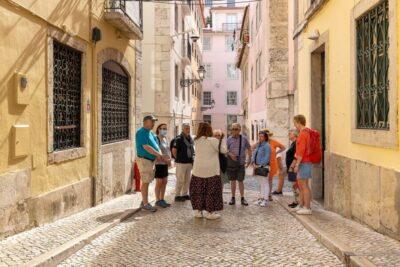

Best of Lisbon Small-Group Guided Walking Tour
Read our review →
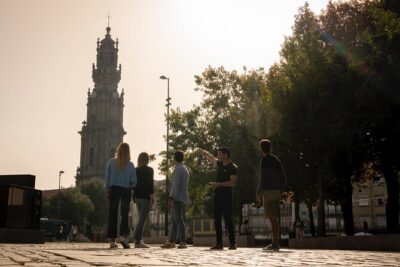
Porto Walking Tour, Lello Bookshop, River Cruise and Cable Car
Read our review →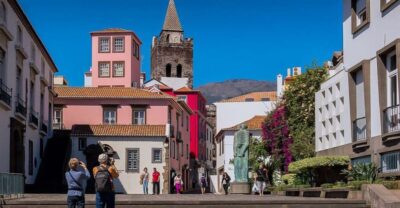

Best of Lisbon Walking Tour: Rossio, Chiado & Alfama
Read our review →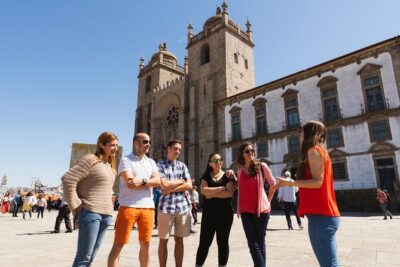
Experience Porto’s Charm: 3-Hour Guided Walking Tour
Read our review →
Enjoy a Guided Levada Walk in the Rabaçal Valley
Read our review →Browse the lists this tour appears in