
Reviewed · MONASTERY TOURS
Lisbon: Belem Walking Tour with Jeronimos Monastery Entry
Belém’s great reward is Jerónimos Monastery, where every column, arch, and carved rope points back to Portugal’s seafaring past. This three-hour morning tour gets you inside with a pre-purchased ticket, then connects the monastery to the Discoveries Monument, Belém Tower, and the original Pastéis de Belém bakery.
I like the separate access point, especially when the public ticket line is long, and I like having a guide explain the church’s tombs and Manueline carvings rather than trying to decode a nearly silent monument alone. The main drawback is clear: Belém Tower is closed for restoration, so you can see and hear about it only from the outside.
Key points at a glance
- Start inside Lisbon’s grandest monument: Meet at Jerónimos Monastery and begin with the cloister and church.
- Skip much of the waiting: Your entry ticket is arranged in advance, with access through a separate entrance.
- Hear the stories behind the stone: Guides such as Luis, Leonardo, Federico, Leo, and Daniel explain the architecture, monarchy, explorers, and religious life.
- Taste the original tart: A Pastel de Belém is included at the historic bakery that has sold the pastry since the mid-19th century.
- Walk through Portugal’s maritime story: The route links the monastery, Empire Square Garden, Discoveries Monument, and Belém Tower.
- Plan for outdoor walking: The tour runs in rain or sun, and comfortable shoes, sunscreen, a hat, and an umbrella are sensible.
Why Jerónimos Monastery deserves the early start
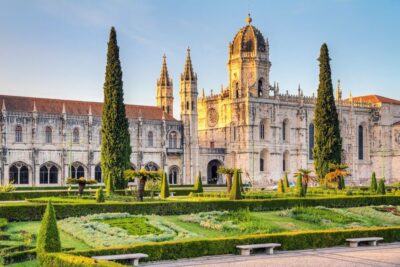
The tour begins at Jerónimos Monastery, with entry planned for around 9:30 in the morning. That timing matters. Belém is one of Lisbon’s busiest sightseeing areas, and getting into the monastery early helps you spend your energy looking up at the stonework instead of standing in line.
Your guide waits near the entrance where access queues form, close to the south entrance of the church. Pay close attention to the supplied meeting-point photo. One practical criticism in the feedback was that the meeting point could use clearer planning, and arriving late is especially awkward when the group is already moving through timed entry.
Once inside, you begin at the upper cloister. This is the architectural heart of the visit. The open galleries frame the sky and reveal the detailed Manueline style, a Portuguese form that grew from late Gothic design while adding Renaissance ideas and maritime symbols.
You will hear how the monastery reflected the power and wealth of Portugal during the great navigations of the 15th and 16th centuries. This context is useful because the building is not simply decorative. It links royal ambition, religious purpose, overseas trade, and the public image of a kingdom looking out toward the ocean.
The cloister is also a good place to slow down. You can study the carved stonework, arches, and repeated details while your guide points out meanings that are easy to miss. The building has very little explanatory signage, so a live explanation adds real value here.
More Monastery Tours in Lisbon
- Lisbon: Jerónimos Monastery Entrance Ticket
★ 4.1 · 14,164 reviews - Lisbon: Jerónimos Monastery E-Ticket and Audio Guide
★ 3.7 · 660 reviews - Lisbon: Belem Walking Tour with Jeronimos Monastery Ticket
★ 4.7 · 490 reviews
The lower cloister and the people remembered inside
After the upper level, the visit continues through the lower cloister and several important rooms. You see the Chapter Room and the old Refectory, spaces that help turn the monastery from a postcard image into a working religious complex.
The tomb of Fernando Pessoa is also included in the visit. Pessoa was moved here in the 20th century, long after the monastery’s original period, which gives you a small reminder that Jerónimos has continued to gather national figures across different eras.
Your guide will also explain the meaning of the building for Portuguese society. That wider view is one of the strongest reasons to choose this tour instead of entering alone. The monastery’s details can be beautiful without explanation, but the connection between the building, the monarchy, the church, and the navigations gives the visit its shape.
Guides named in the feedback include Luis, Leonardo, Federico, Leo, Renan Stein, Ricardo, Daniel, and Frederick. The most consistent strength is their ability to explain complex material in clear English, answer questions, and adjust the pace. Luis is repeatedly singled out for friendly communication and easy explanations. Leonardo and Leo are praised for enthusiasm, while Federico is often noted for linking the monastery to wider Portuguese history.
Santa Maria de Belém Church and its famous tombs
The church, known as Santa Maria de Belém Church, is the next major stop. It is large, formal, and strongly tied to the Manueline style you have already seen in the cloister.
Inside, you learn about the tombs of King Manuel I and his son, João III, both connected to the Avis dynasty. You also see the tomb of Vasco da Gama, the navigator associated with the sea route to India, and Luiz Vaz de Camões, the celebrated Portuguese poet.
These names make the church more than an architectural stop. They bring together the people who funded, carried out, and recorded Portugal’s maritime expansion. A guide can explain who belongs to which part of that story and why the church became such an important national setting.
The church is also a quieter contrast to the open spaces outside. If you visit independently, you can admire the scale and decoration, but you may not know what the carvings signify or why particular figures are buried here. This is the section where guided interpretation is especially helpful.
Pastéis de Belém and the original custard tart
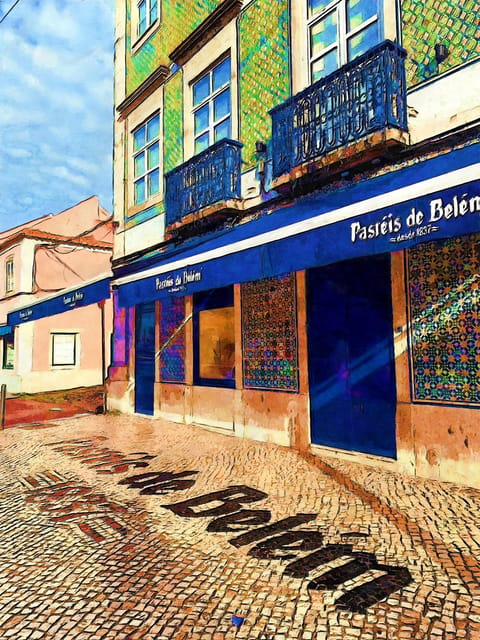
At some point after the monastery visit, the walk pauses at Pastéis de Belém. The included treat is the original Pastel de Belém, the custard tart associated with the neighborhood and made from a recipe connected to the monks of Jerónimos Monastery.
The same establishment has sold the pastry since the mid-19th century. That detail gives the stop more weight than a routine snack break. You are tasting something tied directly to the monastery you have just explored.
The tart is called Pastel de Belém here, rather than the more general pastel de nata. The tour includes one tart, while lunch and other food are not included, so think of this as a flavorful interlude rather than a meal.
Several people specifically praise the pastry, with one noting that it was the best Portuguese tart of their time in Portugal. I would still plan to eat breakfast beforehand, particularly if you prefer a substantial morning meal.
More Walking Tours in Lisbon
- Lisbon: History, Stories and Lifestyle Walking Tour
★ 4.8 · 10,902 reviews - Best of Lisbon Small-Group Guided Walking Tour
★ 5.0 · 4,869 reviews - Lisbon: Food and Wine Small Group Walking Tour
★ 4.9 · 4,082 reviews - Best of Lisbon Walking Tour: Rossio, Chiado & Alfama
★ 4.9 · 2,700 reviews
Empire Square Garden and the outdoor walk
After the monastery and pastry stop, the route moves through Empire Square Garden. The walk is short, listed at about 15 minutes, but it helps you see how the monuments relate to one another.
This is where comfortable shoes matter. The full tour lasts three to three and a half hours, with about 15 minutes listed for the walk between the garden area and the Discoveries Monument. You are not covering a huge distance, but the experience includes standing, walking, and outdoor sightseeing.
On a warm Lisbon morning, the sun can be strong. Bring a hat, sunscreen, and water for your own comfort. The operator advises bringing an umbrella as well, since the tour runs in rain or sun.
The outdoor sections also provide a useful change of pace after the detailed monastery visit. You can look back at the complex from outside, take photographs, and continue the story without being confined to one building.
The Discoveries Monument and Portugal’s maritime age
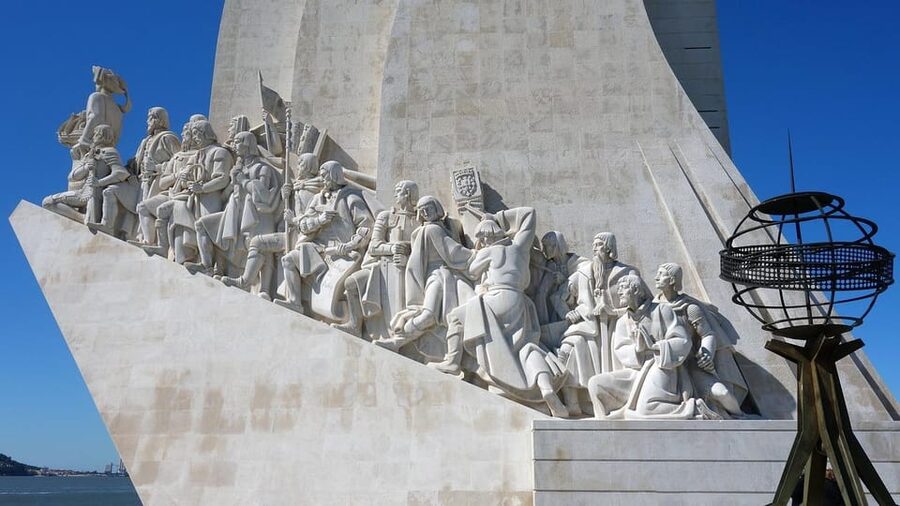
The Discoveries Monument was built in 1960 to mark the 500th anniversary of the death of Infante D. Henrique, known as the main figure behind the Portuguese navigations.
The monument also represents other figures connected to the era, including people who helped extend Portuguese culture and influence around the world. Your guide explains who appears there and how the monument presents that chapter of national history.
This stop works best when you have already heard about the monastery. The church and cloister show the religious and royal side of the period, while the Discoveries Monument presents the explorers and public memory of the same age.
The listed visit lasts around 20 minutes. That is enough for an explanation and sightseeing, but not an extended museum visit. The monument is primarily an outdoor stop, so weather affects how pleasant it feels. On a very hot day, the morning start is a real advantage.
Belém Tower from the outside
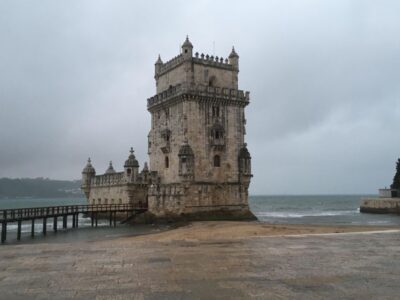
A walk of about 15 minutes takes you to Belém Tower. Together with Jerónimos Monastery, it has UNESCO World Heritage status and is another major example of Manueline architecture.
The tower served as a defensive point for the approach to Lisbon. Its position by the water and its decorative details make it one of the district’s most recognizable sights.
There is an important limitation at present: Belém Tower is undergoing restoration and cannot be visited inside. The guide takes you to the exterior and explains its purpose and design, but you should not book this tour expecting interior access.
This did disappoint some people, especially those hoping to explore the tower itself. Still, the outside stop remains useful because it completes the geographic story of Belém. You begin with the monastery, continue through the public monuments, and finish at the defensive structure by the river.
The formal end point is Torre de Belém. You are not provided with transportation back to central Lisbon, and lunch is not included. Plan your next move before you arrive, especially if you have an afternoon reservation elsewhere.
What the guide adds to the experience
The tour’s strongest feature is the live explanation. Several guides use pictures or visual aids to clarify what you are seeing, and the small-group format can make it easier to ask questions. One group had only four people, while private groups are also available.
Luis is praised for clear English, good communication before the tour, and a friendly manner. Leonardo and Leo are described as enthusiastic about Portuguese history. Federico is noted for connecting the monastery and tower to the wider story of Portugal. Daniel is also praised for giving a broad account of both Belém and Portuguese history.
The best guides do not simply name dates. They explain who built the monastery, how the carvings relate to the period, why the church contains particular tombs, and how the monuments fit together. That is useful in a place where independent visitors may find very few signs inside.
One caution: there is a lot to absorb. One person found the amount of information almost too much to follow. If you prefer a light overview with plenty of free time, tell your guide early. If you enjoy history, architecture, and questions, the detail is likely to be a benefit.
Price, pace, and practical value
At $70 per person, this is not the cheapest way to walk around Belém. The value depends mainly on how much you want from Jerónimos Monastery.
The price includes the monastery entry ticket, the guide, and an original Pastel de Belém. The separate access point can save substantial waiting time, and the historical explanation fills a gap that is hard to solve inside the monument on your own.
The tour runs for three to three and a half hours. That is a good length for seeing the main sights without turning the entire day into a single guided visit. The pace is steady, with time for walking, sightseeing, questions, and the pastry stop.
You may find better value elsewhere if you only want photographs of the exterior or if you already have a strong grasp of Portuguese history. You will likely find this worth the cost if your time in Lisbon is short, the monastery is a priority, and you want the major Belém sights tied into one clear story.
Free cancellation is available up to 24 hours before the start, and you can reserve now while paying later. The tour can be canceled if the minimum number of participants is not reached, so check the booking details before building a tightly timed day around it.
Who should book this Belém tour
I would recommend it to first-time Lisbon visitors who want a guided introduction to Belém, especially anyone interested in architecture, royal history, religion, or Portugal’s maritime age.
It also suits you if you dislike long ticket lines, want an English-speaking guide, or prefer a small group with room for questions. The monastery is the main reason to book, with the tart, garden, Discoveries Monument, and tower adding a well-planned half-day route.
I would hesitate if you need wheelchair access or have significant mobility limits. The activity is not suitable for wheelchair users or people with mobility impairments, and the route includes walking and standing.
Should you book it?
Book this tour if Jerónimos Monastery is high on your Lisbon list and you want the meaning behind what you see. The combination of early entry, strong English-speaking guides, the original custard tart, and the connected Belém route makes the $70 price reasonable for many visitors.
Just set your expectations correctly. Belém Tower is currently an exterior-only stop, lunch and transportation are not included, and the tour runs in all weather. Arrive early at the monastery meeting point, wear comfortable shoes, and choose this experience for its history and guidance, not for a tower interior visit.
FAQ
How long does the Belém walking tour last?
The tour lasts approximately three to three and a half hours.
Where does the tour begin?
It begins in front of the entrance to Jerónimos Monastery, near the south entrance to the church where access queues form.
Where does the tour finish?
The tour finishes at Belém Tower.
Is entry to Jerónimos Monastery included?
Yes. The entrance ticket to Jerónimos Monastery is included.
Can I skip the public line at Jerónimos Monastery?
The tour uses a separate entrance with pre-purchased tickets, which helps you avoid the main ticket queue.
Is the Pastel de Belém included?
Yes. One original custard tart from Pastéis de Belém is included.
Is lunch included?
No. Lunch is not included.
Can I go inside Belém Tower?
No. Belém Tower is currently undergoing restoration and cannot be visited inside. The guide explains and shows the tower from the exterior.
What language is the tour conducted in?
The live tour guide speaks English.
Is the tour suitable for wheelchair users?
No. The activity is not suitable for wheelchair users or people with mobility impairments.
The newest listings around Lisbon
- The Real Lisbon Street Art Private Guided Tour by Minivan★ 4.8 · 49 reviews
- Lisbon: Historical Walking Tour with Jeronimos Monastery★ 4.5 · 71 reviews
- Lisbon: Port Wine Tasting at Taylor’s Shop and Tasting Room★ 4.6 · 490 reviews
- Lisbon: Tagus River Cruise With Brunch★ 3.2 · 73 reviews
- South Lisbon: 3-Hour Christ the King Electric Bike Tour★ 4.8 · 97 reviews
- Oeiras Coast: Stand Up Paddleboarding near Lisbon★ 4.9 · 56 reviews
- Small Group Walking Tour of Belém★ 4.9 · 80 reviews
- Lisbon: 3-Hour Secret Food Tour★ 4.7 · 53 reviews
Monastery Tours, compared.

Templar Tour Convent of Christ & Almourol Castle from Lisbon
Read our review →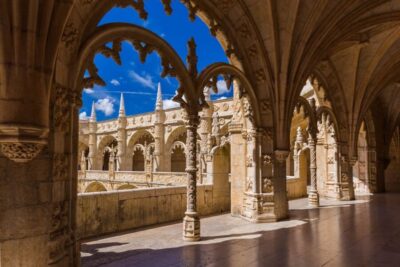
Belem Walking Tour with Jeronimos Monastery Ticket
Read our review →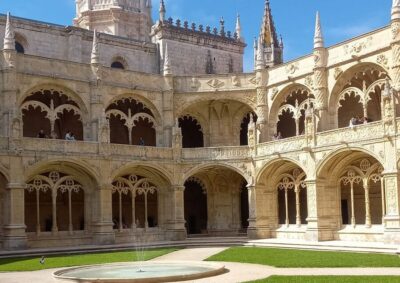
Belem, Jeronimos Monastery, and Coach Museum Tour
Read our review →
“Porto: Fado Show with Guided Tour in a Historic Monastery”
Read our review →
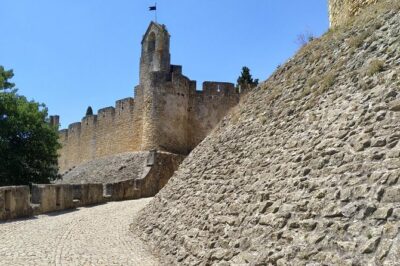
Convent of Christ Tour “Portugal in the Map” – Visit Tomar with a local guide!
Read our review →Browse the lists this tour appears in