
Reviewed · WALKING TOURS
Óbidos: Medieval Tales & Secrets Spots Guided Walking Tour
Óbidos saves its best trick for the end, or perhaps the beginning: a sip of sour-cherry ginjinha served in a chocolate cup. The tasting is small but memorable, and it fits this walled town perfectly, where old churches, castle stones, bookshops, and royal stories crowd into a compact walk.
I like two things here. First, the guides, including Ivo, JP, João Pedro, Bruno, and Maria, bring plenty of local detail without turning the walk into a list of dates. Second, the route slips into side streets and lesser-seen corners, giving you a better feel for Óbidos than a quick stroll along the main lane.
The main drawback is the footing. Two hours on stone streets, steps, and uneven paths can be tiring, especially after rain. This is not a good choice for wheelchair users, people with mobility limits, or anyone recovering from recent surgery.
Key points about the Óbidos walking tour
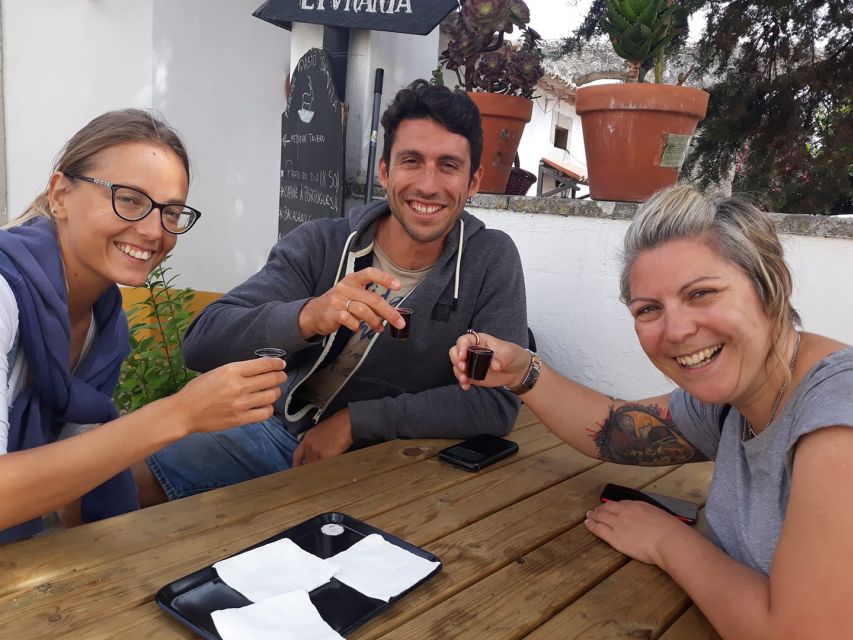
- Ginjinha in chocolate: Taste Óbidos’s famous sour-cherry liqueur from an edible chocolate cup.
- Castle and old quarters: Explore the roughly 1,300-year-old castle of Moorish origin, plus the former Moorish and Jewish neighborhoods.
- Josefa de Óbidos paintings: See five works by the celebrated 17th-century local painter, one of Portugal’s best-known female artists.
- Two unusual bookstores: Visit Livraria do Mercado and São Tiago Bookstore, located in former religious buildings.
- Queens of Portugal: Learn why Óbidos was tied so closely to Portuguese queens, including Leonor de Avis and Catherine of Austria.
- Small-group feel: Guides often adjust the pace, answer side questions, help with photos, and take you away from the busiest lanes.
Why two hours in Óbidos can be time well spent
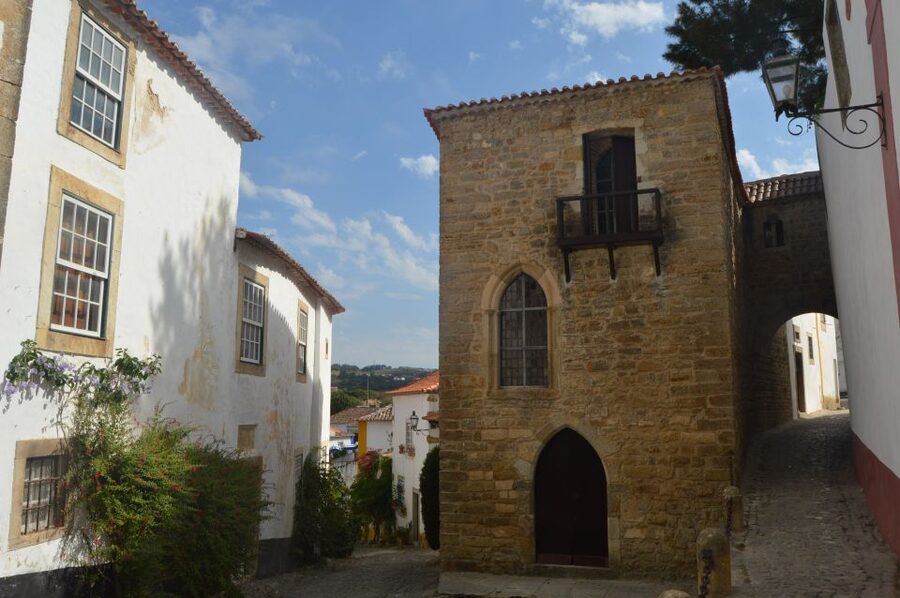
Óbidos is easy to admire on your own. Whitewashed houses, flowerpots, tiled facades, and a castle wall make the town feel almost designed for a postcard. But the surface charm is only part of the story.
A guide helps you connect the buildings to Portugal’s royal, religious, artistic, and charitable past. That matters in Óbidos because many important details are easy to miss. A church may look modest from the street but contain a striking Renaissance sculpture. A bookstore may seem like a pleasant shop until you learn that it occupies a former royal chapel.
At $41 per person, this is not the cheapest way to spend two hours in Portugal. Still, I find the price reasonable if you want context rather than a simple walk through pretty streets. You are paying for a live English or Portuguese guide, access to a planned route, local stories, help with photographs, and the included liqueur tasting.
The value is strongest on a first visit. Once you know the town, you can return on your own to browse, eat, and wander. The tour gives you the framework first, then leaves you free to explore at your own pace.
More Walking Tours in Nazare:
- Lisbon: History, Stories and Lifestyle Walking Tour
★ 4.8 · 10,902 reviews - Best of Lisbon Small-Group Guided Walking Tour
★ 5.0 · 4,869 reviews - Lisbon: Food and Wine Small Group Walking Tour
★ 4.9 · 4,082 reviews
Meeting outside the walls at the tourist office
The walk begins in front of the Óbidos Tourist Office, near the main parking area and outside the town walls. This is a useful arrangement if you arrive by car or bus, since you do not need to search for a meeting point deep inside the old town.
From there, the route enters the historic center and moves between major sights and quieter lanes. The tour finishes back at the tourist office, so you are not left trying to find your way to a distant ending point.
Plan to arrive wearing comfortable shoes. The streets are not smooth sidewalks. Expect cobbles, stone paving, narrow passages, and potentially slippery surfaces in wet weather. One guide has been especially attentive to people walking on wet stones, but good footwear remains your responsibility.
The tour can be canceled because of weather conditions. That is worth keeping in mind when planning an outdoor visit in the cooler or wetter months.
The castle and the Moorish roots of Óbidos
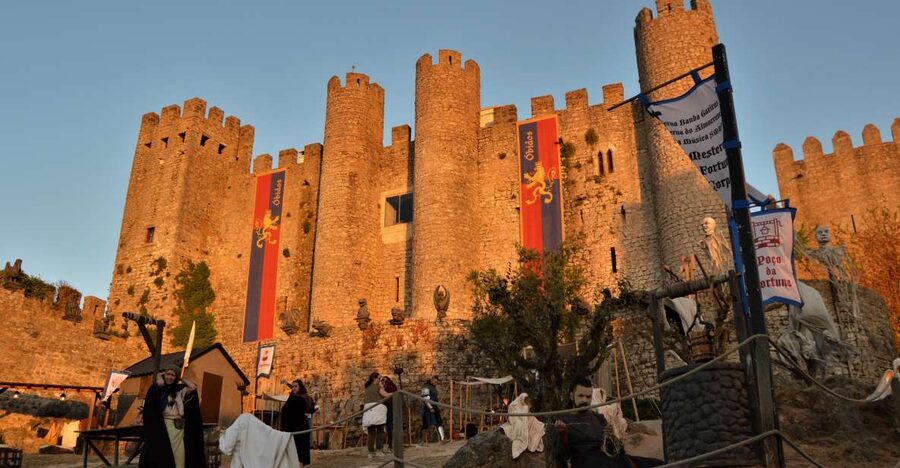
The castle is the visual anchor of the town. Its origins are described as Moorish, and the site is about 1,300 years old. Even if you are more interested in architecture than military history, the castle gives you the clearest sense of why Óbidos developed where it did.
Your guide explains how the fortress fits into the town’s wider story rather than treating it as an isolated monument. The old walls, defensive position, and enclosed streets help you understand how Óbidos once functioned as a protected settlement.
The castle is also one of the best places for photographs. You might get views across the town’s tiled roofs and beyond the walls, depending on the route and conditions. Bring a phone or camera, but do not let photography crowd out the commentary. The point of the walk is not simply to collect attractive pictures.
The castle area can feel busy at popular times. That is where the guides add real value. Ivo, JP, João Pedro, Bruno, and other members of the team are known for using quieter corners and adjusting the order of the walk when possible. You may still encounter crowds, but the experience is not limited to the main tourist street.
Churches, chapels, and the art of Josefa de Óbidos
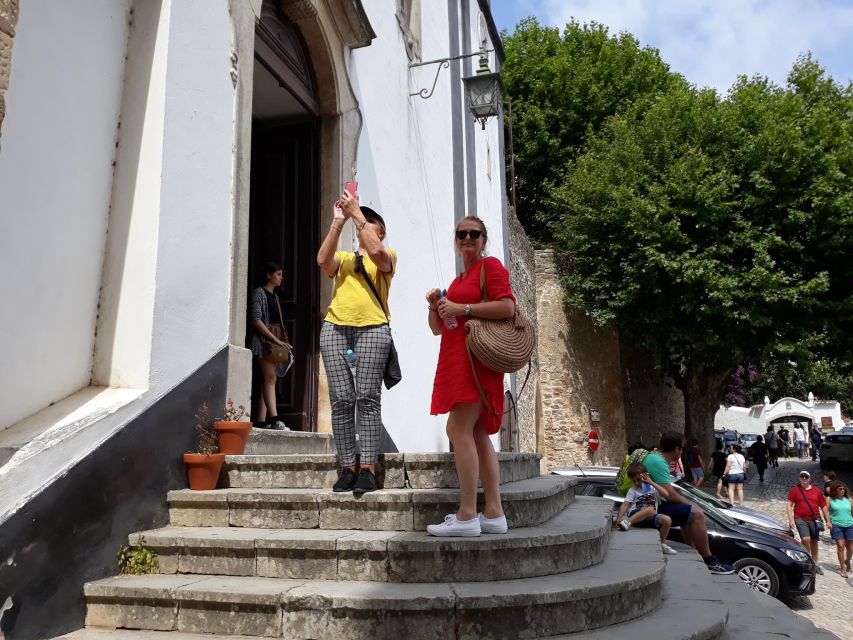
The tour includes several religious buildings, each offering a different piece of the town’s story. These include Saint Peter Church, Saint Martin Chapel, the Almshouse Church, and Saint Mary Church. You also visit the Museum of the Saint John the Baptist Church.
The attraction here is variety. You are not simply moving from one grand church to another. Instead, you see how worship, charity, art, royal influence, and daily life overlapped in a small Portuguese town.
A major artistic focus is Josefa de Óbidos. The route includes five original paintings by this celebrated 17th-century local artist. She was the first Portuguese female artist to have her work exhibited at the Louvre in Paris, a detail that gives her place in Portuguese art added weight.
I appreciate this part of the walk because it moves beyond the usual castle-and-photo visit. You get a reason to look closely at the paintings and to remember the name of an important woman artist. The works also give Óbidos a cultural identity that is easy to overlook when the town’s white walls and bright flowers steal all the attention.
The tour also includes Nicolau de Chanterene’s Renaissance pietà. This is one of the stops where a guide’s explanation can change what you see. Without context, you may walk past a sculpture as one more church detail. With the story and artistic background, it becomes a much more meaningful stop.
A few more Nazare options worth putting side by side
- Three Cities in One Day: Porto, Nazare and Obidos from Lisbon
★ 4.5 · 3,572 reviews - Peniche: Berlengas Island Trip, Hiking and Cave Tour
★ 4.7 · 1,473 reviews - Peniche: Berlenga Island and Cave Tour
★ 4.7 · 1,432 reviews - From Lisbon: Day Trip to Porto, Óbidos, and Nazaré
★ 4.5 · 1,311 reviews
The Town of the Queens
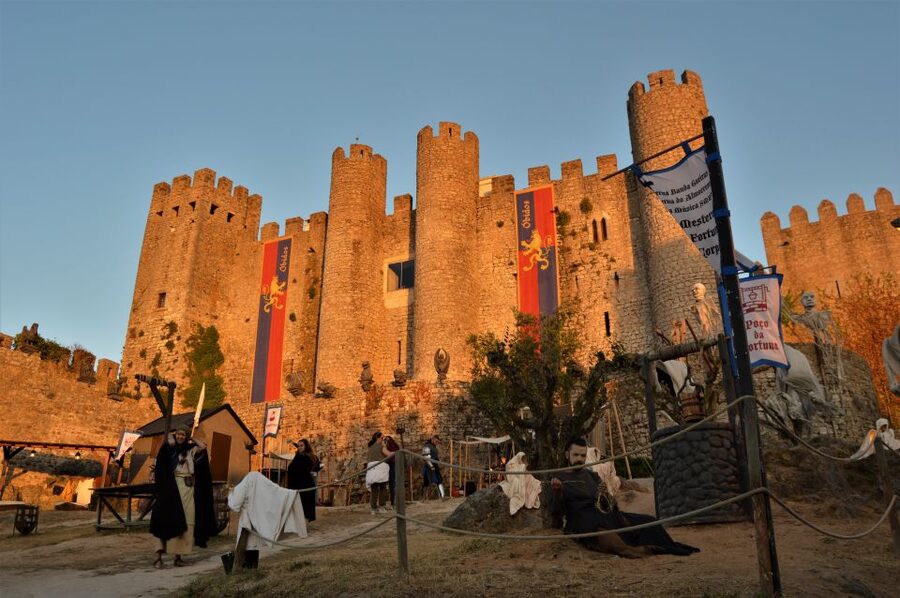
Óbidos is often called the Town of the Queens because of its long connection with Portugal’s royal women. Queens such as Catherine of Austria, Isabel of Aragon, also known as Queen Saint Isabel, and Leonor de Avis left lasting marks on the town.
The most striking story concerns Leonor de Avis, wife of King John II. She helped establish one of the early branches of the Holy House of Mercy, a charitable hospital and relief network that later spread through the Portuguese empire. The Almshouse Church connects this local story to a much wider Portuguese tradition of care.
This section gives the town more depth. Óbidos was not only a fortified settlement or a pretty royal possession. It was also shaped by people who funded churches, supported charity, and used their position to influence public life.
Your guide may present these stories differently depending on the group. Ivo is often praised for adding personal warmth and answering questions patiently, while JP and João Pedro are noted for making the material conversational. The team includes several guides, so the exact style can vary, but the central focus remains the same: connecting Óbidos to Portugal as a whole.
Bookshops in former religious spaces
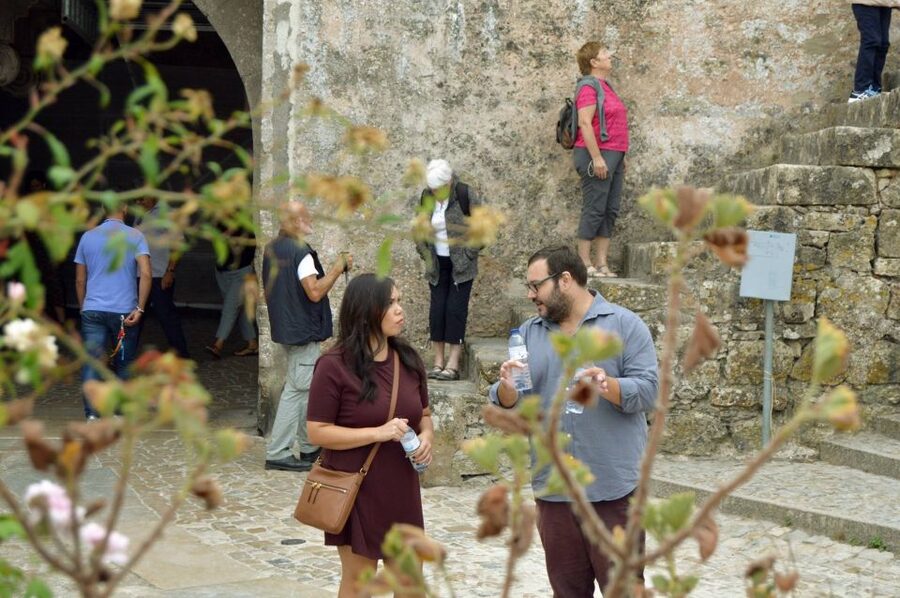
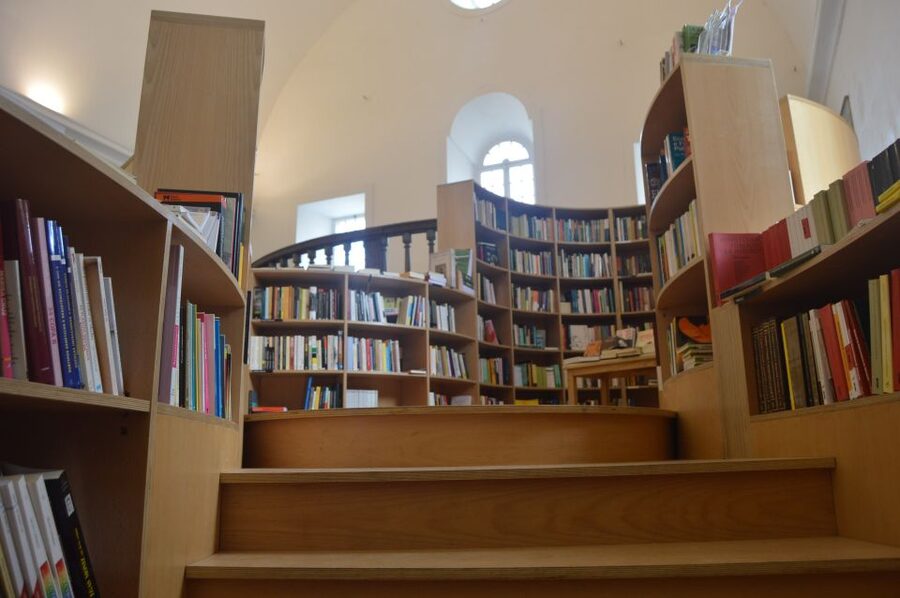
Two stops make this tour unusual for a medieval-town walk: Livraria do Mercado and São Tiago Bookstore.
Livraria do Mercado combines books with organic products. It gives you a break from formal monuments and lets you see a more contemporary side of Óbidos. The shop is part of the town’s modern cultural life, not just a place to buy a souvenir.
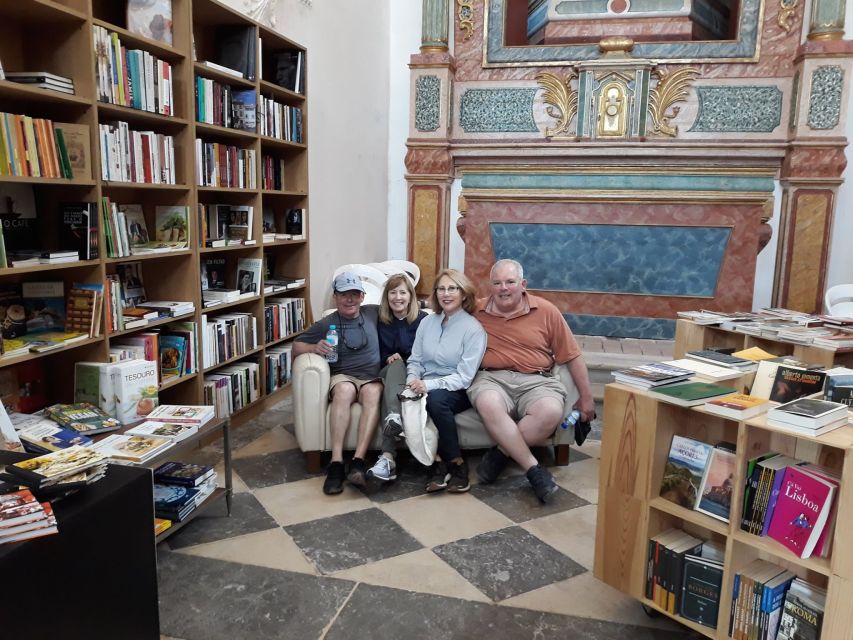
São Tiago Bookstore is located in a former church and royal chapel. The setting alone makes it worth a look. Shelves inside an old religious space create a useful contrast between the town’s past and present. You can browse books while standing in a building once tied to worship and royalty.
The bookstore stops also suit curious readers. One person on a past tour even received book suggestions about Portuguese history from a guide. You should not expect long shopping sessions, since the walk has many stops, but these places add personality to the route.
The Moorish and Jewish neighborhoods
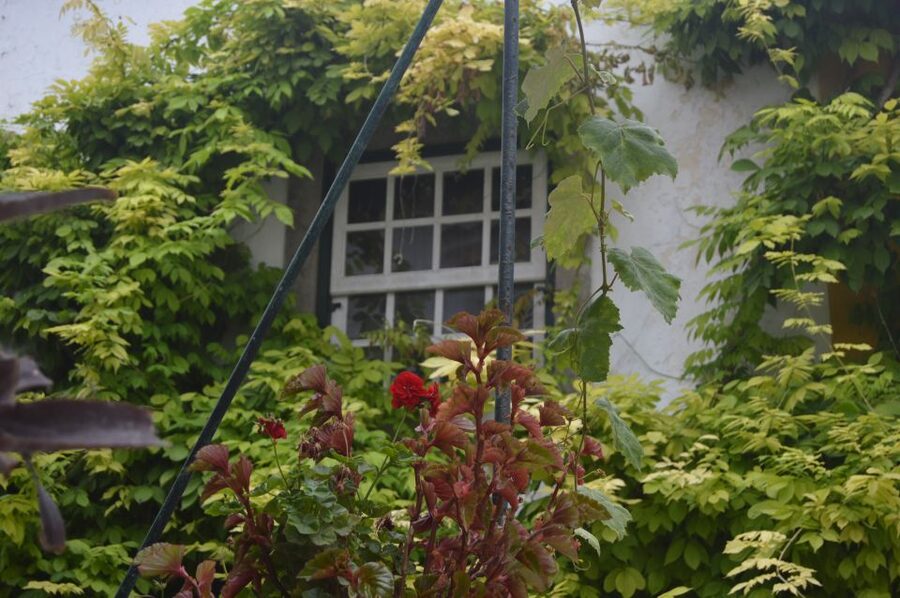
Óbidos’s former Moorish and Jewish quarters are explored as part of the walk. The narrow lanes here help you picture how different communities once lived within the walled town.
This is another reason not to judge the tour by its postcard stops alone. The castle and main square are easy to find. The smaller streets require a guide who knows where to turn and what details matter.
The route can be intensive. In two hours, you cover churches, art, royal stories, neighborhoods, the castle, bookshops, and the tasting. You will not have unlimited time to stop at every shop or take long photographs. The tradeoff is a fuller introduction to Óbidos in a short period.
If you want a slow morning of browsing, book this early in your stay and return later for a relaxed wander. Several people have used the walk as an introduction, then explored independently afterward.
Saint Mary’s Plaza and the central streets
Saint Mary’s Plaza and Saint Mary Church provide a central pause in the route. This is the part of town where the layers of Óbidos are easiest to read: royal associations, religious buildings, shopfronts, and tourist life all meet within a small area.
The Camões Mark and Casa da Música are also included. These stops widen the route beyond the obvious castle and church circuit. You get a sense of how the town continues to function as a living place rather than a preserved stage set.
The guide’s storytelling matters most here. Dry facts about dates and rulers can blur together. The strongest guides use anecdotes and connections, making it easier to remember why a building or person mattered.
The pace is generally flexible. Guides have stopped for photos, handled questions from families of different ages, and adapted explanations for multilingual groups. That makes the tour a good fit if you prefer conversation over a fixed speech.
Walking outside the walls
The out-of-the-walls section changes the view. Inside the walls, you focus on lanes, churches, and doorways. Outside, you can appreciate the town as a complete fortified settlement.
This is also a useful photographic opportunity. The guides are familiar with spots where you can frame the walls and rooftops with fewer people in the picture. You may still need patience, but the route is designed to take you beyond the most crowded path.
I would pay attention to the ground here. Outdoor paths may be uneven, and wet weather can make stone slippery. The tour is not suitable for wheelchair users or people with mobility impairments, and people recovering from recent surgery should choose a gentler activity.
Ginjinha in a chocolate cup
The final tasting is simple, local, and fun. Óbidos ginjinha is a sour-cherry liqueur, served here in a small chocolate cup. You drink the liqueur, then eat the cup.
It is not a full food experience, and food is not included. Think of it as a tasting that closes the tour, not a substitute for lunch. If you want a meal afterward, your guide may be able to suggest a restaurant, as guides have done for families and couples on earlier walks.
The chocolate cup is a clever local touch because it turns a standard liqueur tasting into something tied to Óbidos. If you do not drink alcohol, the provided details do not mention a nonalcoholic alternative, so ask before booking if that matters to you.
Who will get the most from this walk
I would recommend this tour to you if you enjoy:
- Medieval town layouts and castle stories
- Portuguese royal and religious history
- Art, especially the work of Josefa de Óbidos
- Quiet lanes and lesser-known corners
- Guides who welcome questions
- A compact introduction before exploring on your own
It is also a good choice for families with older children, since the route mixes stories, buildings, art, a castle, bookshops, and a tasting. The guide team has handled mixed-age and multilingual groups well.
You may prefer to skip it if you want a slow, unstructured visit. Two hours is packed, and you will not have time to linger at every shop, church, or viewpoint. It is also a poor match if uneven ground causes trouble.
The strongest part of the experience is the human element. Ivo is often described as warm, patient, and especially strong at connecting local stories to wider Portuguese history. JP, João Pedro, Bruno, Maria, and other guides have also led engaging walks. Since the guide affects the tone, expect some variation, but the activity is built around live explanation rather than an audio recording.
Booking advice for the $41 price
At $41, the tour makes sense when you value interpretation. A self-guided walk costs less, but it will not automatically lead you to five Josefa de Óbidos paintings, the former royal chapel bookstore, the old quarters, or quieter photo spots in an efficient order.
The included ginjinha is a pleasant extra, though it should not be the reason you book. The real value comes from seeing a broad range of Óbidos in two hours and having someone explain why each place matters.
Free cancellation up to 24 hours before the start and reserve-now, pay-later booking make it easier to fit into a changing Portugal itinerary. Check the available start times before committing, since the activity lasts two hours and begins and ends at the tourist office.
Should you book this Óbidos tour?
Book it if this is your first time in Óbidos and you want more than pretty streets and castle photographs. The combination of royal stories, Josefa de Óbidos’s paintings, religious buildings, former quarters, bookstores, and ginjinha gives you a rounded introduction in a short window.
Skip it if you need step-free access, dislike uneven stone streets, or prefer to explore without a schedule. For most able walkers who enjoy history and local detail, $41 is a fair price for a thoughtful first look at the Town of the Queens.
FAQ
Where does the Óbidos walking tour begin?
The tour begins in front of the Óbidos Tourist Office, near the main parking area outside the town walls.
Where does the tour finish?
The walk returns to the Óbidos Tourist Office.
How long does the experience last?
The tour lasts two hours.
Which languages are available?
The live guide service is available in English and Portuguese.
Is ginjinha included?
Yes. The tour includes a tasting of Óbidos ginjinha, served in a chocolate cup.
Is food included?
No. Food is not included in the tour.
What should I bring?
Bring comfortable shoes for the stone streets and uneven paths.
Is the tour suitable for wheelchair users?
No. The activity is not suitable for wheelchair users, people with mobility impairments, or people recovering from recent surgery.
The newest listings around Nazare
- Time travel at the Convent of Christ Tomar★ 5.0 · 56 reviews
- Tomar: Convent of Christ and Templar Castle Tour Ticket★ 4.2 · 43 reviews
- From Lisbon: Tomar, Christ Convent & Almourol Castle Tour★ 5.0 · 64 reviews
- Óbidos, Nazaré & Alcobaça: Private Trip by Car★ 4.9 · 113 reviews
- Peniche: Surfing Lessons for all surf levels★ 4.8 · 71 reviews
- Peniche: Berlengas Island Catamaran Tour + Snorkeling★ 4.3 · 60 reviews
- From Lisbon: Private Óbidos and Nazaré Tour★ 5.0 · 152 reviews
- From Nazaré: Self-Guided Half-Day or Full-Day E-bike Rental★ 4.9 · 68 reviews
Walking Tours, compared.
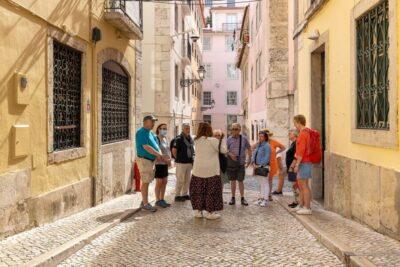

Best of Lisbon Small-Group Guided Walking Tour
Read our review →
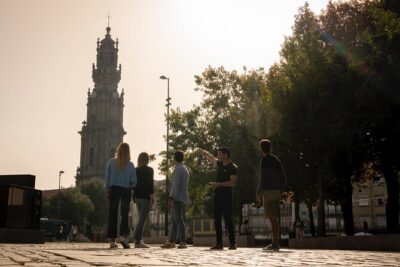
Porto Walking Tour, Lello Bookshop, River Cruise and Cable Car
Read our review →

Best of Lisbon Walking Tour: Rossio, Chiado & Alfama
Read our review →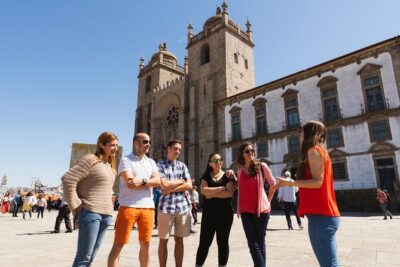
Experience Porto’s Charm: 3-Hour Guided Walking Tour
Read our review →
Enjoy a Guided Levada Walk in the Rabaçal Valley
Read our review →Browse the lists this tour appears in