

Reviewed · EVORA TOURS
Marble Tour in Vila Viçosa
Portugal’s marble country is not a polished palace interior. It is a working world of giant cuts in the earth, roaring machinery, dusty workshops, and stone blocks bound for homes and monuments around the globe. This two-hour tour takes you into that world around Vila Viçosa, the country’s marble capital, where the quarries have shaped both the town and its surroundings.
I like the clear look at the whole process, from choosing stone underground to cutting, washing, polishing, and making finished pieces. I also like the human side: guides such as João explain how marble supports the local community, while artisan workshops show the patience needed to turn a hard block into art.
The main drawback is practical rather than cultural. You need your own private vehicle to move between the stops, and the quarry and factory visits are not suited to wheelchair users or people with mobility impairments. Wear closed shoes, expect dust, and do not plan this as a walk through town.
Key points to know before you book

- See three working quarries: The tour can take you past quarries that grow larger and deeper, with extraction machinery and huge marble slabs in view.
- Follow marble from rock to finished product: You see cutting, washing, polishing, shaping, and preparation for sale.
- Start with useful local context: The Marble Interpretive Center explains geology, geography, history, and the industry’s social importance.
- Meet the craft behind the stone: Artisan workshops reveal how marble becomes handmade objects and art pieces.
- Bring your own vehicle: Transportation between Vila Viçosa, the quarries, factory, and workshops is not included.
- Budget about two hours: The $29 price is reasonable for a guided look at several parts of an industry most people cannot access alone.
Why Vila Viçosa is the right place to study marble
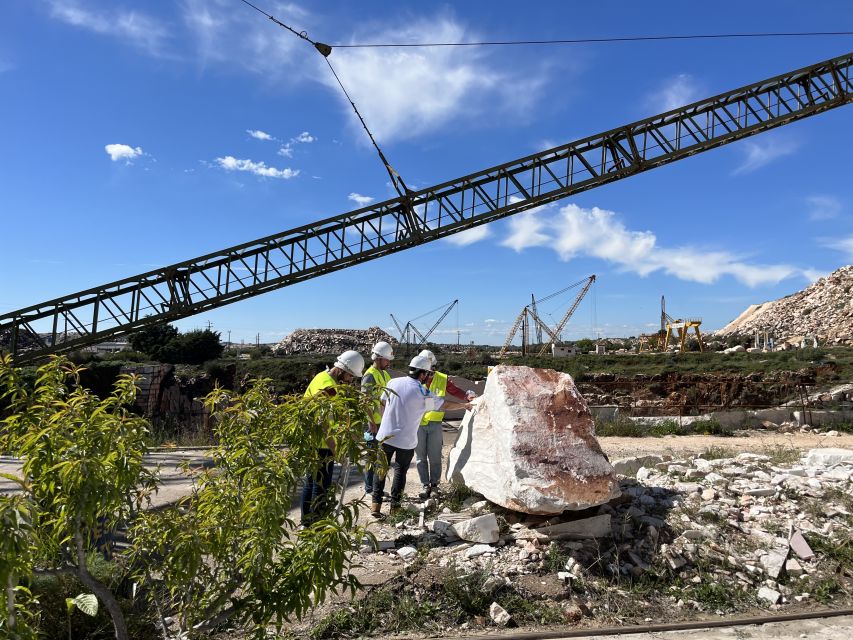
Vila Viçosa is a small Alentejo town where marble is not confined to a museum display. You see it in buildings, paving, details, workshops, and public spaces. The stone has been valued since Roman rule in the Iberian Peninsula, and marble from the Alentejo has been shipped far beyond Portugal.
That background matters because the tour is not simply a quarry visit. It explains why the industry took root here and how it affects daily life. At the Marble Interpretive Center, your guide covers the geology beneath the region, the geography that made extraction possible, and the history of quarrying over the centuries.
I find this opening useful because it gives you a way to read the scenes that follow. Without it, a quarry can look like a huge hole with machines at the bottom. With the basic geology in place, you can better understand why some stone is selected, how the ground is assessed, and why a particular block may be worth cutting while another is not.
The center also addresses the social role of marble. The industry is important for local income, but its value is not only financial. Families, skills, work patterns, and the identity of Vila Viçosa are tied to the quarries. That makes the experience more personal than a standard factory visit.
A few more Evora options worth putting side by side
- Évora and Megaliths Full-Day Tour from Lisbon
★ 4.7 · 456 reviews - Marble Tour in Vila Viçosa
★ 5.0 · 308 reviews - From Lisbon: Évora and Monsaraz Day Tour with Wine Tasting
★ 4.8 · 279 reviews
The Marble Interpretive Center gives you the essential vocabulary
The tour begins at Rota do Mármore AE, the white building with three brick arches and the Rota do Mármore AE and CECHAP logos. This is the meeting point and the base for the introduction.
Allow the first part of the tour to settle the basics. You learn how marble forms, how its colors vary, and how people decide where and how to extract it. The exact rhythm depends on the guide and the day, but the planned introduction lasts about 30 minutes.
This is also where a good guide makes a real difference. João has been praised for explaining the subject in clear English and for keeping the information lively. One particularly useful detail is his family connection to quarry work, which gives him a direct feel for the trade rather than only a textbook understanding of it. Tours may also be led by guides speaking Portuguese, English, or Spanish.
Do not expect a long museum visit filled with finished objects. The center is a starting point, designed to prepare you for the working sites outside town. If you already know a great deal about geology, this part may feel basic. For most people, it is just enough background to make the quarry visit much more rewarding.
The quarry views are the tour’s strongest moment
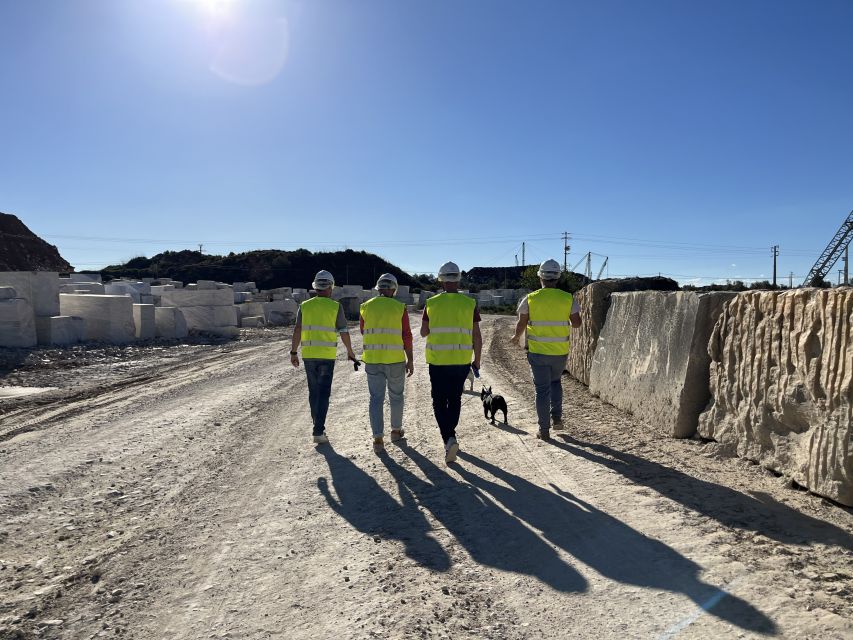
After the introduction, you travel by your own vehicle to the marble industry sites. The route itself becomes part of the experience, as the countryside gives way to a setting shaped by quarrying over many generations.
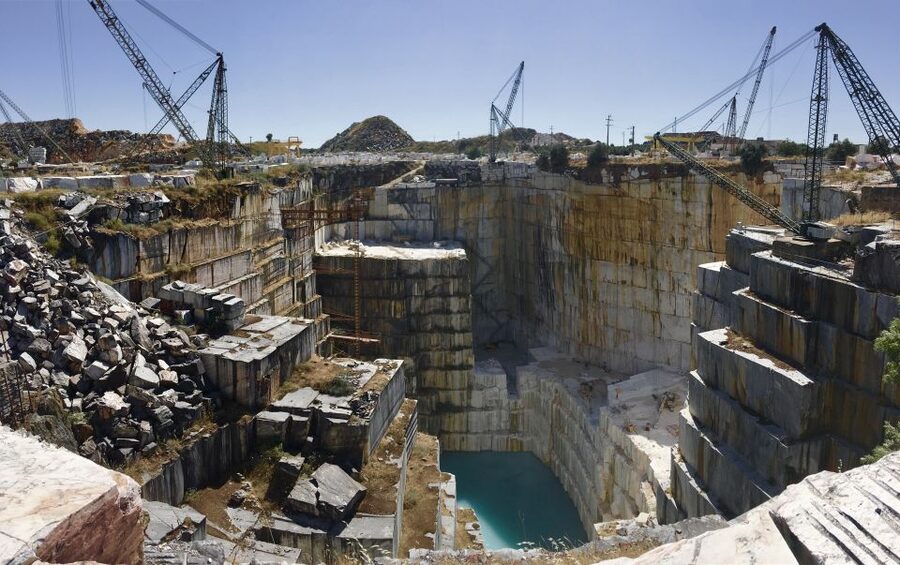
The views can be startling. Instead of a gentle rural scene, you see enormous excavated areas, pale rock faces, terraces, heavy equipment, and marble in several stages of removal. The effect has been described as almost apocalyptic, which is a fair warning about the scale and raw appearance of the sites. This is not a manicured viewpoint.
A typical visit includes several quarries, with some examples growing larger and deeper than the last. You may see workers cutting out large slabs and identify the machinery used to separate and move the stone. That working activity is what gives the stop its value. You are not only looking at an old excavation. You are seeing a current industry at work.
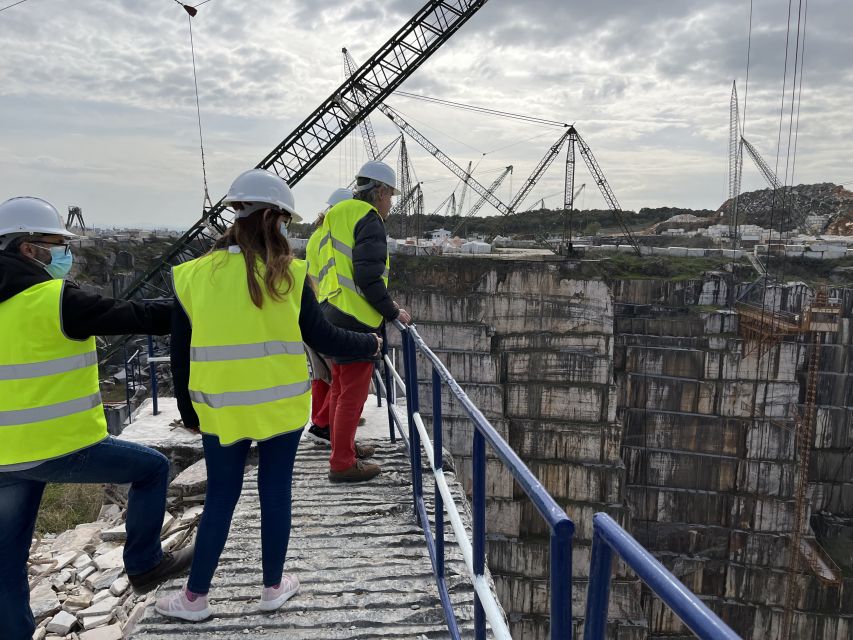
Your guide also explains the risks. Quarrying involves heavy machinery, steep cuts, falling material, and controlled operations. Safety equipment is included, but you still need to listen carefully and follow instructions. This is one reason the tour is not suitable for people with mobility impairments or wheelchair users.
The quarry stop is planned for roughly 45 minutes, though the exact time can depend on operating conditions. Bring water and wear sturdy, closed-toe shoes. Sandals and flip flops are not allowed, and comfortable clothing makes sense in an active industrial setting.
One striking point from the tour is the estimated future of the resource. The area may still have around 300 years of mining ahead. That figure puts the industry into perspective: these are not merely remnants of an old trade, but active sites with a long expected future.
The factory shows why extraction is only the beginning
Freshly removed marble is not ready to become a countertop, tile, monument, or sculpture. The factory visit explains the less glamorous but essential work between quarry and final sale.
You can see blocks being cut down in stages, washed, and polished. The sequence helps you understand how much labor and equipment goes into producing a smooth, usable surface. A large block becomes manageable slabs or smaller pieces, each prepared for a particular market.
This stop is especially good for anyone interested in homes, architecture, or materials. A finished marble floor often looks simple. Seeing the cutting and polishing process makes it clear how much happens before that tile reaches a building site.
The factory also gives the tour a useful economic angle. Marble is exported around the world, but it passes through local hands first. Extraction, transport, cutting, polishing, sales, and craftsmanship all connect the stone to the community.
Dust is part of the setting. One practical suggestion is to bring a mask for the workshop and factory portions, especially if you are sensitive to airborne dust. The supplied information does not promise masks, so carry your own if that would make you more comfortable.
The factory portion lasts about 30 minutes in the planned schedule. It is a hands-on visual stop, but do not expect a retail showroom tour alone. The point is to show production stages and the work involved in preparing marble for use.
Same base, a completely different sort of day:
- 2-Hour Surf Lesson in Alentejo
★ 5.0 · 243 reviews - Évora and Monsaraz with Regional Wine Tasting from Lisbon
★ 4.5 · 229 reviews - Évora: Private walking tour with tickets to main monuments
★ 5.0 · 223 reviews - Private Day Tour With Guide to Évora and Monsaraz
★ 5.0 · 134 reviews
Artisan workshops reveal the softer side of a hard material

The final part of the experience moves from industrial scale to handwork. At local artisan workshops, you see marble shaped into decorative pieces and art. The contrast is strong: at the quarry, the stone is measured in enormous blocks; here, the focus narrows to the marks made by individual tools and hands.
This is where marble becomes more than a building material. Your guide can connect the colors and patterns of Portuguese marble with the finished objects around you. Some pieces are practical, some decorative, and some are made as genuine art.
The workshop stop is scheduled for about 15 minutes, so keep your expectations realistic. You get a short look at the craft rather than an extended class or a chance to make your own piece. Still, it completes the story well. You have seen the stone underground, watched it pass through industrial machinery, and then seen a craftsperson give it a personal form.
The workshops are also a good reminder that local production is not only about large exports. Skills survive through small businesses and artisans. If you like buying meaningful souvenirs, this may be the point where you find something more connected to the place than a mass-produced gift.
Again, dust may be present. Comfortable clothes and closed shoes are the sensible choice, and a face mask is worth carrying.
What you get for $29
At $29 per person, this is good value if you want access to several parts of the marble trade in a short amount of time. A self-guided drive past quarries might give you views, but it would not give you the same explanation of geology, machinery, safety, processing, and local life. The guide is the main value.
You also receive safety equipment and a professional local guide. The tour is available in Portuguese, English, and Spanish, which makes the technical subject easier to follow. João, in particular, has been praised for clear English, an easy manner, and an entertaining approach to the subject.
The price does not include transportation, food, drinks, hotel pickup, or personal expenses. The transportation point matters most. You need a private vehicle during the tour, so this is not a simple walk from the town center and not a shuttle excursion.
For a two-hour experience, the schedule is full. You receive an introduction, quarry views, a factory visit, and an artisan stop. The tradeoff is that no single stop receives a very long visit. I would book it for the range of access and explanation, not for slow photography or a long workshop session.
Who will enjoy this experience most
I would recommend the tour to you if you enjoy seeing how ordinary products are made, especially when the work is tied closely to a particular place. It suits people interested in geology, architecture, sculpture, construction, local industry, and photography.
It is also a strong choice if you have already seen Portugal’s churches and palaces and want to understand the material behind some of their decorative details. Marble can seem luxurious and finished in historic buildings. This tour shows the rough, noisy, physical work that comes first.
Families with older children may find the scale of the quarries memorable, though the safety rules and walking conditions need to be taken seriously. The experience is less suitable for anyone wanting a gentle sightseeing trip, a fully accessible route, or a long cultural visit inside town.
You should also think about the weather and your clothing. The supplied information calls for comfortable shoes, water, comfortable clothing, and closed toes. That is practical advice, not a formality. Quarry and workshop conditions are very different from a paved museum.
Timing, meeting point, and small practical details
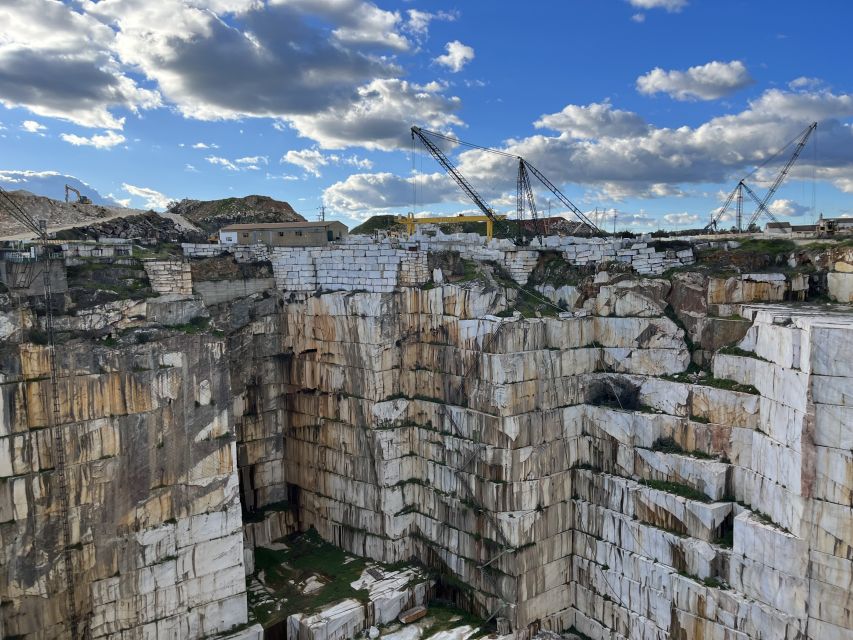
Meet at the Rota do Mármore AE headquarters, identified by the white building, three brick arches, and the Rota do Mármore AE and CECHAP logos. Check the available starting times when booking, since the activity lasts about two hours.
Free cancellation is available up to 24 hours in advance, and you can reserve now and pay later. Those options are useful if your Alentejo route is still changing.
Remember the main limitation: you must have a private vehicle to travel between sights. The tour provider does not supply hotel pickup or drop-off. There is also no food or drink included, so bring water and eat before or after the activity.
The tour is not designed for wheelchair users or people with mobility impairments. Baby strollers are not allowed. These restrictions make sense given the quarry and industrial settings, but they are important to check before booking.
Should you book the Vila Viçosa marble tour?
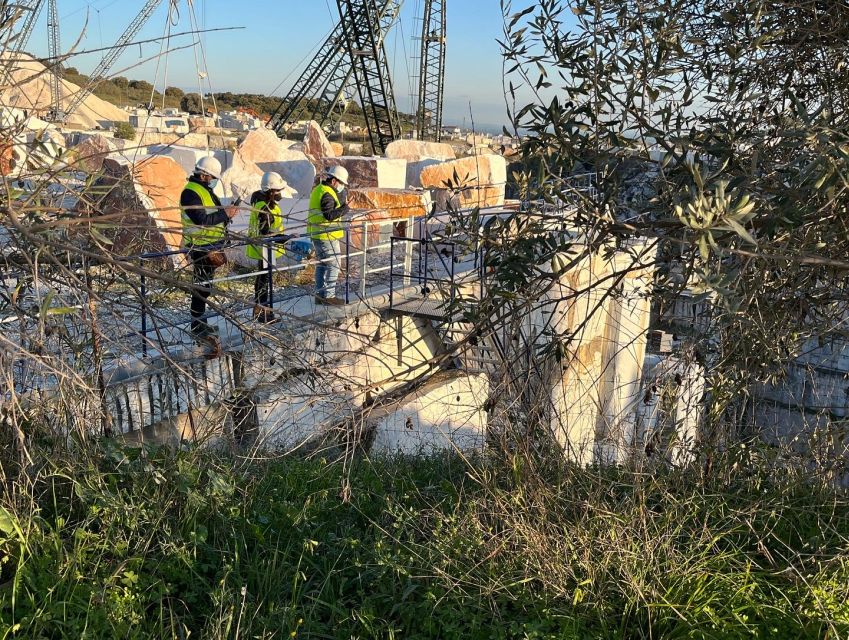
Book it if you want a close look at a working Portuguese industry and prefer real production sites to another standard sightseeing stop. The quarry views are the main draw, while the factory and artisan workshop give the visit a satisfying beginning-to-end story.
The experience is especially worthwhile because the guide connects the stone to Vila Viçosa’s people and history. You do not simply see marble being cut. You learn why it matters, how dangerous the work can be, and how a raw block becomes a polished surface or handmade artwork.
Skip it if you do not have a private vehicle, need step-free access, or dislike dust and industrial settings. For everyone else, $29 buys a rare look behind the polished marble seen in Portugal’s buildings and homes.
FAQ
Where does the Marble Tour in Vila Viçosa begin?
It begins at Rota do Mármore AE in Vila Viçosa. Look for the white building with three brick arches and the Rota do Mármore AE and CECHAP logos.
How long does the tour last?
The tour lasts about two hours. The planned schedule includes around 30 minutes at the initial Vila Viçosa stop, 45 minutes for quarry sightseeing, 30 minutes for another guided visit, and 15 minutes at the final stop.
What languages are available?
Live guides are available in Portuguese, English, and Spanish.
Is transportation included?
No. You need a private vehicle during the tour to travel between the meeting point, quarries, factory, and workshops. Hotel pickup and drop-off are not included.
What should I wear and bring?
Bring comfortable shoes, closed-toe shoes, water, and comfortable clothing. Sandals and flip flops are not allowed. A mask may also be useful in the workshop because dust can be present.
Is the tour suitable for wheelchair users?
No. The tour is not suitable for wheelchair users or people with mobility impairments. Baby strollers are also not allowed.
The newest listings around Evora
- 2hr Walk in a Cork Forest★ 4.5 · 42 reviews
- Grande Prova Honrado Vineyards★ 5.0 · 46 reviews
- From Lisbon: Small-Group Day Tour to Évora and Monsaraz★ 4.6 · 54 reviews
- Évora (with Sé & Bones), Evoramonte & Arraiolos: From Lisbon★ 4.7 · 57 reviews
- Évora: Private tour with entrance tickets to main monuments★ 5.0 · 57 reviews
- From Lisbon: Évora Wine & Heritage Tour★ 4.1 · 93 reviews
- Tour Évora and Alentejo in a private tour★ 5.0 · 124 reviews
- From Lisbon to Alentejo: Évora and Megaliths Full-Day Group Tour★ 4.5 · 111 reviews
Evora Tours, compared.




Évora and Monsaraz with Regional Wine Tasting from Lisbon
Read our review →
Private walking tour with tickets to main monuments
Read our review →
Private Day Tour With Guide to Évora and Monsaraz
Read our review →
From Lisbon to Alentejo: Évora and Megaliths Full-Day Tour
Read our review →Browse the lists this tour appears in