
Reviewed · COIMBRA TOURS
Portugal dos Pequenitos entry ticket
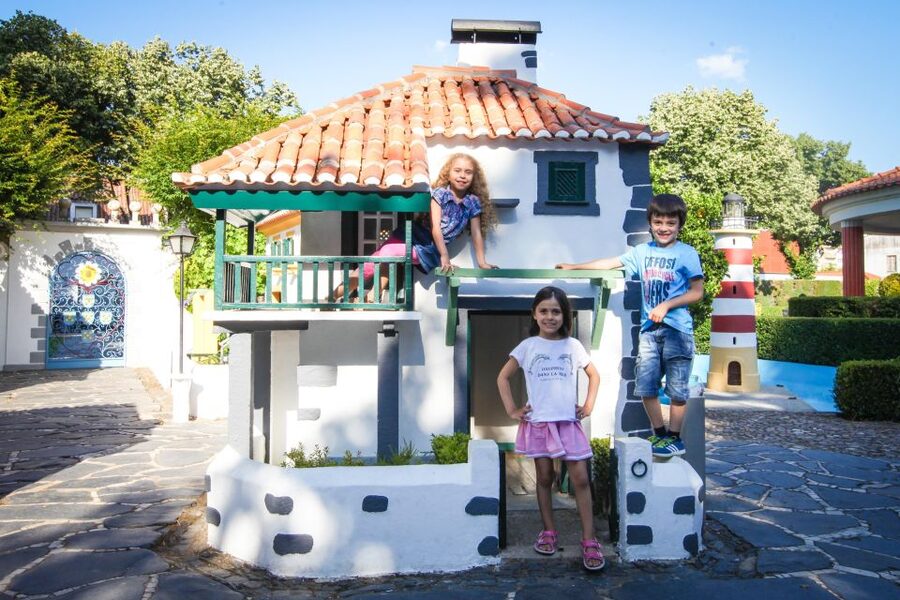
Portugal dos Pequenitos turns a country into a walkable miniature world. In one visit, you can move from northern Portuguese building styles to southern traditions, then on to architectural and cultural displays linked with Brazil, Macau, India, Timor, and Portuguese-speaking Africa. The park began as a display of Portugal’s heritage and grew into something much broader.
I like the wide cultural range and the way the park gives children a clear, hands-on way to compare regions. I also like that the $17 ticket includes the exhibitions and programmed activities, with no required guided-tour fee. The main drawback is upkeep: some electronic information points may not work, and several areas could use better signs and maintenance.
Key points to know before you go
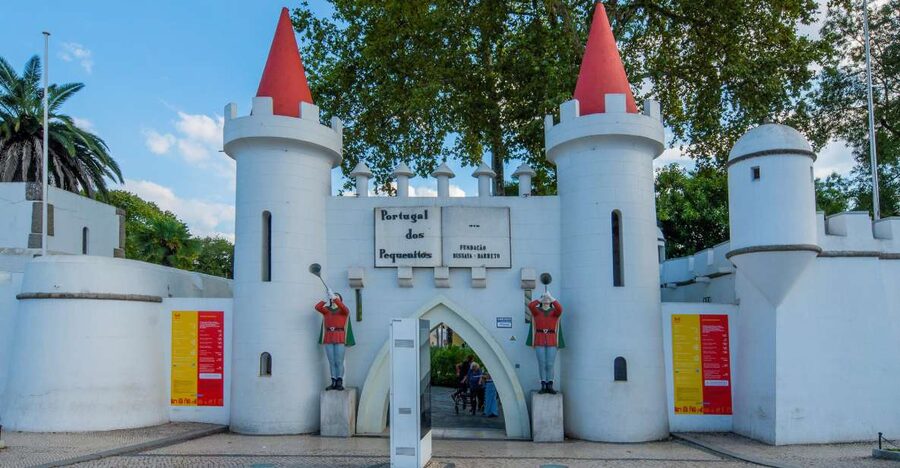
- A 1.3-hectare miniature tour: You can cover a great deal in a compact area, although the advertised one-hour visit can stretch much longer.
- Portugal from north to south: The original focus is regional Portuguese architecture, construction methods, and traditional crafts.
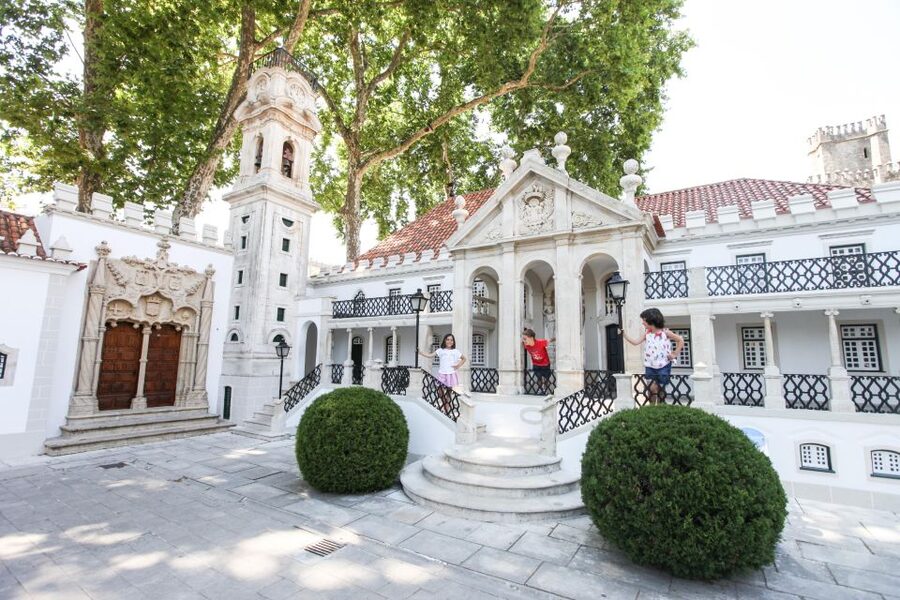
- Portugal and the World: Later additions represent Portuguese-speaking parts of Africa, Brazil, Macau, India, and Timor.
- Designed by major Portuguese names: Architect Cassiano Branco created the project, with Manuel de Jesus Cardoso directing the construction work.
- A $17 self-guided visit: Your admission covers the park, exhibitions, and programmed activities, but guided tours cost extra.
- Check your voucher at the gate: Some admissions have required the voucher link to be sent by email before the ticket could be validated.
A miniature tour from northern Portugal to the south

The best way to understand Portugal dos Pequenitos is as a compact introduction to the country’s regional identity. The park was created to show how Portuguese buildings change from one part of the country to another, shaped by local materials, terrain, and ways of living.
That gives the visit more purpose than a collection of small buildings. You are not just looking at tiny façades. You are comparing different approaches to construction and seeing how geography affects the look of a place. The scale makes those differences easy to spot, especially for children.
The original section presents Portugal from north to south. You can expect miniature examples of architectural styles and construction types, along with displays connected to traditional crafts. The supplied information does not list each building by name, so I would treat this as a broad regional survey rather than a precise architectural walking tour.
This part works best when you slow down. A one-hour entry time is enough for a quick circuit, but it is not a strict limit on your visit. The park covers 1.3 hectares, and the attraction itself says you may spend a full day exploring. Families with children will likely stop often, while adults who want to read and compare details should allow more than the basic hour.
A few more Coimbra options worth putting side by side
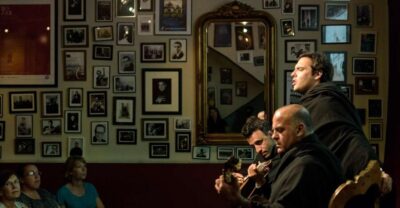
- Coimbra: Live Fado Show with Glass of Port Wine
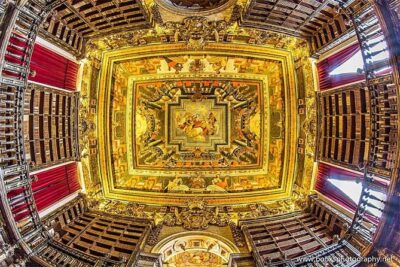
★ 4.7 · 998 reviews - University of Coimbra guided tours without queue
★ 5.0 · 518 reviews - Guided tour of the University and city of Coimbra.
★ 5.0 · 377 reviews
Why the miniature scale works
Miniature architecture gives you an unusual way to read a country. A full-size building can be impressive, but it can also be difficult to compare with structures from another region. Here, the compact scale puts different forms close together and lets you see the contrast at a glance.
I especially like this approach for families. Children can grasp the idea that Portugal is not architecturally identical from one end to the other. They can look at rooflines, building shapes, and decorative details without needing a long lecture first.
Adults get something useful, too. The park’s founding idea connects architecture with geomorphological factors, meaning the physical character of each region. That makes the visit a light introduction to how place, materials, and local habits influence buildings.
The limitation is that miniatures can simplify. If you want detailed architectural interpretation, the self-guided visit may feel thin in places. Information beside each area has been described as insufficient, and some electronic information boards have not been operating. I would come ready to observe the buildings rather than depend on every display to explain them.
Portugal and the World in one walk

The park expanded beyond mainland Portugal in later years. The area now known as Portugal and the World presents ethnographic and monumental aspects of Portuguese-speaking African countries, Brazil, Macau, India, and Timor.
This is an important part of the visit because it changes the story. Portugal dos Pequenitos is not only a regional display of Portuguese houses. It also shows the wider cultural and historical connections created through the Portuguese-speaking world.
You should expect this section to work as a visual introduction rather than a complete history lesson. The information provided does not specify every country represented in a separate building or explain the exact route through the area. Still, the range gives you a reason to look beyond familiar Portuguese architecture.
I find this part most useful when you treat the park as a starting point. The miniatures can prompt questions about architectural influence, cultural exchange, and the different places where Portuguese is spoken. If you want detailed context for each country or territory, a guided visit may be worth considering, provided you arrange it in advance.
The work of Cassiano Branco and Manuel de Jesus Cardoso
The park’s design has a strong architectural pedigree. Cassiano Branco, one of the major names in modern Portuguese architecture, carried out the construction project. Manuel de Jesus Cardoso directed the works and brought the physical build to life.
That detail adds value to what might otherwise seem like a simple family attraction. You are looking at a planned architectural project, not just scattered models placed around a playground. The park’s original purpose was to present Portugal’s heritage through building styles, construction methods, and traditional crafts.
The names also help explain why the park has lasting cultural interest. Its appeal is not only the novelty of seeing small buildings. The layout reflects a deliberate effort to make Portuguese culture visible through architecture and regional comparison.
At the same time, age matters. The park is described as the oldest miniature park in Portugal, and some parts now look dated. One recent visit found the grounds beautiful and well preserved overall but noted a lack of information in some areas. Another found the park in poor condition, with electronic signs often switched off. I would expect charm and character, but not a freshly renovated attraction at every turn.
Same base, a completely different sort of day:
- Coimbra: Mondego River Kayaking Tour
★ 4.7 · 324 reviews - Aveiro and Coimbra Small Group Tour with Moliceiro Boat Cruise
★ 4.5 · 236 reviews - From Porto: Aveiro & Coimbra Tour with Moliceiro Boat Cruise
★ 4.6 · 219 reviews - Coimbra: Guided tour with a local student
★ 5.0 · 170 reviews
What your $17 ticket covers
At about $17 per person, admission is reasonable if you plan to spend several hours in the park. The ticket includes the visit, exhibitions, and programmed activities unless a particular activity is marked otherwise.
The value depends on how you use the space. If you rush through in exactly one hour, the price may feel less appealing, especially if several information points are not working. If you take time with the regional architecture and the Portugal and the World area, the same ticket makes more sense.
The attraction gives you flexibility. You do not have to pay for a guide to enter, and there is no stated requirement to join a group. That suits families and independent visitors who prefer to set their own pace.
Guided tours are a separate cost. They must be arranged directly with the park, are subject to availability, and are priced according to the size of the group or party. You pay for the guide at the park’s ticket office. If you want a more explained visit, do not assume you can arrange it on arrival.
The booking platform’s price has also been reported as matching the ticket-office price. That makes online booking useful mainly for flexibility, advance planning, and the option to reserve now and pay later, rather than for a guaranteed discount.
Allow more than the listed one-hour duration
The activity is listed as lasting one hour, but that figure should be read as a suggested visit duration, not a hard park limit. The attraction says you can spend a full day exploring the 1.3-hectare site.
I would allow at least one hour for a brisk visit and longer if you are traveling with children or want to examine the architecture. The miniature scale encourages stops, and the park includes several distinct themes rather than a single display.
The final entry is 30 minutes before closing. That matters if you are planning a late visit, since arriving just before the last admission leaves little time to see the park properly. Christmas Day, December 25, is the stated annual closure.
There is no guide included by default. Staff or greeters may communicate in English, French, Portuguese, Spanish, or Tagalog, but the information does not identify individual guides by name. If language support matters to you, check what is available on your chosen date.
Practical limits inside the park
Portugal dos Pequenitos is wheelchair accessible, which makes the admission suitable for many visitors with mobility needs. Mobility scooters, however, are not allowed, so that distinction matters when planning.
The park also prohibits large bags and oversize luggage. Leave those behind before you arrive, since they may not be accepted inside. Pets, bicycles, skateboards, drones, surfboards, and fishing equipment are also not allowed.
The long list of restrictions reflects a quiet, family-focused attraction. Smoking indoors, alcohol and drugs, fireworks, weapons, sharp objects, climbing, jumping, swimming, and making fires are prohibited. Noise, littering, touching plants or animals, and party groups are not permitted either.
Unaccompanied minors are not allowed. Bachelor and bachelorette groups are also excluded, so this is not the right setting for a party-style outing. The rules are stricter than you might expect for a miniature park, but they protect the displays and keep the area calm.
A small booking detail worth checking
There has been a practical issue with voucher validation. At least some visitors have reached the entrance and found that the ticket could not be scanned or accepted immediately. They were asked to send the voucher link by email before entry could be confirmed.
I would keep the voucher link open on your phone and make sure you can access your email at the gate. This does not mean every booking will have a problem, but it can prevent a needless delay.
The booking terms allow free cancellation up to 24 hours before the visit for a full refund. You can also reserve and pay later, which is helpful when your Portugal schedule is still changing.
Who will enjoy Portugal dos Pequenitos most
This attraction is best for families who want a visual, low-pressure introduction to Portuguese architecture and culture. Children get the immediate fun of miniature buildings, while adults can pay attention to regional design and the links between Portugal and the wider Portuguese-speaking world.
It also suits independent visitors who dislike fixed tours. You can move at your own pace, spend more time in the areas that interest you, and skip a guided-tour surcharge.
I would be more cautious if your main goal is detailed historical interpretation. The park’s subject is broad, but the information beside individual areas may be limited. A guided tour could help, though availability and extra cost apply.
It may also disappoint anyone expecting a fully modern attraction. Some sections are well kept and attractive, but electronic displays may be out of service, and parts of the park can feel dated. Think of it as an established cultural park with a lot of character, not a new high-tech exhibition.
Should you book this entry ticket?
Book it if you want a family-friendly way to see Portugal’s regional architecture in one compact visit, with the added interest of Brazil, Macau, India, Timor, and Portuguese-speaking Africa. The $17 admission is fair when you use the park as a longer self-guided outing rather than a quick one-hour stop.
I would book with realistic expectations. The strongest features are the concept, the range of places represented, the miniature scale, and the chance to explore without paying for a guide. The weak points are uneven information, occasional electronic displays that do not work, and maintenance that may not match a newly built attraction.
If you go, keep your voucher ready, avoid bringing large bags, and allow more time than the basic duration suggests. For families and curious architecture fans, Portugal dos Pequenitos earns its place on the itinerary. For a short, highly polished museum visit, it may not be the best match.
FAQ
How much does entry to Portugal dos Pequenitos cost?
The listed price is $17 per person.
How long does a visit take?
The activity is listed as one hour, but the park covers 1.3 hectares and says visitors may spend a full day exploring.
What does the entry ticket include?
Admission includes the visit, exhibitions, and programmed activities unless otherwise stated.
Are guided tours included?
No. Guided tours cost extra, must be booked directly with the park, depend on availability, and are paid at the park’s ticket office.
Is Portugal dos Pequenitos wheelchair accessible?
Yes, the park is wheelchair accessible. Mobility scooters are not allowed.
Can I cancel the booking?
Yes. You can cancel up to 24 hours in advance for a full refund.
Is the park open on Christmas Day?
No. Portugal dos Pequenitos is closed on December 25. Last entry on other operating days is 30 minutes before closing.
The newest listings around Coimbra
- Lousa Mountain Private Tour★ 5.0 · 88 reviews
- Soft Canyoning, river Ceira, Góis, Serra da Lousa, Coimbra★ 5.0 · 48 reviews
- Schist Villages at Lousa Mountain★ 5.0 · 127 reviews
- Schist Villages of Lousã Mountain, half-day from Coimbra★ 5.0 · 42 reviews
- Discovering the charms and places of Coimbra★ 5.0 · 78 reviews
- Coimbra Private Walking Tour with U.C. Tickets Early Access★ 4.5 · 68 reviews
- University of Coimbra – more complete and private visit, ticket included★ 5.0 · 53 reviews
- A tour between Cascades and Schist Villages, Piodão★ 5.0 · 46 reviews
Coimbra Tours, compared.
University of Coimbra guided tours without queue
Read our review →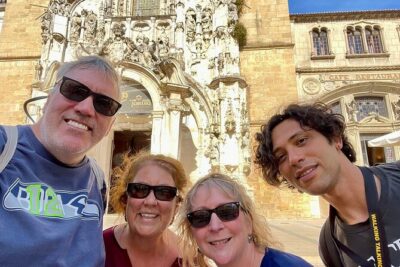
Guided tour of the University and city of Coimbra.
Read our review →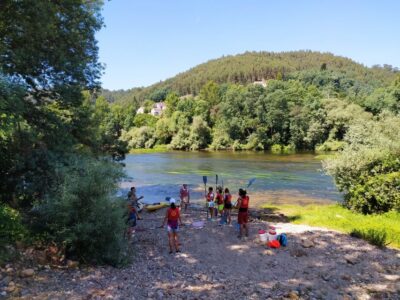
Aveiro and Coimbra Small Group Tour with Moliceiro Boat Cruise
Read our review →
Aveiro & Coimbra Tour with Moliceiro Boat Cruise
Read our review →
Full Day Tour from Porto to Coimbra and Aveiro with River Cruise
Read our review →Browse the lists this tour appears in