
Reviewed · COIMBRA TOURS
Schist Villages of Lousã Mountain, half-day from Coimbra
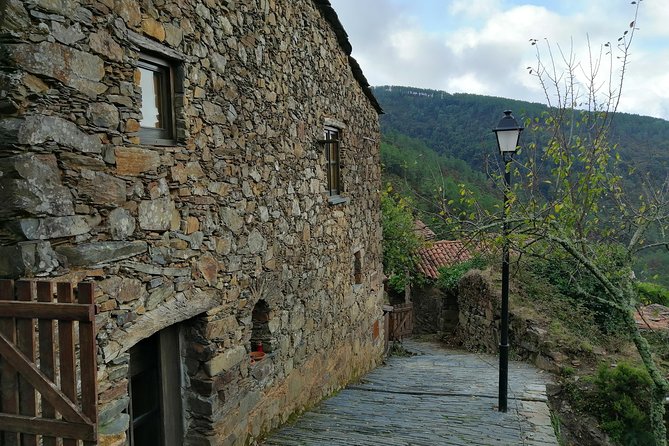
The most appealing part of this tour is the setting: three schist villages tucked into the Lousã mountains, where stone houses climb steep hillsides and wooded slopes open to wide valley views. You get far beyond Coimbra’s grand monuments without spending a full day on the road.
I like the small-group format, with no more than eight people, and the chance to travel with guides such as Pedro or Xavier, who explain both village life and Portugal beyond the usual tourist facts. I also like that the tour leaves time to walk, rather than treating the villages as quick photo stops.
The main catch is physical. These are hillside villages, and steep lanes, stairs, and uneven surfaces are part of the experience. One stop may feel strenuous if you have limited mobility, and some restored houses may look less medieval than you expect.
Key points to know before you book
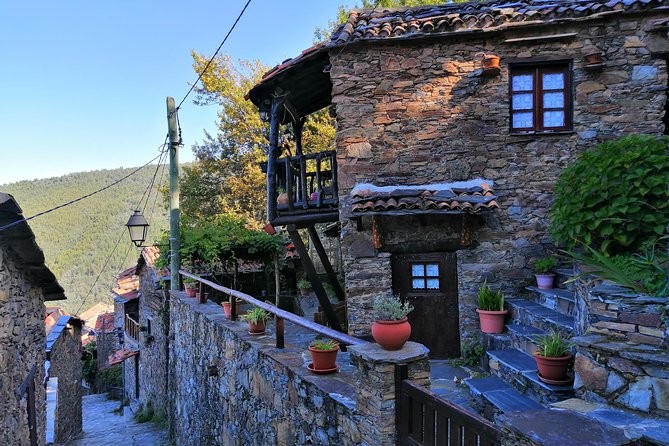
- Three very different villages: Cerdeira is artistic and carefully restored, Candal is easy to reach and has a fine viewpoint, while Talasnal is the largest and most atmospheric.
- A skilled mountain driver matters: The roads are narrow, winding, and full of hairpin turns, so having Pedro or Xavier at the wheel removes a real source of stress.
- Four hours is enough for an introduction: You receive about 45 minutes at each village, plus driving time, but not a long hike or a leisurely mountain lunch.
- Small groups keep the visit personal: The maximum group size is eight, and the private format allows the guide to adjust explanations to your questions.
- Expect stairs and climbing: The best views often require going uphill through narrow lanes.
- Bring your own meal plan: Bottled water and transport are included, but lunch is not.
Why these mountain villages are worth the trip from Coimbra
Coimbra is known for its university, old streets, and riverside setting. The Lousã mountain villages give you a very different view of central Portugal. Here, the buildings are made from local schist, a dark, layered stone often paired with clay and brown wood.
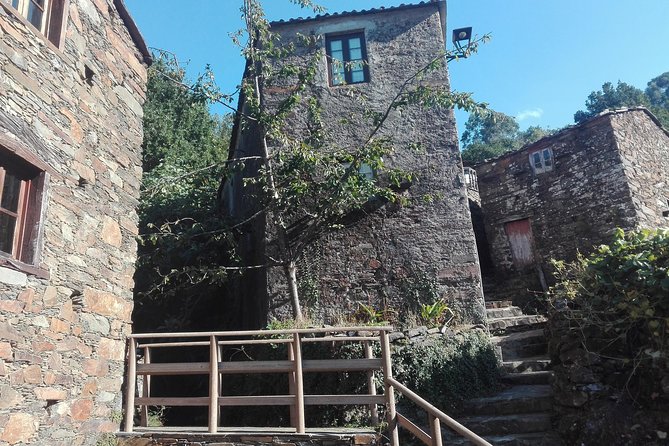
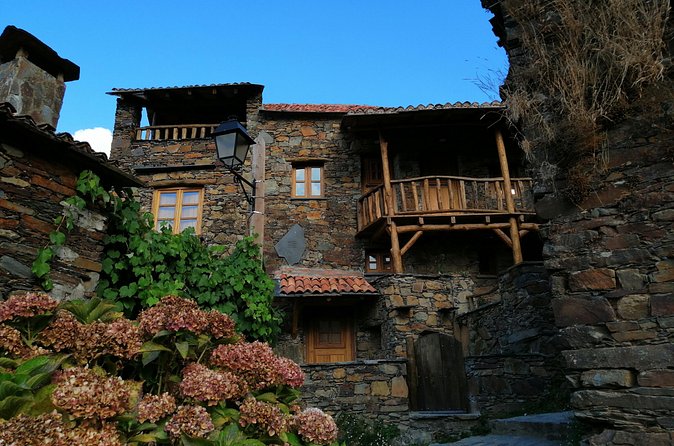
The charm comes from the way the houses fit the slopes. They do not form a neat town square with broad streets. Instead, you find stairways, narrow passages, balconies, and homes packed into uneven ground. That makes the villages feel close to the mountains rather than placed beside them.
This is also a useful trip if you want to understand why rural restoration matters. Several of these communities have been rebuilt or carefully maintained, and their value is not only visual. They reflect older building methods, local materials, mountain settlement patterns, and efforts to keep small communities meaningful in modern Portugal.
The tour is especially useful because getting there independently is not simple. The roads have tight bends and switchbacks, and reaching the villages requires confidence behind the wheel. Guides Pedro and Xavier are praised for handling the mountain roads carefully, which lets you watch the scenery instead of worrying about the next turn.
More half-days in Coimbra:
- From Albufeira: Half-Day Algarve Jeep Safari
★ 4.7 · 2,039 reviews - Madeira: Nuns Valley Half-Day Tour
★ 4.5 · 1,955 reviews - Lisbon: 7 Hills Half-Day Electric Bike Tour
★ 4.9 · 1,592 reviews
Cerdeira: an artistic village in the trees
Cerdeira is the first stop and a gentle introduction to the character of the area. Its houses have been rebuilt with schist, clay, and dark wood, and the village is closely tied to an arts and crafts school.
That artistic focus gives Cerdeira a different feel from a simple preserved settlement. You are not only looking at old walls. You are seeing a place where craft, creativity, quiet, and the surrounding mountains are part of the village identity.
Allow about 45 minutes here. That is enough to walk through the compact settlement, study the construction, and take in the natural setting without rushing. The lanes may invite you to stop often, especially if you enjoy architectural details and close-up photographs.
Cerdeira is a good place to ask your guide how the restoration work changed the village. The houses are attractive because they have been repaired and integrated into the slope, but that also means the stop may not match an expectation of untouched medieval ruins. The appeal is the blend of traditional materials and present-day artistic life.
Candal: the easiest village to reach
Candal is described as the best located, most developed, and most visited of the three. Its easy access helps explain why it feels more prepared for visitors, but it does not lose its mountain character.
The village sits on a south-facing hillside. You walk through narrow, steep streets, then reach a viewpoint with broad views across the valley. That viewpoint is the main reward here, so keep some energy for the climb.
Candal may be the most comfortable stop for getting your bearings. It gives you a clear sense of how these settlements use the slope, how the homes follow the contours, and how a small mountain village can open suddenly to a much wider view.
At the same time, its popularity means it can feel less secluded than Cerdeira or Talasnal. If you want the most polished introduction to schist villages, Candal fits well. If you want the strongest feeling of a quiet, timeworn settlement, the other two stops may appeal more.
Talasnal: the most atmospheric walk
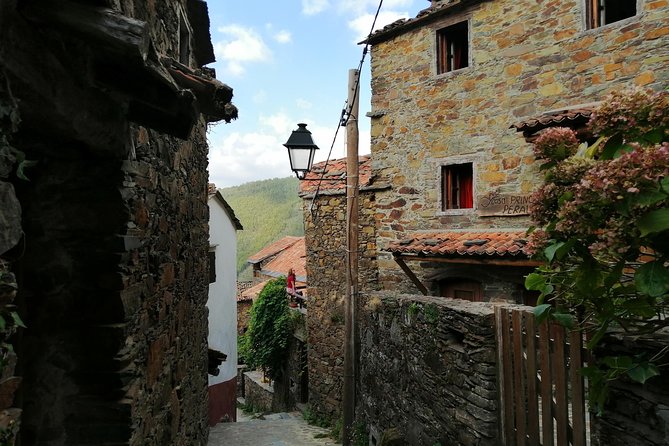
Talasnal is the largest and best-preserved village on the route, and it is likely to be the stop you remember most. It has the strongest sense of a complete hillside community, with houses, stairs, balconies, and alleys arranged across the slope.
There is no simple straight path through Talasnal. You go up and down, turn into small passages, and pause at balconies to look back over the buildings and mountains. The village rewards slow walking, but the same layout creates the tour’s biggest physical demand.
Give yourself time to notice the meeting of natural rock, human construction, and vegetation. The setting feels theatrical without being artificial. A stairway may lead you to a new angle on the rooftops, while a small opening between buildings can reveal the valley below.
Talasnal is where the tour’s worth the climb quality becomes clear. It is also where you should be honest about your fitness. The official guidance calls for a moderate level of physical fitness, and that is practical advice, not a formality. If stairs and uneven paths are difficult for you, tell the provider before booking and ask what can be adjusted.
A few more Coimbra options worth putting side by side
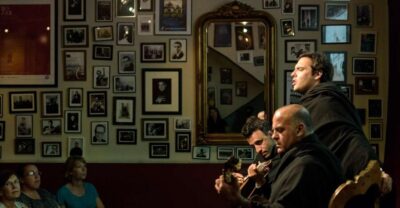
- Coimbra: Live Fado Show with Glass of Port Wine
★ 4.7 · 998 reviews - University of Coimbra guided tours without queue
★ 5.0 · 518 reviews - Guided tour of the University and city of Coimbra.
★ 5.0 · 377 reviews - Coimbra: Mondego River Kayaking Tour
★ 4.7 · 324 reviews
What the guide adds to the stone and scenery
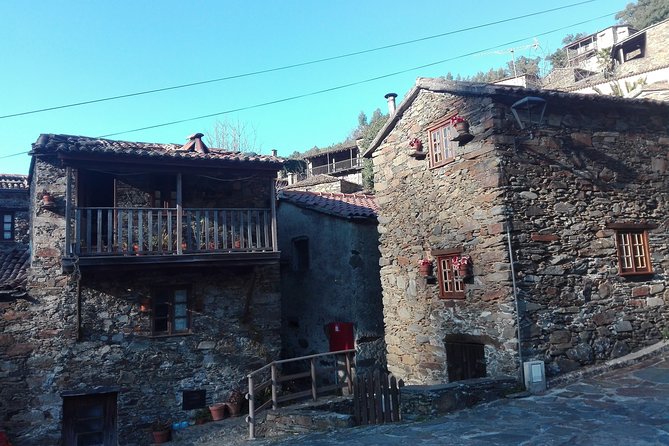
You could perhaps find photographs of these villages online, but the guide gives the visit its meaning. Pedro and Xavier are repeatedly praised for explaining the villages, the construction, local culture, and Portugal more broadly.
A good guide can point out why schist, clay, and wood work well together, explain the role of restoration, and connect the buildings to mountain life. The best moments are likely to come through questions, since the tour is private or very small and the explanation can follow your interests.
You may hear about hiking routes marked with red and yellow signs, mountain streams, trails, and other places along the way. The road journey becomes part of the experience instead of dead time between stops.
The guides also appear comfortable adapting the plan when conditions require it. One tour had to change its usual route because of a car rally, but the guide still delivered a worthwhile visit. That flexibility matters in a mountain region where road conditions or local events can affect the day.
A coffee break with Beirão liqueur has also been part of one visit, but it is not listed as a guaranteed inclusion. Treat it as a possible local touch, not something to book the tour around.
The four-hour pace and what you will not get
The advertised duration is about four hours. Each village receives roughly 45 minutes, leaving the rest for the drive between Coimbra and the mountain communities.
That is a sensible length for a first visit. You can see three places in one outing, learn how they differ, and return to Coimbra without giving up an entire day. The morning or afternoon choice also makes it easier to fit the tour around university visits, meals, or other city plans.
The tradeoff is that you will not have time for a long hike, a relaxed meal, or extended wandering in every village. One person found the available time short and wanted to return for a longer visit. I would make the same calculation: this is an overview with real walking time, not a full mountain day.
Lunch is not included. Since the tour lasts only half a day, you can eat before or after, but do not assume that a meal will be arranged in the villages. Bottled water is provided.
Transport, meeting point, and group size
The tour includes an air-conditioned minivan, a driver-guide, taxes, fees, and bottled water. The advertised arrangement also includes round-trip transfers from your Coimbra hotel, while the stated start and end point is Av. Emídio Navarro 21 in central Coimbra. Confirm the pickup details when booking so you know if you will meet at the listed address or arrange a hotel pickup.
The vehicle matters here. The roads into the Lousã mountains are narrow, winding, and marked by hairpin turns and switchbacks. Driving yourself may be possible for a confident motorist, but it can distract from the scenery and make parking or turning more stressful.
With a maximum of eight people, the tour is small enough for questions and conversation. The private format is its strongest value feature. You are not simply moved from stop to stop in a large coach, and the guide can spend more time on the subjects that interest you.
The four-hour trip costs $102.12 per person. That is not the cheapest way to see rural Portugal, especially if you are traveling alone. But the price includes the vehicle, driver-guide, water, and the service of getting you safely through roads that you might prefer not to drive. For two or more people, the small private format makes the cost easier to justify, particularly if you value personal explanation over a basic transfer.
Group discounts are available, so larger parties should compare the final price rather than judging only the per-person figure.
Who will enjoy this tour most
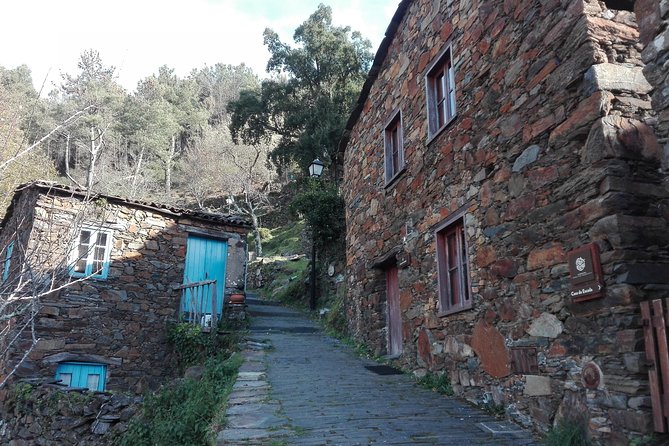
I would recommend this trip to you if you want rural scenery, traditional building materials, short walks, and a guide who can explain what you are seeing. It fits well into a Coimbra stay and gives you a break from city sightseeing.
It is also a strong choice for people who would rather not rent a car. The driving is one of the tour’s practical advantages, not just a convenience.
You should think twice if you dislike stairs, have difficulty with uneven ground, or want untouched medieval villages. The settlements have been restored, and one stop may feel more developed than expected. The tour shows living, repaired villages, not ruins preserved exactly as they were centuries ago.
Photography fans will find plenty to work with: stone textures, wooden details, hillside roofs, balconies, mountain views, and tight lanes. But you should allow time to put the camera away and listen. The cultural explanation is a large part of what makes this trip more than a scenic drive.
Booking advice and cancellation terms
The tour is offered in English, with a morning or afternoon departure. Confirmation is provided at booking, and free cancellation is available up to 24 hours before the start time. Cancellations or changes made inside that window are not refunded or accepted.
Because the tour is often booked well ahead, with an average booking lead time of 27 days, reserve early if your Coimbra dates are fixed. Ask about pickup, group discounts, and the amount of walking you can expect before paying.
Should you book the Schist Villages tour?
Book it if you want a compact, well-guided trip into a part of Portugal that is difficult to reach efficiently without a car. Cerdeira gives you art and restoration, Candal provides access and views, and Talasnal delivers the strongest hillside walk. Together, they make a clear and varied introduction to the Lousã mountain villages.
Skip it if you need a flat, relaxed outing or if your main goal is to see untouched medieval architecture. For everyone else, the combination of careful mountain driving, small-group attention, and three distinctive villages makes $102.12 a fair price for a half-day outside Coimbra.
FAQ
How long does the Schist Villages tour last?
The tour lasts approximately four hours, including travel between Coimbra and the villages.
Which villages are included?
The route includes Cerdeira, Aldeia do Candal, and Aldeia do Talasnal.
Is the tour offered in the morning and afternoon?
Yes. You can choose a morning or afternoon tour.
Is transport included?
Yes. Transport in an air-conditioned minivan is included, along with a driver-guide and bottled water. Round-trip transfers from a Coimbra hotel are advertised, while the stated meeting point is Av. Emídio Navarro 21 in Coimbra.
How large is the group?
The maximum group size is eight people. The experience is described as a private tour.
Is lunch included?
No. Lunch is not included in the tour price.
How much walking is involved?
You should expect narrow, steep streets, stairs, and uneven surfaces, especially in Candal and Talasnal. A moderate level of physical fitness is recommended.
Can I cancel for a refund?
Yes. You can cancel at least 24 hours before the start time for a full refund. Cancellations or changes made less than 24 hours before the experience are not refunded or accepted.
The newest listings around Coimbra
- Lousa Mountain Private Tour★ 5.0 · 88 reviews
- Soft Canyoning, river Ceira, Góis, Serra da Lousa, Coimbra★ 5.0 · 48 reviews
- Schist Villages at Lousa Mountain★ 5.0 · 127 reviews
- Discovering the charms and places of Coimbra★ 5.0 · 78 reviews
- Coimbra Private Walking Tour with U.C. Tickets Early Access★ 4.5 · 68 reviews
- University of Coimbra – more complete and private visit, ticket included★ 5.0 · 53 reviews
- An adventure through the Forest and Palace of Bussaco – Coimbra★ 5.0 · 44 reviews
- A tour between Cascades and Schist Villages, Piodão★ 5.0 · 46 reviews
Coimbra Tours, compared.

University of Coimbra guided tours without queue
Read our review →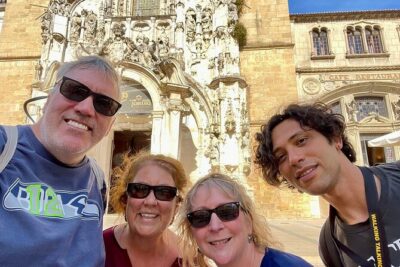
Guided tour of the University and city of Coimbra.
Read our review →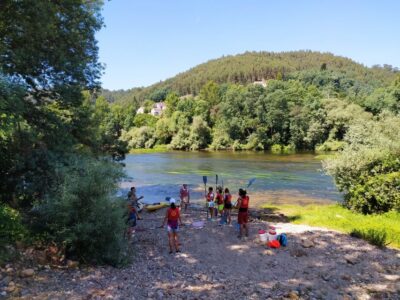
Aveiro and Coimbra Small Group Tour with Moliceiro Boat Cruise
Read our review →
Aveiro & Coimbra Tour with Moliceiro Boat Cruise
Read our review →

Browse the lists this tour appears in