
Reviewed · MUSEUMS
Lisbon: National Tile Museum E-Ticket & Audio Guide
Lisbon’s National Tile Museum tells Portugal’s story through painted ceramic, from medieval Mudéjar patterns to a wonderfully unexpected Mickey Mouse tile panel. The building adds to the visit, especially the Dona Leonor Chapel and the pretty courtyard near the cafeteria. You get an e-ticket and an English audio guide on your phone, so you can set your own pace rather than follow a group.
I like the offline audio content, which includes narration, text, and maps once downloaded, and I like that you can replay sections as often as you wish. The $16 price is reasonable if you want background on the exhibits, though you should know that the audio route can feel out of order. You may need to tap ahead to match the room you are viewing.
Key points at a glance
- The Mickey Mouse panel: A playful modern highlight among centuries of Portuguese tilework.
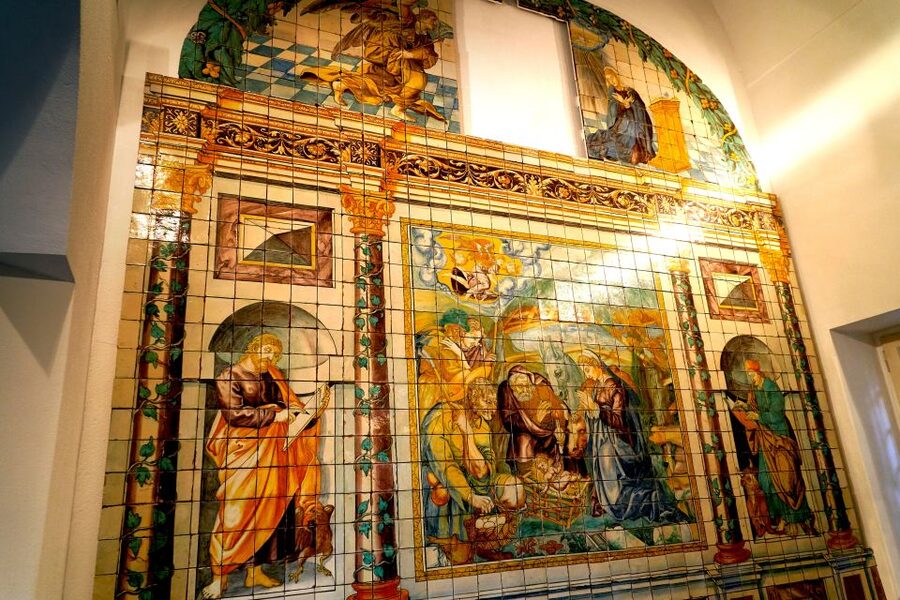
- The Dona Leonor Chapel: One of the museum’s most striking spaces, combining architecture and tile decoration.
- An English guide on your phone: Download the app and offline material before entering.
- A self-paced visit: Plan for one to two hours, but allow longer if you listen to every section.
- Skip-the-line access with limits: The ticket includes this service, but queues can still form at the entrance.
- Wheelchair-accessible museum: The site is accessible, while free and reduced tickets must be obtained on-site without skip-the-line privileges.
Why Lisbon’s tiles deserve a museum visit

Lisbon’s tiles are more than decoration. They cover walls, chapels, courtyards, and buildings across Portugal, often turning ordinary spaces into visual stories. At the National Tile Museum, you get to see that craft in a focused setting and follow its development from Portugal’s medieval past to modern times.
The museum presents the tile industry as part of Portugal’s cultural story. You can look closely at patterns, colors, religious scenes, and decorative panels instead of racing past them on city streets. The audio guide adds short explanations and lesser-known details, which helps you notice why a certain pattern or panel matters.
I would not treat this as a quick stop for a single famous object. The Mickey Mouse panel may catch your eye first, but the pleasure comes from seeing how widely tile design changed over the centuries. The museum gives you enough variety to make the visit worthwhile even if you do not normally collect museums.
More Museum Tours in Lisbon
- Lisbon: Luz Stadium Tour & SL Benfica Museum Ticket w/Scarf
★ 4.7 · 3,264 reviews - Lisbon: National Tile Museum Entry Ticket
★ 4.6 · 868 reviews - Lisbon: Banksy Museum Permanent Exhibition Entry Ticket
★ 4.7 · 506 reviews
Entering with the e-ticket and phone guide
Your ticket arrives by email with instructions for accessing the app and audio guide. Check your spam folder if the message does not appear, and download everything before you reach the museum. The offline material includes the audio narration, written content, and maps, so you do not need to depend on a strong connection inside.
The audio guide is in English and requires an Android phone version 5.0 or later, or an iPhone with a compatible iOS system. It is not compatible with Windows Phones, iPhone 5 or 5C, older iPod Touch and iPad models, or the first iPad Mini. Set aside roughly 100 to 150 MB of storage.
You need your own smartphone and headphones. Neither is included. If you are booking for a couple or family, pay attention to the device rule: the booking is made per device, not per person. One phone can work for one shared listening setup, but separate devices require separate bookings.
The ticket includes a skip-the-line service, but that does not guarantee an instant entrance. Long queues may still form at the door, and the museum can adjust the visiting route or entry procedure. Follow the staff instructions when you arrive.
The opening rooms and Portugal’s tile tradition
Once inside, start by getting your bearings rather than pressing play on the first audio track and walking blindly. The guide can provide useful background, but its sections may not follow the physical route in a perfect order. Look for the section or room image that matches where you are standing, then begin there.
This small habit matters. The narration is full of information, but it can leave you behind if you listen from the start while moving ahead through the galleries. You can skip sections, return to them, and replay anything that deserves a second hearing.
The early material helps set up the larger story of Portugal’s ceramic work. You will hear about the tile industry and see how patterns and decoration changed over time. The museum’s displays let you compare different styles at close range, something you cannot always do when tiles are high on an old building or partly hidden by city traffic.
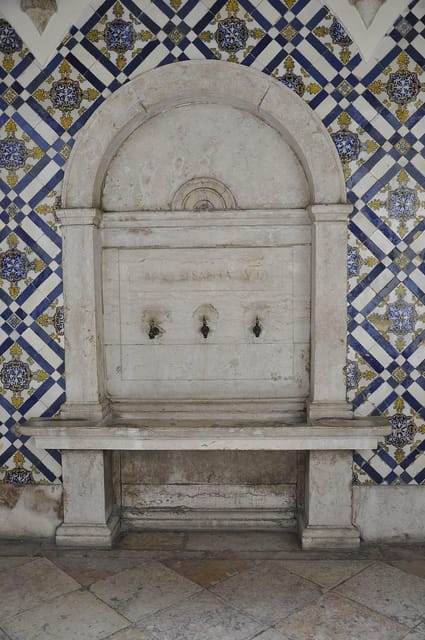
The Mudéjar-patterned tiles deserve a careful look. Their repeated geometric designs show how much visual effect can come from simple shapes arranged with discipline. Give yourself time to stand back for the overall pattern, then move closer to study the small details.
The Mudéjar patterns and 16th-century tilework
The museum’s 16th-century material is one of the best reasons to use the audio guide. Without explanation, you may see a handsome wall of tiles and move on. With context, you can pay attention to the pattern structure, the method of decoration, and the way tilework served both practical and artistic purposes.
The audio does not turn the visit into a formal guided group. You remain free to move, pause, or ignore a section. That suits you if you like to spend ten minutes with one panel and only thirty seconds with another.
The drawback is that the guide’s order is not always obvious. One part of the narration may describe a room you have not yet reached, while another section may seem to belong behind you. Use the map and room images as a navigation tool, not simply as a recording you play from start to finish.
If your time is limited, select the stops connected to the rooms and panels you most want to see. If you have closer to three hours, listen to everything and let the museum’s sequence unfold at a slower pace. The standard visit is listed as one to two hours, but the displays can easily hold your attention longer.
Same base, a completely different sort of day:
- Lisbon City Center Tour – The Unmissable Lisbon
★ 5.0 · 22,234 reviews - Lisbon: Jerónimos Monastery Entrance Ticket
★ 4.1 · 14,164 reviews - Lisbon: History, Stories and Lifestyle Walking Tour
★ 4.8 · 10,902 reviews - Lisbon: Sunset Boat Party Cruise with DJ and Open Bar
★ 4.5 · 10,378 reviews
The Dona Leonor Chapel and the museum setting
The Dona Leonor Chapel gives the visit a change of mood. Here, you are not looking at loose panels in a standard gallery alone. You are seeing tile decoration within a sacred architectural setting, where the walls, space, and ornament work together.
This is a good place to pause the audio and simply look. Notice how the tiles relate to the chapel’s structure rather than treating them as separate pictures. The chapel also helps explain why tilework became such a powerful part of Portuguese interiors: it could cover broad surfaces while adding pattern, color, and a sense of ceremony.
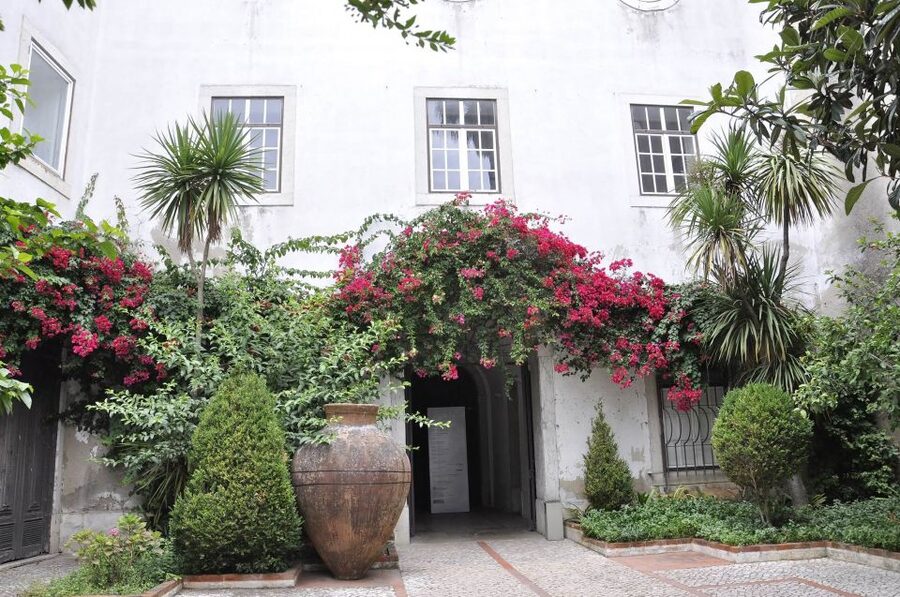
The museum itself contributes to the appeal. The setting has character, and the courtyard is a pleasant place to pause. Near the cafeteria, you will find a garden area with tables and chairs where you can sit with food or a drink. That makes the museum easier to enjoy at a relaxed pace, especially if you want to break up the visit instead of rushing through every room.
The Mickey Mouse panel and modern surprises
The Mickey Mouse tile panel is an amusing and memorable stop. After medieval patterns and religious decoration, a familiar modern character reminds you that tile art did not stop with old Portugal.
It also keeps the museum from feeling like a single-style collection. You are not being asked to admire only formal or historic work. The panel adds a touch of popular culture and gives families a clear point of interest, while showing how the museum can connect traditional tilework with more recent design.
Look at it alongside the older examples rather than treating it as a novelty alone. The contrast helps you see how the medium can carry many subjects and moods. The same basic idea, a decorated ceramic surface, can support geometric pattern, religious imagery, historical scenes, or a cartoon character.
The diamond-patterned panel and close looking

The diamond-patterned panel is another useful stop for comparing design choices. Repeated diamonds can seem simple from a distance, but the arrangement creates rhythm across a wall. Small changes in color, spacing, and border design affect the whole panel.
This is the kind of exhibit that rewards patience. Walk close enough to see the individual tiles, then step back to understand the full composition. The audio guide can give you a reason to look again, but you do not need to listen to every word to enjoy the design.
I like that the museum offers both major architectural spaces and smaller details. You can admire the chapel, then focus on a single pattern or tile surface. That range is useful for different kinds of visitors: an art enthusiast may want technical detail, while a first-time museum visitor can simply follow the colors and shapes.
How much time should you allow?

The official duration is one to two hours. That is enough for a sensible visit with selected audio stops and time to see the main highlights. If you listen to every narration, read all the labels, and pause in the chapel and courtyard, plan for more time.
The audio guide can be replayed as many times as you wish, and you can skip sections. This flexibility is valuable because not every part of the collection will appeal equally to you. You can move quickly through a display that feels repetitive and slow down when the subject catches your attention.
For a short Lisbon sightseeing day, one hour may work if you arrive prepared and use the app selectively. For a fuller museum visit, allow two to three hours. One particularly enthusiastic assessment of the museum found that three hours would be easy to fill, which seems reasonable if you follow the complete material.
Is the $16 price good value?
At $16 per adult, the ticket is best value for you if you want convenient entry plus historical context without hiring a private guide. The e-ticket saves you from arranging admission at the door, and the phone guide gives you more background than basic wall labels alone.
The value is less clear if you are happy to read the museum’s labels and explore silently. A free audio download may be available at the museum, and the printed information can be enough for a visitor who prefers a simple, self-directed look. The paid option is mainly buying convenience, advance access, and a ready-made English narration.
Free admission is available for children up to 12 years old. Free and reduced admission tickets must be obtained on-site and do not include skip-the-line privileges. Families should compare the paid adult ticket with those rules before booking.
The ticket is refundable if you cancel at least 24 hours ahead. That gives you some flexibility, though the museum’s entry process and route can still change according to site instructions.
Who will enjoy this visit most?
I would recommend this for you if you enjoy art, architecture, decorative design, or Lisbon’s cultural background. It also suits independent visitors who dislike fixed tour schedules. You can decide which objects deserve your attention and replay the explanations instead of keeping pace with a live guide.
Families may appreciate the Mickey Mouse panel and the ability to shorten the audio route. The courtyard and cafeteria area also offer a useful rest point. Still, younger children may not want to listen to every historical explanation, so select only the most engaging stops.
This is a good choice for a rainy or very hot part of the day because the museum gives you a focused indoor activity. It is also a solid option if you have already seen Lisbon’s tiled streets and want to understand the craft behind them.
You may prefer a different visit if you want a person leading you from room to room. There is no live guide. You also need to be comfortable downloading an app, using your phone as a map, and choosing the correct audio section as you move.
Practical tips for a smoother museum visit
Download the ticket, app, and audio content before leaving your hotel. Check your email, including the spam folder, and confirm that your phone has enough free storage.
Bring headphones and make sure your phone is charged. The museum does not provide a smartphone or headphones, and the audio guide cannot help if your device is incompatible.
Start with the map or room image, not necessarily the first track. The audio may not follow the walking route in exact order, so matching the section to the room will save you from constantly skipping backward and forward.
Keep the courtyard and garden area in your plan. It offers tables and chairs near the cafeteria, making it a sensible place to sit after the chapel or before finishing the final displays.
The museum is wheelchair accessible. Still, follow any route changes or staff directions on the day, since the course of the visit can be modified.
Should you book the National Tile Museum audio guide?
Book it if you want an easy, independent visit with advance admission and English explanations. The Dona Leonor Chapel, Mudéjar patterns, diamond panel, and Mickey Mouse panel give you a varied collection, while the offline guide lets you control the pace.
Skip it if you mainly want a quick look and prefer wall labels or a free download. The audio content is useful but not perfectly arranged, and the occasional queue means skip-the-line access may not be as immediate as you expect.
For most adults interested in Lisbon’s tile tradition, $16 is a fair price. Prepare your phone before arrival, bring headphones, and use the room images to keep the narration in step with what you are seeing.
FAQ
How much does the National Tile Museum ticket cost?
The adult ticket costs $16 per person.
How long does the visit take?
The listed duration is one to two hours. You may need more time if you listen to every audio section and explore at a slower pace.
Is the audio guide available in English?
Yes. The included smartphone audio guide is in English.
Do I need my own smartphone?
Yes. You need a compatible Android or iOS smartphone to use the audio guide.
Are headphones included?
No. You need to bring your own headphones.
Can I use the audio guide offline?
Yes. Offline text, audio narration, and maps are included after you download the content.
How much phone storage do I need?
You need about 100 to 150 MB of available storage.
Is the museum wheelchair accessible?
Yes. The museum is wheelchair accessible.
Are children admitted free?
Children up to 12 years old can enter free. Free and reduced tickets must be obtained on-site and do not include skip-the-line privileges.
Can I cancel for a full refund?
Yes. You can cancel up to 24 hours in advance for a full refund.
More Audio-Guided Routes in Lisbon
- Lisbon: São Jorge Castle E-Ticket and Audio Guide
★ 4.3 · 2,182 reviews - Lisbon: Tram 28 Entry Ticket & Audio Guide with 24-Hour Pass
★ 4.0 · 930 reviews - Lisbon: Jerónimos Monastery E-Ticket and Audio Guide
★ 3.7 · 660 reviews - Lisbon: National Palace of Ajuda E-Ticket & City Audio Guide
★ 4.1 · 87 reviews
The newest listings around Lisbon
- The Real Lisbon Street Art Private Guided Tour by Minivan★ 4.8 · 49 reviews
- Lisbon: Historical Walking Tour with Jeronimos Monastery★ 4.5 · 71 reviews
- Lisbon: Port Wine Tasting at Taylor’s Shop and Tasting Room★ 4.6 · 490 reviews
- Lisbon: Tagus River Cruise With Brunch★ 3.2 · 73 reviews
- South Lisbon: 3-Hour Christ the King Electric Bike Tour★ 4.8 · 97 reviews
- Oeiras Coast: Stand Up Paddleboarding near Lisbon★ 4.9 · 56 reviews
- Small Group Walking Tour of Belém★ 4.9 · 80 reviews
- Lisbon: 3-Hour Secret Food Tour★ 4.7 · 53 reviews
Museums, compared.

Cálem Cellar Tour, Interactive Museum & Wine Tasting
Read our review →
Luz Stadium Tour & SL Benfica Museum Ticket w/Scarf
Read our review →


Banksy Museum Permanent Exhibition Entry Ticket
Read our review →
Belem, Jeronimos Monastery, and Coach Museum Tour
Read our review →

Browse the lists this tour appears in