
Reviewed · MUSEUMS
Lisbon: National Tile Museum Entry Ticket
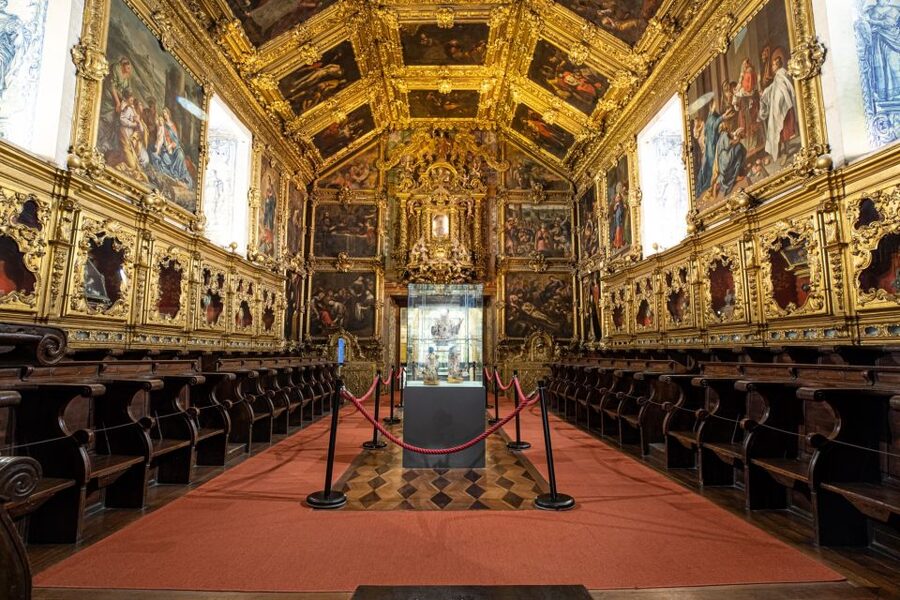
The National Tile Museum is far more than a room of pretty blue-and-white squares. Inside the former Madre de Deus Convent, you’ll find Portuguese azulejos from the 15th century to today, plus a church, cloister, chapel, sacristy, and carved giltwood choir. The building itself is part of the visit.
I especially like the clear chronological route, which shows how tile styles and techniques changed over time, and the huge city panorama made from tiles on the upper floor. At $11, it is a strong value for an art museum visit that can fill about 90 minutes to two hours. The main drawback is practical: the ticket is not officially a skip-the-line ticket, and some interior areas can feel warm because ventilation is limited.
Key points
- 15th-century beginnings: See Portuguese decorative tiles develop from early examples into elaborate later designs.
- A former convent: The Madre de Deus site includes a Mannerist cloister, decorated church, sacristy, choir, and Baroque chapel.
- More than azulejos: The collection also covers ceramics, porcelain, and faience from the 17th to the 21st century.
- A standout city panorama: The tiled Lisbon display on the upper floor is one of the museum’s most memorable sections.
- Allow 90 minutes to two hours: You can move quickly through the collection, but the building rewards a slower pace.
- Good rainy-day choice: It offers art, architecture, and Portuguese culture under one roof, with a café and garden area for a break.
Why Lisbon’s Tile Museum Is Worth Your Time
Azulejos are one of the visual signatures of Portugal. You see them on church walls, railway stations, apartment façades, and grand public buildings across Lisbon. This museum gives you the chance to understand what you’re looking at instead of simply admiring another tiled wall in passing.
The collection begins with the materials and methods used to make tiles. That short introduction matters. It gives you a basic vocabulary for the rest of the visit: how ceramic surfaces were prepared, how colors were applied, and why certain patterns and finishes look different from one period to another.
From there, the route follows a chronological order. I find that arrangement particularly helpful because the museum is not just displaying isolated works. It is showing change over time. You can follow Portuguese tile-making from early decorative pieces through later architectural compositions and contemporary examples.
The museum also puts tiles in their proper setting. A tile panel removed from a building can be beautiful, but seeing tilework inside a convent church or around a cloister explains how the art was meant to function. It was decoration, storytelling, religious instruction, and architecture working together.
More Museum Tours in Lisbon
- Lisbon: Luz Stadium Tour & SL Benfica Museum Ticket w/Scarf
★ 4.7 · 3,264 reviews - Lisbon: Banksy Museum Permanent Exhibition Entry Ticket
★ 4.7 · 506 reviews - Lisbon: Belem, Jeronimos Monastery, and Coach Museum Tour
★ 4.8 · 478 reviews
The Former Madre de Deus Convent

The museum occupies the former Convent of Madre de Deus, founded by Queen D. Leonor in 1509. That gives the visit a useful sense of place. You are not walking through a modern gallery filled with old objects. You are moving through a historic religious complex that has been altered and expanded across several centuries.
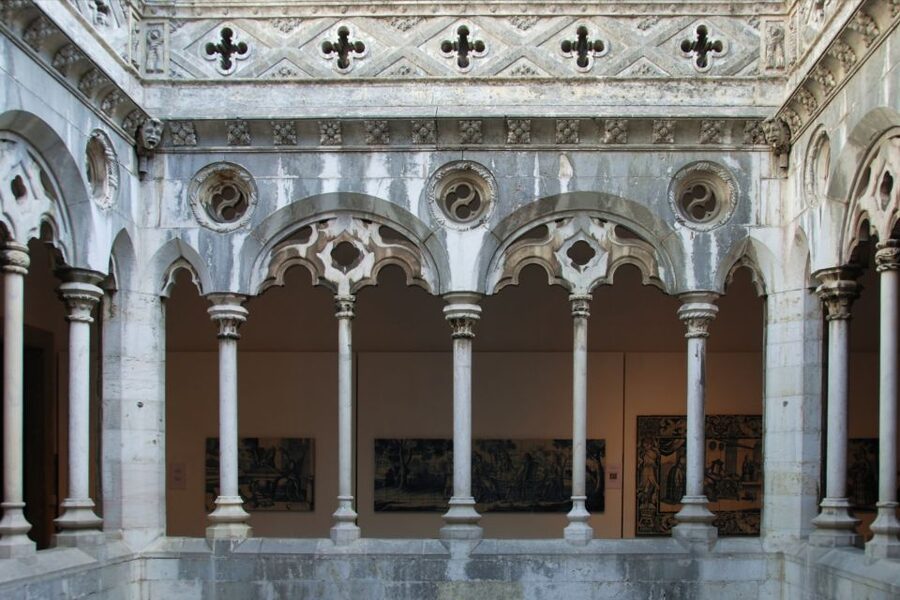
The convent includes a 16th-century Mannerist cloister. Its calm proportions make a good pause between the more crowded display rooms. The cloister also helps you understand why tiles became such a natural part of Portuguese architecture. Their repeated patterns suit long walls, arcades, and courtyards.
The building went through several construction campaigns, so the museum is not visually uniform. That is a strength. Different rooms create different moods, and the collection feels tied to the structure around it rather than separated from it.
Look for the carved wood details as well as the tiles. Giltwood decoration, painted panels, and religious sculpture appear throughout the complex. If you only focus on the blue-and-white surfaces, you’ll miss a large part of what makes this place special.
Following the Tile Collection From the 15th Century
The permanent exhibition starts with tile-making materials and techniques before moving into the historical collection. This is a sensible sequence, especially if you know little about Portuguese ceramics.
Early examples introduce the long story of decorative tile in Portugal. As you continue, the displays become more elaborate, with changing colors, patterns, scenes, and uses. The museum presents traditional work alongside later pieces, allowing you to see both continuity and experimentation.
You’ll also encounter ceramics, porcelain, and faience dating from the 17th through the 21st century. That wider collection prevents the visit from becoming too narrow. It shows that Portugal’s ceramic traditions extend beyond wall tiles and include objects made for daily use and display.
The chronological layout is easy to follow, with explanations connected to different monarchies. If you enjoy seeing how art reflects political and social change, take time with those panels. They help give structure to the sequence without requiring a specialist’s background.
Some individual tiles and panels have limited information beside them. For that reason, an audio tour can be useful. The audio option requires downloading an app and bringing your own headphones, so arrange that before arriving if you want more explanation as you walk.
The Church, Cloister, and Baroque Chapel
The church is one of the main reasons this museum feels different from a standard art collection. Its walls and decorative details create a complete setting for the objects, rather than placing every piece against a plain white background.
The church includes remarkable sets of paintings and tiles. Look up as well as ahead. The painted ceiling and decorated upper areas are easy to miss if you keep your attention at eye level.
The sacristy contains a Brazilian wood display cabinet and carved wood frames holding paintings. These details add material and color beyond the tile collection. They also show how religious interiors combined imported materials, carved decoration, painting, and ceramics.
The high choir has extensive carved giltwood embellishment. It is ornate, even by the standards of Lisbon’s richly decorated churches, and it gives the building a strong theatrical quality.
The Chapel of Saint Anthony has an 18th-century Baroque interior and several canvases by André Gonçalves. This is a particularly good stop if you appreciate church interiors, even if religious art is not normally your main interest. The scale and decoration provide a sharp contrast with the more orderly museum displays.
Some objects connected with the convent may seem unusual or unexpected. That is part of the character of the site, but it also means you should not expect a purely modern, tightly edited gallery experience. The museum mixes art, architecture, religious history, and decorative craft.
Same base, a completely different sort of day:
- Lisbon City Center Tour – The Unmissable Lisbon
★ 5.0 · 22,234 reviews - Lisbon: Jerónimos Monastery Entrance Ticket
★ 4.1 · 14,164 reviews - Lisbon: History, Stories and Lifestyle Walking Tour
★ 4.8 · 10,902 reviews - Lisbon: Sunset Boat Party Cruise with DJ and Open Bar
★ 4.5 · 10,378 reviews
The Tiled Lisbon Panorama Upstairs
The large Lisbon city display on the upper floor is one of the most useful sections for making sense of the city outside. It presents Lisbon through tilework, giving you a visual link between the museum and the streets you’ll explore afterward.
Set aside extra time here. It is not just another decorative panel to pass on the way to the exit. The display helps you notice how tiles can record places, buildings, and urban views. After seeing it, you may pay closer attention to tiled façades around Lisbon.
This section also works well for younger visitors. The large scenes are easier to grasp than a long sequence of small historical objects, and the city connection gives the collection a clear point of reference.
The museum can be appealing to teenagers and reluctant museum visitors for the same reason. The subject is unusual, the colors are immediate, and the convent interiors keep the visit from feeling like a single long corridor of similar objects.
How Long to Spend and How to Plan the Visit
The practical sweet spot is about 90 minutes to two hours. A quick visit can cover the main chronological displays, church, and chapel in roughly an hour and a half. If you read the explanations, study the techniques, and pause in the cloister and café, plan closer to two hours.
The museum is open Tuesday through Sunday from 10:00 a.m. to 1:00 p.m., then from 2:00 p.m. to 6:00 p.m. Last entry is at 5:30 p.m. The midday closure is important. Do not arrive shortly before 1:00 p.m. expecting to continue straight through.
It closes on January 1, Easter Sunday, May 1, June 13, and December 25. Check the hours before setting out, particularly around holidays.
The ticket is valid for one day, and the price is $11 per person. That is good value if you want a substantial cultural stop rather than a quick photo opportunity. You are paying for both the national collection and access to an important historic building.
The ticket information does not promise skip-the-line access. Some people who bought ahead found that they moved through the entrance more easily, but you should not book this ticket solely to bypass a queue. Treat advance purchase as a convenience, not a guaranteed fast entry.
Comfort, Accessibility, and the Café
The museum is wheelchair accessible. You should still wear comfortable shoes because the visit involves moving through a sizeable complex rather than standing in one small gallery.
Bring water, especially in warm weather. Some areas have limited ventilation, and the interior can feel hot on a summer afternoon. Comfortable clothing will make the visit easier.
A café is located on site, with garden seating. It is a useful place to pause before or after the collection, and the garden adds a quieter setting to the visit. Food service can become busy, so allow extra time if you want to eat rather than simply take a short coffee break.
There is also a gift shop. That is not a reason to visit by itself, but it makes sense here: after seeing how much design can be created from a repeated tile, you may find yourself looking at Portuguese ceramic patterns differently.
Who Will Enjoy This Museum Most
I would recommend the museum to anyone interested in Portuguese architecture, religious art, decorative arts, or the visual character of Lisbon. It is also a smart choice for a rainy afternoon because the visit combines several subjects in one place.
Art lovers will find plenty to study, especially in the church, chapel, painted ceilings, and large tile panels. You do not need prior knowledge of ceramics to enjoy it. The introductory display and chronological route give you enough structure to follow the collection.
Families with older children and teenagers may find it more approachable than a conventional fine-art museum. The city panorama, bold patterns, and unusual setting give the visit variety.
The museum may be less suitable if you want a short, highly interactive attraction or a guided tour with constant explanation. No guide is included, and some displays offer only limited detail. The optional audio tour can help, but you need your own headphones and must download the app.
Should You Buy the $11 Ticket?
Yes, if you want to understand one of Portugal’s most recognizable art forms and see an exceptional historic interior at the same time. The combination of 15th-century tiles, later ceramics, a convent cloister, a decorated church, and the Lisbon panorama gives you much more than the title National Tile Museum might suggest.
I would be more cautious if your schedule is extremely tight or if you have little interest in art, architecture, or historic interiors. Even then, the visit can work well alongside another Lisbon outing, since it takes about two hours and includes a café and garden for a natural break.
Buy it for the museum itself, not for guaranteed priority entry. Bring water, wear comfortable shoes, and arrive with enough time to see the church and chapel rather than rushing through the chronological displays. If you do that, this $11 ticket offers one of Lisbon’s more distinctive cultural stops.
FAQ
Where is the National Tile Museum located?
It is in the Lisbon District, inside the former Convent of Madre de Deus.
What does the ticket include?
The ticket includes entry to the National Tile Museum.
Is this a skip-the-line ticket?
No. The activity information specifically says it is not a skip-the-line ticket.
How long is the ticket valid?
The ticket is valid for one day.
What are the museum’s opening hours?
It is open Tuesday through Sunday from 10:00 a.m. to 1:00 p.m. and from 2:00 p.m. to 6:00 p.m. Last entry is at 5:30 p.m.
When is the museum closed?
It is closed on January 1, Easter Sunday, May 1, June 13, and December 25.
Is the museum wheelchair accessible?
Yes, the activity information states that it is wheelchair accessible.
What should I bring?
Bring a passport or ID card, comfortable shoes, a camera, water, and comfortable clothing. If you want to use the audio tour, bring your own headphones and download the required app.
The newest listings around Lisbon
- The Real Lisbon Street Art Private Guided Tour by Minivan★ 4.8 · 49 reviews
- Lisbon: Historical Walking Tour with Jeronimos Monastery★ 4.5 · 71 reviews
- Lisbon: Port Wine Tasting at Taylor’s Shop and Tasting Room★ 4.6 · 490 reviews
- Lisbon: Tagus River Cruise With Brunch★ 3.2 · 73 reviews
- South Lisbon: 3-Hour Christ the King Electric Bike Tour★ 4.8 · 97 reviews
- Oeiras Coast: Stand Up Paddleboarding near Lisbon★ 4.9 · 56 reviews
- Small Group Walking Tour of Belém★ 4.9 · 80 reviews
- Lisbon: 3-Hour Secret Food Tour★ 4.7 · 53 reviews
Museums, compared.

Cálem Cellar Tour, Interactive Museum & Wine Tasting
Read our review →
Luz Stadium Tour & SL Benfica Museum Ticket w/Scarf
Read our review →

Banksy Museum Permanent Exhibition Entry Ticket
Read our review →
Belem, Jeronimos Monastery, and Coach Museum Tour
Read our review →


Entry Ticket at WOW – The Wine Experience Museum
Read our review →Browse the lists this tour appears in