
Reviewed · CASTLE TOURS
Lisbon: Alfama and São Jorge Castle Quarters Walking Tour
Lisbon’s oldest streets make the best classroom in the city. This 150-minute walk through Alfama follows old walls, steep lanes, Moorish traces, Roman remains, and fado landmarks before reaching the fine view at Portas do Sol. You get a story-led introduction rather than a quick list of sights.
I like the route’s strong historical sweep, from Roman Olisipo to Muslim Al-Hamma and medieval Lisbon. I also like that Lisbon Cathedral is included, since its layered architecture gives you a proper look inside one of the city’s key buildings. The main catch is simple: despite the title, São Jorge Castle itself is not included, only its surrounding quarter and walls.
Key points
- Casa dos Bicos begins the story: Meet beside Lisbon’s unusual House of Spikes at Campo das Cebolas.
- Roman and Moorish Lisbon are both covered: See the Cetária and learn how Alfama got its name.
- Alfama is explored on foot: Expect alleys, stairways, small squares, patios, and the former Jewish Quarter.
- Fado gets local context: The walk explains the music’s birth and customs around Largo do Chafariz de Dentro.
- Lisbon Cathedral is included: The guided visit shows its blend of architectural styles.
- Portas do Sol supplies the payoff: Finish with one of Alfama’s best-known city views.
Why Alfama works best with a guide

Alfama is easy to admire and surprisingly easy to misunderstand. Its lanes twist around the hill below São Jorge Castle, and a short walk can cross several periods of Lisbon’s past. A guide helps connect the stones, customs, and street plan instead of leaving you with attractive but disconnected views.
This route begins at Casa dos Bicos, the sharp-faced building at Campo das Cebolas. Its diamond-shaped façade gives the meeting point an unmistakable look, and the building dates from around 1523. It also survived the 1755 Lisbon Earthquake, making it a useful starting point for understanding how much of the lower city disappeared while parts of Alfama endured.
Look for the guide holding a black bag marked Lisboa Autêntica. The nearest metro station is Terreiro do Paço, so you can reach the meeting point without adding a long uphill approach before the walk begins.
The tour costs $23 per person. I consider that a fair price if you want an organized introduction to Alfama, especially because the fee includes a live guide and entry with a guided visit to Lisbon Cathedral. It is less useful for you if your only aim is to enter São Jorge Castle, since that ticket is not part of the package.
More Castle Tours in Lisbon
- Lisbon: São Jorge Castle E-Ticket and Audio Guide
★ 4.3 · 2,182 reviews - Lisbon: Sao Jorge Castle Skip-the-Line Ticket with Guide
★ 4.6 · 1,191 reviews - São Jorge Castle Skip-the-line Entry Ticket
★ 4.5 · 440 reviews
From Casa dos Bicos to Roman Olisipo

The first historical turn takes you back before medieval Lisbon. The area was once part of Olisipo, the Roman name for the city, and the route includes the Cetária, where you can see traces of old Roman salting tanks.
These remains point to ordinary work rather than grand monuments. Roman Lisbon depended on food production, trade, and the river, and salting fish was an important practical activity. I like this stop because it gives you something concrete to look for. Instead of hearing only about ancient dates, you see evidence of how people used the city.
The guide also explains Alfama’s connection with thermal waters. The Romans discovered the springs, and later Muslim residents gave the area its name, Al-Hamma, referring to baths or hot waters. That small piece of language explains why Alfama’s name still carries a trace of the city’s Muslim period.
The route does not treat Lisbon as a single-culture story. Roman, Muslim, Jewish, and Portuguese influences appear as part of the same neighborhood. That makes the walk more useful than a simple account of kings and earthquakes.
Climbing into the castle quarter
From the lower meeting point, the walk heads into the older quarter around São Jorge Castle. You should expect uneven streets, stairways, and slopes. The activity is specifically not suitable for people with mobility impairments, and that warning matters here. Comfortable clothing is advised, but supportive shoes would also be a sensible choice for the stone lanes and inclines.
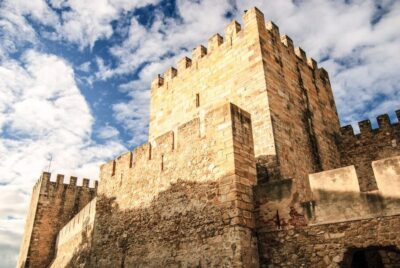
The castle is part of the setting, not the main admission stop. You will follow the path of the old city walls and learn about the Moorish castle, but the entrance fee is not included. If you want time inside São Jorge Castle, plan that separately and do not assume the 150-minute route will cover it.
That limitation is worth knowing before you book. The title can sound as if a castle visit is included, and one guest specifically found the omission confusing. I would book this for the surrounding quarter, history, and views, then add the castle on another visit or before the walk if your schedule allows.
The benefit of staying outside the castle is that you spend more time in Alfama itself. The street-level details are the point: old walls, turning lanes, interior patios, and stairways that reveal how the neighborhood developed around the hill.
Alleys, patios, and the former Jewish Quarter
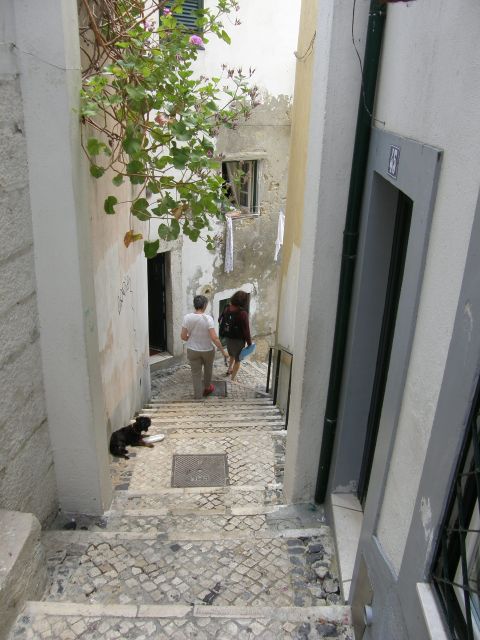
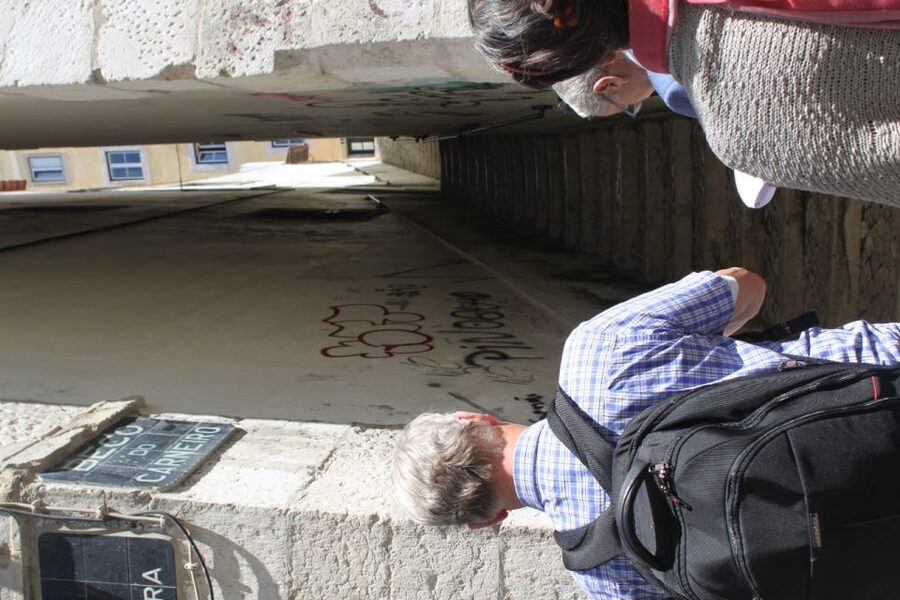
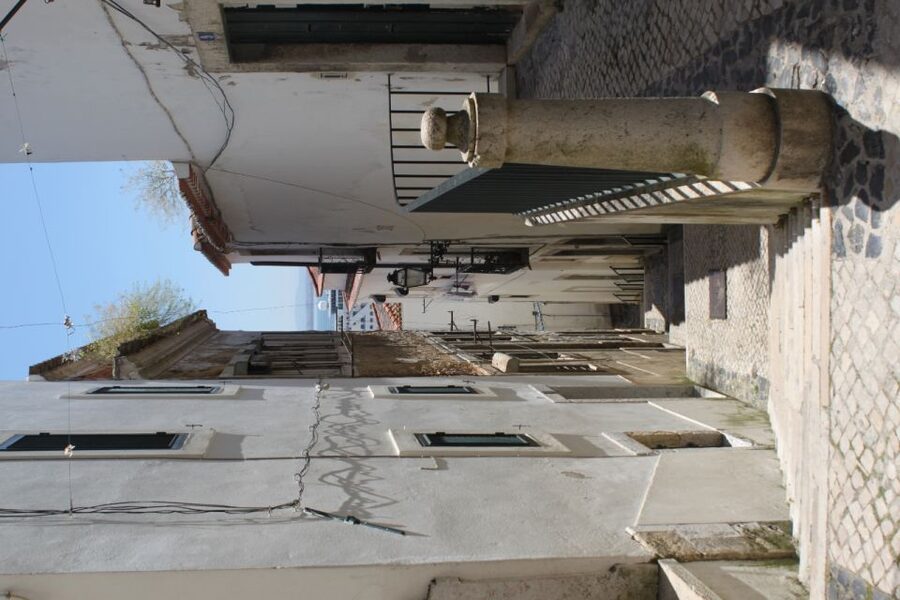
This is the part of the walk where Alfama feels least like a collection of marked attractions. The route threads through narrow lanes and interior patios, with hidden squares and stairways leading toward what used to be Lisbon’s Jewish Quarter.
You will not simply march from one monument to the next. The guide uses the route to explain how residents lived, moved around, and adapted to a crowded hillside. That is valuable early in your Lisbon stay, since it helps you get your bearings before exploring alone.
Several guides have been praised for making this section easy to follow. Ricardo, a history teacher, is noted for his engaging explanations, while Agatha was described as both friendly and useful when explaining cultural influences. Helena was able to adjust the route slightly for a group’s requests, and Elena was praised for creating a pleasant, flexible walk.
Those details suggest that the human side of the tour matters as much as the stop list. A good guide can turn an awkward staircase or anonymous corner into part of the story. The experience is also likely to feel personal when the group is small. One family of three found that their scheduled group tour worked almost like a private visit, though group size is not fixed in the information provided.
More Walking Tours in Lisbon
- Lisbon: History, Stories and Lifestyle Walking Tour
★ 4.8 · 10,902 reviews - Best of Lisbon Small-Group Guided Walking Tour
★ 5.0 · 4,869 reviews - Lisbon: Food and Wine Small Group Walking Tour
★ 4.9 · 4,082 reviews - Best of Lisbon Walking Tour: Rossio, Chiado & Alfama
★ 4.9 · 2,700 reviews
Fado around Largo do Chafariz de Dentro
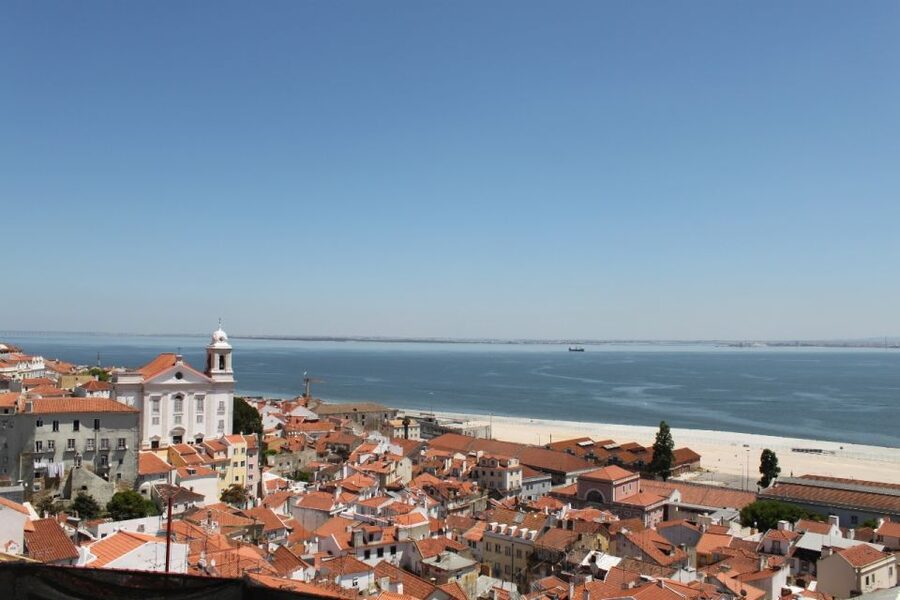
Lisbon’s fado tradition gets a place in the walk, especially around Largo do Chafariz de Dentro. This is not presented as a fado performance, so you should not book the tour expecting live music. Instead, you learn about the birth of fado and one of the city’s oldest customs as you pass through the area.
That distinction matters. A performance gives you an evening of music; this walk gives you the setting and social background that help the music make sense. If you plan to attend a fado house later, the guide’s explanation can give you a better feel for why Alfama is tied so closely to the tradition.
The route also connects fado with everyday life, not just formal venues. Alfama’s lanes, small gathering places, and old residential fabric help explain why local customs remain part of the neighborhood’s identity. I like this balance because it avoids treating fado as a tourist add-on.
Lisbon Cathedral’s mixed architecture
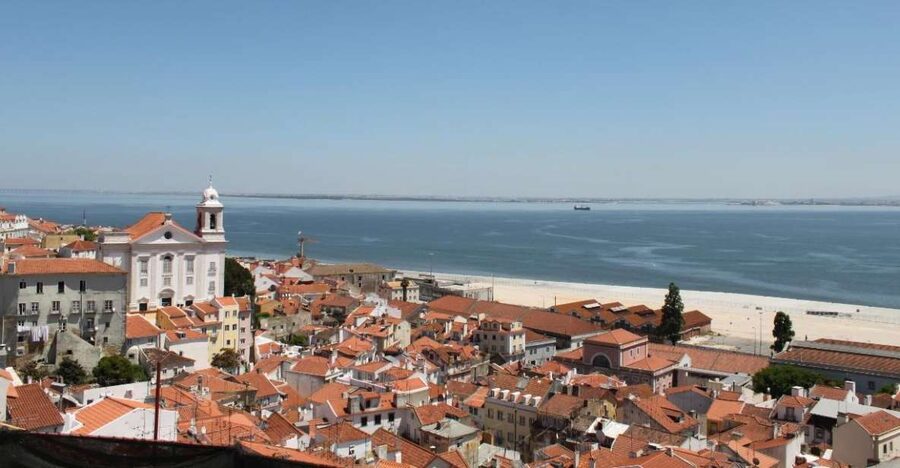
The guided entrance to Lisbon Cathedral is one of the clearest practical advantages of this tour. The cathedral dates from the 12th century, but it has been changed over time, leaving a mix of architectural styles.
You get more from that mixture when someone points out how the building developed. A quick exterior glance can make the cathedral seem severe and uniform. Inside, the changes tell a more complicated story about rebuilding, adaptation, and shifting artistic taste.
The cathedral visit also gives you a pause from the narrow streets. After climbing and turning through Alfama, stepping into a major stone church changes the scale of the experience. It puts the small lanes into a broader picture of medieval Lisbon.
Because cathedral admission and a guided visit are included, the $23 price feels stronger than it would for a basic neighborhood stroll. The value is not only the ticket. It is the explanation of why the building looks the way it does and how it fits into the city’s past.
Portas do Sol and the view over Lisbon

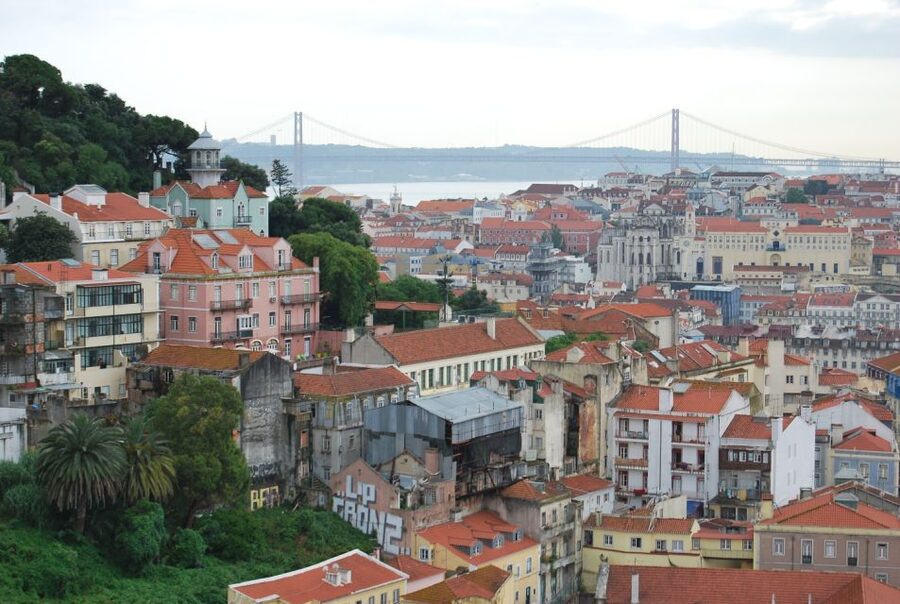
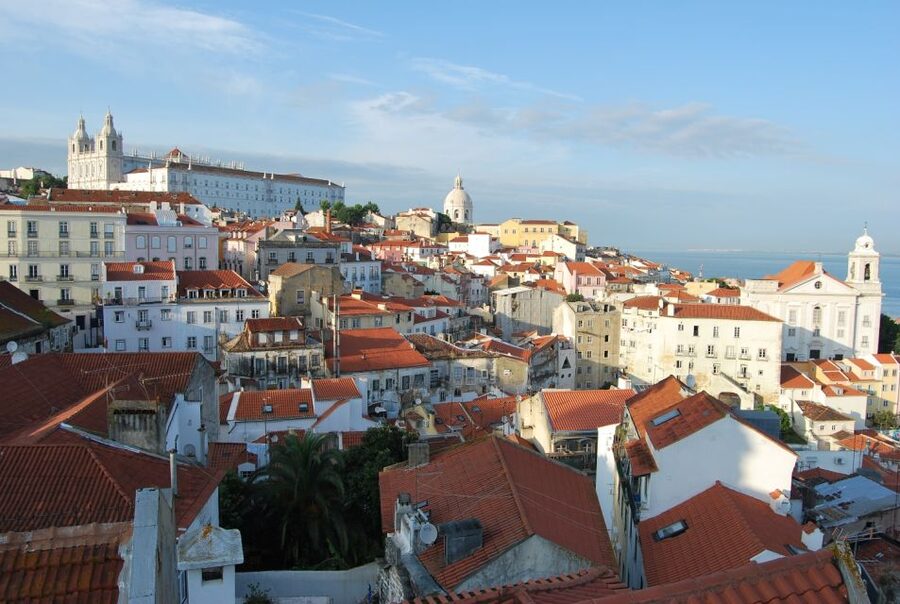
The walk reaches Portas do Sol, one of Alfama’s best-known belvederes. This is the natural scenic reward after the history and uphill streets. From here, you get panoramic views across Lisbon, with the city spreading below the castle quarter.
The view is also a useful orientation point. Earlier, you have been moving through a tight network of lanes where direction can be hard to judge. At Portas do Sol, the city opens up, and you can see how Alfama sits above the lower part of Lisbon.
I would save a few minutes here rather than rushing away. The tour is designed to keep moving, but this is one place where a short pause helps you connect the route to the wider city. Ask your guide what to visit next, since advising you on the rest of your stay is part of the experience.
That advice can be particularly useful on your first day. Several people have used the walk to learn what they wanted to return to later, including areas, sights, food, and cultural customs. The guide can help you turn a first look at Alfama into a plan for the rest of Lisbon.
Guides, languages, and the feel of the walk
The tour is offered in English, Spanish, Portuguese, German, and French. The guide names connected with past departures include Ricardo, Agatha, Helena, Elena, Lucy, Fatima, Beatrice, and Beatrix. Your guide will depend on the date and language you choose.
The strongest pattern is clear: the tour depends heavily on the guide’s ability to tell the story. Lucy was praised for combining detailed storytelling with the visual route, while Fatima was noted for a well-structured presentation. Beatrice was remembered for her warm manner and broad understanding of Lisbon and Portugal.
That does not mean every departure will feel identical. A history-focused guide may spend more time on dates and political changes, while another may focus more on customs and daily life. The available information also indicates that some groups are small, but it does not promise a private tour or a fixed group size.
The structure should suit you if you like asking questions. Past guides have been described as responsive, friendly, and flexible, including one who altered the route slightly at a group’s request. If you prefer to walk silently and inspect each stop at your own pace, a guided route may feel more directed than you want.
Who should book this Alfama walk?
I would recommend it for a first or second day in Lisbon. You get basic city history, neighborhood orientation, local customs, Roman traces, fado background, a cathedral visit, and a major viewpoint in one manageable outing.
It also suits families when the guide keeps the stories lively. A 15-year-old was reported to have enjoyed the tour, and another guide made a point of engaging with children. The route is less suitable for anyone who struggles with steep streets, stairs, or uneven surfaces.
You should also book it if you want context before visiting independently. Alfama can be rewarding without a guide, but the old Jewish Quarter, Roman salting tanks, thermal-water story, and castle walls are easy to pass without understanding their importance.
I would choose another activity if your main goal is São Jorge Castle interiors, a fado concert, or a slow photography walk. None of those is the central offering here. This is a compact history and orientation tour with a strong neighborhood focus.
Practical details before you reserve
The meeting point is Casa dos Bicos at Campo das Cebolas, near Terreiro do Paço metro station. Find the guide with the black Lisboa Autêntica bag. Transfers are not included, so you need to make your own way there.
The duration is 150 minutes. That is long enough for a real introduction, but not so long that it consumes an entire day. Starting times vary, so check availability when you select your date.
Wear comfortable clothes and shoes suited to slopes and old paving. Since the route is not suitable for people with mobility impairments, consider your walking ability honestly before booking.
You can cancel up to 24 hours in advance for a full refund, and the reserve-now, pay-later option keeps your plans flexible. Those terms are useful if your Lisbon schedule may change, but the main booking decision remains the route itself: Alfama, the cathedral, the Roman traces, and the viewpoints, not entry to São Jorge Castle.
Should you book it?
Book this tour if you want a well-paced introduction to Lisbon’s oldest quarter, with a guide who can connect Roman Olisipo, Muslim Al-Hamma, Jewish Lisbon, fado, the cathedral, and the castle hill. At $23, the included cathedral visit and live commentary make it good value.
Skip it if you need a castle ticket included or cannot manage steep, uneven streets. For most first-time visitors who want to understand Alfama before exploring it alone, this is a sensible, focused choice.
FAQ
How long does the Alfama and São Jorge Castle Quarters Walking Tour last?
The tour lasts 150 minutes, or two and a half hours.
How much does the tour cost?
The listed price is $23 per person.
Is entry to São Jorge Castle included?
No. The route explores the castle quarter and follows parts of the old walls, but admission to São Jorge Castle is not included.
Is Lisbon Cathedral included?
Yes. The price includes entrance and a guided tour of Lisbon Cathedral.
Where does the tour meet?
Meet at Campo das Cebolas beside Casa dos Bicos, also called the House of Spikes. The nearest metro station is Terreiro do Paço.
How do I identify the guide?
The guide will be holding a black bag with the Lisboa Autêntica logo.
Which languages are available?
The live tour guide is available in Spanish, Portuguese, German, English, and French.
Is the tour suitable for people with mobility impairments?
No. The activity is listed as unsuitable for people with mobility impairments, and the route includes Alfama’s steep lanes and stairways.
Can I cancel or pay later?
You can cancel up to 24 hours in advance for a full refund. You can also reserve now and pay later, keeping your travel plans flexible.
The newest listings around Lisbon
- The Real Lisbon Street Art Private Guided Tour by Minivan★ 4.8 · 49 reviews
- Lisbon: Historical Walking Tour with Jeronimos Monastery★ 4.5 · 71 reviews
- Lisbon: Port Wine Tasting at Taylor’s Shop and Tasting Room★ 4.6 · 490 reviews
- Lisbon: Tagus River Cruise With Brunch★ 3.2 · 73 reviews
- South Lisbon: 3-Hour Christ the King Electric Bike Tour★ 4.8 · 97 reviews
- Oeiras Coast: Stand Up Paddleboarding near Lisbon★ 4.9 · 56 reviews
- Small Group Walking Tour of Belém★ 4.9 · 80 reviews
- Lisbon: 3-Hour Secret Food Tour★ 4.7 · 53 reviews
Castle Tours, compared.


Sao Jorge Castle Skip-the-Line Ticket with Guide
Read our review →
Templar Tour Convent of Christ & Almourol Castle from Lisbon
Read our review →


Pena Palace, Moorish Castle, Qta. Regaleira & Sintra
Read our review →
Sintra Cascais Private Tour with Pena Palace and Mouros Castle
Read our review →Browse the lists this tour appears in