
Reviewed · WORKSHOPS
Sintra: Hispanic Moorish Tile Workshop
The most appealing part of this Sintra workshop is that you do not just look at Portugal’s famous tiles. You make two pieces yourself, using fresh clay for one and colored glaze for another. The lesson focuses on Aresta, a geometric technique of Islamic influence that arrived from Spain in the 15th century.
I like the small class of up to eight, which leaves room for clear help from the instructor, and I like the wide choice of patterns. The two-hour afternoon slot also fits neatly after a morning exploring Sintra. The main catch is practical: your painted tile stays behind for firing, and U.S. postal shipping is currently restricted, so you may need to collect it later or arrange hotel delivery.
Key points to know before booking

- Make one tile with clay and a mold, then paint another with glaze.
- Learn Aresta, a traditional Hispano-Moorish technique with Islamic influence.
- Choose from many geometric motifs on molds and ready-to-paint tiles.
- Small groups of up to eight make the instruction personal and calm.
- The workshop runs from 3 to 5 pm in the studio.
- Your fired tile is ready in two to three days for pickup, with delivery options available for a separate fee.
Why this two-hour craft lesson belongs in a Sintra day

Sintra is best known for palaces, wooded hills, and grand decorative details. This workshop gives you a quieter way to understand one small but important part of Portuguese visual culture: the decorated ceramic tile.
Instead of spending another afternoon moving from one sight to the next, you sit down and work with your hands. That change of pace matters. You get a short introduction to the tile tradition, then put the ideas into practice with clay, molds, brushes, and glaze.
The session begins at 3 pm and ends at 5 pm. That timing works well if you arrive in Sintra earlier by train, see some of the town, and keep the workshop as your afternoon anchor. It is also a useful choice on a rainy day or when you want a break from steep streets and crowded palace interiors.
The setting is a working studio run by Estudio Lazuli, Artes e Eventos, Lda. It offers other creative classes as well, including pottery, Tiffany glass, and jewelry. That does not change the content of this booking, but it helps explain why the studio feels like a place for local making rather than a short demonstration built only for sightseeing.
More workshops in Sintra:
- Porto: Pastel de Nata Pastry-Making Workshop
★ 4.9 · 1,542 reviews - Porto: Tile-Painting Workshop with Porto Wine – Bainharia
★ 4.9 · 526 reviews - Porto: Tile Painting and Cocktails in Downtown Porto
★ 4.9 · 484 reviews
Aresta tiles and the Hispano-Moorish connection
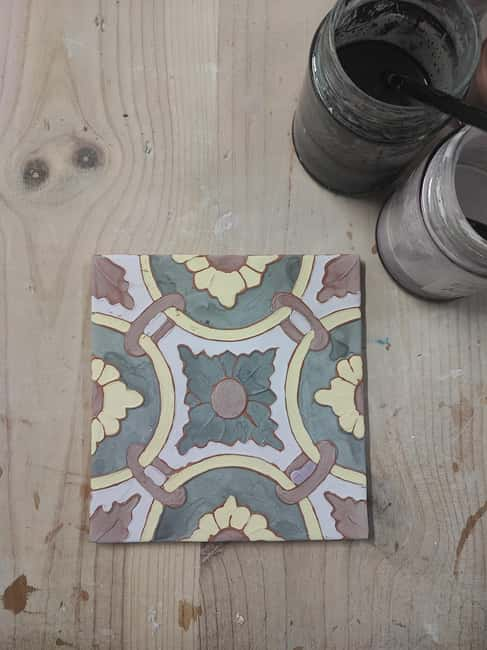
The workshop introduces you to Aresta tile decoration. The method uses raised lines or edges to keep different colors of glaze from running together. In practice, that gives the finished tile its clear geometric divisions and strong pattern.
The artistic tradition is described as Hispano-Moorish, a style that came from Spain in the 15th century and carries Islamic influence. You will hear about the connection between Moroccan and Portuguese tile work, then see how repeated forms and careful color choices create a more complex design.
You do not need a background in ceramics or art history. The value is in seeing how a tile that looks simple on a wall requires several stages of work. The mold, clay, pattern, glaze, and kiln all play different parts.
I especially like this kind of short lesson because it changes the way you look at tiles afterward. Once you have tried to keep a design tidy and balanced, the decorated facades around Lisbon and Sintra become easier to notice. You start looking at the pattern, not just the color.
First project: pressing fresh clay into a mold

One part of the session involves fresh clay and a mold. You work the clay into the form, following the instructor’s directions and choosing from the available designs.
This is the more tactile half of the workshop. You are shaping the basic tile rather than simply adding color to a finished surface. The process gives you a feel for how a flat piece of clay becomes a small decorative object.
The molds offer a selection of motifs, so you are not forced into one standard design. That choice is useful for families and mixed groups, since one person may prefer a simple geometric pattern while another may want something more detailed.
Expect this part to be hands-on, but not physically demanding. The emphasis is on learning the method and enjoying the work, not on producing a professional ceramic piece. The instructor provides the materials and equipment, so you can arrive with no special preparation.
The information supplied for the experience clearly includes the clay-and-mold activity, while the included finished piece is described as one painted tile. Ask the studio how your clay tile will be handled if having both pieces fired or shipped is important to you.
Second project: painting with colored glazes

The painted tile is the part you take home after firing. You select a ready-made tile and choose a motif from the studio’s range. Then you apply colored glazes under the instructor’s guidance.
This is where the lesson becomes personal. Two people can work from the same general tradition and produce very different results through color choices and small brush decisions. You do not need to draw a pattern from scratch, which keeps the task approachable.
The painting is also the most relaxing stage. You can take your time, ask questions, and focus on the small areas of the design. The studio supplies the materials, and the instructor explains how to work with them.
Remember that glaze can look different before and after firing. The piece you leave behind is not the final version you will see later. The studio fires the tile in a kiln, giving it its finished surface and lasting color.
The fired tile is normally ready for pickup within two to three days. If you have already left Sintra, the studio can arrange delivery to your hotel by courier for an extra fee, if that service is suitable for your plans.
A few more Sintra options worth putting side by side
- Lisbon: Sintra, Pena, Regaleira, Cabo da Roca & Cascais
★ 4.7 · 19,656 reviews - Sintra: Pena Palace and Park Entrance Ticket
★ 4.2 · 17,410 reviews - Lisbon: Pena Palace, Sintra, Cabo da Roca, & Cascais Daytrip
★ 4.7 · 9,981 reviews - Sintra and Cascais Small-Group Day Trip from Lisbon
★ 5.0 · 7,018 reviews
What the instructor adds to the experience

Clear instruction is important in a workshop like this. The available feedback repeatedly points to a welcoming, patient teaching style, especially from Aldina. One booking note refers to the instructor as Dina, so you may see either name associated with the teaching.
The useful thing for you is not simply a friendly welcome. You need someone who can explain the tile’s background, show you how to use the mold, and answer questions while you work. That is the role the instructor fills here.
The class is taught in English. With a maximum of eight people, you should have a better chance of getting individual help than in a large demonstration. The small size also makes the two-hour period feel less rushed.
This is a good match if you like learning by doing. If you only want a quick explanation and a finished souvenir, a shop visit would be faster. Here, the making is the point.
Choosing a motif and making the piece your own

The wide choice of molds and tile designs is one of the strongest practical features. You can choose a pattern that suits your taste rather than receiving a preselected design.
Geometric motifs are a natural fit for the Aresta technique. Look for a pattern that you can imagine painting carefully within the two-hour session. Extremely detailed designs may require more patience, especially if you are new to ceramic painting.
Color is another decision. The glaze selection lets you create a tile that feels personal, but the final appearance changes after firing. You should listen closely to the instructor’s advice about how the colors behave.
The result will be handmade, not factory-perfect. That is part of its value. A small uneven edge or variation in color connects the object to the afternoon you spent making it.
The studio also sells pottery and other handmade items. There is no need to buy anything beyond the class, but the option is useful if you want an additional ceramic souvenir without waiting for firing.
Planning the 3 pm start in Sintra

The workshop begins at 3 pm and ends at 5 pm in the studio. It does not include transportation, food, or drinks, so plan your route and lunch separately.
A short walk from Sintra’s train station makes the studio practical for people arriving from Lisbon by rail. Allow enough time to find the studio and settle in before the start. Sintra’s sightseeing areas can take longer to cross than a map suggests, especially if you have been visiting palaces or walking uphill.
The timing makes this a good companion to a morning in town. You can explore before lunch, eat, and then head to the studio without trying to squeeze the class between two timed palace entries.
Do not book the workshop immediately after an attraction if you are likely to be delayed by transport or long queues. The class depends on a fixed start time, and arriving calm will make the creative work more enjoyable.
At the end, you leave without the fired painted tile unless you arrange a later collection or delivery. Build that detail into your Sintra plan rather than treating it as an afterthought.
Is $58 a fair price?

At $58 per person, the workshop costs more than a simple museum visit or a casual souvenir purchase. The price includes two hours of instruction, all materials and equipment, the clay-and-mold activity, one painted tile, and firing service.
That package gives the price a reasonable basis. You are paying for a small group, teaching, studio time, and a finished object rather than just a craft demonstration. The firing service is especially useful because a home kitchen cannot produce the same result.
The value is strongest if you want an activity with a lasting reminder of Sintra. A handmade tile takes up little luggage space, carries a clear connection to Portuguese craft, and gives you a story to tell when you display it at home.
The price is less appealing if you are counting every euro or have no interest in making things. You may also need to add shipping or courier delivery, and those costs are not included.
The optional shipping charge varies by destination and must be paid separately at the studio. One booking note reported a charge of 28 euros for two tiles to the United States, but current U.S. postal restrictions mean you should not rely on that option now.
Important U.S. shipping restrictions

This point deserves special attention. Portugal’s postal services have temporarily restricted shipments to the United States because of changes to U.S. duty-free de minimis rules.
The studio cannot currently mail painted tiles to U.S. addresses. Your tile can still be fired and held safely at the studio, ready for pickup within two to three days.
If you cannot return to Sintra, ask about courier delivery to your hotel. That costs extra and depends on your plans. The studio can also store the tile until international shipping becomes available again.
For visitors from outside the United States, shipping may be possible, but the fee is separate. Confirm the current arrangement before assuming the tile can go straight home.
Who will enjoy this Sintra workshop most
I would recommend this activity to you if you like local craft, small classes, and souvenirs with a personal connection. It suits couples, solo visitors, families with older children, and anyone who wants a slower afternoon after sightseeing.
Children must be at least seven years old. The class is described as family-friendly, but younger children may find the careful painting and fixed two-hour session difficult. Older children who enjoy drawing or making things should have plenty to keep them busy.
The workshop is also wheelchair accessible, which makes it a practical option for people looking for an accessible creative activity. Transportation to the studio is not included, so check your route from the train station or your accommodation.
You should skip it if your Sintra schedule is already packed, you dislike hands-on activities, or you need to leave the area immediately after 5 pm. The finished tile needs time for firing, and collecting it requires planning.
Free cancellation is available up to 24 hours before the start, and you can reserve now and pay later. Those terms help if your Lisbon plans are still changing, but they do not remove the need to plan for the later tile collection.
Should you book the Hispanic Moorish Tile Workshop?
Book it if you want a small, creative experience that explains something you will see all over Portugal. The combination of clay molding, glaze painting, pattern choice, and a fired keepsake gives you more substance than a standard souvenir stop.
I especially like the workshop for a second or third day in Lisbon, when you may want to slow down and spend time in Sintra without chasing one more major sight. Aldina’s patient teaching, the choice of motifs, and the small group make the session approachable for beginners.
Think carefully about the finished tile. If you are going to the United States, plan to pick it up, arrange hotel courier delivery, or leave it stored at the studio. If that extra step is manageable, the $58 price offers a worthwhile hands-on connection to Portuguese and Hispano-Moorish ceramic art.
FAQ
How long does the Sintra tile workshop last?
The workshop lasts two hours, from 3 pm to 5 pm.
What will I make during the class?
You will craft a tile with fresh clay and a mold, then paint another tile with colored glazes. The included finished item is one painted tile, which the studio fires for you.
Is the workshop taught in English?
Yes. The instructor teaches the workshop in English.
How many people can join the class?
The workshop is limited to eight participants.
Can I take my painted tile home the same day?
No. The tile stays at the studio for firing and is ready for pickup within two to three days. You can also ask about delivery options for an additional fee.
Can the studio ship my tile to the United States?
U.S. postal shipping is currently unavailable because of temporary restrictions. You can collect the tile, arrange courier delivery to your hotel for an additional fee, or have the studio store it until international shipping resumes.
The newest listings around Sintra
- Relaxed E-bike in the backroads of Cascais and Sintra★ 5.0 · 62 reviews
- From Lisbon: Fátima, Nazaré and Sintra Guided Tour★ 4.7 · 155 reviews
- Lisbon: Sintra, Azenhas do Mar and Cascais Day Trip★ 4.9 · 70 reviews
- From Lisbon: Sintra Pena Palace Cascais 8-People Group Tour★ 4.9 · 93 reviews
- Sintra: Private Tour with Guided Pena Palace Experience★ 4.9 · 99 reviews
- Lisbon: Sintra, Coast and Wine Small-Group Day Tour★ 4.8 · 83 reviews
- Sintra: Full-Day Tour from Lisbon with Wine Tasting★ 4.8 · 58 reviews
- Sintra: Walking Tour with Palace, Castle, and Old Town Visit★ 4.9 · 66 reviews
Workshops, compared.

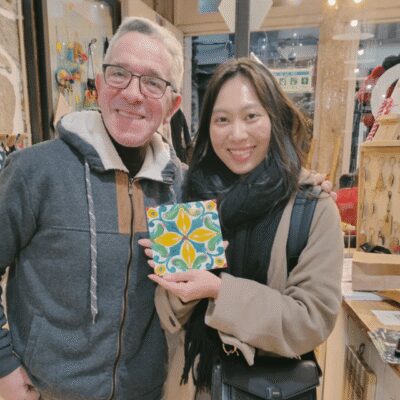
Tile-Painting Workshop with Porto Wine – Bainharia
Read our review →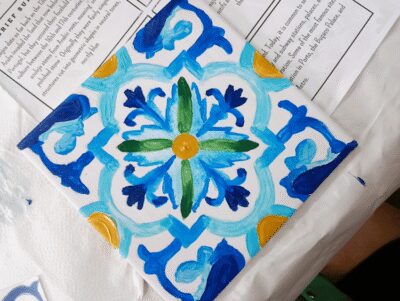
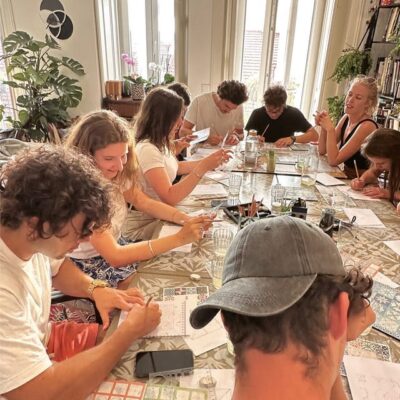

Stories, Canals, and Azulejos Guided Walking Tour
Read our review →

Porto center- Workshop “A nata do BJ” making pasteis de nata
Read our review →
Browse the lists this tour appears in