
Reviewed · HISTORICAL TOURS
Ponta Delgada: Historical Walking Tour
Ponta Delgada reveals itself best on foot, and this tour links its markets, churches, gardens, museums, and seafront defenses into one useful introduction. You move from the local produce stalls at Mercado da Graça to the grand Portas da Cidade, with plenty of Azorean culture between them.
I like the way the route mixes daily life with major sights, especially the market and Mercado CORES. I also like the focus on writers such as Luís de Camões and Antero de Quental, since they give the city a more personal feel. The main caution is that the experience can depend heavily on your guide. English clarity and the balance between religious stories and documented history may vary.
Key points to know before you book
- A citywide introduction in three hours: The route covers central Ponta Delgada without transport, making it a practical first look at São Miguel’s capital.
- Market life comes first: Mercado da Graça and Mercado CORES bring you close to local food, crafts, and creative work.
- History comes with religious context: Churches, Santo Cristo traditions, and biblical stories form part of the tour, so this suits you if faith is part of your interest in Azorean culture.
- Several cultural stops are built in: Teatro Micaelense, the Carlos Machado Museum, and Coliseu Micaelense add art, science, and regional culture.
- The route is wheelchair accessible: That makes this a useful option for visitors who need an accessible city walk.
- The price is $41 per person: With a guide, listed attraction entry, and insurance included, the value is strongest if you want a broad orientation rather than a long museum visit.
Starting beside the Luís de Camões bust
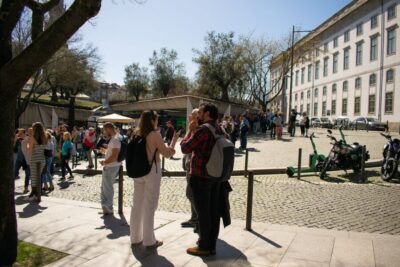
Your walk begins at the Ernesto do Canto Public Library, next to a bust of Luís de Camões. The meeting point is on Rua Ernesto do Canto, also listed as the former Rua Denisa da Graça, so check the exact map pin before setting out.
This is a sensible starting place. You are not simply dropped beside a famous church and told to take pictures. The opening setting introduces Portugal’s literary tradition, and your guide can begin explaining how Ponta Delgada connects national culture with its own island identity.
The first few minutes matter on a walking tour. You learn the city’s basic shape, get used to the pace, and begin placing later stops in context. Since this is a three-hour route, you should expect a steady overview rather than long, detailed visits at every location.
The tour is offered in English, Portuguese, Scots Gaelic, and Spanish. If you need English, pay attention during the welcome. Guide quality can vary, and one English-language outing was held back by unclear communication. Another guide, Manuela, was praised for being friendly and very well informed, so your experience may depend quite a bit on who leads the group.
More history walks in Sao Miguel Island:
- Lisbon: History, Stories and Lifestyle Walking Tour
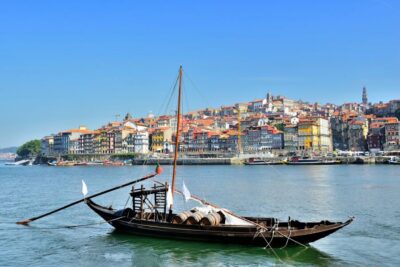
★ 4.8 · 10,902 reviews - Douro Valley: Historical Sites, Wine Experience, Lunch & Cruise
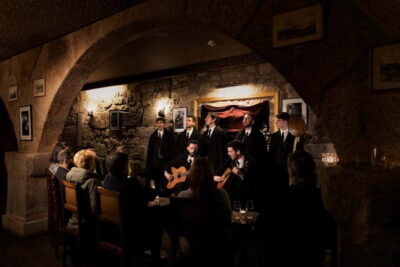
★ 5.0 · 5,133 reviews - Lisbon: Live Fado Show with Port Wine in Historic Center
★ 4.7 · 4,166 reviews
Mercado da Graça and the everyday Azores

Mercado da Graça is one of the most useful stops because it shows Ponta Delgada as a living city. The colors, smells, and produce connect the capital to the farms and fishing communities of São Miguel.
I like beginning here instead of saving the market for a rushed shopping stop at the end. Your guide can explain the role of local food in Azorean life while you see people buying and selling ordinary goods. It is the kind of place where the island feels less like a postcard and more like home.
Do not expect a cooking class or a long food tasting. Lunch is not included, and the tour is primarily about orientation and interpretation. If you want to linger over every stall, you may need to return on your own.
The market also gives you a useful break from monuments. Ponta Delgada has handsome stonework and formal squares, but its character is not limited to grand buildings. The market helps you understand the daily rhythm behind them.
Teatro Micaelense and the city’s artistic life
The next stop is Teatro Micaelense, an important venue for the Azores’ cultural life. Here the tour shifts from trade and daily errands to performance, public life, and the island’s artistic traditions.
The theater is valuable as a landmark because it shows that Ponta Delgada has long been more than a port stop. It is a place where people gather for culture, entertainment, and civic occasions.
The exact amount of time inside a venue can depend on opening hours and the day of your visit. Saturday scheduling deserves special care. Some stops may be closed on Saturdays, so ask at booking time if interior access matters to you.
That point is important because the tour includes several cultural buildings. If you visit when they are open, you get more than exterior commentary. If not, the experience becomes more of a streetside history walk, still useful but less complete.
The Carlos Machado Museum and island knowledge
The Carlos Machado Museum brings natural history and regional culture into the route. It is a particularly good match for anyone who wants to understand São Miguel as an island environment, not just a collection of old buildings.
The museum connects the archipelago’s biodiversity with its people and traditions. That balance is useful. You hear about the natural world, then see how island communities developed their own customs and ways of life.
The museum stop also helps break up the walking. Three hours is a reasonable length for a city tour, but Ponta Delgada’s sights can blur together if you only move from one facade to the next. A museum gives you a different kind of information and a chance to take in objects at closer range.
Entry to the listed attractions is included. Still, do not assume you will have time for a full museum visit. The route has many stops, and the guide needs to keep the group moving.
More Walking Tours in Sao Miguel Island:
- Angra do Heroísmo: Walking Tour with Local Pastry and Coffee
★ 4.8 · 65 reviews - Best of Lisbon Small-Group Guided Walking Tour
★ 5.0 · 4,869 reviews - Lisbon: Food and Wine Small Group Walking Tour
★ 4.9 · 4,082 reviews - Porto Walking Tour, Lello Bookshop, River Cruise and Cable Car
★ 5.0 · 3,354 reviews
Igreja do Colégio, two gardens, and Antero de Quental
Igreja do Colégio and the Antero de Quental Garden bring together architecture, literature, and public space. The church reflects the strong Catholic presence in Azorean life, while the garden gives the route a quieter setting.
Antero de Quental is one of the city’s most important literary figures. The tour uses his connection to help explain Portuguese literature and the role of writers in public debate. This is a welcome change from a tour that only lists dates and building names.
The nearby Public Library continues that literary thread. You hear more about Antero de Quental and his influence, while the setting reminds you that books and education remain part of the city’s identity.
You should know that religious interpretation is part of the experience. One outing leaned strongly on biblical stories rather than historical evidence, which may disappoint you if you want a strictly secular account. If you enjoy learning how faith shapes local culture, these stops will likely feel more relevant.
The best approach is to ask questions. A good guide can separate documented history, local tradition, and religious belief. That distinction makes the church visits more useful for everyone in the group.
Padre Sena Freitas Garden and Palácio da Conceição
At the Padre Sena Freitas Garden and Palácio da Conceição, the subject turns toward government and political autonomy. These places help explain how power is shared across the Azores and how the island group fits within Portugal.
This is one of the tour’s more unusual strengths. Many city walks focus on architecture, food, and famous residents, then skip the political structure that shapes island life. Here you get a basic explanation of Azorean autonomy and the division of authority among the islands.
Do not expect a full political lecture. The stop works as a clear introduction, not an academic course. You will come away with a better sense of why Ponta Delgada serves as the capital of São Miguel while the Azores function as a wider island group.
The garden also adds another pause in the route. Comfortable shoes still matter, but the walk is not simply a long line through traffic. Gardens and squares give you moments to look around and let the information settle.
Coliseu Micaelense and Campo de São Francisco
The Coliseu Micaelense is one of the largest theaters in the archipelago. Its place on the route reinforces the cultural theme introduced at Teatro Micaelense, while also showing the scale of public entertainment in Ponta Delgada.
From there, the walk continues to Campo de São Francisco. This open area is tied to the Santo Cristo festivities, described as the second-largest religious celebration in Portugal. That detail gives the square a special role in the city’s calendar.
If you visit outside the festival period, you will not get the full event atmosphere. You can still learn why the site matters and how religious celebrations shape public space in Ponta Delgada.
This section may feel more solemn than playful. The tour’s tone can be serious, and one outing was described as informative but short on energy. If you prefer a lively, joke-filled walk, make your expectations clear at the start. If you want a thoughtful account of local traditions, the quieter approach may suit you.
Forte de São Brás and Ponta Delgada’s connection to the sea
Forte de São Brás adds military history and a reminder that island life has always depended on the sea. The fort’s position reflects Ponta Delgada’s strategic importance over the centuries.
This is where the route broadens beyond literature, religion, and culture. The city was not only a place of worship and commerce. It was also a defended Atlantic port, linked to shipping, security, and the movement of people and goods.
The fort is also connected to Santo Cristo festivities, giving the tour another chance to show how civic, religious, and military history overlap. You get a more rounded picture of the city when these subjects appear together.
The listed attraction entry is included, but the tour still has a fixed schedule. If a site is closed or the group is moving on, you may hear the explanation from outside. Ask your guide how much time is planned at the fort if this is a major reason for booking.
Portas da Cidade and the city center finale
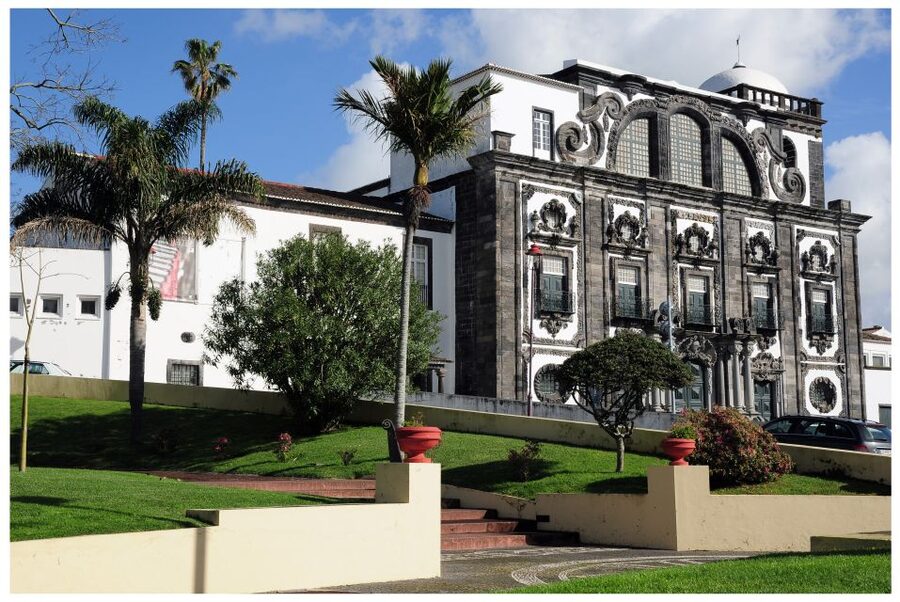
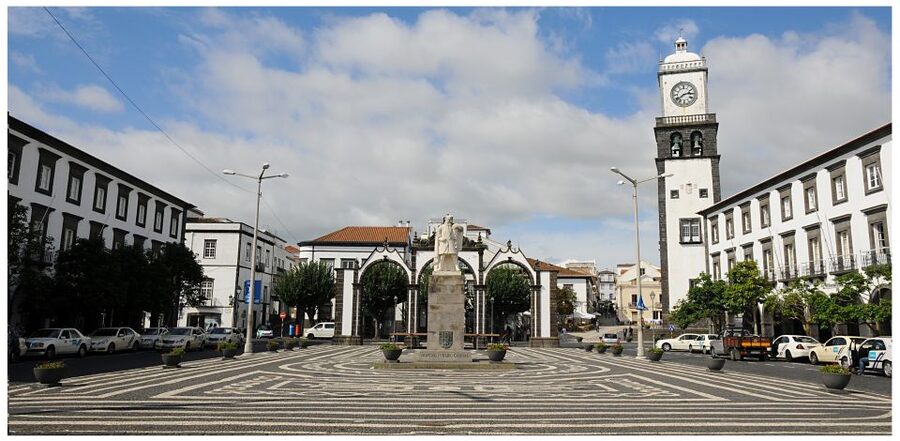
The Portas da Cidade is the symbolic gateway to the Azores and one of Ponta Delgada’s most recognizable sights. Reaching it near the end gives the walk a clear visual finish, although the tour continues nearby.
The route then takes in the Câmara Municipal and Igreja Matriz de São Sebastião. These landmarks sit at the heart of the city and bring together civic authority, religious life, and central Ponta Delgada architecture.
This is a good point to look back at the route as a whole. You have seen the city through markets, museums, theaters, gardens, a fort, churches, and government buildings. The value is not just in checking off sights. It is in seeing how those parts work together.
You may want to take photographs here, but keep listening. The final explanations often help tie earlier stops together. Since the tour ends at Mercado CORES, you are still close to the center after the main monuments.
Mercado CORES and Azorean creative work
The final stop is Mercado CORES, connected with Azores for All. Here the focus turns to local crafts and creative projects that express Azorean identity.
I like this ending because it brings the tour back to people and present-day work. You begin with a traditional market and finish with a space devoted to crafts and creative projects. That gives the experience a useful arc from everyday commerce to modern local expression.
The stop can also help you decide what you want to explore afterward. You might return to the market, look for a locally made item, or use the central location as a launch point for more independent sightseeing.
No pickup or drop-off is included, and none is needed for the core route. You meet in central Ponta Delgada and finish in the city, so plan your own way back to your hotel, ship, or next activity.
What $41 buys you in practical terms
At $41 per person, this is reasonably priced if you value a guide and want several cultural entries included. You are paying for three hours of interpretation, a route through many central sights, listed attraction admission, and personal accident and liability insurance.
The price is less compelling if you only want a quick look at the Portas da Cidade, the main church, and a few squares. You can see central Ponta Delgada independently. The real benefit here is the explanation connecting those places to literature, religion, politics, island ecology, and local life.
The tour does not include lunch, hotel pickup, or drop-off. Bring water and wear comfortable clothes and shoes. This is a walking tour, not a bus excursion, and the number of stops means you should not treat it as a casual stroll.
The route is wheelchair accessible, which is a practical advantage. Still, if you have specific mobility needs, confirm the access arrangements for each included interior before booking, especially if you are visiting on a Saturday when some stops may be closed.
Who will enjoy this Ponta Delgada walk?
I would choose this tour for a first visit to São Miguel, especially if you want your first few hours in the capital to have a clear structure. It suits you if you like local markets, public squares, museums, churches, political history, and short explanations that connect them.
It is also a good choice for visitors who prefer an accessible route and want to learn from a local guide rather than read signs alone. The range of languages makes it easier to choose a comfortable option, with English, Portuguese, Scots Gaelic, and Spanish available.
You may want something else if you need a very detailed academic history, a food-focused walk, or a high-energy entertainment tour. The religious material is not a small side note, and guide style can affect how engaging and clear the three hours feel.
Free cancellation up to 24 hours before the start and the reserve-now, pay-later option make it easier to fit into a changing São Miguel schedule. Check available starting times before you commit, since the tour runs for three hours.
Should you book it?
Book this walk if you want a broad, accessible introduction to Ponta Delgada and enjoy seeing how markets, literature, faith, culture, politics, and the sea shape one city. The combination of Mercado da Graça, the Carlos Machado Museum, Forte de São Brás, and Mercado CORES gives you more range than a simple monument walk.
Think twice if your priority is polished English, a strongly evidence-based history lesson, or a light and humorous guide. Ask about the language, Saturday opening hours, and the balance between religious tradition and secular history before booking.
With a 4.4 rating from 41 reviews, the experience looks solid but not flawless. The strongest praise goes to the authentic local feel and guides such as Manuela. The safest choice is to book when you want orientation and context, then return independently to the places that deserve more time.
FAQ
How long does the Ponta Delgada Historical Walking Tour last?
The tour lasts three hours.
Where does the tour begin?
It begins at the Ernesto do Canto Public Library, next to the bust of Luís de Camões.
Where does the tour finish?
The tour finishes at Mercado CORES, connected with Azores for All.
What languages are available?
The live tour guide is available in English, Portuguese, Scots Gaelic, and Spanish.
Is the tour wheelchair accessible?
Yes, the walking tour is listed as wheelchair accessible.
What attractions are included?
The route includes Mercado da Graça, Teatro Micaelense, the Carlos Machado Museum, Igreja do Colégio, Antero de Quental Garden, the Public Library, Padre Sena Freitas Garden, Palácio da Conceição, Coliseu Micaelense, Campo de São Francisco, Forte de São Brás, Portas da Cidade, Câmara Municipal, Igreja Matriz de São Sebastião, and Mercado CORES.
Is admission included?
Entry to the listed attractions is included.
Is food included?
No. Lunch is not included, so bring water and plan separately for meals.
Can I cancel the booking?
Yes. You can cancel up to 24 hours in advance for a full refund. You can also reserve now and pay later.
The newest listings around Sao Miguel Island
- Island Van Tour (Full Day) | Terceira Island★ 4.9 · 176 reviews
- Terceira: Half-Day Dolphin and Whale Watching Tour★ 4.6 · 219 reviews
- Terceira: Half-Day Island Tour with Cheese Tasting★ 4.4 · 106 reviews
- Ponta Delgada: Full-Day Sete Cidades 4X4 Tour with Lunch★ 4.9 · 50 reviews
- Sete Cidades Azores 4×4 Day Tour from Ponta Delgada★ 4.9 · 46 reviews
- São Miguel: Sete Cidades and Lagoa do Fogo Full-Day Tour★ 4.8 · 65 reviews
- São Miguel: Sete Cidades & Lagoa do Fogo Tour with Lunch★ 4.8 · 565 reviews
- São Miguel: Full-Day Tour to Sete Cidades and Lagoa do Fogo★ 4.8 · 252 reviews
Historical Tours, compared.
Historical Sites, Wine Experience, Lunch & Cruise
Read our review →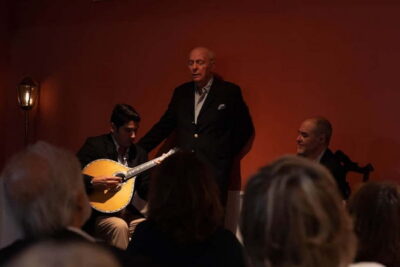
Live Fado Show with Port Wine in Historic Center
Read our review →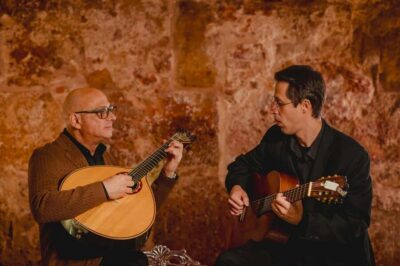

Browse the lists this tour appears in