

Reviewed · 1-DAY TOURS
Lisboa Story Centre: 1-Day Admission Ticket
Lisboa Story Centre turns Lisbon’s past into a short stage show, complete with old warehouses, caravela ships, sound effects, and a dramatic account of the 1755 earthquake. It is a useful first stop before sightseeing because it gives you a basic map of the city’s major events without asking you to read a wall of dates.
I like the chronological route, which makes Lisbon’s story easy to follow, and I like the virtual scale model upstairs, where the city’s architecture and layout come together. The main drawback is that the presentation gives limited attention to contemporary Lisbon, and the building has no air conditioning, which can matter on a hot day.
Key points to know before you go
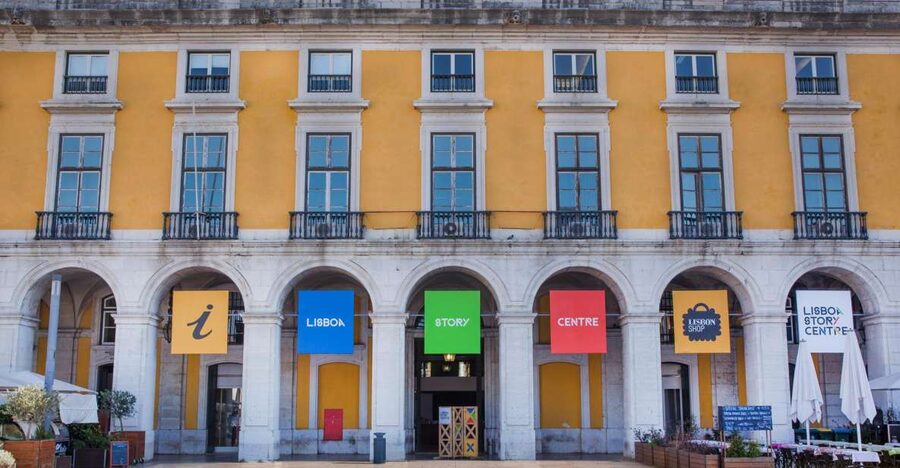
- A 60-minute history show: The main route moves through five ground-floor areas in chronological order.
- Lisbon’s 1755 earthquake gets the most dramatic treatment: Expect an immersive presentation of the disaster and its aftermath.
- A recorded storyteller guides you: Audio is available in Portuguese, English, Spanish, French, Italian, German, Russian, Mandarin, and Japanese.
- The upstairs city model is worth your time: It helps you connect Lisbon’s architecture with the story you have just heard.
- Good for families and first-time visitors: The playful format is easier for children than a traditional museum display.
- The building may feel warm: One recent assessment specifically noted the lack of air conditioning.
Starting at Terreiro do Paço

Lisboa Story Centre sits in the East Wing of Terreiro do Paço, the broad waterfront square also known as Praça do Comércio. The setting matters. You are not entering a museum in an out-of-the-way district. You are beginning in one of Lisbon’s most important civic spaces, surrounded by the arcades and yellow facades of the rebuilt city.
The entrance is at Terreiro do Paço, 78 to 81. With a skip-the-ticket-line admission, you can get inside without spending extra time at the ticket counter. Opening hours are 10:00 to 19:00, with the last entrance at 18:00, and the ticket is valid for one day.
The attraction is not an all-day guided tour. The central route takes about 60 minutes, though you should allow more time if you want to linger with the displays, visit the upstairs model, and see the temporary exhibition. I would place it early in a Lisbon visit, especially if you plan to walk through Baixa, Alfama, or the waterfront afterward.
More Day Trips in Lisbon:
- Sintra and Cascais Small-Group Day Trip from Lisbon
★ 5.0 · 7,018 reviews - From Porto: Braga and Guimarães Full-Day Trip
★ 4.6 · 3,951 reviews - Three Cities in One Day: Porto, Nazare and Obidos from Lisbon
★ 4.5 · 3,572 reviews
Five ground-floor chapters of Lisbon
The main exhibition is arranged as five areas on the ground floor. They move through time rather than jumping between unrelated subjects, so you get a clear sense of cause and effect.
A recorded storyteller leads you through the route in your chosen language. The narration is paired with sets, multimedia scenes, and sensory elements. This makes the experience feel closer to a history presentation than a standard museum. You are not simply looking at objects in glass cases. You are placed inside recreated settings and asked to follow a story.
The format is especially useful if you are new to Lisbon. The city’s past can otherwise seem scattered across churches, castles, monuments, and street names. Here, the Centre gathers the main pieces into one compact introduction.
Early Lisbon and the city’s beginnings
The first part covers Lisbon from its earliest civilizations onward. The available information does not list every settlement or period in detail, so do not expect a specialist archaeological museum. Instead, this opening section sets up the long timeline and shows that Lisbon was shaped by many eras before becoming the capital you see today.
That broad approach works well for a first visit. You get the basic foundation before the presentation turns to commerce, shipping, disaster, and rebuilding. If you already know Lisbon’s ancient and medieval history in depth, this section may feel brief.
Trade, ships, and the 16th-century warehouse
One of the most appealing scenes recreates the atmosphere of a 16th-century warehouse. You also see products from the New World and caravela ships, the vessels associated with Portuguese maritime trade.
This section helps you understand Lisbon as a port rather than just a collection of pretty streets and monuments. The ships and goods make the overseas trade story more concrete. Instead of hearing only about expansion and commerce, you get a visual sense of the objects moving through the city.
The theatrical setting should appeal to children, but adults benefit too. The display gives context for the grand waterfront square outside. Afterward, when you look across Terreiro do Paço, you can better connect the square with Lisbon’s long relationship to the river and the sea.
The presentation is still a designed attraction, not a working historical warehouse. If you want original maritime objects, detailed ship construction, or a scholarly account of Portugal’s overseas empire, you will need another museum. Lisboa Story Centre keeps the story moving and favors atmosphere over depth.
A few more Lisbon options worth putting side by side
- Lisbon City Center Tour – The Unmissable Lisbon
★ 5.0 · 22,234 reviews - Lisbon: Jerónimos Monastery Entrance Ticket
★ 4.1 · 14,164 reviews - Lisbon: History, Stories and Lifestyle Walking Tour
★ 4.8 · 10,902 reviews - Lisbon: Sunset Boat Party Cruise with DJ and Open Bar
★ 4.5 · 10,378 reviews
All Saints’ Day and the 1755 earthquake
The most powerful part of the route focuses on All Saints’ Day in 1755. The Centre presents the earthquake and its tragic consequences through an immersive audiovisual scene.
This event is central to understanding modern Lisbon. The earthquake, followed by fires and a tsunami, destroyed much of the city on November 1, 1755. The Centre’s version is designed to communicate the scale of the disaster through sound, visuals, and staging rather than through a long written explanation.
This is where the interactive format earns its place. A paragraph about an earthquake can feel remote. A carefully staged scene gives you a stronger sense of why the disaster changed Lisbon so completely. It also explains why parts of the central city have such a planned, orderly design compared with the winding streets of older districts.
The tone is dramatic, so families should consider the age and temperament of younger children. The information provided does not give a specific age recommendation, but the presentation deals with death and destruction rather than presenting the earthquake as a simple museum fact.
The Marquis of Pombal and the rebuilding of Baixa
After the earthquake, the story follows the Marquis of Pombal as he carries out his plan to rebuild Lisbon. This section connects the disaster with the city you can visit today.
The rebuilding story is valuable because it helps you read the streets around Terreiro do Paço. The regular blocks and broad routes of central Baixa make more sense once you know they were part of a deliberate reconstruction. The Centre presents Pombal’s vision as a major turning point in the city’s development.
I appreciate the way this part follows the earthquake instead of treating it as an isolated tragedy. You see the crisis, then the political and urban response. That simple sequence gives you a stronger framework for walking through central Lisbon later.
The presentation remains introductory. It does not provide a detailed study of every rebuilding decision or every social consequence. Think of it as a useful orientation, not a substitute for a full architecture tour.
From the past toward modern Lisbon
The five ground-floor areas continue through Lisbon’s history toward the present. The Centre aims to cover the city from its earliest civilizations to modern times, but the contemporary period receives less attention than the earlier chapters.
That is the main content limitation. If you want a close look at 20th-century Lisbon, the Carnation Revolution, recent urban growth, or daily life in today’s city, this attraction may leave you wanting more. One assessment specifically found little discussion of the contemporary era.
Still, the broad timeline does its job. You leave with an understanding of the main forces that shaped Lisbon: early settlement, maritime trade, the 1755 disaster, and planned rebuilding. For many visitors, that is enough background to make the rest of the city easier to understand.
Upstairs with the virtual city model

The sixth area is on the first floor and features a virtual scale model of Lisbon. This is more than a decorative finale. It gives you a chance to see the city as a whole after following the story in separate scenes.
The model highlights different types of architecture and offers more detail about Lisbon’s development. It also encourages you to discover modern Lisbon, helping to fill part of the gap left by the relatively light treatment of recent history.
This is the place to pause and connect the dots. You can think about the old lanes, the rebuilt central streets, the waterfront, and the city’s changing architectural styles as parts of one larger place. If you are planning your sightseeing, the model can also help you understand how the central districts relate to one another.
Do not rush out after the main route ends. The upstairs model is one of the most useful parts for adults who want to turn the presentation into practical city knowledge. It is also a good final stop for children, since a scale model is easier to grasp than a long historical explanation.
The temporary exhibition area

Your ticket also includes access to a temporary exhibition area connected to the Centre’s main themes. The content of this section can change, so I would not book the attraction for one specific temporary display unless you have checked what is showing on your date.
Its value depends on the exhibition in place. Treat it as an extra rather than the main reason to visit. The permanent route is what gives you the core Lisbon story.
How the audio guide works
The recorded multilingual storyteller is included with admission. Available languages include Portuguese, English, Spanish, French, Italian, German, Russian, Mandarin, and Japanese. Portuguese has both adult and child versions, which is a useful touch for families using that language.
The audio format keeps the route moving and lets you hear the same presentation in a language you understand well. It also avoids the need to match your schedule with a live guide. The trade-off is that you cannot ask questions or change the pace of the narration as you could on a private tour.
Because the route is built around staged scenes, listen as you move through each area rather than treating the audio as background noise. The storytelling is what ties the sets together. Without it, some displays may feel more like attractive props than parts of a connected history.
Is the one-day ticket good value?
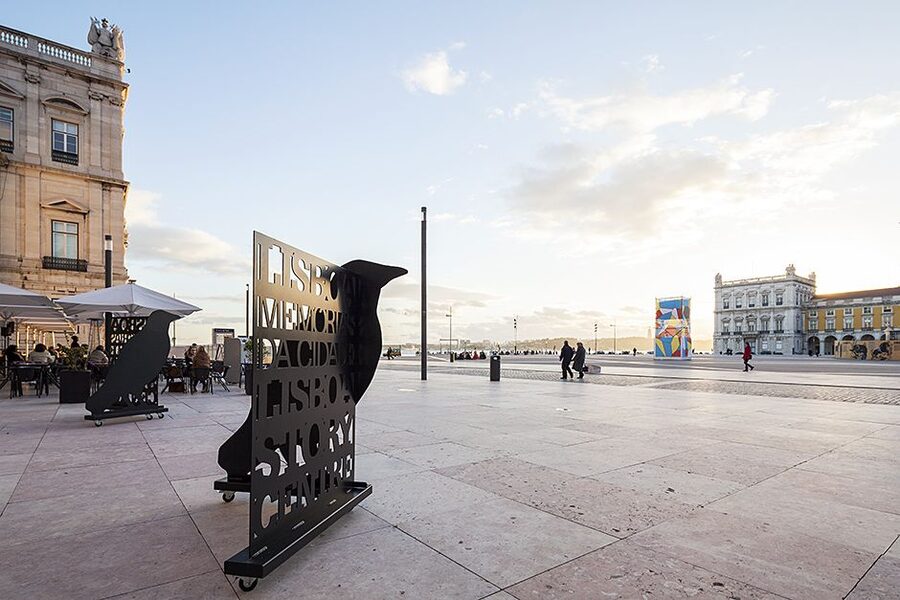
No price is provided here, so the fairest way to judge value is by the kind of visit you want. You receive admission to the permanent attraction, the temporary exhibition area, and the audio guide, with a route lasting about an hour. That is reasonable value if you want a clear introduction to Lisbon and prefer a short indoor activity over a long museum visit.
The ticket becomes more useful when you treat Lisboa Story Centre as a starting point. Use the presentation to understand the city, then spend the rest of your day looking for the earthquake-era street plan, the waterfront setting, and the buildings connected with the rebuilding of Baixa.
The value is weaker if you expect a full-day museum or detailed academic history. The attraction covers a lot of ground in roughly 60 minutes, so the treatment must be selective. You are paying for an accessible show with sets and multimedia, not a large collection of original artifacts.
The flexible booking terms add practical value. You can reserve and pay later, and cancellation is allowed up to 24 hours before the visit for a full refund. That helps if your Lisbon schedule is still changing.
Families, older visitors, and access needs
The playful presentation works well for families because it replaces long blocks of text with scenes, sound, and visual storytelling. The earthquake section may be intense for very young children, but the overall structure is straightforward and easy to follow.
It also suits adults who want orientation without committing to a long walking tour. After a tiring flight or during a hot afternoon, an hour indoors can give you useful context while saving your legs.
The Centre is wheelchair accessible. That makes it a practical option for visitors who need a break from Lisbon’s steep streets and uneven pavements. The available information does not provide further details about individual exhibit access, so you may want to confirm any specific requirements before booking.
One comfort issue is worth noting. A recent assessment found that the facilities do not have air conditioning. On a warm day, that could affect your enjoyment, especially if you linger in the exhibition areas. Plan your visit for a cooler part of the day if heat bothers you.
Best timing and how to pair it with sightseeing

The Centre opens daily from 10:00 to 19:00, with final admission at 18:00. Since the core presentation takes about an hour, a late entry leaves little room for the upstairs model and temporary exhibition. I would arrive well before the last admission time.
The morning is a sensible choice if you want historical context before exploring Baixa and the waterfront. You can then recognize the planned streets and rebuilt areas instead of seeing them as attractive scenery without a story.
An afternoon visit works well as a pause between outdoor stops. The lack of air conditioning is the one reason not to assume it will feel cool inside during the hottest part of the day. If the weather is mild, the location makes it easy to combine the Centre with the square, the riverfront, and nearby central Lisbon sights.
Who should book Lisboa Story Centre?
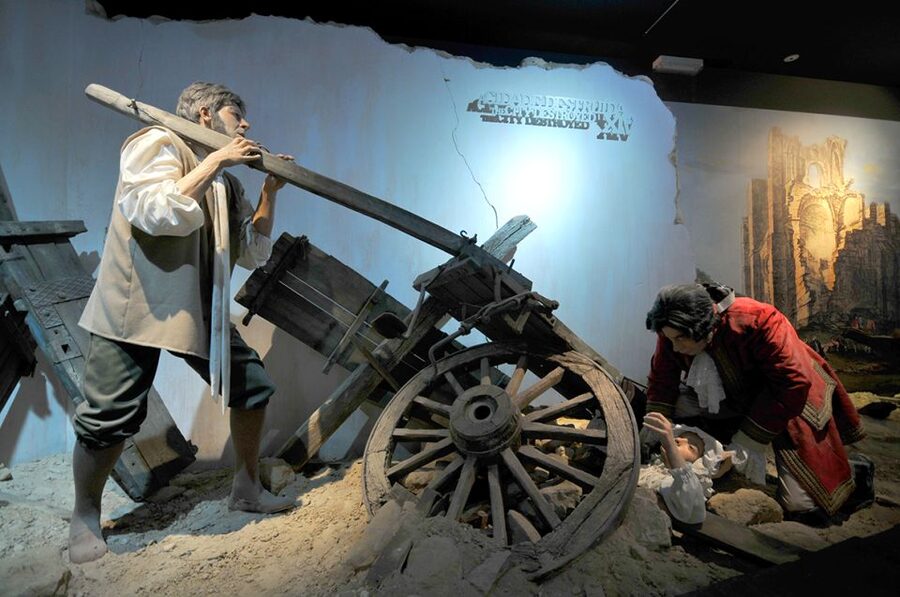
I would recommend it to first-time visitors, families, history-curious adults, and anyone who wants a clear explanation of Lisbon before walking the city. The best parts are the 16th-century warehouse, the caravela ships and New World goods, the dramatic earthquake presentation, and the upstairs model.
I would be more cautious if you already know Lisbon’s history well or want a detailed account of the modern city. The contemporary period receives limited treatment, and the attraction’s short format leaves little room for specialist detail.
Book it if you value a well-organized, visual introduction and want an easy activity in the heart of Lisbon. Skip it if you would rather spend your time in original historic buildings, galleries, or outdoor neighborhoods. For many visitors, the Centre is most useful as a one-hour orientation, followed by a walk through the city it explains.
FAQ
Where is Lisboa Story Centre located?
It is in the East Wing of Terreiro do Paço at Terreiro do Paço, 78 to 81, 1100-148 Lisbon, Portugal.
How long does the visit take?
The main historical route takes about 60 minutes. You may need additional time for the virtual scale model upstairs and the temporary exhibition area.
What are the opening hours?
Lisboa Story Centre is open every day from 10:00 to 19:00. The last entrance is at 18:00.
Which languages are available for the audio guide?
Audio guides are available in Portuguese, English, Spanish, French, Italian, German, Russian, Mandarin, and Japanese. Portuguese has both adult and child versions.
Is the attraction wheelchair accessible?
Yes. Lisboa Story Centre is wheelchair accessible.
Does the ticket include an audio guide?
Yes. Admission includes the audio guide and access to the main attraction. It also includes the temporary exhibition area.
Can I cancel my booking?
Yes. You can cancel up to 24 hours in advance for a full refund. You can also reserve now and pay later.
The newest listings around Lisbon
- The Real Lisbon Street Art Private Guided Tour by Minivan★ 4.8 · 49 reviews
- Lisbon: Historical Walking Tour with Jeronimos Monastery★ 4.5 · 71 reviews
- Lisbon: Port Wine Tasting at Taylor’s Shop and Tasting Room★ 4.6 · 490 reviews
- Lisbon: Tagus River Cruise With Brunch★ 3.2 · 73 reviews
- South Lisbon: 3-Hour Christ the King Electric Bike Tour★ 4.8 · 97 reviews
- Oeiras Coast: Stand Up Paddleboarding near Lisbon★ 4.9 · 56 reviews
- Small Group Walking Tour of Belém★ 4.9 · 80 reviews
- Lisbon: 3-Hour Secret Food Tour★ 4.7 · 53 reviews
1-Day Tours, compared.


Three Cities in One Day: Porto, Nazare and Obidos from Lisbon
Read our review →
Best of Braga and Guimaraes Day Trip from Porto
Read our review →

Day Trip from Porto to Santiago de Compostela and Valença
Read our review →
Arrabida and Sesimbra Small-Group Day Trip from Lisbon with Wine Tasting
Read our review →
Browse the lists this tour appears in