
Reviewed · DOLPHIN WATCHING
From Ponta Delgada: Whale and Dolphin Watching Trip
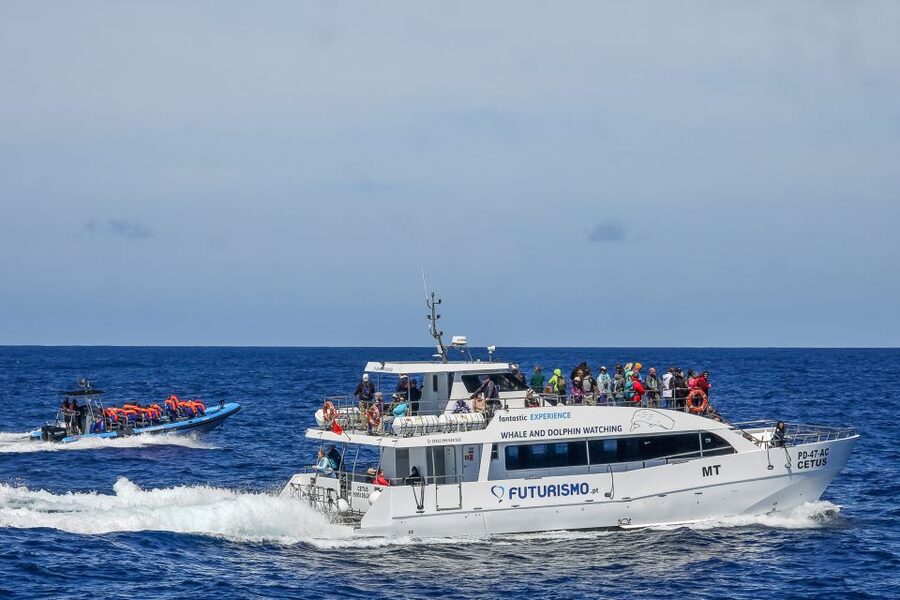
The Azores sit in a busy Atlantic corridor for whales and dolphins, and this three-hour trip from Ponta Delgada gives you a real chance to see them in open water. The possible list is impressive: sperm whales, several dolphin species, turtles, seabirds, and springtime visitors such as blue, fin, and sei whales.
I like two things right away: a marine biologist or nature guide rides along, and you can choose between a catamaran and a Zodiac boat. The crew also offers a second tour if no animals are seen, which takes some sting out of an unlucky outing. The main drawback is simple: wildlife is wild, and even a determined crew cannot promise a whale.
Key points at a glance
- The Azores support more than 25 cetacean species, with sperm whales and several dolphin species present year-round.
- Spring offers the best chance for migrating baleen whales, including blue, fin, and sei whales.
- Summer often brings dolphins, pilot whales, and striped dolphins, while other species can appear at any time.
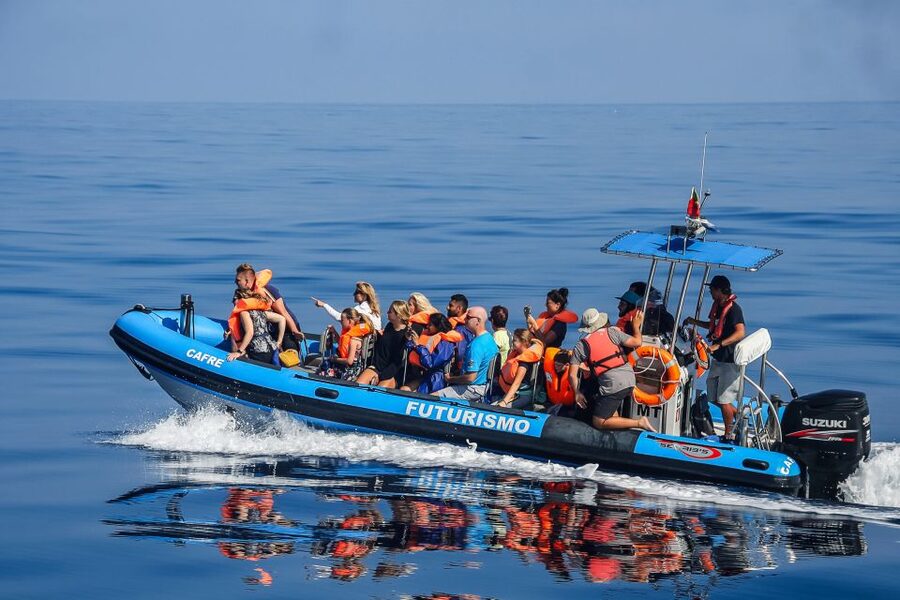
- The Zodiac gives a closer, more active ride, while the catamaran is the better choice for comfort and stability.
- Marine biologists explain identification, behavior, and viewing rules throughout the trip.
- A second tour is offered if no animals are sighted, though weather can still force a cancellation.
Leaving Ponta Delgada for the open Atlantic

Meet Futurismo Azores Adventures at Portas do Mar, Shop 26, in Ponta Delgada Harbour. The harbor is easy to reach in town, but allow time to find the shop inside the port complex. One past booking note specifically suggested clearer directions, so look for the Futurismo sign and Shop 26 rather than relying only on a general harbor address.
The outing begins with a 15-minute safety briefing. This is not wasted time. You learn how to move around the boat, what to do if conditions change, and how the crew approaches marine animals without putting pressure on them. The guide also explains the old whaling past of the Azores and the change toward whale watching and marine conservation.
I like that the briefing includes rules for observing animals. The best encounter is not the closest one at any cost. The crew’s job is to give you a good view while keeping a proper distance and avoiding sudden pursuit. One particularly strong account described the engine being turned off near orcas so the animals were not disturbed. That is the kind of practice I want on a wildlife trip.
After the briefing, you leave Ponta Delgada Harbour and head into the Atlantic. The first part of the ride is about getting away from the port and reaching the open-water areas where the crew expects to find cetaceans. Your guide watches the sea, communicates with the skipper, and points out movement that an untrained eye can easily miss.
More Dolphin Watching in the Azores
- Terceira: Whale and Dolphin Watching in a Zodiac Boat
★ 4.8 · 230 reviews - São Miguel: Wild Swimming with Dolphins
★ 4.7 · 222 reviews - Terceira: Half-Day Dolphin and Whale Watching Tour
★ 4.6 · 219 reviews
Choosing between the catamaran and Zodiac
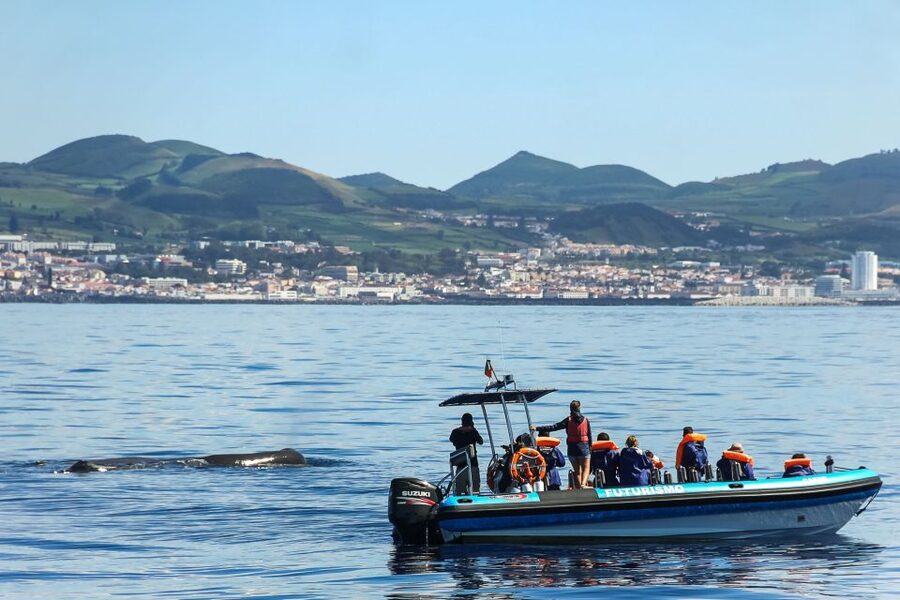
Your boat choice affects the whole feel of the experience. The Zodiac is an inflatable rubber boat, usually chosen by people who want a more active ride and a low position close to the water. You may feel more connected to the sea, and the smaller boat can offer a strong sense of being on an expedition.
The trade-off is motion. The open Atlantic can be rough, and several people have found the smaller speedboat intense when the waves build. If you are prone to seasickness, take appropriate medicine before departure. Do not wait until the boat is already moving and the horizon starts to roll.
Raincoat and trousers are supplied on the Zodiac, and a life jacket is mandatory. Wear practical clothes and shoes with good grip. High heels are not allowed, and loose plans for a polished harbor outfit are best left for dinner.
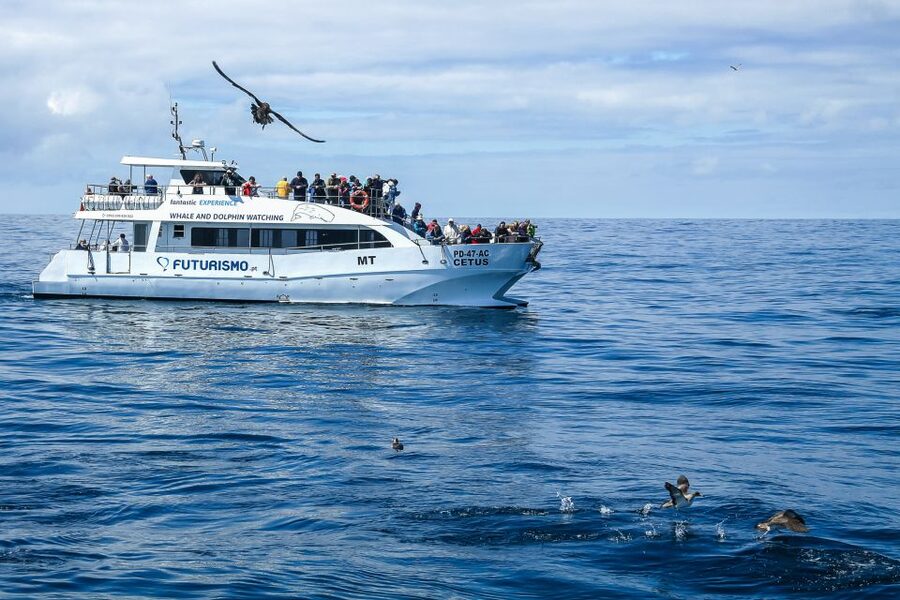
The catamaran is the calmer option. It gives you more room to move and is the sensible pick for older passengers, people with limited mobility, or anyone who values a steadier platform. It is also recommended in the supplied information for families with younger children, pregnant passengers, and people with back concerns.
There is an important age and health-policy wrinkle. The same information also says the activity is not suitable for children under eight, pregnant women, or people with back problems. Because those statements do not fully agree, confirm the current rule before booking if it applies to you. Do not assume that choosing the catamaran automatically makes the trip suitable.
The boat can get busy, especially in high season. On a full departure, everyone naturally wants the best sightline. Move with care, listen to the crew, and do not block other people when an animal surfaces. The Zodiac may feel less crowded, but the catamaran has the comfort advantage.
What you might see in different seasons

The Azores are useful for whale watching because they are not limited to one short annual window. More than 25 cetacean species pass through or live around the islands, and sightings change with the season.
Sperm whales and several dolphin species are present throughout the year. Common dolphins, bottlenose dolphins, and Risso’s dolphins are among the regular possibilities. You might also see turtles, flying fish, seabirds, or other ocean life. A winter trip can still produce a fine day: one February outing recorded many dolphins and four whales, while another saw two dolphin species but no whale.
Spring brings the biggest seasonal bonus. Migrating baleen whales may include blue whales, fin whales, and sei whales. Sei whales are not guaranteed, but they can make a spring or late-summer trip particularly memorable. The trip timing is therefore a factor, but not a guarantee. A spring departure can miss a whale, while a winter morning can produce several.
Summer often brings large groups of dolphins, pilot whales, and striped dolphins. Sightings can be surprisingly varied. A single outing has produced Atlantic spotted dolphins, common dolphins, several other dolphin types, and a whale. Large pods can be thrilling even when whales stay below the surface.
Autumn can also be excellent. Sperm whales, sei whales, Atlantic spotted dolphins, common dolphins, and even a Bryde’s whale have appeared on individual trips. October is not too late for strong sightings, including rare sei whales, but you should still treat every species as a possibility rather than a promise.
The search matters as much as the sighting

Whale watching is not a zoo visit. You may spend time scanning apparently empty water, waiting for a blow, fin, or sudden patch of whitewater. This can test your patience, especially if you have imagined constant action for three hours.
The crew makes that search more useful by explaining what to look for. A marine biologist can help you separate a dolphin’s jump from a wave crest, identify a sperm whale’s blow, or understand why a pod changes direction. The commentary adds meaning to the waiting time.
The guides are repeatedly praised for their care, clear explanations, and effort. Valeria is one biologist specifically named in a booking account, and other trips had one or two marine biologists aboard. You should expect the guide to talk about marine life, conservation, and the system used to locate whales and dolphins, though the exact guide depends on the departure.
The crew may also extend the outing when conditions and sightings make it sensible. Individual trips have run 30 to 45 minutes longer while following dolphins or looking for a whale. That is a welcome bonus, but do not build a tight later appointment around the advertised three hours. The formal whale-watching portion is about 2 hours and 45 minutes after the briefing.
More Whale Watching in the Azores
- Azores Whale Watching & Islet Boat Tour
★ 4.6 · 2,146 reviews - São Miguel Azores: Half-Day Whale Watching Trip
★ 4.5 · 983 reviews - Rabo de Peixe: Sperm Whale Sanctuary Expedition
★ 4.8 · 135 reviews - São Miguel: Whales & Volcano Full-Day Tour with Lunch
★ 4.5 · 95 reviews
Close encounters, with sensible boundaries
The most memorable sightings can be close, but closeness is not the whole point. Sperm whales have approached boats, dolphins have swum alongside the Zodiac, and pods have played in the wake. A group of roughly 200 spotted dolphins has appeared on one outing, while another included a mother and calf among many dolphins.
The crew’s behavior matters here. Good wildlife watching uses distance, patience, and positioning rather than racing directly at an animal. One outing involving orcas was especially careful, with the engine switched off near the animals. That approach gives you a better chance of seeing natural behavior instead of a stressed creature trying to escape a boat.
You should also prepare for imperfect sightings. A whale may surface once and disappear before everyone has a clear look. One account described a possible whale that could not be confirmed because it did not come back up. That is frustrating, but it is also part of watching wild animals.
If no animals appear at all, a second tour is offered. This is one of the strongest parts of the booking terms because it recognizes that the central promise depends on nature. It does not remove every risk: bad weather can cancel a trip, and the departure can also be canceled if minimum numbers are not met.
Is $82 a fair price?

At $82 per person, this sits in the reasonable middle for a guided marine wildlife outing, especially since the price includes the briefing, boat trip, guide, and, on the Zodiac, rain gear and a required life jacket. You are paying for more than transport. You are paying for the crew’s local search skills and the chance to interpret what you see.
The value is strongest when you choose the boat that suits you and treat the trip as a natural-history experience rather than a guaranteed whale photograph. If you see dolphins only, the biologist’s explanations and the time on the Atlantic still give the outing substance. If you see sperm whales, sei whales, or several dolphin species, the price feels especially fair.
Food, drinks, and hotel pickup are not included. Plan those separately. You will meet at the harbor, so this is not a door-to-door excursion.
Free cancellation is available up to 24 hours before departure, and you can reserve now while paying later. Check the available start times for your date, since the exact schedule is not fixed in the basic description.
Practical advice before you go

Bring layers and expect changing conditions. The boat may feel cool even on a pleasant São Miguel day, and spray is part of the experience. The Zodiac includes protective rain clothing, but sensible footwear and clothes that can handle saltwater are still a good idea.
If you get seasick, prepare before boarding. The smaller boat can move sharply, particularly when the sea is rough. The catamaran is the safer comfort choice for many people, though no boat removes all motion offshore.
Keep your camera ready, but do not let it take over. Whale blows and dolphin jumps can last only seconds. Watch first, then take photographs. Drones, smoking, alcohol, drugs, and nudity are not allowed.
The tour operates in English and Portuguese. Hotel transfers are not included, so arrange your own route to Portas do Mar. Most important, leave flexibility after the trip. Sightings can lead to extra time on the water, and the crew may stay out longer when conditions allow.
Should you book this whale-watching trip?

I would book it if you want a well-supported wildlife outing from Ponta Delgada and understand that the Atlantic sets the schedule. The strongest reasons are the marine biologist on board, the clear attention to animal welfare, the choice of two boats, and the second-tour offer when nothing is seen.
Choose the catamaran if comfort, stability, or easy movement matters most. Choose the Zodiac if you want a livelier ride and a closer-feeling position on the water. If you are under eight, pregnant, or have back problems, confirm suitability before paying because the supplied guidance is not fully consistent.
This is a good fit for curious adults, families who meet the age rules, and anyone who wants more than a quick animal-spotting checklist. It is not ideal for someone who needs guaranteed whales, dislikes motion, or has a rigid schedule after the three-hour booking.
FAQ
Where does the whale-watching trip leave from?
Meet Futurismo Azores Adventures at Ponta Delgada Harbour, Portas do Mar, Shop 26, 9500-771 São Miguel, Azores.
How long does the experience last?
The full activity lasts about three hours, including a 15-minute safety briefing and roughly 2 hours and 45 minutes of whale watching.
What animals might I see?
Possible sightings include sperm whales, common dolphins, bottlenose dolphins, Risso’s dolphins, turtles, seabirds, pilot whales, striped dolphins, blue whales, fin whales, sei whales, and other cetaceans.
Which season is best for whales?
Spring offers the chance to see migrating baleen whales such as blue, fin, and sei whales. Sperm whales and several dolphin species can be present throughout the year.
What is the difference between the catamaran and Zodiac options?
The Zodiac is an inflatable rubber boat with a more active ride and required life jackets. The catamaran is the more stable and comfortable choice for many passengers.
Is the tour suitable for children under eight?
The supplied information says children under eight are not suitable for the activity, while also recommending the catamaran for families with younger children. Confirm the current age policy before booking.
Is food included?
No. Food and drinks are not included, and hotel pickup and drop-off are also not provided.
What happens if no animals are seen?
A second tour is offered if no animals are sighted during the experience. Trips can still be canceled because of weather or insufficient numbers.
Can I cancel or pay later?
You can cancel up to 24 hours in advance for a full refund. A reserve-now, pay-later option is also available.
More Whale Watching in Sao Miguel Island
- Funchal Bay: Dolphin & Whale Watch Luxury Catamaran Cruise
★ 4.2 · 2,684 reviews - All Inclusive Whale and Dolphin Watching Luxury Tour
★ 4.9 · 2,573 reviews - Madeira Dolphin and Whale Watching on a Ecological Catamaran
★ 4.5 · 1,957 reviews - Funchal: Dolphin and Whale Watching by Luxury Catamaran
★ 4.5 · 1,709 reviews
More Dolphin Watching in Sao Miguel Island
- Albufeira: 2.5-Hour Benagil Caves & Dolphin Watching
★ 4.6 · 10,710 reviews - Albufeira: Benagil Caves & Dolphin Watching Speed Boat Tour
★ 4.6 · 6,316 reviews - From Funchal: Ecological Catamaran Dolphin Whale Watching
★ 4.5 · 5,771 reviews - Funchal: Dolphin and Whale Watching Catamaran Cruise
★ 4.5 · 5,697 reviews
The newest listings around Sao Miguel Island
- Island Van Tour (Full Day) | Terceira Island★ 4.9 · 176 reviews
- Terceira: Half-Day Dolphin and Whale Watching Tour★ 4.6 · 219 reviews
- Terceira: Half-Day Island Tour with Cheese Tasting★ 4.4 · 106 reviews
- Ponta Delgada: Full-Day Sete Cidades 4X4 Tour with Lunch★ 4.9 · 50 reviews
- São Miguel: Sete Cidades and Lagoa do Fogo Full-Day Tour★ 4.8 · 65 reviews
- Sete Cidades Azores 4×4 Day Tour from Ponta Delgada★ 4.9 · 46 reviews
- São Miguel: Sete Cidades & Lagoa do Fogo Tour with Lunch★ 4.8 · 565 reviews
- São Miguel: Full-Day Tour to Sete Cidades and Lagoa do Fogo★ 4.8 · 252 reviews
Dolphin Watching, compared.
Benagil Caves & Dolphin Watching Speed Boat Tour
Read our review →
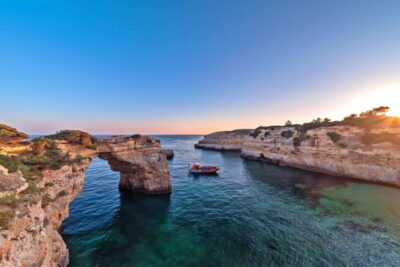
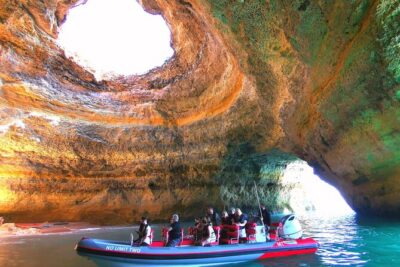
Dolphins Search and Benagil Caves from Albufeira
Read our review →
Benagil Caves & Dolphins Watching with Biologist
Read our review →
Tagus River Cruise to the Ocean & Dolphin Watching
Read our review →Browse the lists this tour appears in