
Reviewed · FOOD TOURS IN LISBON
Lisbon Awakens: A Culinary Crossroads, Reborn.
Lisbon Awakens is a food walk with a useful twist: the dishes are treated as clues to Portugal’s past. You move from Estrela’s churches and gardens to neighborhood food shops and the Campo de Ourique market, stopping for coffee, sweets, wine, spirits, and savory Portuguese food along the way.
I like the tiny group size, capped at seven, and the way the tour gets beyond Lisbon’s postcard center. I also like the clear practical advice: eat lightly beforehand, send in your dietary restrictions, and book this early in your stay so you can use what you learn at later meals. The main drawback is the price, $150 per person, which is a serious spend if you mainly want a quick sampling of local dishes.
Key points to know before booking
- Small-group format: No more than seven people, which gives the guide room to answer questions and adjust the pace.
- A full meal in small portions: Coffee, pastries, wine, spirits, sweets, and savory food are spread across several stops.
- Estrela and Campo de Ourique focus: You explore local neighborhoods rather than Lisbon’s busiest sightseeing streets.
- Food tied to world history: Portuguese exploration, trade, spices, and former colonies help explain what you eat.
- Strong guide element: Kika, Inês, Gisela, Laura, and other local hosts have been praised for combining food with storytelling.
- Plan your appetite: Several people found the tastings substantial enough to replace breakfast and lunch.
Why this Lisbon food tour feels different

Lisbon has plenty of food tours built around a checklist of famous dishes. This one takes a broader view. You are not simply handed a pastel de nata and sent on your way. The guide uses food to explain how Portugal connected with other parts of the world, how ingredients traveled, and how old traditions continue in modern Lisbon.
That makes the tour useful for someone who wants context with lunch. I like learning why a dish matters, not just whether it tastes good. The guides are expected to connect Portuguese cooking with local customs, coffee culture, wine, spirits, spices, and the country’s links with former colonies.
The experience also puts you in neighborhoods where people live. Estrela and Campo de Ourique have churches, gardens, family-run food businesses, restaurants, and a small market. You get a more grounded view of Lisbon than you would from a route that only links the Baixa, Alfama, and major monuments.
The format is personal. A group of seven is small enough for questions and conversation, but not so small that you feel locked into a private tour. Guide names that appear in the experience history include Kika, also known as Francesca, Inês, Gisela, Laura, Celia, Lara, Martim, and others. The exact guide can vary, but the strongest pattern is clear: this tour depends heavily on having a host who enjoys teaching as much as feeding.
More Food Tours in Lisbon
- Lisbon Small-Group Food Tour with 18 Tastings in Alfama District
★ 5.0 · 1,967 reviews - Lisbon: Baixa District Food Tour with Dinner and Drinks
★ 4.9 · 1,870 reviews - Devour Lisbon: The Ultimate Portuguese Food Tour
★ 5.0 · 1,782 reviews
Meeting at Jardim da Estrela
The walk begins at Jardim da Estrela, at Praça da Estrela, in front of the park. This is a pleasant starting point because the garden gives you a little breathing room before the food begins. It is also near public transportation, which makes the meeting point fairly simple to reach.
Arrive with room in your schedule. The tour lasts about five hours and 30 minutes, and it ends back at the meeting point. That return is handy if you want to rest afterward, continue exploring Estrela, or use public transportation from the same area.
A useful tip is to arrive early if you want to look around before the group gathers. The Basilica da Estrela is close to the meeting point, and one person specifically recommended visiting the church across from the park gate before the walk begins. Admission to the listed stops is free, but that does not necessarily mean every optional visit is included in the food tour itself, so treat the extra church visit as something to fit in on your own if time allows.
Basilica da Estrela and the stories behind the food
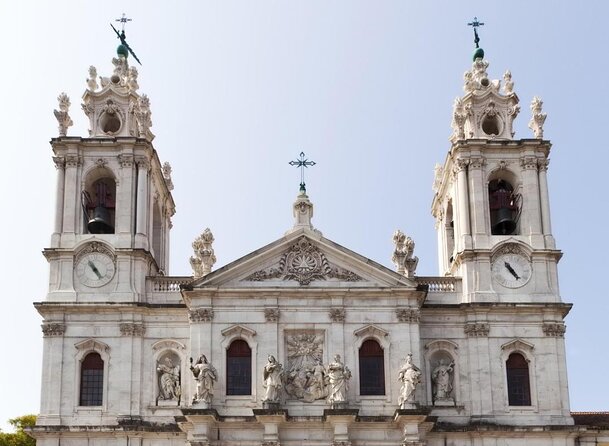
The first scheduled stop is Basilica da Estrela, with about an hour set aside. The point here is not only to admire a church. You begin looking at Portuguese food through convent traditions, pastries, spices, and religious institutions.
Portugal’s convent sweets are a natural subject for this kind of walk. The country’s pastry traditions are tied to old convent kitchens, and the tour uses that connection to show how food preserves history. You may also hear about spices and ingredients that arrived through Portugal’s overseas connections.
This opening gives the day a useful frame. Instead of starting with a large meal and a list of dishes, the guide establishes why food in Lisbon reflects more than local agriculture. Expect a lesson in how religion, trade, travel, and daily cooking overlap.
Kika has been especially praised for handling this part of the experience. Her background as a former teacher is useful here because the information needs to be clear without turning into a lecture. Inês has also been singled out for explaining Lisbon’s past and present in an entertaining way.
The one thing to keep in mind is that this is a food tour with cultural stops, not a dedicated church tour. If you want a detailed architectural examination of the basilica, you may find the historical and culinary angle more important than the building’s every design detail.
Campo de Ourique Market and neighborhood food life
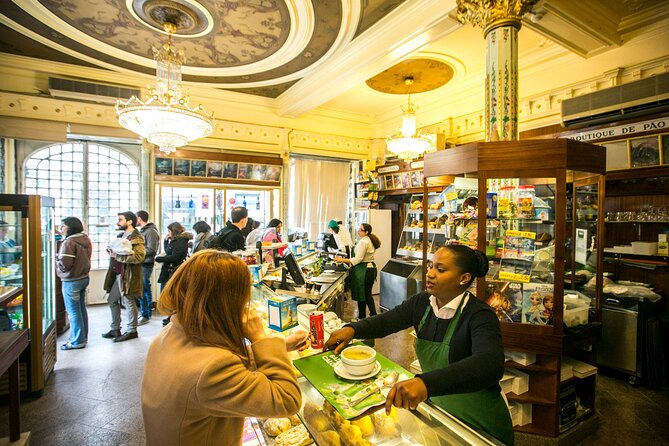
Next comes Mercado de Campo de Ourique, with about 45 minutes scheduled. Campo de Ourique is known for traditional food shops, and its market offers a compact place to see different food businesses in one setting.
The market stop is valuable because it lets the guide move from broad history to present-day eating. You may sample food from more than one stall, learn how locals use the market, and see how traditional Portuguese cooking sits alongside newer food ideas.
One particularly useful detail is the chance to meet people working in the market. Gisela’s route included an introduction to Fred, who provided samples, and there was also time to buy snacks to take home. That sort of contact is one reason a small group helps. You can ask about an ingredient or preparation without holding up a large crowd.
Do not expect a full hour of free shopping. The market is part of a guided route, and the group has to keep moving. Still, the stop gives you practical ideas for returning later on your own. If you find a product you enjoy, make a note of it, since the tour ends back at Jardim da Estrela rather than at the market.
Same base, a completely different sort of day:
- Lisbon City Center Tour – The Unmissable Lisbon
★ 5.0 · 22,234 reviews - Lisbon: Jerónimos Monastery Entrance Ticket
★ 4.1 · 14,164 reviews - Lisbon: History, Stories and Lifestyle Walking Tour
★ 4.8 · 10,902 reviews - Lisbon: Sunset Boat Party Cruise with DJ and Open Bar
★ 4.5 · 10,378 reviews
Jardim da Parada and Lisbon’s custard tart tradition
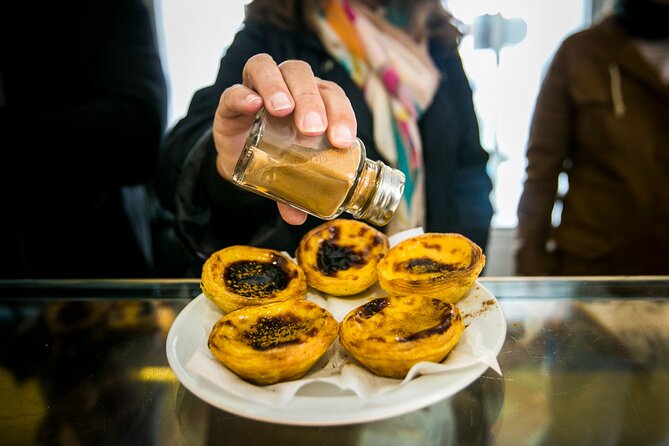
The third listed stop is Jardim da Parada, with about 45 minutes. Here, the focus shifts to custard tarts, one of Portugal’s most recognizable sweets.
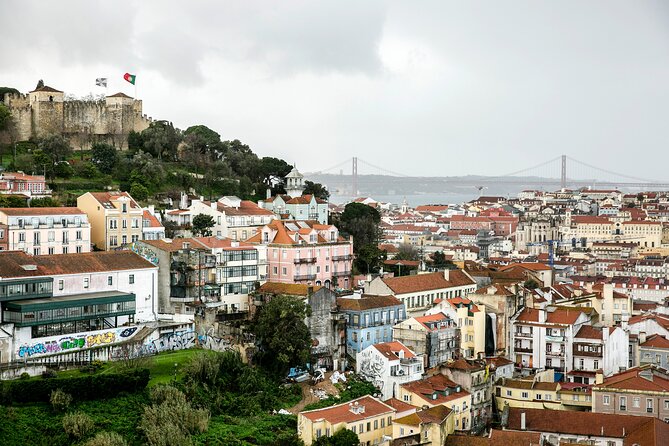
The setting matters. You taste the tarts while looking at 19th-century tiles and mature trees in the garden. That is a more pleasant way to sample a famous pastry than rushing through a crowded bakery. The tour gives you time to connect the food with the neighborhood around it.
The tasting is also a good example of the tour’s balance. You get a well-known Portuguese item, but not in the most obvious sightseeing district. The guide can explain the pastry tradition while you consider texture, sweetness, and how the tart fits into Portuguese coffee culture.
This is one of the places where you will be glad you skipped a large breakfast. The day includes enough samples that even a small pastry can feel like part of a serious meal by this point. If you have a sweet tooth, this may be one of the most memorable stops. If you do not, the tour’s later savory food and drinks should keep the overall tasting from feeling dessert-heavy.
Igreja do Santo Condestável and a different side of Lisbon

The final listed stop is Igreja do Santo Condestável, with about 25 minutes. It is described as a newer Gothic church in a neighborhood associated with artists and writers.
This visit adds another architectural and social layer to the walk. The Basilica da Estrela gives you an older religious setting tied to convent food traditions. Santo Condestável offers a later church and a neighborhood identity shaped by creative life.
The stop is short, so expect a focused visit rather than a long guided tour. It works best as part of the larger route, giving you a chance to pause and understand the area before the experience returns to its food-centered rhythm.
The official stop times add up to less than the full five hours and 30 minutes. The remaining time allows for the food tastings, drinks, walking between places, conversation, and the many smaller stops described by participants. One account counted eight places during the day, while another described a mix of restaurants, markets, and small local businesses. The exact sequence can change, but you should prepare for a steady series of tastes rather than four isolated attractions.
What you are likely to eat and drink
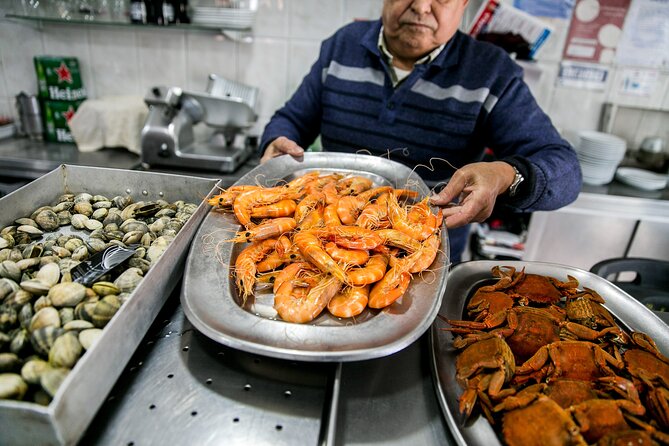
The exact menu is not fixed in the information provided, and that is worth understanding before booking. You are promised enough bites and samples to make a generous meal, but not a printed list of every dish.
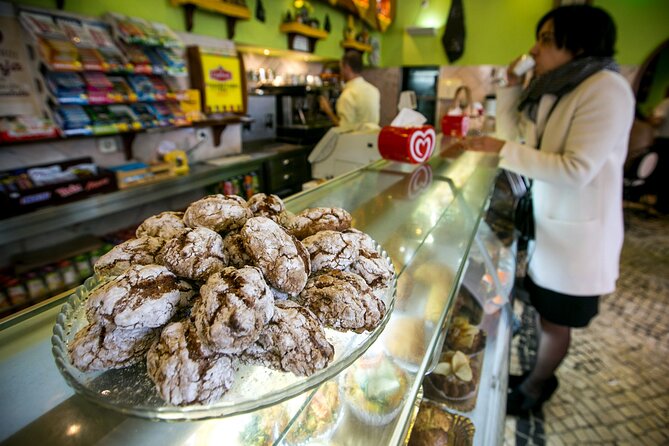
The food described across the experience includes Portuguese pastries, custard tarts, coffee, wine, spirits, banana bread, fish, meat, sweets, and savory local dishes. You may also encounter foods shaped by Portugal’s overseas contacts and spice trade.
That range is one of the tour’s strongest points. You are not left with only one category of food. The day can move from a sweet breakfast-style bite to coffee, then on to savory dishes, wine, spirits, and more sweets. Several people specifically advised skipping breakfast because the tastings are filling.
A dietary restriction can sometimes be handled. One person with a dislike of fish received an additional plate outside the planned menu for the group to share. That is encouraging, but you should not assume every request can be met automatically. Send your allergies or dietary restrictions when booking, and repeat them to your guide at the start.
If you do not drink alcohol, ask about alternatives when you meet the guide. The experience includes wine and spirits in its food and drink mix, but the available information does not promise a particular nonalcoholic replacement.
The guide makes or breaks the day
The strongest part of this experience is the guide. Food is important, but the tour’s real value comes from how someone explains the connection between a dish and Lisbon.
Kika, also called Francesca, has been praised for keeping a large amount of information moving at a comfortable pace. Inês is described as a native of Lisbon with long familiarity with the neighborhoods on the route. Gisela has been valued for warmth, humor, and her ability to connect Portuguese exploration with the food on the table.
Laura has also been praised for linking the history of Portugal with modern culture and for making conversation easy within a small group. Other guides, including Celia and Lara, have been noted for their storytelling and local knowledge.
You should not book this expecting a silent procession from restaurant to restaurant. The guide will talk, ask questions, explain ingredients, and place the food in context. That is a plus if you enjoy learning while eating. It may feel slow if you want to spend five hours focused only on tasting.
Is $150 a fair price?
At $150 per person, this is not a budget lunch. You are paying for more than the cost of the food. The price covers about five and a half hours, a maximum group of seven, a local guide, several tasting stops, drinks, neighborhood walking, and the planning needed to connect those pieces.
The value is strongest if you would otherwise book a meal, a short food tasting, and a cultural walk separately. The tour also saves you from guessing which local places are worth your time. Several tastings may be places you would not find by simply following a central Lisbon food guide.
The value is weaker if you already know Portuguese cuisine, dislike guided discussion, or want a single long restaurant meal. You also need to be comfortable with the fact that the food list is not fully specified in advance.
I would compare the price with the importance of the experience in your trip. For a first visit to Portugal, this can serve as an orientation to food, neighborhoods, history, and local habits. If you are staying only a few days, that wider introduction may justify the cost.
Who should book this walk?
I would recommend it most strongly to first-time visitors who want to understand Portuguese food before making their own restaurant choices. Booking it near the start of your stay is smart because you can use the guide’s suggestions and explanations during the rest of your time in Lisbon.
It also suits people who like a mix of eating and walking. The walk is described as easy, and one older participant with bad knees found it manageable. Still, the experience lasts more than five hours, so you should be ready to stay on your feet and move between stops.
This is a good choice for couples, friends, solo visitors, and families who enjoy conversation. The group limit helps make solo participants feel included without requiring the cost of a private tour.
You may want to skip it if you need a fully fixed menu, have complex dietary needs, or prefer a fast tour with little explanation. Contact the provider about serious allergies before committing, since the available details only say that restrictions should be sent in advance.
The cancellation terms are straightforward: cancel at least 24 hours before the start for a full refund. Changes or cancellations inside that window are not refunded. The tour can also be moved or refunded if poor weather or an insufficient number of bookings causes cancellation.
Should you book Lisbon Awakens?
I would book this if you want Lisbon explained through what people eat, not just through monuments. The small group, neighborhood setting, generous amount of food, and strong guide element give the experience more substance than a quick pastry crawl.
The best practical plan is to schedule it early in your stay, eat only a light breakfast, arrive at Jardim da Estrela with time to spare, and send all dietary information ahead. At $150, it is a splurge, but a reasonable one if you value local guidance and expect the tastings to replace several meals.
Skip it if you want a cheap introduction or a precise menu. Choose it if you want a full half-day that joins food, churches, markets, gardens, and Portugal’s far-reaching culinary connections.
FAQ
How long does Lisbon Awakens last?
The experience lasts approximately 5 hours and 30 minutes.
How much does the tour cost?
The price is $150 per person.
Where does the tour begin?
It begins at Jardim da Estrela, Praça da Estrela, 1200-667 Lisboa, Portugal.
Where does the tour end?
The activity ends back at the meeting point at Jardim da Estrela.
How many people can join the tour?
The group has a maximum of seven travelers.
What language is the tour offered in?
The tour is offered in English.
What places are included in the route?
The listed stops are Basilica da Estrela, Mercado de Campo de Ourique, Jardim da Parada, and Igreja do Santo Condestável.
Is the food enough for a full meal?
The experience includes enough bites and samples to add up to a generous meal. Several participants advised not eating a large breakfast beforehand.
Can I tell the provider about allergies or dietary restrictions?
Yes. You should send your allergies or dietary restrictions when booking.
What is the cancellation policy?
You can cancel at least 24 hours before the start time for a full refund. Cancellations or changes made less than 24 hours before the start are not refunded. If poor weather or an insufficient number of bookings cancels the experience, you will be offered another date or experience, or a full refund.
The newest listings around Lisbon
- The Real Lisbon Street Art Private Guided Tour by Minivan★ 4.8 · 49 reviews
- Lisbon: Historical Walking Tour with Jeronimos Monastery★ 4.5 · 71 reviews
- Lisbon: Port Wine Tasting at Taylor’s Shop and Tasting Room★ 4.6 · 490 reviews
- Lisbon: Tagus River Cruise With Brunch★ 3.2 · 73 reviews
- South Lisbon: 3-Hour Christ the King Electric Bike Tour★ 4.8 · 97 reviews
- Oeiras Coast: Stand Up Paddleboarding near Lisbon★ 4.9 · 56 reviews
- Small Group Walking Tour of Belém★ 4.9 · 80 reviews
- Lisbon: 3-Hour Secret Food Tour★ 4.7 · 53 reviews
Food Tours in Lisbon, compared.

Lisbon Small-Group Food Tour with 18 Tastings in Alfama District
Read our review →
Baixa District Food Tour with Dinner and Drinks
Read our review →
Devour Lisbon: The Ultimate Portuguese Food Tour
Read our review →
Lisbon Food Tour with 10+ Tastings of Local Delicacies & Wines
Read our review →
Lisbon Private Food Tour – Taste 10+ Local Dishes & Wines
Read our review →


Heart of Lisbon Food Tour: Baixa, Chiado & Bairro Alto
Read our review →Browse the lists this tour appears in