
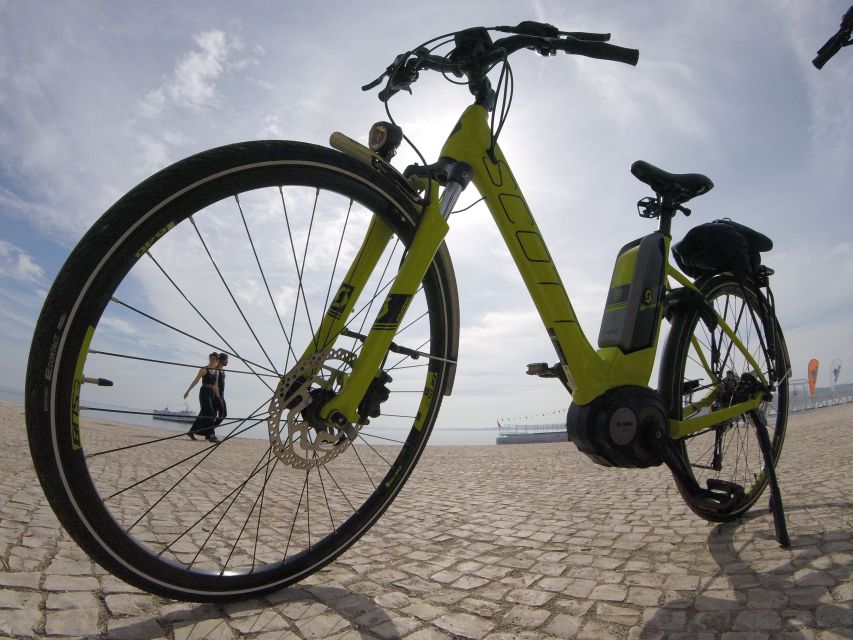
Reviewed · E-BIKES
South Lisbon: 3-Hour Christ the King Electric Bike Tour
The best part of this tour is that it changes your view of Lisbon twice: first from the orange cacilheiro ferry, then from high above the south bank at Christ the King. You get the familiar postcard of Lisbon from an angle most city tours skip, along with a short look at Almada’s working waterfront and old streets.
I like the mix of transport and places. The ferry, electric bike, Boca do Vento lift, and downhill ride give the morning a pleasant rhythm. I also like the small group, limited to 11 people, and the guides, including Bruno and Mathias, who are praised for clear local stories and a friendly manner.
The main thing to consider is the pace and format. This is not a tightly scripted sightseeing ride, and the route includes city streets, hills, ferry boarding, and a museum stop. You need to be comfortable on a bike, measure at least 145 centimeters, and accept that coffee at Casa da Cerca costs extra.
Key points at a glance

- Christ the King from the south bank: Ride up to one of Lisbon’s finest viewpoints without grinding up the hill on a standard bicycle.
- A real cacilheiro crossing: The Tagus ferry is part of the journey, not just a way to get from one dock to another.
- Almada beyond the statue: Cais do Ginjal, narrow streets, Casa da Cerca, and the Medieval Museum add substance to the south-bank visit.
- Small-group guidance: With no more than 11 participants, it is easier to hear the guide and ask questions.
- Good city orientation: The route links Praça da Figueira, Rua dos Douradores, Santa Justa, Praça do Comércio, Ribeira das Naus, and Martim Moniz.
- Strong value at $41: The price covers the guide, e-bike, helmet, ferry ticket, museum ticket, water, and insurance.
Why this ride shows you more than central Lisbon

Many Lisbon visitors spend their time north of the Tagus, among tiled facades, steep lanes, and lookout points. This tour gives you those central sights at the start, then moves you across the river to a quieter and less familiar side of the metropolitan area.
That change matters. From the south bank, Lisbon becomes a broad panorama rather than a maze of streets. You can see the city’s waterfront, the 25 de Abril Bridge, and the spread of rooftops from a distance. The ride also gives you a bit of Almada, a place with its own working past and local character rather than simply a platform for taking photos of Lisbon.
I see this as a good choice after you have already seen the main central sights, or for a first visit if you want a quick orientation with several forms of transport. The route covers a lot in three hours, so it is best viewed as an active introduction rather than a slow, detailed tour of every stop.
More Bike Tours in Lisbon
- Lisbon: Hills, Alfama, and Mouraria Tour by Electric Bike
★ 4.8 · 3,438 reviews - Lisbon E-Bike Tour Commerce Square, Mouraria and Alfama
★ 4.5 · 1,688 reviews - Lisbon: 7 Hills Half-Day Electric Bike Tour
★ 4.9 · 1,592 reviews
Starting at Largo da Severa and reaching Praça do Comércio
The meeting point is Largo da Severa 7A, a pedestrian area close to Praça Martim Moniz. If you arrive by taxi, Uber, metro, or bus, use Praça Martim Moniz as your destination, then walk about two minutes to Largo da Severa.
The tour begins with a safety briefing and an explanation of the electric bikes. That is useful in Lisbon, where streets can be narrow, surfaces uneven, and hills sudden. The electric motor does the hard work on climbs, but you still need to steer, brake, and ride responsibly around other traffic.
From there, the group heads toward Praça da Figueira. This large square has long been tied to trade and commerce, so it is a fitting place to begin thinking about Lisbon as a port city. Your guide uses the ride to connect the modern square with its mercantile past instead of treating it as just another open space for photographs.
The route continues along Rua dos Douradores, one of the streets associated with Fernando Pessoa. You will hear about the setting that helped inspire Livro do Desassossego, adding a literary note before the tour turns toward the river.
At the Santa Justa Elevator, pause to admire the ironwork. The lift is one of Lisbon’s most recognizable pieces of urban engineering, but this tour does not promise a ride up it. That is worth noting if you specifically want to use the elevator. Here, it is a visual stop on the way to Praça do Comércio.
Praça do Comércio opens the route toward the water. The scale changes quickly from close city streets to a wide riverfront square, which helps you understand Lisbon’s relationship with the Tagus.
Ribeira das Naus and the orange ferry across the Tagus

The next section follows the renewed Ribeira das Naus area. This was once a shipyard district, where Portuguese vessels were built before sailing toward other parts of the world. The modern waterfront setting makes a useful contrast with that earlier working role.
At Cais do Sodré, you board the orange cacilheiro for the crossing to the south bank. This is one of the tour’s most appealing features. The ferry is part of Lisbon’s ordinary transport system, so you are seeing the river in a practical local way rather than from a sightseeing boat designed only for visitors.
The crossing also gives you a break from cycling. You can look back toward the central waterfront and watch Lisbon recede across the water. Bring sunscreen and comfortable clothes, since the tour includes time outdoors and the river crossing adds exposure to sun and wind.
The tour later crosses back to Lisbon by ferry, so the boat is not a one-way novelty. The included boat ticket removes one small piece of planning from the day.
Cais do Ginjal and the south-bank climb

Once across the river, the route enters Cais do Ginjal. This former warehouse area once supplied bait and ice to cod fishing boats working the North Seas. It is a more industrial part of the trip, and that is precisely its value. You get a glimpse of Almada’s connection to fishing and port work rather than seeing only polished viewpoints.
Next comes the climb toward Christ the King. You have two options in practice: let the electric bike take you up the hill, or use the Boca do Vento lift to get closer to the statue. The lift adds another unusual form of transport and reduces the amount of uphill riding.
The electric assistance is important here. This is not a flat riverside spin, and a regular bike would make the climb much more demanding. You still need basic cycling confidence, but the motor makes the hill manageable for riders who are comfortable on a bicycle and meet the minimum height requirement.
The Boca do Vento lift is also practical for understanding Almada’s steep connection between the river and the higher town. It turns a difficult vertical section into a short part of the route and gives the ride a distinctive local detail.
More E-Bike Tours in Lisbon
- Lisbon: City Highlights and Viewpoints E-Bike Tour
★ 4.9 · 1,556 reviews - Lisbon: 3-Hour Tour by E-Bike
★ 4.8 · 1,150 reviews - 3-Hour Lisbon 7 Hills Electric Bike Tour
★ 5.0 · 818 reviews - Lisbon: Electric Bike Tour by the River to Belém
★ 4.8 · 431 reviews
Coffee and the view at Casa da Cerca

The tour stops for a coffee in the botanic gardens of Casa da Cerca. Your coffee is not included, so carry a little cash or a payment card if you want to use the stop for a drink.
This break comes at a sensible point. After the ferry and uphill section, you get time to pause before reaching the main viewpoint. The gardens provide a calmer setting than the roads below, and the stop keeps the tour from becoming one long sequence of cycling and commentary.
Do not expect a long café visit. The tour lasts three hours and still needs to reach the sanctuary, the museum, and the return ferry. Think of Casa da Cerca as a short rest with a view, not a full meal break.
Christ the King and Lisbon from above

The Sanctuary of Christ the King is the visual high point of the tour. The statue’s outstretched arms echo Rio de Janeiro’s famous monument, but here the key attraction is the position above the Tagus and the view back toward Lisbon.
From this side of the river, the 25 de Abril Bridge has a strong presence. The bridge, river, and central city line up in a way you cannot fully appreciate from Lisbon’s streets. This is the place to take photographs, but it is also worth putting the camera down for a moment and reading the shape of the city.
The tour description calls this one of the best views of Lisbon and the Tagus, and that claim makes sense because the angle is so different from the standard hilltop viewpoints. You are not looking down on a small old quarter. You are seeing the city as a wide riverfront capital.
The climb to the sanctuary is made easier by the e-bike and the lift, but this remains an outdoor tour with active movement. Wear comfortable shoes and clothing. Biodegradable sunscreen is recommended, and a bottle of mineral water is provided.
Downhill through Almada to the Medieval Museum

After the sanctuary, the route heads downhill toward the river and into Almada’s narrower streets. The downhill section gives your legs a break, though you still need to control the bike carefully. Electric bikes can gather speed quickly, so follow the guide’s instructions and leave room between riders.
The Medieval Museum adds historical weight to the ride. Its exhibits focus on Islamic life in Portugal during the Middle Ages, with relics that help explain a period often reduced to a few dates in a standard city tour.
This stop is especially useful because the tour is not limited to Lisbon’s famous monuments. You get a glimpse of the cultures and daily life that shaped the region before modern Portugal took its present form. The museum visit is included in the price, although one review raised confusion about the admission arrangement. I would confirm the current inclusion at booking, but the stated tour details include the museum ticket.
The museum is not likely to satisfy someone seeking a long, specialist museum visit. It is one stop within a moving itinerary. Its value comes from giving the Almada section more meaning before you return to the river.
What the $41 price really covers

At $41 per person, this tour is reasonably priced for what is bundled into three hours. You receive the guide, electric bike, helmet, ferry ticket, Medieval Museum admission, bottled water, liability insurance, and personal accident insurance.
A comparable self-guided outing would require you to rent a bike, work out the ferry, find the lift, plan the route to Christ the King, and decide how to fit in the museum. You would also miss the explanations connecting the streets, shipyard, warehouses, statue, and medieval exhibits.
The price is less attractive if you only want a quick ride to the statue and back. You are paying for a broad route with several stops, not just transport to a viewpoint. It also does not cover your coffee at Casa da Cerca or transport to and from Largo da Severa.
The small group improves the value. With a maximum of 11 people, the guide can give directions without shouting to a large crowd, and you have a better chance to ask about Lisbon’s history, Fado, or the places along the way. Bruno and Mathias have drawn particular praise for clear explanations and warm, competent guiding.
Pace, language, and who should book

The tour is offered in English, French, Spanish, and German. Check the available language when choosing a departure, since the quality of a history-focused tour depends greatly on how comfortably you understand the guide.
The route suits adults and older children who can ride a bicycle confidently. It is not suitable for people with mobility impairments or anyone under 145 centimeters. Those limits matter because you must handle an e-bike, board a ferry, manage city streets, and move through a route with hills and changes in surface.
I would choose this tour if you enjoy a bit of unpredictability and prefer local transport and side streets to a polished bus route. The route is described as less rigid than a tightly structured sightseeing program. That can be a strength if you like surprises and conversation, but a drawback if you want every minute and stop handled to a strict schedule.
Wear closed, comfortable shoes and clothes that allow easy movement. Bring sunscreen, and consider carrying a small snack since the only planned refreshment stop is the optional coffee break.
Should you book the Christ the King e-bike tour?
Book it if you want Lisbon in one compact outing: central squares, literary connections, the waterfront, a real ferry crossing, Almada’s old working areas, a museum, and a high view from Christ the King. The e-bike makes the route practical without removing the pleasure of being outdoors.
Skip it if you dislike cycling in city settings, need step-free access, or want a slow museum visit with long stops. For most active visitors, the $41 price is fair because it combines transport, equipment, guiding, admission, and a viewpoint that is difficult to reach as easily on your own.
The strongest reason to choose it is not the statue alone. It is the complete change of perspective, from Lisbon’s busy center to the south bank, then back again by ferry.
FAQ
Where does the tour meet?
The meeting point is Largo Severa 7A, 1100-588 Lisboa. Because it is a pedestrian area, use Praça Martim Moniz as your destination if you arrive by Uber, taxi, metro, or bus, then walk about two minutes.
How long does the tour last?
The tour lasts three hours. Starting times vary, so check availability when booking.
Does the tour cross the Tagus by ferry?
Yes. You cross the Tagus by orange cacilheiro ferry from Cais do Sodré and cross back again at the end of the route. The boat ticket is included.
Is the electric bike included?
Yes. The tour includes an electric bike and helmet. You also receive a bottle of mineral water.
Is entry to the Medieval Museum included?
Yes. The stated inclusions cover a ticket to the Medieval Museum of Almada.
Is coffee at Casa da Cerca included?
No. The stop takes place in the botanic gardens of Casa da Cerca, but you pay separately for your coffee.
What languages are available?
The live guide may operate in German, French, Spanish, or English. Check the selected departure for the available language.
Who should not take this tour?
The tour is not suitable for people with mobility impairments or people under 145 centimeters tall. Comfortable cycling ability is also important because the route includes city riding and hills.
More 3-Hour Experiences in Lisbon
- Lisbon: 3-Hour The Slave Trade – An Historical Walking Tour
★ 4.9 · 179 reviews - Lisbon: 3-Hour Segway Sailor Tour to Belém
★ 4.9 · 140 reviews - Lisbon: 3 Hour Private Segway Streets of Hills
★ 4.9 · 113 reviews - Lisbon: Food and Culture 3-Hour Walking Tour
★ 4.7 · 95 reviews
The newest listings around Lisbon
- The Real Lisbon Street Art Private Guided Tour by Minivan★ 4.8 · 49 reviews
- Lisbon: Historical Walking Tour with Jeronimos Monastery★ 4.5 · 71 reviews
- Lisbon: Port Wine Tasting at Taylor’s Shop and Tasting Room★ 4.6 · 490 reviews
- Lisbon: Tagus River Cruise With Brunch★ 3.2 · 73 reviews
- Oeiras Coast: Stand Up Paddleboarding near Lisbon★ 4.9 · 56 reviews
- Small Group Walking Tour of Belém★ 4.9 · 80 reviews
- Lisbon: 3-Hour Secret Food Tour★ 4.7 · 53 reviews
- Lisbon Sunset Sailing – Small Group (max 10) Wine & History★ 4.8 · 41 reviews
E-Bikes, compared.
Hills, Alfama, and Mouraria Tour by Electric Bike
Read our review →
City Highlights 3-Hour Guided Electric Bike Tour
Read our review →
Lisbon E-Bike Tour Commerce Square, Mouraria and Alfama
Read our review →



Browse the lists this tour appears in