
Reviewed · MOUNTAIN PEAK HIKES
Pico Mountain Climb: Portugal’s Highest Point – 2351 meters
Pico Mountain is not a gentle viewpoint with a short walk from the car park. It is an 8-kilometer climb over volcanic rock, with an average slope of 30 percent, ending at Piquinho, Portugal’s highest point at 2,351 meters. I like the built-in safety briefing and the fact that a professional guide stays with you through the rougher sections. I also like the small human touches: walking sticks, summit coffee, and photos and videos taken during the day.
The main consideration is simple: this is a hard physical outing. The loose rock, steep ground, and descent can test your legs, especially in poor weather. It is not suitable for children under 12, people with low fitness, mobility or back problems, pregnant women, wheelchair users, or people over 70.
The essential facts before you commit
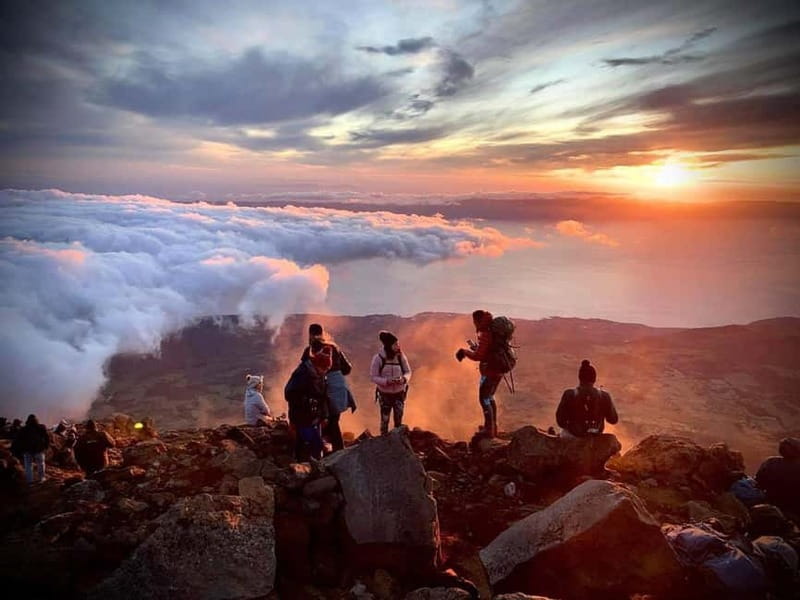
- Portugal’s highest summit: You climb to Piquinho at 2,351 meters, the highest point in Portugal.
- A seven-hour mountain day: The route includes about 8 kilometers of hiking, several rest stops, and a full return to Casa da Montanha.
- Volcanic terrain from start to finish: Expect loose rock, uneven footing, a 30 percent average slope, a crater, and a lava cone with permanent fumaroles.
- Guides make a real difference: Raisa and Isabel are among the guides named in the feedback, with praise for their preparation, encouragement, humor, and care.
- Practical extras are included: Walking sticks, personal accident insurance, guide service, fees, photos, and videos are part of the $90 price.
- You bring the basics: Pack water, snacks, warm layers, weather-ready clothing, and proper hiking shoes or boots.
Why Pico Mountain is a serious but rewarding climb
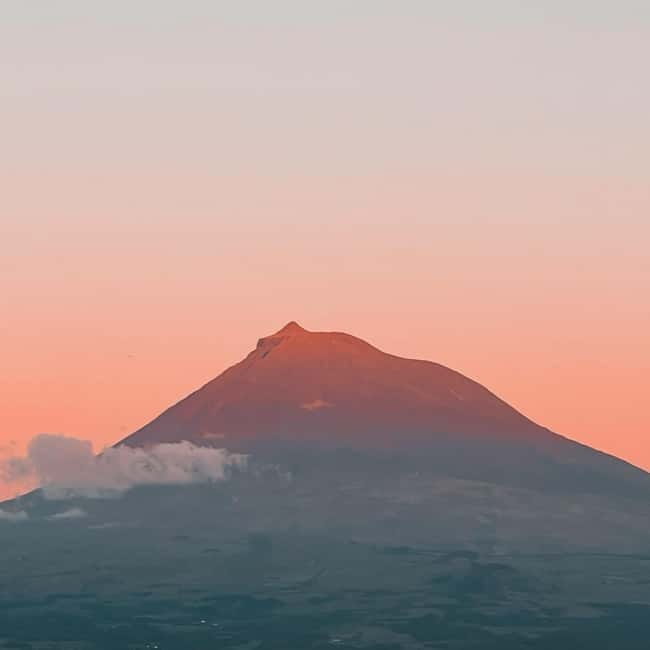
Pico Mountain gives you a clear goal. You are not simply walking through the Mount Pico Natural Reserve. You are working toward the summit of Piquinho, a distinct lava cone at the top of a volcanic mountain.
That goal shapes the whole day. The lower section lets you settle into the rhythm, but the ground grows rougher and steeper as you rise. You need to watch each step rather than stare at the view the whole time. Loose stones and uneven volcanic rock demand attention.
I like this kind of outing because the effort has a visible payoff. You can feel the mountain getting harder, then reach the crater near the top and prepare for the final push. At the summit, the reward is not only the height. It is the feeling that you have completed something that required patience, balance, and steady work.
The views depend heavily on weather. On a clear day, you may see four islands from the top. In harsh weather, the climb becomes less scenic but more demanding, and the guide’s role becomes even more important.
More sunrise and summit hikes:
- Pico island: Climb Mount Pico, highest mountain in Portugal
★ 5.0 · 65 reviews - Funchal: Pico do Arieiro Sunrise Transfer Self-guided Hike
★ 4.9 · 2,798 reviews - Madeira Funchal:East Tour Pico Arieiro & Santana&Laurissilva
★ 4.9 · 1,994 reviews
Starting at Casa da Montanha
You meet the staff and guide at Casa da Montanha in Madalena. This is also where the climb ends, so there is no complicated transport plan during the activity.
The first formal step is a roughly 10-minute safety briefing and equipment check. This matters on Pico. The route is not a marked city walking path where a missed step only costs you a few seconds. You will be moving over volcanic rock, and the guide needs to explain how the day will work before you start.
Walking sticks are provided for comfort and safety. Use them from the beginning, not only when your legs begin to tire. They can help with balance on uneven ground and give your knees extra support during the descent.
The activity is offered with guides speaking Portuguese, English, Italian, Spanish, and French. Raisa and Isabel are two names associated with especially strong guiding experiences. Raisa is praised for being prepared, experienced, encouraging, and attentive to the group’s needs. Isabel is praised for sharing information about the mountain and island life.
The first ascent through Mount Pico Natural Reserve
The first viewpoint comes after the opening section and allows about five minutes for a break, photos, and sightseeing. It is a short stop, so use it to adjust your layers, drink some water, and check your footing before moving on.
The next stretch lasts about 1.5 hours and takes you farther through the Mount Pico Natural Reserve. The early terrain is described as easier, but do not mistake that for easy. This is where you establish your pace.
A common mistake on a long climb is to walk too quickly during the first hour. You want to reach the top, but the route still has several harder sections ahead. Keep your steps short, listen to your guide, and save energy for the upper mountain.
A further 10-minute break is listed as a quieter photo stop. It is described as a secret stop, but no specific feature is provided, so do not build your expectations around a particular viewpoint. Treat it as a useful pause in the climb.
The hardest ground and the volcanic crater
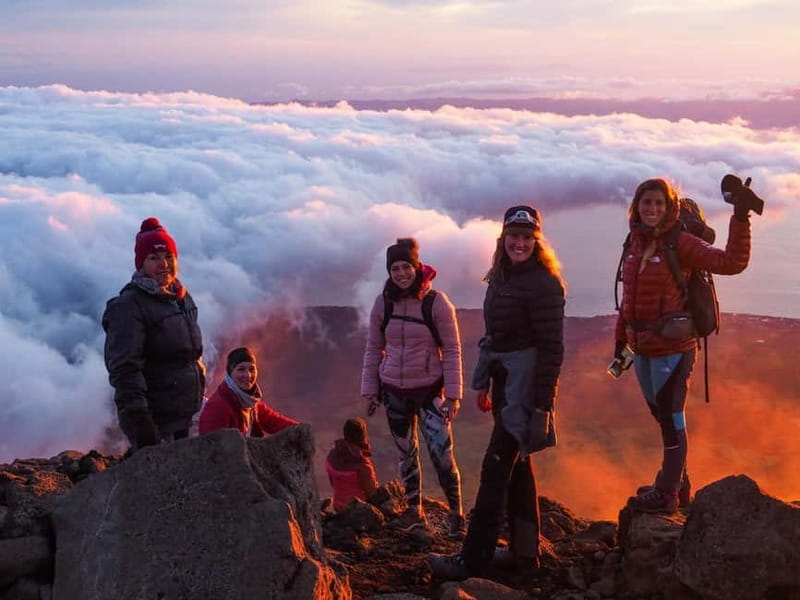
After the next two-hour hiking section, you get a longer stop of about 20 minutes for photos, a picnic, and sightseeing. This is a good place to eat the snacks you bring. Meals and drinks are not included, apart from the coffee offered during the activity, so pack food that is easy to carry and eat.
As you climb higher, the surface becomes more broken and demanding. The route is made entirely of volcanic rock, and the average slope is 30 percent. You will need to place your feet carefully, especially where stones are loose.
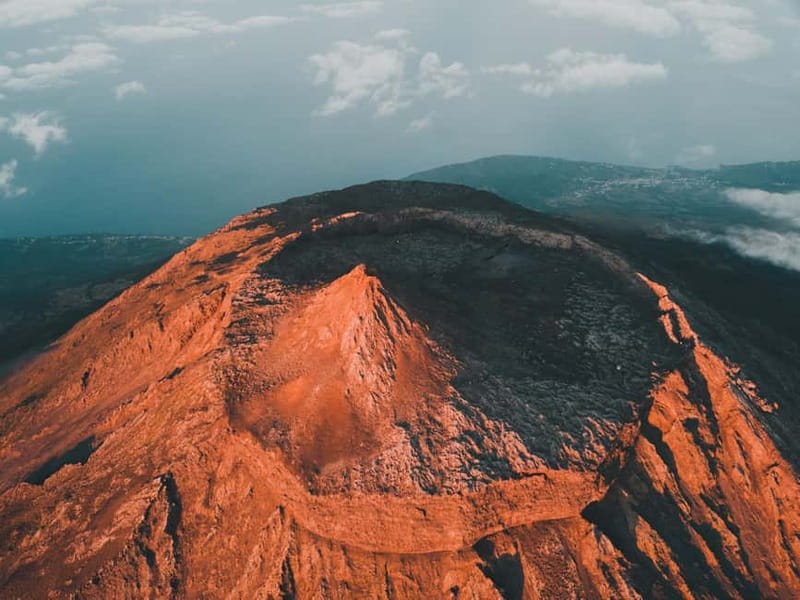
The volcano crater near the top provides a natural pause before the final summit section. This is one of the most memorable parts of the outing because it makes the setting unmistakable. You are not simply above the island. You are inside a volcanic environment, close to a lava cone with permanent fumaroles.
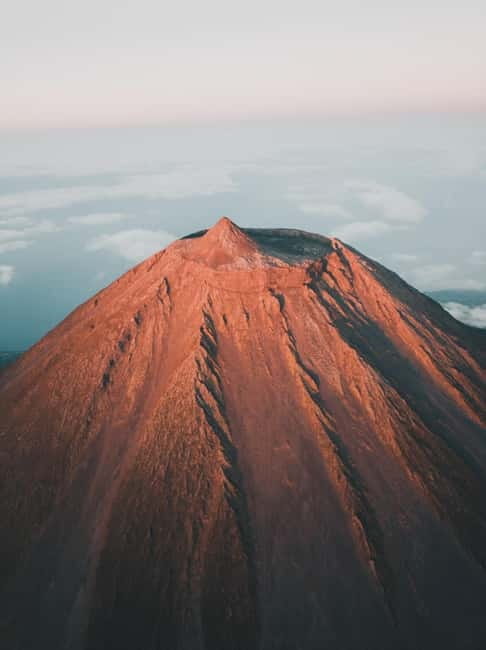
The fumaroles are a striking reminder that Pico is an active volcanic place. The final section asks you to climb the lava cone itself. It is short in relation to the full day, but it can feel like the steepest and most dramatic part of the climb.
A few more Azores options worth putting side by side
- From Ponta Delgada: Whale and Dolphin Watching Trip
★ 4.7 · 4,109 reviews - Azores Whale Watching & Islet Boat Tour
★ 4.6 · 2,146 reviews - São Miguel West: Full-Day Van Tour with Lunch
★ 4.9 · 1,948 reviews - São Miguel West Full Day Tour with Setes Cidades Including Lunch
★ 5.0 · 1,391 reviews
Reaching Piquinho at 2,351 meters
The summit of Piquinho is the main reason to book this experience. At 2,351 meters, it is the highest point in Portugal.
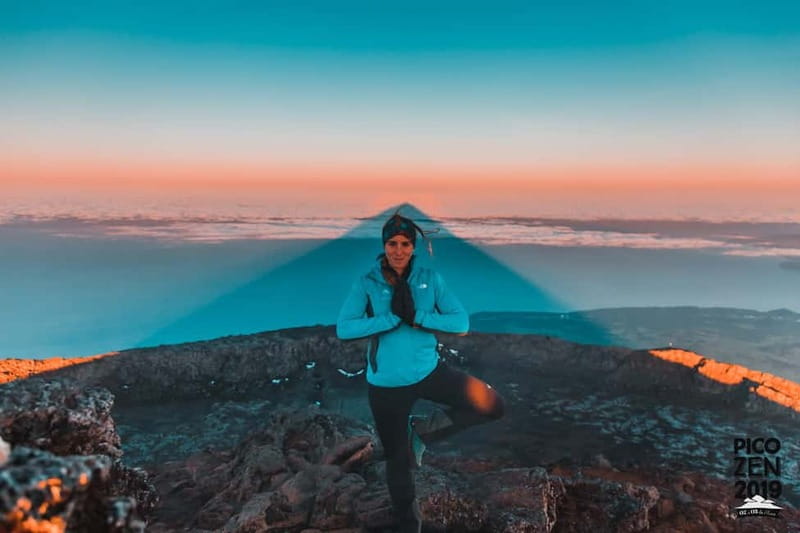
The summit stop is not presented as a rushed arrival, photo, and immediate turn around. You have time to breathe, rest, take photographs, and enjoy the achievement. Guides also take photos and videos, which means you do not have to hand your phone to another participant for every important moment.
Coffee is another small but welcome detail. A hot drink at the top can feel particularly valuable after hours on exposed volcanic ground. It is not a replacement for water or food, but it adds a pleasant ritual to the summit moment.
The view can be superb when the weather clears. You may see the shapes of several islands across the ocean, with up to four islands visible on a very clear day. Clouds, wind, and poor visibility are always possible, so book this for the climb itself rather than for a guaranteed panoramic scene.
The descent is not an easy afterthought
The return takes a different kind of effort. The plan calls for fewer stops on the way down so that your leg muscles remain active. That may sound easier than the ascent, but descending over loose rock can be harder on tired knees and thighs.
One useful point from the experience feedback is that the descent was harder than expected for some people. Take this seriously. Do not spend all your energy celebrating at the summit, and do not rush the downhill sections because you are eager to finish.
Use the walking sticks. Keep your knees slightly flexible, shorten your stride, and watch the ground directly ahead. The guide can help you manage the pace and handle different fitness levels within the group.
The final hiking stages include another viewpoint break and photo stop before you return to Casa da Montanha. The total day lasts about seven hours, so plan nothing demanding afterward.
What the $90 price really covers
At $90 per person, this is a fair price for a guided mountain day, especially because several practical costs are already included. You receive:
- An experienced professional guide
- All applicable fees and taxes
- Personal accident insurance
- Walking sticks
- Photos and videos
- Guide support in several languages
The value is strongest if you want help with pacing, route choices, safety, and the technical parts of the mountain. You are also paying for a guide who knows how to manage a group when weather or fitness levels vary.
You do not receive meals, drinks, boots, backpacks, or jackets. That keeps the headline price reasonable, but it means you need to prepare properly. Bring your own water and snacks, and do not assume casual athletic shoes will be accepted. Open-toed shoes, high heels, and sports shoes are not allowed. The information specifically asks you to bring hiking shoes, so proper hiking footwear is essential.
Weather, clothing, and fitness
Warm clothing is important even if conditions at the start feel comfortable. The mountain can bring colder, wetter, or harsher conditions as you gain height. Wear clothing suited to the forecast and bring layers that you can add or remove.
Your pack should include:
- Water
- Snacks or a picnic
- Warm clothing
- Weather-appropriate layers
- Hiking shoes or boots
- A backpack for your personal equipment
This is not suitable for someone with a low level of fitness. You do not need to be an elite mountaineer based on the information provided, but you do need to manage a long, steep day on uneven ground.
The activity also excludes children under 12, pregnant women, people with back problems, mobility impairments, or wheelchair users. People over 70 are also listed as unsuitable. These limits are worth reading carefully before you book, since the route puts repeated strain on ankles, knees, and back.
The guide can change the whole day
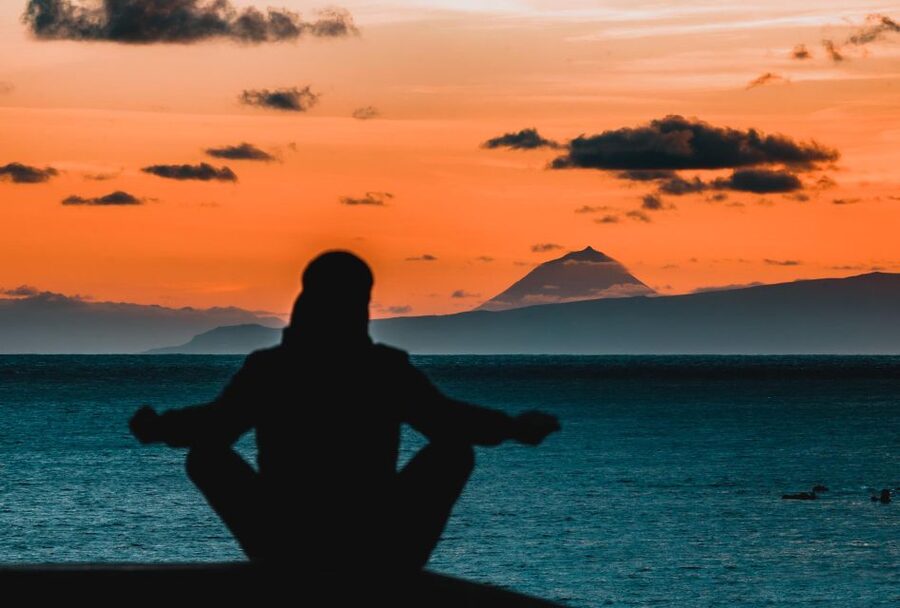
A guide matters here for more than navigation. The route gets harder near the summit, the surface is unstable, and the weather can turn the mountain into a tougher challenge.
Raisa is specifically praised for preparation, experience, and motivation. That last point is important. On a long climb, the right encouragement can help you keep moving when the upper slope feels endless.
Isabel is praised for explaining the mountain and island life, which adds context to what you are seeing. Another guide was remembered for humor and excellent coffee at the summit. Those details show the personal side of the experience: the guide is not only there to point out the route but also to keep the day organized and enjoyable.
Group dynamics can affect the pace. If fitness levels vary widely, the outing may take longer or feel less even. A private tour could be worth considering if you want a more consistent rhythm, but no private-tour price or format is provided here, so check the available option before booking.
Who should book this climb?
I would recommend it to you if you want a demanding outdoor challenge and care more about reaching a major summit than taking an easy scenic walk. It suits people who enjoy volcanic terrain, long days outside, and the satisfaction of a clear physical goal.
It is also a good choice if you prefer not to handle the mountain alone. The guide, safety check, sticks, insurance, and photo service remove several practical worries.
I would not choose it for a relaxed family outing, a casual sightseeing day, or a first attempt at hiking in unsuitable shoes. The seven-hour duration, steep average slope, loose rocks, and difficult descent make this a commitment.
The free cancellation policy allows a full refund when you cancel at least 24 hours in advance. You can also reserve and pay later, which is useful when weather and holiday plans are still uncertain.
Should you book the Pico Mountain climb?
Book this experience if you want to stand at Portugal’s highest point and are ready to work for it. The $90 includes a guide, insurance, walking sticks, photos, videos, and applicable fees, giving it solid value for a demanding full-day climb.
Skip it if you have mobility, back, pregnancy, or fitness concerns, or if your main hope is a guaranteed clear view. For the right person, though, the crater, lava cone, summit coffee, and sense of achievement make this one of the most memorable active experiences on Pico.
FAQ
How high is the summit?
The climb reaches Piquinho at 2,351 meters, Portugal’s highest point.
How long does the activity last?
The full activity lasts about seven hours, including the ascent, summit time, breaks, and descent.
Where does the climb start and finish?
You meet the staff and guide at Casa da Montanha in Madalena. The activity returns to the same meeting point.
Is a guide included?
Yes. An experienced professional guide leads the climb, and Portuguese, English, Italian, Spanish, and French are available.
Are walking sticks provided?
Yes. Walking sticks are included for comfort and safety.
Are food and drinks included?
Meals and drinks are not included. You should bring water and snacks. Coffee is available during the activity.
What should I wear and bring?
Bring warm clothing, weather-appropriate layers, water, snacks, and hiking shoes. Open-toed shoes, high heels, and sports shoes are not allowed.
Who should not take this activity?
It is not suitable for children under 12, pregnant women, people with back problems, mobility impairments, wheelchair users, people with low fitness, or people over 70.
The newest listings around Azores
- Full-Day Private Tour of Faial★ 5.0 · 40 reviews
- Faial Island: Half Day Tour★ 5.0 · 99 reviews
- Faial Island: Full Day Tour – Nature and Local Culture★ 5.0 · 213 reviews
- Wines and Moonshines of Terceira★ 5.0 · 55 reviews
- Terceira Island: Full Day Tour★ 5.0 · 63 reviews
- UNDERGROUNDTOUR (Full Day Private Tour)★ 5.0 · 52 reviews
- PHOTO TOUR (Full Day Private Tour- Sunrise to sunset)★ 5.0 · 68 reviews
- Private Terceira Island Full Day Tour★ 5.0 · 250 reviews
Mountain Peak Hikes, compared.
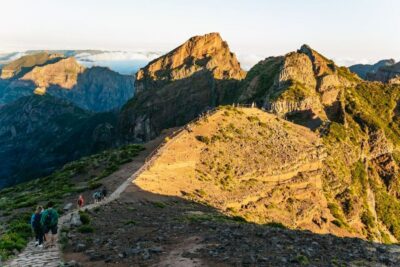
Pico do Arieiro Sunrise Transfer Self-guided Hike
Read our review →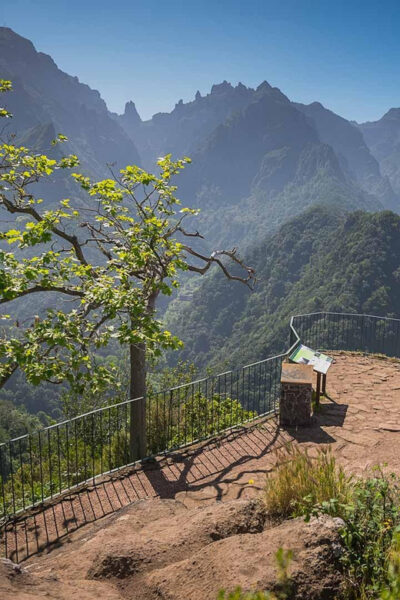
Madeira Funchal:East Tour Pico Arieiro & Santana&Laurissilva
Read our review →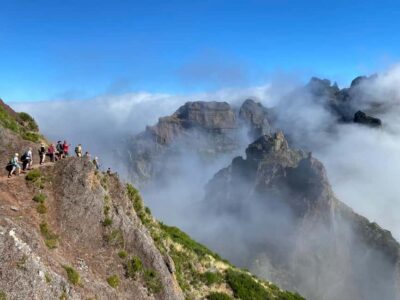
Transfer to Pico do Arieiro & Pico Ruivo Trail
Read our review →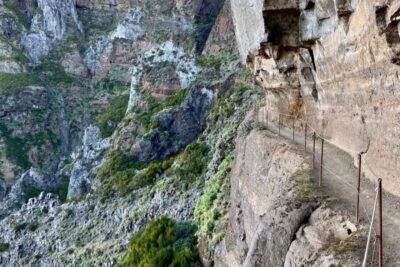
Pico Do Arieiro Pico Ruivo Sunrise or Morning Hike Transfers
Read our review →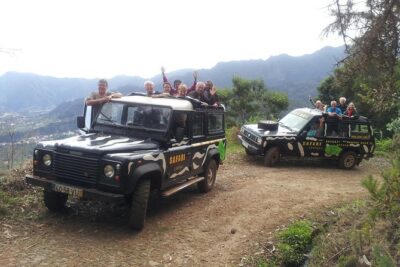
Full Day Jeep Safari East – Pico do Areeiro – Santana – Ponta de são Lourenço
Read our review →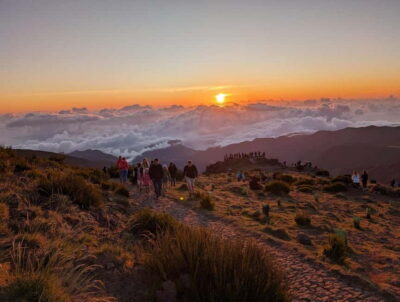
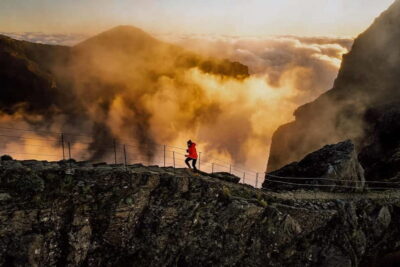
Sunrise Pico do Arieiro & Ruivo/Larano HikeTransfer
Read our review →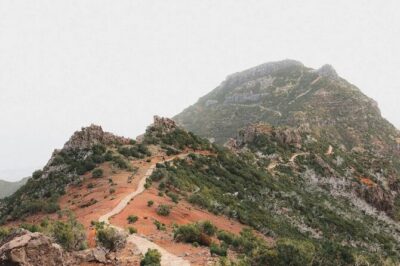
Browse the lists this tour appears in