

Reviewed · MOUNTAIN PEAK HIKES
Pico island: Climb Mount Pico, highest mountain in Portugal
Mount Pico is not a gentle hill walk. It is an 8-kilometre volcanic climb with 1,100 metres of ascent, loose rock, sand, mud, and a final scramble to Piquinho, Portugal’s highest point. I like the way this outing gives you a real mountain day while keeping safety in the hands of a certified guide. I also like the chance to learn about Pico’s native plants and unusual volcanic formations as you climb.
The main consideration is the descent. It takes three to four hours, follows the same steep route, and can be harder than going up. You need good physical preparation, proper hiking boots, and enough stamina for the full eight hours. This is not a casual activity for a sedentary hiker.
Key points at a glance
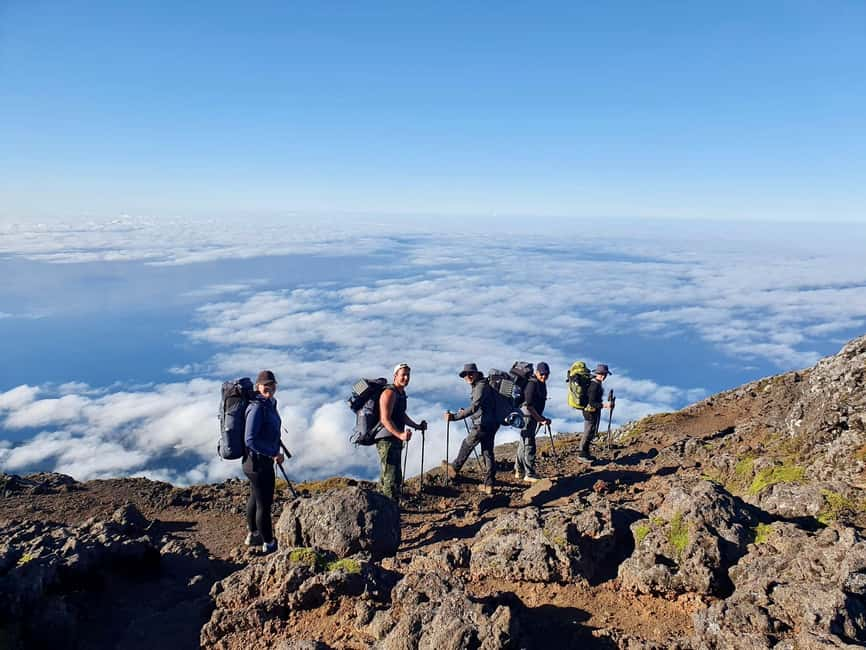
- Reach Portugal’s highest point: Climb to 2,351 metres above sea level, with possible views across the central Azores islands when the weather allows.
- Expect a true volcanic hike: The route changes from mud and solid rock to loose stone and sand, finishing with a hands-on scramble.
- Get steady guidance throughout: Certified guides such as Steffie and Petro help with pace, footing, safety, and mountain information.
- Budget for a full mountain day: The $91 price includes the guide, reserve access, hiking poles, accident insurance, and a certificate.
- Take the descent seriously: The way down can be the toughest section, especially if you are new to steep, unstable ground.
- Pack for changing weather: Bring water, food, sunscreen, rain gear, sunglasses, proper boots, and clothing suited to the forecast.
Why Mount Pico is a serious but rewarding climb
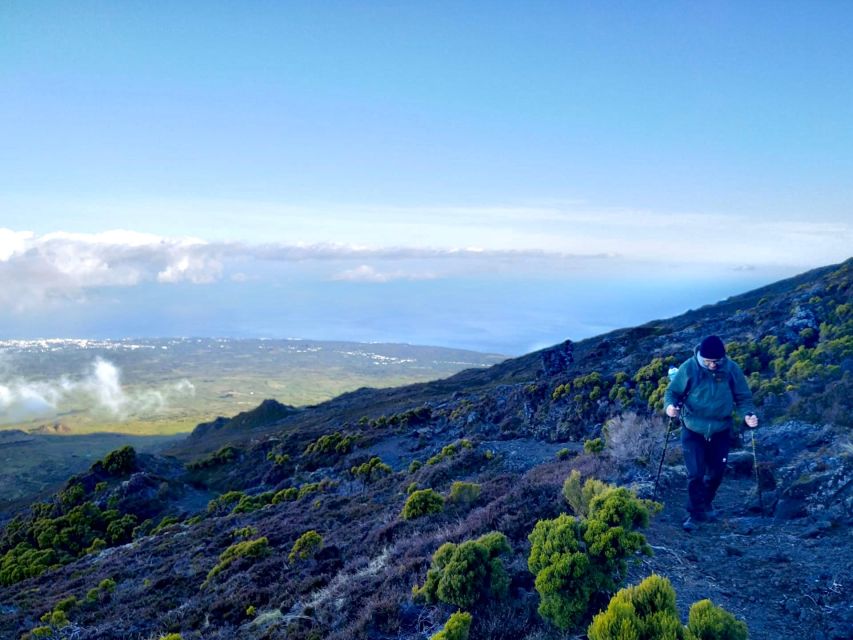
Mount Pico rises to 2,351 metres, making it Portugal’s highest mountain. The summit is not reached by a paved trail or a simple uphill stroll. You move through several kinds of volcanic ground, and each one asks something different from your legs and balance.
The route covers about 8 kilometres in total, with 1,100 metres of ascent and the same amount of descent. Eight hours is the stated duration, so plan to give the climb most of your day. The physical effort is rated difficult, while the technical difficulty is medium to difficult. That distinction matters: you do not need advanced climbing skills, but you do need strength, balance, and comfort on rough ground.
I like that the guide does not treat the summit as the only goal. The first part of the route acts as a practical test. If you are already struggling there, the guide may advise you to stop for your own safety and for the group’s safety. That may feel disappointing, but it is the right call on a mountain where fatigue and poor footing can quickly create problems.
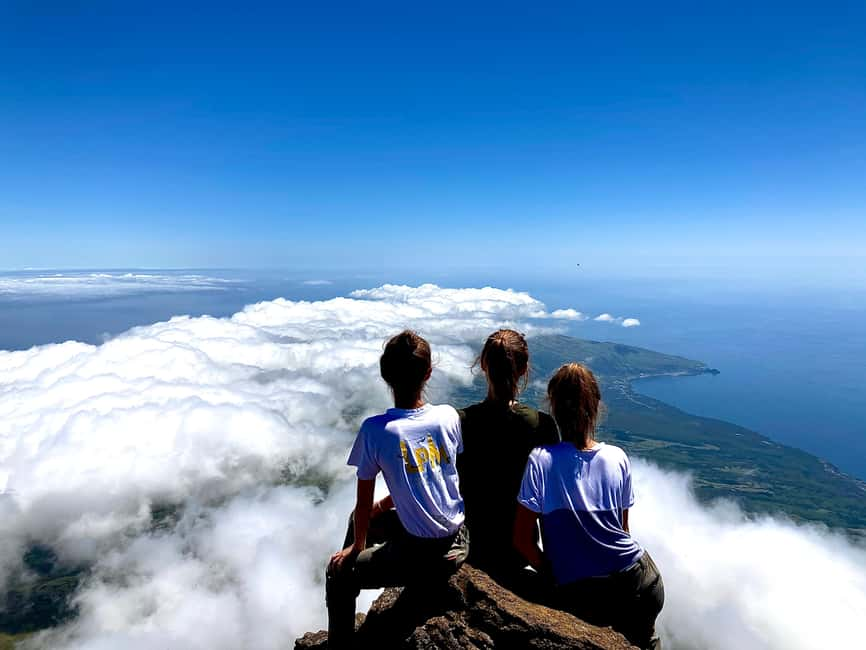
The reward is a broad view from Piquinho, the small upper cone at the top. On a clear day, you may see the central group of Azorean islands. Cloud can limit the view, but reaching the summit still gives the climb a strong sense of purpose.
More sunrise and summit hikes:
- Pico Mountain Climb: Portugal’s Highest Point – 2351 meters
★ 4.9 · 72 reviews - Funchal: Pico do Arieiro Sunrise Transfer Self-guided Hike
★ 4.9 · 2,798 reviews - Madeira Funchal:East Tour Pico Arieiro & Santana&Laurissilva
★ 4.9 · 1,994 reviews
Starting at Mountain House at 1,250 metres
You meet your guide inside Mountain House, which sits at about 1,250 metres above sea level. The outing begins with a 20-minute safety briefing before you enter the Mount Pico Natural Reserve.
This briefing is more than a formality. You need to understand how the route works, what the changing surfaces will feel like, and why your guide may adjust the pace or stop the climb. You also receive hiking poles, which are useful on both the ascent and the descent.
Your guide may be Petro, Steffie, or another certified Pico Mountain Guide. The guides speak English, Dutch, and Portuguese. Steffie is particularly good at setting a pace that works for people with different abilities, explaining Pico’s history and geology, and responding quickly when someone slips or needs help. Petro is also noted for combining practical guidance with easy conversation.
The start is a useful place to check your equipment. Your boots must have a good grip, and they must be proper hiking boots or hiking shoes. Ordinary sports shoes are not accepted, and the Natural Park can refuse access if your footwear is unsuitable.
Through native plants and volcanic ground
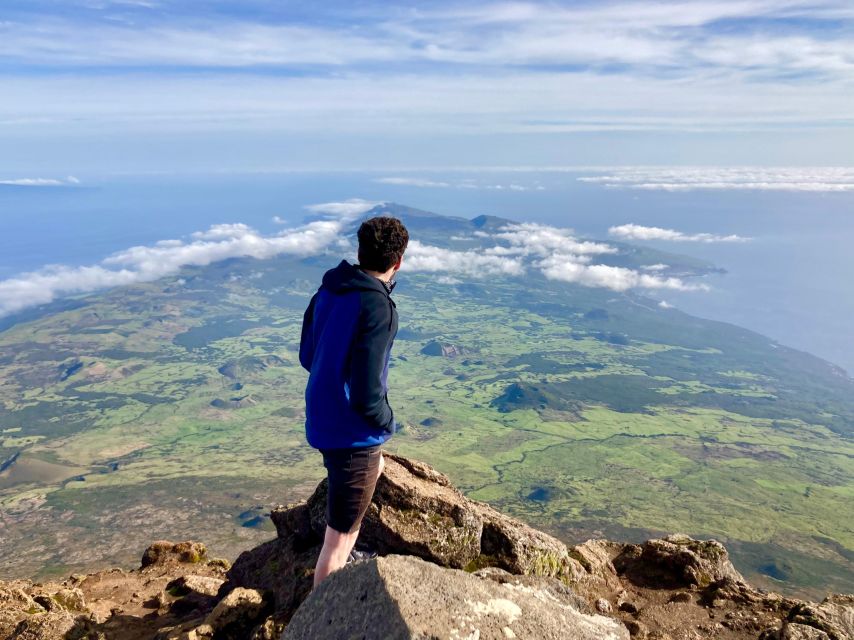
The first stretch moves through native vegetation before the route grows steeper and more exposed. Your guide explains the plants and the volcanic structures along the way, giving the climb more meaning than a simple test of endurance.
The terrain changes several times. You may deal with mud, then firmer rock, followed by loose rock and sand. These surfaces require different footwork. Solid rock can feel secure but steep, while loose material may slide beneath your boots and make every step less certain.
This is where hiking poles earn their place. They can help with balance and reduce some of the strain on your knees, especially when the ground becomes unstable. Still, poles are not a substitute for strong legs or careful movement.
The first section also gives you a realistic idea of what lies ahead. The route gets steeper as you continue, and good physical fitness becomes essential. If you live a mostly sedentary life, this climb is not a wise place to test your limits. The experience is better suited to someone who already walks, hikes, or trains regularly.
The guide adds value here by helping you choose a safe rhythm. A rushed start can leave you drained before the upper slopes. The best approach is steady and controlled, with enough energy left for the way down.
The three-hour climb to the crater
The ascent to the crater takes about three hours. It is the central effort of the day, moving through mud, rock, loose stone, and sand as the mountain becomes more demanding.
The route does not offer one simple type of difficulty. On firm rock, you need to place your feet securely and keep your balance on the incline. In sand and loose stones, the surface may give way under you. That makes the climb slower and more tiring than the distance alone suggests.
You will want food and water within easy reach. The provided information requires you to bring both, and there is no suggestion of a meal stop or food service on the mountain. A small daypack is the practical choice, since you need room for water, snacks, sunscreen, rain gear, and an extra layer suited to the weather.
Your guide also shares information about the mountain and Pico Island during the climb. That is a worthwhile part of the experience. You are not simply counting steps toward the summit. You are learning how the volcanic ground formed and how native vegetation survives on it.
The outing includes access to the Mount Pico Natural Reserve, which is part of the $91 price. It also includes accident insurance through Allianz, hiking poles, a certified guide, and a certificate. For a full-day guided mountain outing with reserve access and safety support, the price is reasonable, especially if you would not feel comfortable managing this route alone.
A few more Azores options worth putting side by side
- From Ponta Delgada: Whale and Dolphin Watching Trip
★ 4.7 · 4,109 reviews - Azores Whale Watching & Islet Boat Tour
★ 4.6 · 2,146 reviews - São Miguel West: Full-Day Van Tour with Lunch
★ 4.9 · 1,948 reviews - São Miguel West Full Day Tour with Setes Cidades Including Lunch
★ 5.0 · 1,391 reviews
The final 15 minutes to Piquinho
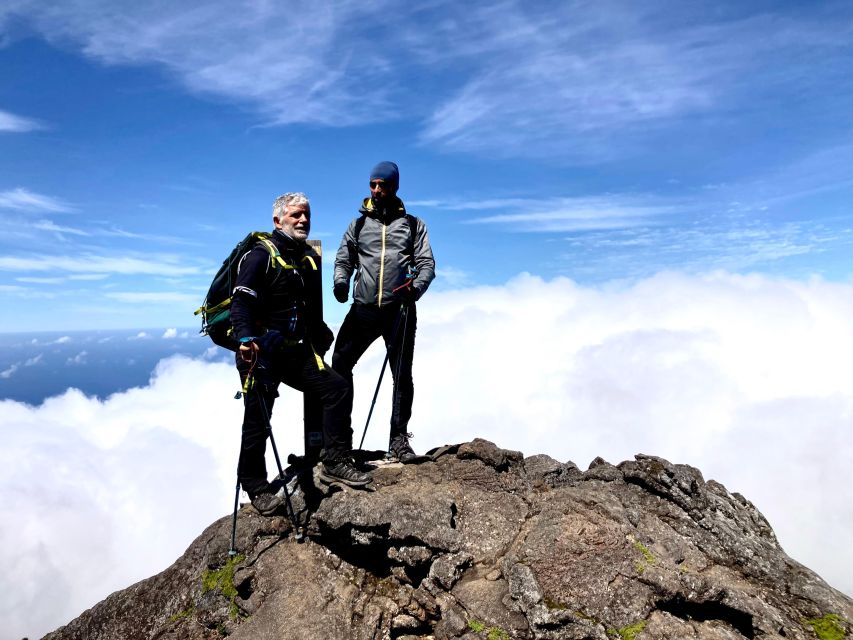
The last 15 minutes to Piquinho require you to use your hands for extra stability. This is the most hands-on part of the climb, and it is one reason the activity is not suitable for people who are afraid of heights or uncomfortable with steep ground.
You are not simply walking up a normal trail at this point. You need to move carefully, keep three points of contact when useful, and follow the guide’s instructions. The exact feel of this section will depend on conditions and your own confidence, but the information provided makes clear that it requires more than ordinary hiking.
At the top, you reach 2,351 metres above sea level. The view can extend across the central Azorean islands when visibility is good, giving you a wide sense of the Atlantic setting. Cloudy weather may hide much of that view, but it does not erase the achievement of reaching the summit.
I would treat the summit as a bonus rather than the only reason to book. Weather can change, and a safe guide may turn you back if conditions are poor. The mountain itself, the changing rock, and the feeling of moving from vegetation into a stark volcanic upper zone are valuable parts of the day.
Why the descent deserves respect
After time at Piquinho, you return by the same route. The descent takes about three to four hours, and it can be the hardest section of the experience.
Going downhill on loose rock and sand places repeated strain on your knees and demands constant attention. Fatigue also changes the equation. After three hours of climbing, then the summit section, you may feel less sharp just when careful foot placement matters most.
This is where the guide’s practical advice becomes especially useful. You may need to shorten your steps, control your pace, and use your poles to steady yourself. Do not rush simply because the destination is downhill. The route can still be steep and unstable.
The descent is particularly challenging for inexperienced hikers. If you are choosing this activity because you want a scenic walk, be honest about your fitness and comfort on rough terrain. If you are choosing it because you want a demanding mountain day, the return journey is part of the challenge, not an unfortunate extra.
The hike finishes back at Mountain House. There is no separate transport section to arrange, since the activity begins and ends at the same meeting point.
What the $91 price really covers
At $91 per person, this is not the cheapest way to spend a day on Pico Island, but it includes several practical items that would otherwise complicate the outing.
You receive:
- A certified Pico Mountain Guide
- Entry to the Mount Pico Natural Reserve
- Hiking poles
- Allianz personal accident insurance
- A certificate of completion
The main value is the guide. A certified professional can judge whether you should continue, help you manage difficult surfaces, and explain the plants and geology around you. The service is also available in English, Dutch, and Portuguese.
The daily limit on climbers makes early booking sensible. Your name, date of birth, and nationality are needed for the Mountain House reservation. Since access is limited each day, waiting too long could leave you without a place on your preferred date.
You can reserve now and pay later, which helps if your Azores plans are still shifting. Free cancellation is available up to 24 hours before the activity for a full refund. The climb is weather-dependent and can be cancelled just before it begins, so keep some flexibility in your schedule.
Who should book this climb
I would recommend it to a fit adult who wants a demanding outdoor experience and understands that the summit is only half the day. You should be comfortable walking for eight hours, climbing 1,100 metres, and descending on unstable ground.
It suits you if you:
- Exercise regularly or have recent hiking experience
- Like volcanic scenery, geology, and native plants
- Want a guided challenge rather than an easy walk
- Are comfortable with steep slopes and a short hands-on section
- Can carry food, water, and weather gear in a daypack
It is not suitable for children under 12, pregnant women, wheelchair users, or people with back, heart, respiratory, or recent-surgery concerns. It is also not suitable if you have a low level of fitness or fear heights.
Wear hiking boots or hiking shoes with a strong grip. Bring water, food, sunscreen, sunglasses, rain gear, and clothing suited to the forecast. If you plan to bring a drone, it must be registered with Portugal’s ANAC, the national civil aviation authority.
Is the guided Mount Pico climb worth booking?
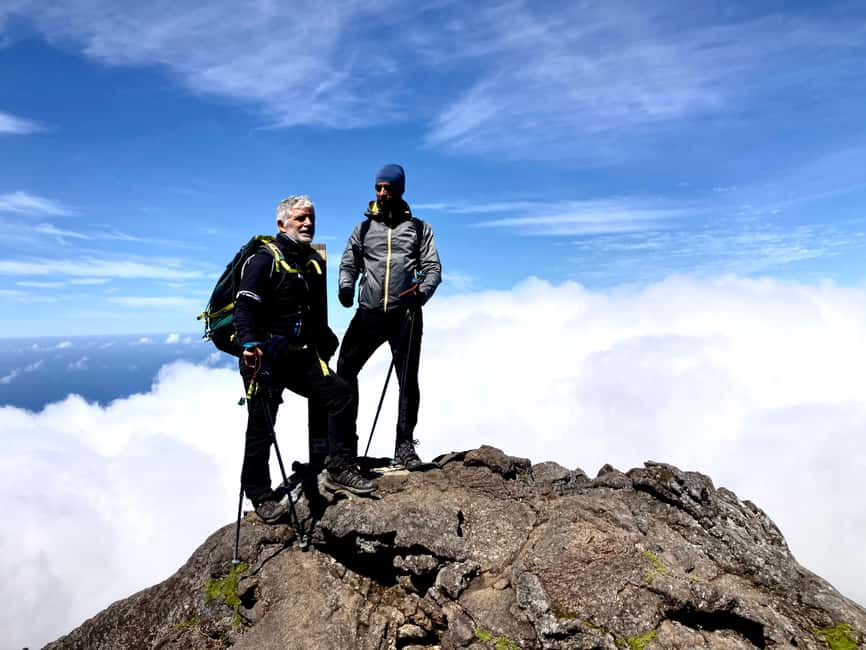
Book this experience if reaching Portugal’s highest point is a serious goal and you want a guide to manage the safety, pacing, and route knowledge. The combination of reserve access, hiking poles, insurance, and professional guidance makes the $91 fee a fair deal for an eight-hour mountain day.
Skip it if you want a relaxed nature walk, if you are out of shape, or if you dislike steep, loose ground. The descent is not a footnote, and cloudy weather may reduce the views.
For the right hiker, this is a memorable way to understand Pico Island from its highest point. Go prepared, listen to the guide, and save enough energy for the long way back down.
FAQ
How long does the Mount Pico climb take?
The activity lasts about eight hours, including the safety briefing, ascent, summit time, and descent.
How far is the route?
The total distance is about 8 kilometres, with approximately 1,100 metres of ascent and 1,100 metres of descent.
What is the highest point reached?
The climb reaches Piquinho at 2,351 metres above sea level, Portugal’s highest point.
Where does the climb start and finish?
You meet your guide inside Mountain House, and the hike ends back at Mountain House.
What languages does the guide speak?
Guides are available in English, Dutch, and Portuguese.
Do I need hiking boots?
Yes. You must wear hiking boots or hiking shoes with a good grip. Sports shoes are not allowed, and the Natural Park may refuse access without suitable footwear.
What should I bring?
Bring sunscreen, a daypack, hiking shoes, weather-appropriate clothing, food, rain gear, sunglasses, and water.
Is the climb suitable for children?
No. It is not suitable for children under 12.
Can the activity be cancelled because of weather?
Yes. The climb depends on weather conditions and can be cancelled shortly before the activity begins.
The newest listings around Azores
- Full-Day Private Tour of Faial★ 5.0 · 40 reviews
- Faial Island: Half Day Tour★ 5.0 · 99 reviews
- Faial Island: Full Day Tour – Nature and Local Culture★ 5.0 · 213 reviews
- Wines and Moonshines of Terceira★ 5.0 · 55 reviews
- UNDERGROUNDTOUR (Full Day Private Tour)★ 5.0 · 52 reviews
- PHOTO TOUR (Full Day Private Tour- Sunrise to sunset)★ 5.0 · 68 reviews
- Terceira Island: Full Day Tour★ 5.0 · 63 reviews
- Private Terceira Island Full Day Tour★ 5.0 · 250 reviews
Mountain Peak Hikes, compared.
Pico do Arieiro Sunrise Transfer Self-guided Hike
Read our review →
Madeira Funchal:East Tour Pico Arieiro & Santana&Laurissilva
Read our review →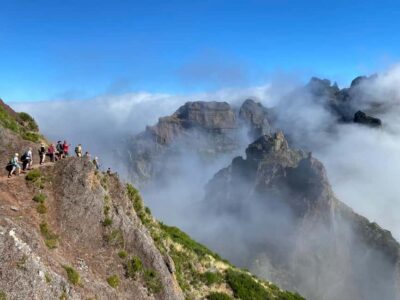
Transfer to Pico do Arieiro & Pico Ruivo Trail
Read our review →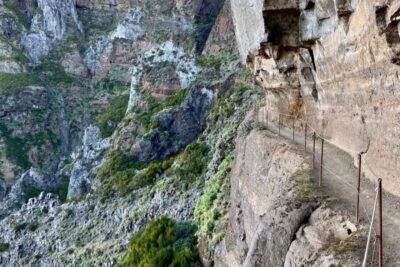
Pico Do Arieiro Pico Ruivo Sunrise or Morning Hike Transfers
Read our review →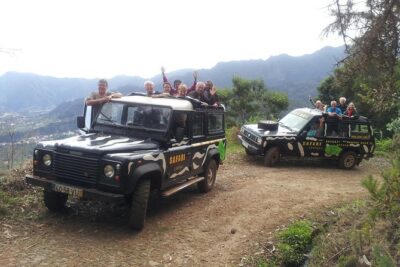
Full Day Jeep Safari East – Pico do Areeiro – Santana – Ponta de são Lourenço
Read our review →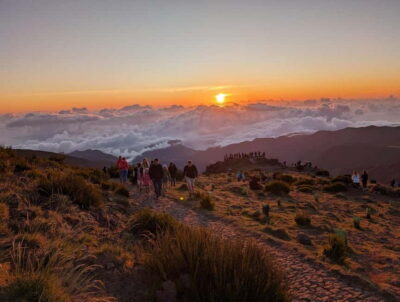
Sunrise Pico do Arieiro & Ruivo/Larano HikeTransfer
Read our review →
Browse the lists this tour appears in