

Reviewed · TUK-TUKS
Lisbon: Half-Day Private Guided Tuk-Tuk Tour
Lisbon’s hills and narrow lanes are the reason this private electric tuk-tuk tour makes sense. In about four hours, you can move from Baixa to Alfama, up to Senhora do Monte, across to Belém, and back through Chiado without spending the day climbing steep streets or waiting for a large bus to turn around. I especially like the hotel pickup in central Lisbon and the way guides such as Tiago, Margarida, Diana, and Jefferson adjust the route to your interests.
I also like the local flavor: you receive a sour cherry liqueur, and the Belém section includes time for a pastel de nata. The main drawback is comfort. Cobblestones make the ride bumpy, and the seating is not ideal for everyone, particularly on a longer outing.
Key points to know before you book
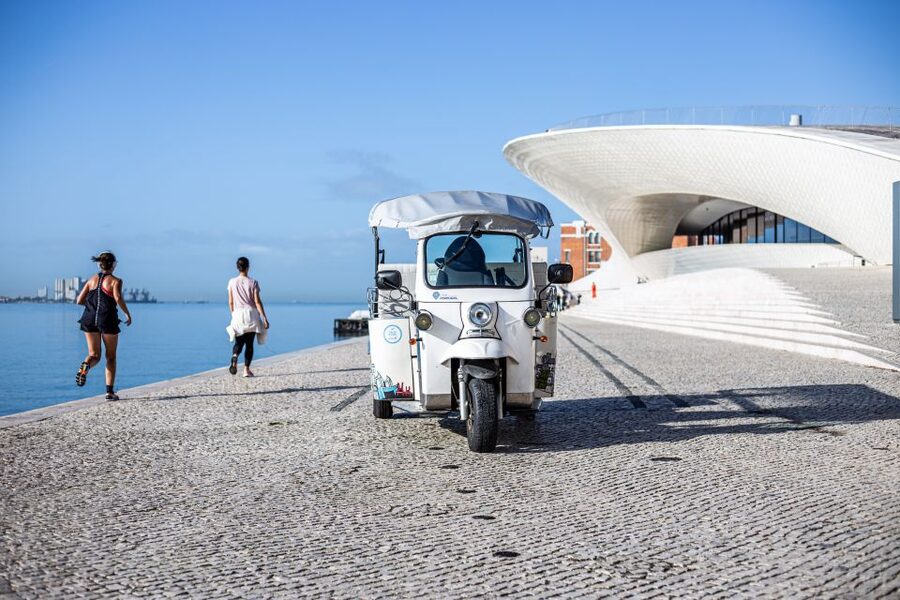
- Electric tuk-tuk access: Reach Lisbon’s tight lanes and steep quarters where big buses cannot go.
- A useful first-day tour: Cover major districts and viewpoints, then decide where to return on foot.
- Flexible guiding: Guides may adjust stops, photo time, and drop-off around your interests.
- Belém included: See Jerónimos Monastery, Belém Tower, the Discoveries monument, and Pastéis de Belém.
- Small scale: The vehicle holds up to six people, but four adults and two children is the more comfortable limit.
- Real road conditions: Expect bumps on old cobbles, and some walking at stops, including about ten minutes in Alfama.
Why a tuk-tuk works so well in Lisbon

Lisbon is easy to admire and tiring to cross. Baixa sits low beside the Tagus, while Alfama and Graça rise sharply above it. Chiado and Bairro Alto add more slopes, and the best viewpoints are rarely beside a flat, direct road.
A tuk-tuk gives you a practical middle ground between a walking tour and a large sightseeing bus. You are not simply watching the city through a window. The vehicle can turn into narrow lanes, stop for views, and pull over near places that would take real effort to reach on foot.
I would use this tour early in a Lisbon stay. It gives you a broad map of the city, from the older eastern districts to Belém in the west. Several people who took the tour on their first day used it to choose which churches, viewpoints, and neighborhoods deserved a longer return visit.
The electric motor is a welcome touch in old residential streets. It avoids the harsher engine noise of a standard vehicle, although you should not expect a silent ride. The open sides also make it easier to see walls, tiled buildings, street art, and passing details than from a closed car.
More Tuk Tuk Tours in Lisbon
- True 4Hour Private Tuk Tuk Tour: Discover Lisbon with a Local!
★ 5.0 · 8,008 reviews - Lisbon: Private Guided Tuk-Tuk Tour with Hotel Pickup
★ 4.9 · 4,552 reviews - Private Lisbon Sightseeing Tuk-Tuk Tour: Alfama, Belém & More
★ 5.0 · 4,277 reviews
Baixa, the cathedral, and Lisbon’s first great viewpoints
The route generally begins in Baixa, the planned downtown district. This is a useful starting point because it helps you understand Lisbon’s layout. From here, the tuk-tuk heads toward the Lisbon Cathedral and the eastern hill.
The cathedral stop is mainly for seeing and photographing the building, with commentary from your guide. It is worth paying attention to the difference between the flat lower streets and the rising lanes ahead. You quickly see why a tuk-tuk is more useful here than a standard car.
Portas do Sol Terrace offers one of the tour’s first big views over Alfama and the Tagus. The stop is short enough to keep the tour moving, but you should have time for photographs and an explanation of the area.
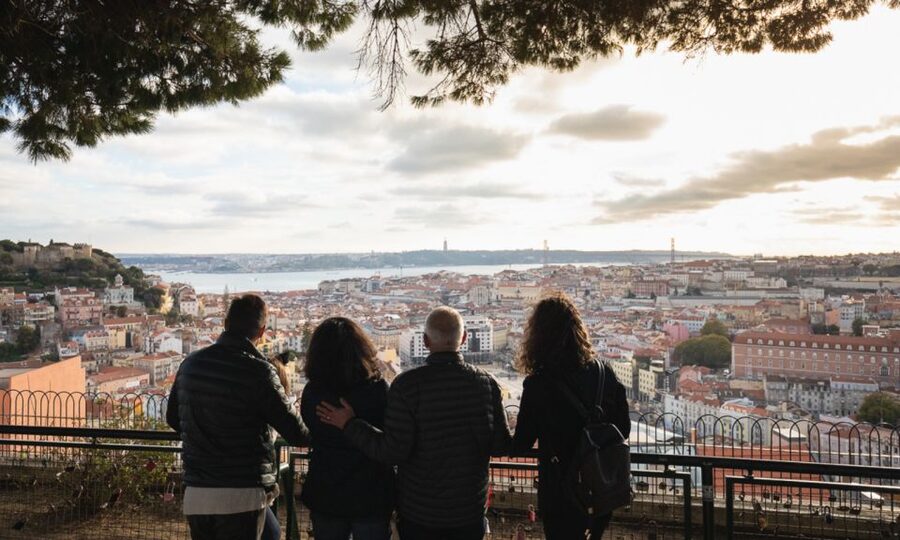
From there, the vehicle climbs through Graça to Miradouro da Senhora do Monte. This is one of the best viewpoints on the route. You get a wider look across Lisbon’s rooftops, hills, and river, and the guide can help identify parts of the city below.
The tradeoff is that viewpoint stops can feel rushed if you want long photo sessions. Tell your guide early if you prefer fewer stops with more time at each one. The private or small-group format makes that request realistic.
Mouraria, Alfama, and Lisbon’s oldest-feeling streets
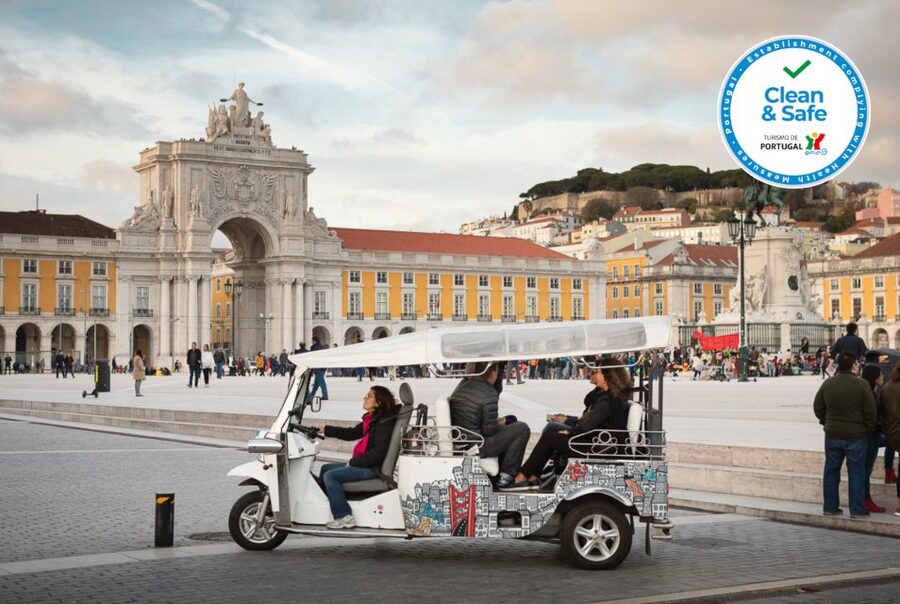
Mouraria and Alfama give the tour its strongest sense of place. Their lanes are narrow, steep, and often paved with uneven stone. They are exactly the kind of streets where a large coach is useless.
In Mouraria, your guide may point out street art, local customs, and the district’s role in Lisbon’s cultural life. The tour description specifically highlights the history of street art, so ask about it if that subject interests you. The quality of the explanation depends on your guide, but guides such as Tiago and Margarida have been praised for giving local context rather than simply naming monuments.
The route continues toward the Monastery of São Vicente de Fora and the National Pantheon of Santa Engrácia. These are photo and commentary stops, with a chance to appreciate the scale and detail of the buildings from outside. The activity does not include monument entrance fees, so do not expect a full interior visit as part of the basic route.
Alfama includes a short walk of about ten minutes. That matters. This is not a stay-in-your-seat tour from start to finish. Wear shoes that can handle cobblestones and bring water, especially in warm weather.
The Alfama stop also includes the local tasting. The included drink is sour cherry liqueur, known locally as ginjinha. The activity description also gives you the option of a pastel de nata or traditional Portuguese liqueur, so confirm your preference when booking or at the start.
Chiado, Carmo, and the view from Bairro Alto
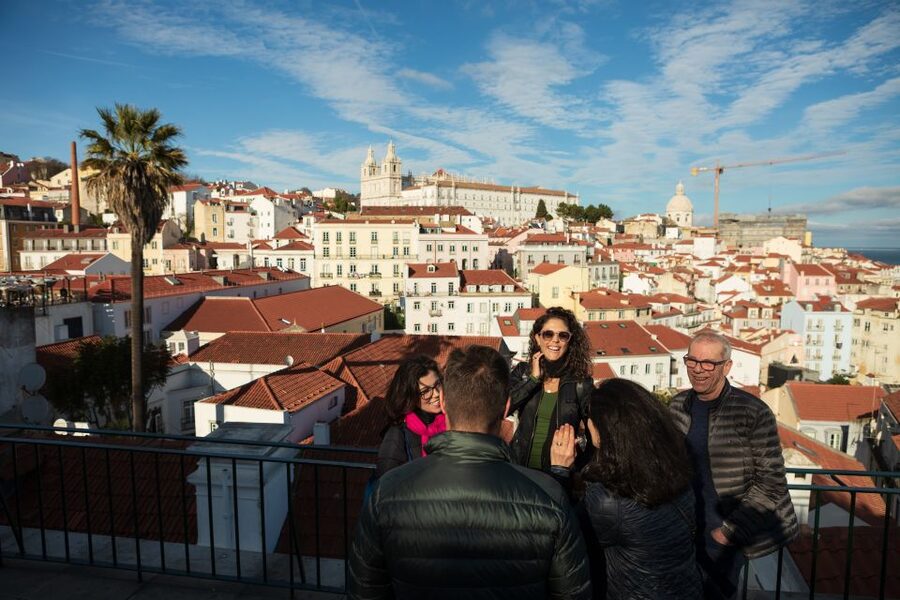
After the eastern hills, the tuk-tuk crosses back toward central Lisbon. Chiado is a more polished district, with grand streets, shops, cafés, and cultural landmarks. It makes a useful contrast with Alfama’s tight lanes and older residential feel.
The Carmo Convent is one of the most memorable stops in this part of town. Its roofless Gothic shell gives you a strong visual reminder of Lisbon’s 1755 earthquake, though the exact amount of time spent there depends on the schedule and your guide.
The Igreja de São Roque follows, with a photo stop and visit listed in the route. São Roque is important because its plain exterior gives little hint of the elaborate interior. Since entrance arrangements can change, check with the guide about what is open during your visit.
The tuk-tuk then reaches Miradouro de São Pedro de Alcântara. This viewpoint looks across toward the eastern hills and gives you another chance to orient yourself. I like having both this view and Senhora do Monte in the same outing because they show Lisbon from different sides.
Bairro Alto is included in the central Lisbon portion, although not every district receives a long stop. The route is designed to give you a working overview, not hours inside each neighborhood. If you want a slow look at shops, cafés, or nightlife streets, mark those places down for later.
Same base, a completely different sort of day:
- Lisbon City Center Tour – The Unmissable Lisbon
★ 5.0 · 22,234 reviews - Lisbon: Jerónimos Monastery Entrance Ticket
★ 4.1 · 14,164 reviews - Lisbon: History, Stories and Lifestyle Walking Tour
★ 4.8 · 10,902 reviews - Lisbon: Sunset Boat Party Cruise with DJ and Open Bar
★ 4.5 · 10,378 reviews
Lapa and Estrela before the run to Belém

The route continues through Lapa, a quieter and more residential area, then to Estrela Basilica. This section helps prevent the tour from becoming only an old-town circuit. You see another side of Lisbon, with larger streets and monumental buildings.
Estrela Basilica is listed as a photo stop and visit. The building is especially useful as a quick architectural pause, and the guide can add context about its place in the city. As with the other monuments, an entrance fee is not included.
The vehicle then passes the 25 de Abril Bridge on the way toward Belém. The bridge is a striking part of the river view, and the approach gives you a sense of how far the tour has traveled from the oldest quarters.
This is where the tuk-tuk earns its price. Covering Alfama, Graça, Chiado, Lapa, and Belém in one half-day would be difficult on foot, particularly in summer or with children. Public transport can help, but it does not give you the same door-to-viewpoint movement or live explanation.
Belém’s monuments and the pastry stop

Belém is the western highlight. The route includes Jerónimos Monastery, Pastéis de Belém, Belém Tower, and the Monument to the Discoveries.
Jerónimos Monastery is one of Lisbon’s essential sights. The tuk-tuk stop lets you see the exterior and take photographs, but the admission fee is not included. If you want to explore the cloisters or interior, plan a separate visit and allow extra time beyond the tour.
Pastéis de Belém gives the outing a pleasant food break. You have about ten minutes listed for the dessert stop, so this is a taste rather than a long café visit. If you have a dietary restriction, raise it before ordering. One guide went out of her way to help a lactose-intolerant member of a group find a suitable bakery afterward, but that should not be treated as a standard included service.
Belém Tower is another photo stop. Its position by the river makes it one of Lisbon’s most recognizable sights, though crowds and access conditions can affect how close you get. The Monument to the Discoveries adds a second large riverside landmark and ties the district to Portugal’s seafaring past.
The Tagus appears throughout the route, but Belém gives you the clearest sense of the river’s scale. You also get the bridge, waterfront, and monuments in one stretch, which makes this portion especially useful for photographs.
The guides are a major part of the experience

The vehicle gets you around, but the guide determines how much you take away. The strongest guide names associated with this activity include Tiago Martins, Tiago Pinot, Margarida, Diana, Jefferson, Joana, Claudio, and Nonou.
Tiago is repeatedly praised for his stories about Portuguese history and culture, careful driving, and ability to explain the city in clear English. Margarida is noted for flexibility, local suggestions, and finding alternate stops when traffic affected the planned route. Diana is praised for adapting the outing and helping her group get good value from a shorter three-hour version.
That flexibility is worth using. Ask for restaurant suggestions, places to return for Fado, areas best explored on foot, or help deciding which monuments deserve an entrance ticket. Guides have also helped with photographs, lunch recommendations, and extra points of interest not listed in the basic route.
The tour is offered in German, English, Portuguese, Spanish, Italian, and French. Specify your preferred language when you book. The guide is both driver and storyteller, so the experience works best when you ask questions rather than sit quietly through a fixed script.
What three to six hours really means
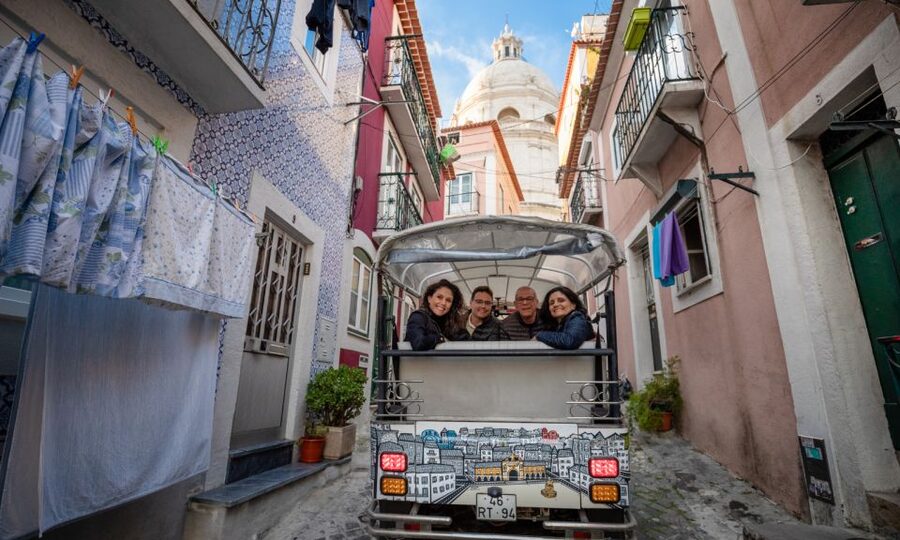
The advertised duration ranges from three to six hours, with four hours as the usual plan described for the main route. Check the exact option and departure time before paying, since the route and pickup details can vary.
Three hours can work if your goal is a quick overview. One guest found that enough time to see the main old-city sights from a tuk-tuk. Four hours gives the route room to include Belém and several photo stops without feeling like a race.
Six hours would be more useful for a slower private outing, especially if you want longer stops or more time for walking. Still, the tour is not a monument-by-monument visit. You are seeing many places from outside, with selected stops along the way.
Pickup and drop-off are available from hotels in central Lisbon. You should be ready in the lobby five to ten minutes before pickup. Drop-off is listed at four locations on Rua do Comércio, near Baixa, so confirm the exact arrangement if you want to finish somewhere else.
Price, comfort, and practical limits
At $99 per person, this is not the cheapest way to see Lisbon. The value improves for a small private group because the cost buys transport, a guide, hotel pickup when selected, and a route that covers a large part of the city. For one or two people, it is a convenience purchase. For four adults, it can compare more favorably with arranging several separate rides and a private guide.
The tuk-tuk holds up to six people, but the more comfortable limit is four adults and two children. The compact seating can feel cramped, and one person specifically found the seat and footboard uncomfortable. You should expect folded legs rather than a normal chair position.
The ride can also be bumpy. Uneven cobblestones are part of the route, especially in historical quarters. Some guides describe this with humor, but the practical message is simple: fasten the seatbelt, support yourself carefully, and do not choose this activity if a rough ride will cause pain.
Some mobility is required to climb into the vehicle. The activity is not suitable for children under four, pregnant women, people with back problems, wheelchair users, or people with mobility impairments. Oversize luggage is not allowed. These limits are important, even though the tuk-tuk can reduce the amount of walking compared with a conventional city tour.
Free cancellation is available up to 24 hours before the start, and reserve-now-pay-later booking is offered. Those terms help if your Lisbon schedule is still moving, but always check the exact option you select.
Who should book this Lisbon tuk-tuk tour?
I would recommend it to first-time visitors with limited time, families with older children, couples who want a private route, and anyone who would struggle with Lisbon’s hills but can climb into the vehicle. It is also a strong choice for a first-day orientation.
You will get the most from it if you like scenic stops, short walks, local stories, and the freedom to ask for adjustments. You should choose a longer version if you want time for photographs and a more relaxed pace.
I would skip it if you want full interior visits at every monument, quiet transport, or a smooth ride. It is also a poor fit for serious back problems, pregnancy, wheelchair use, or anyone who dislikes cramped seating.
Should you book it?
Book this tour if you want to see a lot of Lisbon quickly and understand how its districts fit together. The electric tuk-tuk reaches places that are awkward by bus, while the local guide adds stories, food suggestions, and practical advice for the rest of your stay.
Before booking, choose your duration carefully, request a guide in your language, and tell the company about mobility or dietary concerns. If possible, ask for a four-hour option and use the tour early in your visit. You will leave with a useful list of places to revisit, plus a better feel for Lisbon’s hills, riverfront, churches, viewpoints, and old lanes.
FAQ
How long does the Lisbon tuk-tuk tour last?
The available options range from three to six hours. The main experience is described as taking about four hours, but you should check the selected option for its exact duration and start time.
What areas of Lisbon does the tour visit?
The route includes Baixa, Alfama, Graça, Mouraria, Chiado, Bairro Alto, Lapa, Estrela, and Belém. It also includes views of the Tagus River and the 25 de Abril Bridge.
Is hotel pickup included?
Hotel pickup and drop-off are included for locations within Lisbon’s city center when that option is selected. Be ready in the hotel lobby five to ten minutes before pickup.
How many people fit in the tuk-tuk?
The maximum occupancy is six people. The more comfortable arrangement is up to four adults and two children.
Is the tuk-tuk electric?
Yes. The tour uses an electric tuk-tuk designed to reach narrow streets and areas that large tour buses cannot access.
Is food or drink included?
A sour cherry liqueur is included. The experience also includes a local treat, with the option described as a pastel de nata or traditional Portuguese liqueur. The Belém route includes a short stop at Pastéis de Belém.
Are monument entrance fees included?
No. Entrance fees for monuments are not included in the tour price.
Is the ride suitable for people with limited mobility?
Some mobility is required to climb into the vehicle. The activity is not suitable for wheelchair users or people with mobility impairments, and it is also not recommended for people with back problems.
Is the ride bumpy?
Yes. Bumps are expected, especially on uneven cobblestone streets in historical districts. The seating may not suit everyone for a longer ride.
Can I cancel the booking?
You can cancel up to 24 hours in advance for a full refund. Reserve-now-pay-later booking is also available for selected options.
More Half-Day in Lisbon
- Lisbon: 7 Hills Half-Day Electric Bike Tour
★ 4.9 · 1,592 reviews - Lisbon Private And Customizable Half-Day Tour
★ 5.0 · 633 reviews - Lisbon: Half-Day Private Tuk Tuk Tour
★ 4.8 · 179 reviews - Lisbon: Half-Day City Tour
★ 4.0 · 143 reviews
The newest listings around Lisbon
- The Real Lisbon Street Art Private Guided Tour by Minivan★ 4.8 · 49 reviews
- Lisbon: Historical Walking Tour with Jeronimos Monastery★ 4.5 · 71 reviews
- Lisbon: Port Wine Tasting at Taylor’s Shop and Tasting Room★ 4.6 · 490 reviews
- Lisbon: Tagus River Cruise With Brunch★ 3.2 · 73 reviews
- South Lisbon: 3-Hour Christ the King Electric Bike Tour★ 4.8 · 97 reviews
- Oeiras Coast: Stand Up Paddleboarding near Lisbon★ 4.9 · 56 reviews
- Small Group Walking Tour of Belém★ 4.9 · 80 reviews
- Lisbon: 3-Hour Secret Food Tour★ 4.7 · 53 reviews
Tuk-Tuks, compared.

True 4Hour Private Tuk Tuk Tour: Discover Lisbon with a Local!
Read our review →
Guided Tour by Tuk-Tuk & Optional Douro River Cruise
Read our review →

Private Lisbon Sightseeing Tuk-Tuk Tour: Alfama, Belém & More
Read our review →
Lisbon Highlights: Private Tuk Tuk Tour Adventure Sightseeing
Read our review →
Discover Porto’s Highlights on a 2-Hour Private Electric Tuk Tuk
Read our review →
Welcome Lisbon Tour with Local Guide in Private Eco Tuk Tuk
Read our review →
Browse the lists this tour appears in