
Reviewed · HORSES
Lisbon: Portuguese Riding School Trainig with Lusitano Horse
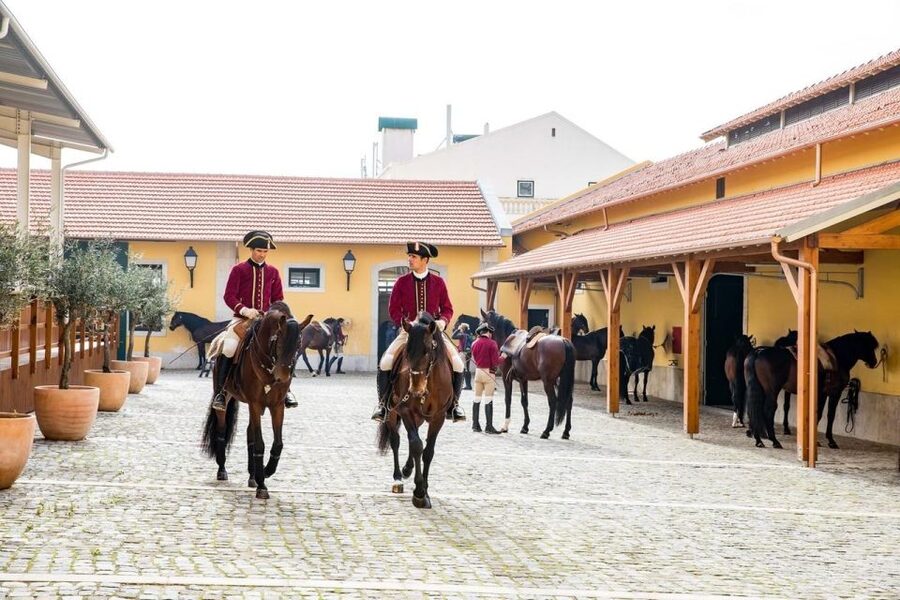
The best part of this Lisbon experience is the access to the daily work behind a formal equestrian performance. You see Lusitano horses being handled in the stables, then watch period-costumed riders practice precise movements at the Henrique Calado Riding Ring. It is less about a polished show and more about seeing how horses and riders prepare for one.
I like the close look at horse care, and I like the link between the quiet stable work and the grand choreography in the arena. The $17 price is modest for a morning activity, especially if you care about horses or Portuguese tradition. The main drawback is that you should not expect a continuously present human guide. The audio guide does most of the explaining, and the ticket instructions require careful attention.
Key points at a glance
- Lusitano horses from the Alter Real Stud Farm: See the breed at close range and learn about its health, rhythm, and physical needs.
- Stable access at Henrique Calado Riding Ring: Watch handlers care for the horses before and around the training session.
- Period costume and court-style music: Riders rehearse Equestrian Art exercises in an atmosphere modeled on an 18th-century court.
- Best visiting window: The full activity runs from 10 a.m. to 1 p.m., but 11 a.m. to 12:30 p.m. is the most useful time to arrive.
- Audio guide rather than a full live tour: Bring your own headphones and a charged smartphone for the English, Portuguese, or French commentary.
- Low price, with a few practical catches: Transport, food, drinks, headphones, and photography are not included.
Seeing the work behind the Portuguese School
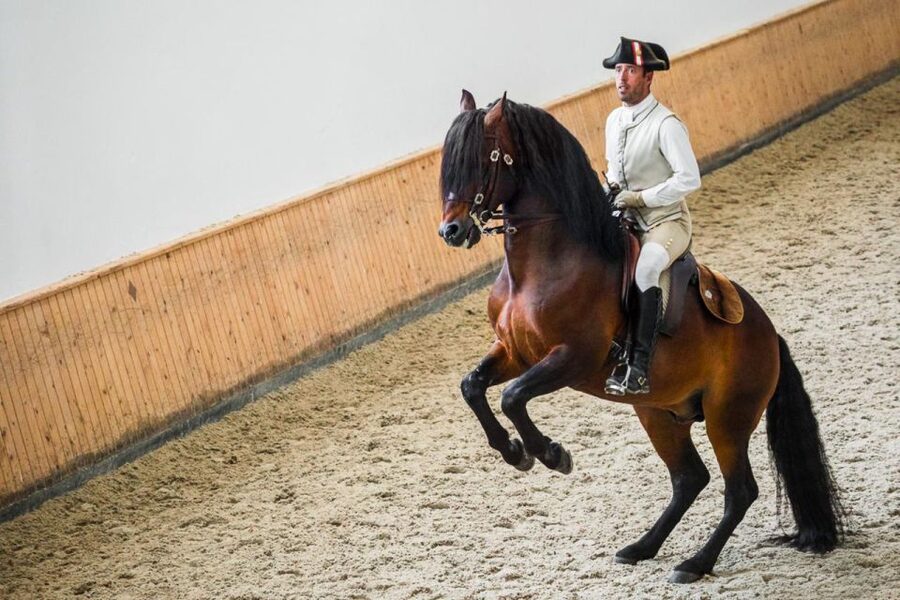
The Portuguese School of Equestrian Art is built around a simple idea: the performance begins long before the riders enter the arena. This visit lets you see that preparation in a fairly direct way.
You start with the horses and handlers. The stable portion gives you time to observe how the Lusitanos are cared for, rather than seeing them only as polished performers. This matters because the training is described in terms of each horse’s rhythm, health, and physical limits. The point is not simply to make a horse obey a difficult movement. It is to prepare the animal carefully for demanding work.
That is the part I find most useful for first-time visitors. The horses are not presented as props for a historical spectacle. You get a better sense of the daily attention required before the formal exercises begin.
The experience then moves toward the training and rehearsals. Riders wear period costume, and the sessions use music associated with the courtly setting. You will see exercises and choreographies that recreate the atmosphere of an 18th-century court, though this is a training session rather than a full gala performance.
That distinction is important. If you want a finished theatrical production, this may feel quieter and less dramatic. If you want to understand how the performance is built, the morning visit gives you more useful access.
More horse riding in Lisbon:
- Lisbon: Morning of Equestrian Art with Lusitano Horses
★ 4.4 · 87 reviews - Algarve: 1-Hour Carrapateira Horseback Riding Tour
★ 5.0 · 295 reviews - From Albufeira: Horse Riding Tour with Pickup
★ 4.7 · 202 reviews
Start with the stables and the handlers
The stable visit is scheduled as a major part of the experience, with roughly an hour devoted to the horses and their care. You can get closer to the animals here than you might expect from a formal show setting, although you should still follow staff directions and respect the horses’ space.
Handlers are the people to watch. Their work shows the practical side of the school: caring for the horses, preparing them for exercise, and helping maintain the physical condition needed for high-level riding. This is also where the audio guide can add value by introducing the different horses and explaining the setting.
One useful detail is that the audio guide is not just general background about Lisbon. It explains the stables and presents the horses. That makes it a better companion for this visit than a broad city-history recording.
The stable section can feel short if you are especially interested in horses. An extra 30 minutes here would give you more time to observe the animals and absorb the setting. Still, the approximate hour provides a solid introduction before the training begins.
Bring comfortable shoes. You may be standing or walking during this portion, and the activity is not designed as a seated indoor museum visit.
Watch riders warm up in period costume
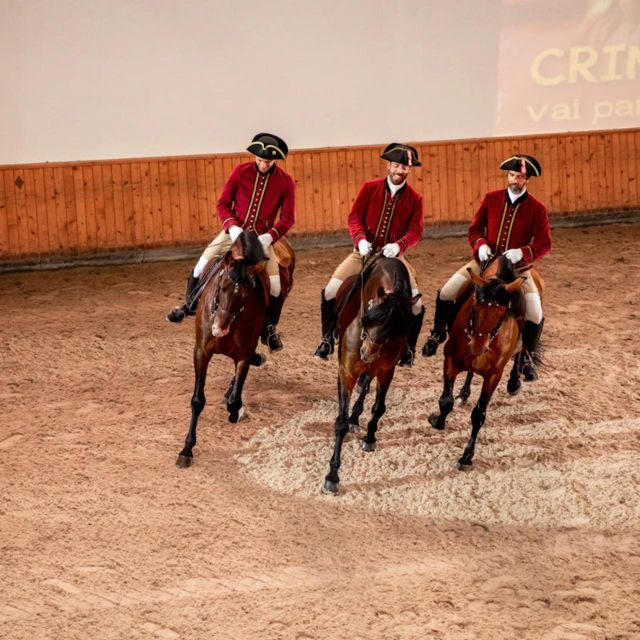
The riding session begins with warm-up work and exercises designed to prepare both horse and rider. The riders’ period clothing gives the session a distinctive look, but the real interest lies in the method behind the appearance.
Warm-ups are not filler. They show how riders establish control, balance, and communication before attempting more complex exercises. You can watch the riders work with the horses’ pace and movement, keeping the demands suited to each animal.
The phrase resourcefulness exercises refers to training that develops the horses’ responsiveness and the riders’ skill. You will not need to understand every technical detail to appreciate the sequence. Watch how the horses respond to small signals, how the riders maintain posture, and how the exercises build toward the more formal movements.
This is a good activity for you if you enjoy seeing practice rather than only results. It also gives families and casual visitors something clear to follow: the horses warm up, the riders establish a rhythm, and the work becomes more complex.
The session takes place at the Henrique Calado Riding Ring, one of the main spaces connected with the school. The setting helps explain why the experience feels different from a standard horseback riding demonstration. You are watching a formal equestrian discipline with its own training system and visual language.
From daily exercise to Equestrian Art

The later part of the visit brings together the elements introduced in the stables and warm-up. Riders rehearse complex Equestrian Art exercises and choreographies while period music creates the courtly mood.
These exercises are designed for precision. The movements need timing, balance, and trust between horse and rider. That is why the earlier stable and warm-up sections matter. You see that the elegant performance is supported by routine care and careful physical preparation.
The Nora Patio adds another setting to the experience. Its atmosphere is meant to recall an 18th-century court, giving the activity a more intimate and historic feel than a modern sports arena. The program may include work connected with both the Nora Patio and the Henrique Calado Riding Ring.
Do not confuse this with a gala show. Training and rehearsal can include pauses, repetition, and less polished moments. That is also the appeal. You get to see the riders working through the discipline instead of only watching a finished sequence.
The music helps the historical theme, but you should not expect a full theatrical production with elaborate narration. The experience is primarily about training, horses, and the tradition of Portuguese Equestrian Art.
A few more Lisbon options worth putting side by side
- Lisbon City Center Tour – The Unmissable Lisbon
★ 5.0 · 22,234 reviews - Lisbon: Jerónimos Monastery Entrance Ticket
★ 4.1 · 14,164 reviews - Lisbon: History, Stories and Lifestyle Walking Tour
★ 4.8 · 10,902 reviews - Lisbon: Sunset Boat Party Cruise with DJ and Open Bar
★ 4.5 · 10,378 reviews
What the Lusitano horses add to the visit
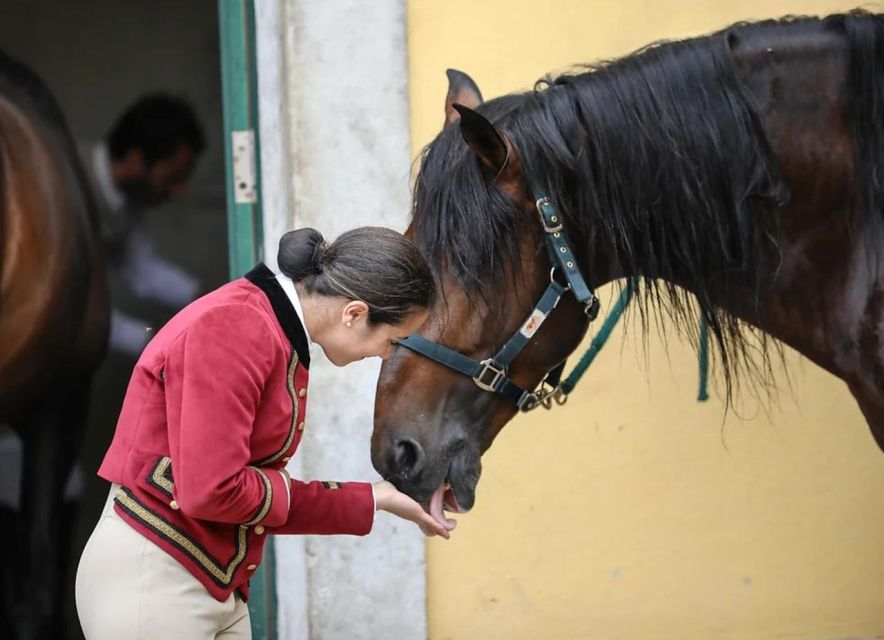
The Lusitano is central to the character of this experience. The horses come from the Alter Real Stud Farm, and the visit focuses on their preparation for demanding equestrian work.
You will learn about the horses’ rhythm, health, and physical needs. Those details make the visit more than a photo stop. They explain why the school pays close attention to how each horse trains and how much work it can handle.
I especially like this focus because it gives you a more respectful view of classical riding. The goal is not just to make the animal perform a spectacular movement. Training must account for the horse’s body and temperament. The riders’ work is therefore partly about restraint: knowing how to develop ability without ignoring the horse’s needs.
You may find the experience especially rewarding if you already ride, follow dressage, or have an interest in traditional horse breeds. Even without that background, the sequence is easy to understand. First comes care, then warm-up, then increasingly demanding movement.
Timing your morning at the riding school
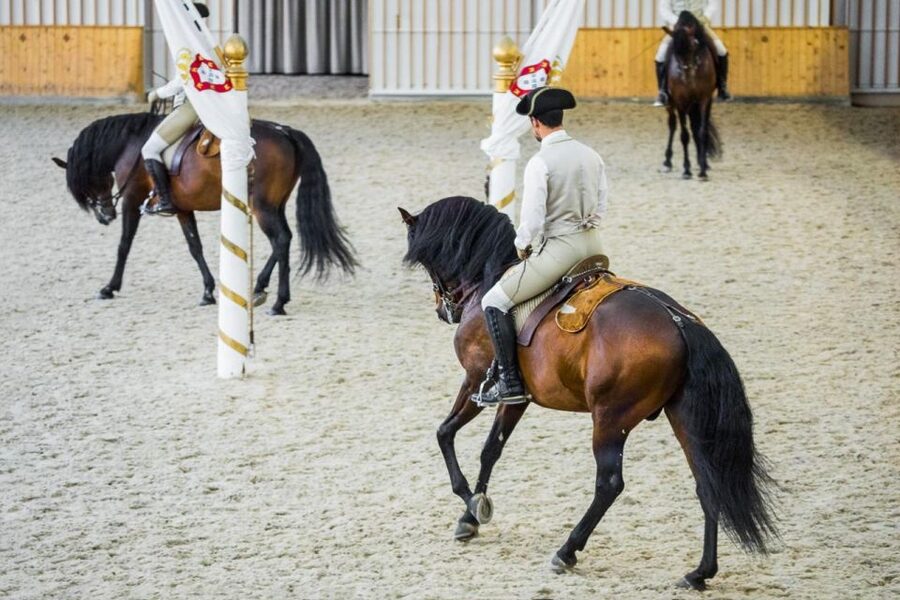
The activity takes place between 10 a.m. and 1 p.m. You can check available starting times when booking, but 11 a.m. to 12:30 p.m. is identified as the best visiting window.
That suggested window is practical because it places you within the heart of the stable and training program without requiring you to spend the entire three-hour period at the venue. If you want a fuller look at the horses, arrive with enough time for the stable section. If your schedule is tight, do not cut the visit too close, since the training and horse-care portions are the main reason to come.
The duration is listed as one day because the ticket is valid for one day, but this is really a morning activity. It fits well into a Lisbon itinerary with lunch or another nearby plan afterward.
Transport is not included. You need to make your own way to the school, and the meeting instructions are worth reading carefully. The paper from GetYourGuide is not the admission ticket. You must show the Book N Tour ticket to reception, not the GetYourGuide QR code, voucher, or ticket.
After booking, look for a separate email with instructions for accessing and downloading the ticket and audio guide. Check your spam folder if it does not appear. You also need to provide at least one working WhatsApp number or email address so the provider can contact you.
Using the audio guide without getting stuck
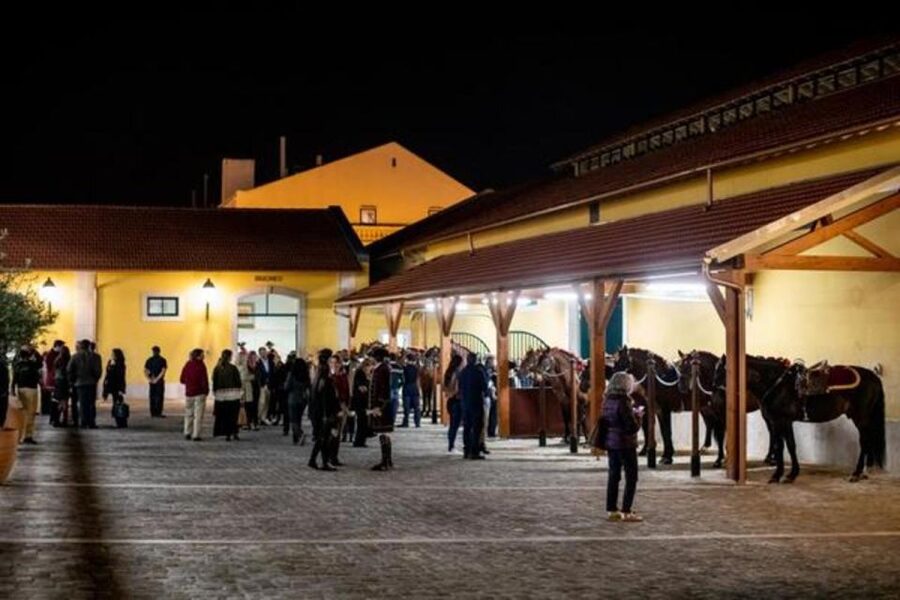
The audio guide is available in English, Portuguese, and French. It explains the stables and introduces the horses, so it is useful during the self-guided parts of the visit.
Bring a charged smartphone, internet access, and your own headphones. Headphones are not included. This is a small but important detail, since the audio guide will be less convenient if you arrive without them.
The experience includes an English or Portuguese host or greeter, but you should not count on a full live tour with a guide explaining every stage. The audio guide carries much of the interpretation. One practical lesson is to download or access everything before you arrive, rather than trying to solve ticket and audio issues at the reception desk.
The audio guide appears to be one of the stronger parts of the visit, but it does not replace personal guidance. If you want a detailed conversation about riding technique or horse training, this may feel limited. If you prefer moving at your own pace, the format works well.
Is $17 a fair price?
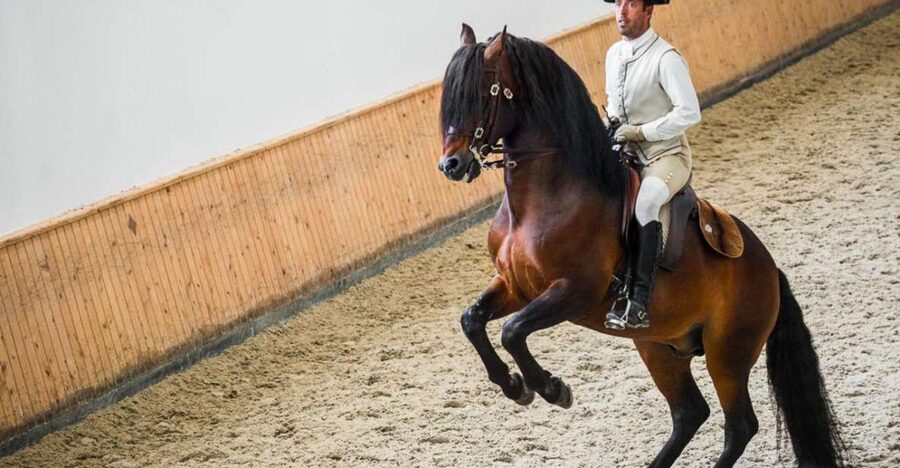
At $17 per person, this is good value for a specialized Lisbon experience. The price includes entry to the Portuguese School of Equestrian Art, access to the daily training of the Lusitano horses from the Alter Real Stud Farm, and the audio guide.
You are paying for more than a short look at an arena. The stable visit, horse-care element, warm-up, and rehearsal together create a morning program with several distinct parts. For someone interested in horses, that combination is hard to match at this price.
The value is less obvious if you want only a polished show. This is not described as a full gala performance, and the training may feel slower than a staged presentation. You are also responsible for transport, food, drinks, and headphones.
Photography is not included, and flash photography is not allowed. Smoking, alcohol, and drugs are prohibited. If taking pictures is a major reason for your visit, check the rules carefully and plan for the possibility that photography opportunities are limited.
The attraction is wheelchair accessible. You should still bring comfortable shoes, since accessibility does not necessarily mean every part of the morning involves sitting.
Who should book this experience?
I would choose this for anyone with a genuine interest in horses, riding technique, Portuguese culture, or traditional performance. It is also a smart pick if you want a quieter alternative to Lisbon’s major monuments.
Families may enjoy the close look at the horses, especially if children are fascinated by animals. The period costumes and music give the training a visual hook, while the stable work provides something concrete to watch.
You may want to skip it if your Lisbon schedule is packed and you are looking only for a quick attraction. The ticket instructions require attention, and the experience works best when you give the horses and training enough time.
It is also not the right choice if you expect a named guide to lead you through every room and explain each movement in person. The host or greeter can help at reception, but the audio guide is the main source of interpretation.
My recommendation
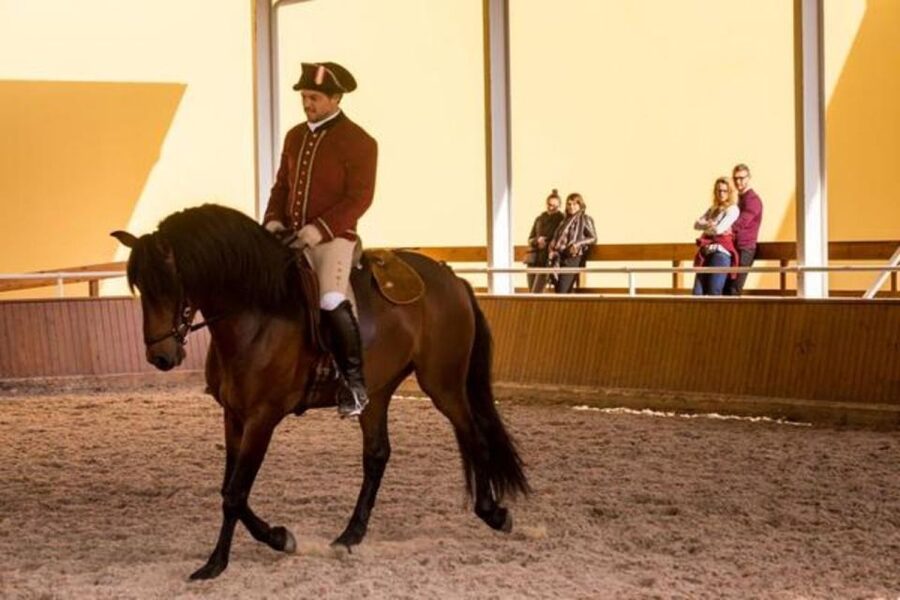
Book this experience if you want to see the daily discipline behind Portuguese Equestrian Art rather than simply attend a finished show. The strongest features are the stable access, the chance to watch handlers care for the Lusitanos, and the period-costumed training at a very reasonable price.
Go at about 11 a.m., bring headphones and a charged phone, and make sure you have the separate Book N Tour ticket ready. If you do that, this can be a thoughtful and unusual morning in Lisbon, with enough horse care and rehearsal to feel substantial without taking over your day.
FAQ
How long does the Portuguese Riding School experience last?
The activity takes place from 10 a.m. to 1 p.m. It is described as valid for one day, but the actual visit is a morning program. The best time to visit is stated as 11 a.m. to 12:30 p.m.
What does the $17 ticket include?
The ticket includes entry to the Portuguese School of Equestrian Art, daily training of Lusitano horses from the Alter Real Stud Farm, and an audio guide.
Is transport included?
No. You must arrange your own transport to the riding school. Food and drinks are also not included.
Which languages are available for the audio guide?
The audio guide is available in English, Portuguese, and French. The host or greeter speaks English and Portuguese.
What should I bring?
Bring comfortable shoes, headphones, a charged smartphone, and internet access. Headphones are not supplied.
Which ticket should I show at reception?
Show the Book N Tour ticket. The GetYourGuide paper, QR code, voucher, or ticket is not the admission ticket. You will receive separate instructions by email for accessing and downloading the correct ticket and audio guide.
The newest listings around Lisbon
- The Real Lisbon Street Art Private Guided Tour by Minivan★ 4.8 · 49 reviews
- Lisbon: Historical Walking Tour with Jeronimos Monastery★ 4.5 · 71 reviews
- Lisbon: Port Wine Tasting at Taylor’s Shop and Tasting Room★ 4.6 · 490 reviews
- Lisbon: Tagus River Cruise With Brunch★ 3.2 · 73 reviews
- South Lisbon: 3-Hour Christ the King Electric Bike Tour★ 4.8 · 97 reviews
- Oeiras Coast: Stand Up Paddleboarding near Lisbon★ 4.9 · 56 reviews
- Small Group Walking Tour of Belém★ 4.9 · 80 reviews
- Lisbon: 3-Hour Secret Food Tour★ 4.7 · 53 reviews
Horses, compared.

Algarve: 1-Hour Carrapateira Horseback Riding Tour
Read our review →

Algarve: Horse Riding Beach Tour at Sunset or Morning
Read our review →

Melides: Horse Riding on the Beach with Wine Tasting
Read our review →
Browse the lists this tour appears in