

Reviewed · HISTORICAL TOURS
Lisbon: Jewish History Tour of Lisbon
Lisbon’s Jewish story is mostly told through streets, vanished neighborhoods, and the city’s wider history rather than preserved monuments. This private walk connects Praça do Comércio, Alfama, Baixa, and Rossio to the people who lived, worshipped, worked, and later fled or were forced to convert here.
I like the way the tour treats Jewish history as part of Lisbon’s full story, not as an isolated subject. I also like the private format, which lets you ask questions and adjust the pace. The main drawback is clear: few physical remains survive, so this is best for people who enjoy history brought to life through explanation rather than a long list of intact buildings.
Key Points
- Starts beneath Lisbon’s triumph arch: Meet your guide at Praça do Comércio, where the tour sets up the story of departure, migration, and the Exodus.
- Covers several historic districts: Walk through Alfama, the castle hill, Mouraria, Baixa, Praça da Figueira, and Rossio.
- Explains difficult chapters: Learn about medieval segregation, forced conversions, and the 1506 Pessah massacre.
- Connects Lisbon to the wider diaspora: The story reaches across the Atlantic, the Mediterranean, Asia, and northern Europe.
- Includes modern history: The tour also covers Lisbon’s Jewish presence and the passage of refugees during World War II.
- Private and adaptable: The three-hour walk is offered in English or Portuguese and can be adjusted to different starting points and time frames.
A Jewish Lisbon Told Through Streets, Not Monuments
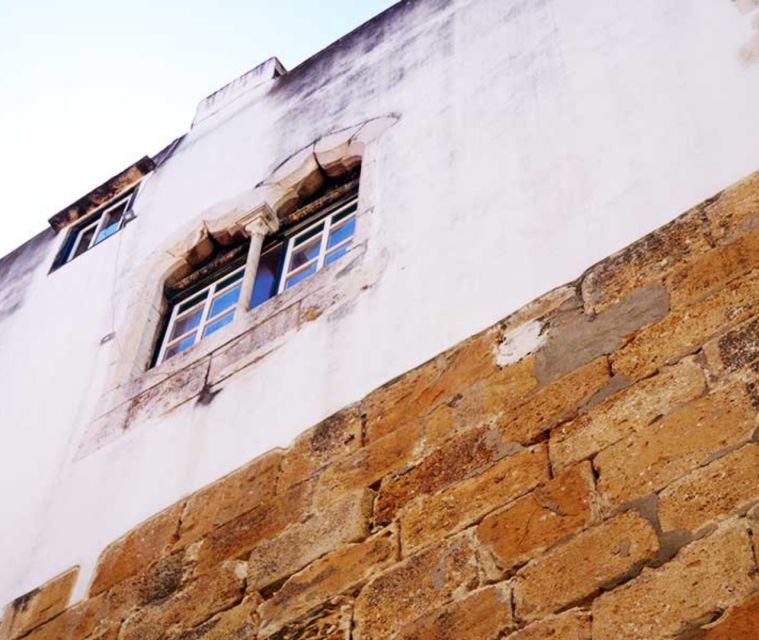
This is a walking history lesson through central Lisbon. The route covers places tied to the old judiarias, or Jewish quarters, but you should not expect a preserved medieval quarter with intact synagogues and rows of marked buildings.
That absence is part of the subject. Centuries of persecution, forced conversion, destruction, rebuilding, and urban change left very little visible evidence. Your guide has to build the story from place names, street patterns, historical events, and the way Lisbon’s districts developed.
That approach works best when the guide is a strong storyteller. José, Filipa, Jorge, Rita, Sofia, and other guides have led this experience at different times. The most frequently praised quality is their command of Portuguese and Jewish history, along with their ability to answer questions without turning the walk into a dry lecture.
You will likely spend much of the tour listening outdoors, then moving from one area to another. The route gives you a useful way to read Lisbon: not just as a collection of viewpoints and tiled façades, but as a city shaped by religious pressure, commerce, migration, and cultural exchange.
More history walks in Lisbon:
- Lisbon: History, Stories and Lifestyle Walking Tour
★ 4.8 · 10,902 reviews - Lisbon: Live Fado Show with Port Wine in Historic Center
★ 4.7 · 4,166 reviews - Lisbon: Fado Show with Wine in a Historic Venue
★ 4.8 · 1,294 reviews
Starting Beneath the Arch at Praça do Comércio
The meeting point is easy to identify. Look for the guide under the large triumph arch at Praça do Comércio. The guide will carry an orange backpack or a tote bag marked with the Lisbon Walker logo.
Praça do Comércio is a fitting place to begin. The broad square opens toward the river and provides a natural setting for a discussion of movement and departure. The tour places the Exodus at the beginning of its story, then links Lisbon to later Jewish departures and diaspora routes.
This opening also gives you a useful sense of scale. Lisbon’s Jewish story was never confined to one building or one isolated street. It was tied to the port, the city center, trade, government, and the larger movement of people around the Atlantic and Mediterranean worlds.
From here, the route passes through Praça do Município and along Rua do Comércio. These early stops help place Jewish life within the commercial center of Lisbon. You are not simply following a religious trail. You are looking at how communities fit into the daily life and economy of a medieval and early modern city.
Casa dos Bicos, Ribeira, and the City’s Commercial Life
Casa dos Bicos is one of the route’s memorable architectural stops. Its unusual diamond-pointed façade makes it easy to recognize, but the larger value is how it helps connect Lisbon’s Jewish story to the city’s waterfront and commercial activity.
The Ribeira area adds that practical context. Lisbon’s position on the river made it a meeting point for trade, travel, and migration. The tour uses this part of the city to explain how Jewish communities were connected to places beyond Portugal, including the Atlantic, Mediterranean, Asian, and northern European worlds.
I appreciate this broader frame because it keeps the tour from becoming a simple list of tragedies. Persecution is central to the story, but so are scholarship, trade, science, food, language, and family networks. The tour also introduces historical figures and discusses the Jewish community’s contribution to Portuguese culture, science, and gastronomy.
You may also pass the Resistance Museum area, where the discussion can move toward political oppression and resistance. The exact emphasis can vary because the tour is private and may be adapted, but this part of the route helps connect older religious persecution with the more recent history of authoritarian rule and displacement.
Alfama and the Medieval Judiarias
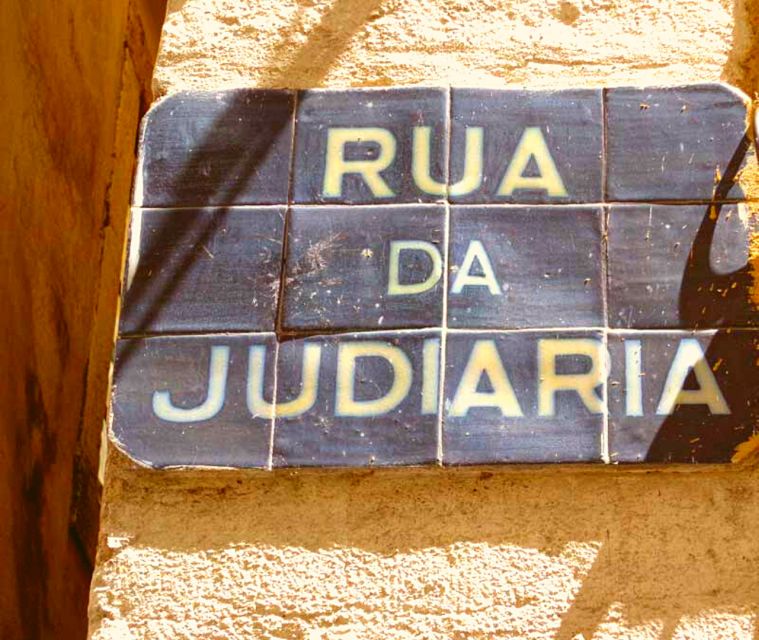
Alfama is one of the most important parts of the walk. Its lanes and steep streets preserve the feeling of an old urban quarter, even though very little can be pointed out as a clearly preserved Jewish building.
Here, your guide explains the medieval system of segregation and the location of Jewish neighborhoods. The word judiaria is important because it refers not merely to a street but to a defined part of the city where Jewish residents were concentrated.
The castle hill makes this section physically demanding for some people. You should wear comfortable shoes and expect uneven paving, inclines, and regular walking. One guide adjusted the pace for older participants on a hot day, and another tour included little hill climbing, but the route still requires a reasonable ability to walk through central Lisbon.
Alfama also shows why a place can be historically important even when its original buildings are gone. You might stand in a quiet lane and hear about a community that once lived there, then see only later construction around you. That contrast can be moving, but it requires imagination.
If you want a tour with clear plaques, preserved interiors, and many artifacts, this may feel thin. If you want help understanding how a vanished community fitted into the city, Alfama is one of the strongest parts of the walk.
A few more Lisbon options worth putting side by side
- Lisbon City Center Tour – The Unmissable Lisbon
★ 5.0 · 22,234 reviews - Lisbon: Jerónimos Monastery Entrance Ticket
★ 4.1 · 14,164 reviews - Lisbon: Sunset Boat Party Cruise with DJ and Open Bar
★ 4.5 · 10,378 reviews - Lisbon: Oceanário de Lisboa Entrance Ticket
★ 4.6 · 9,943 reviews
Baixa and the Era of Forced Conversions
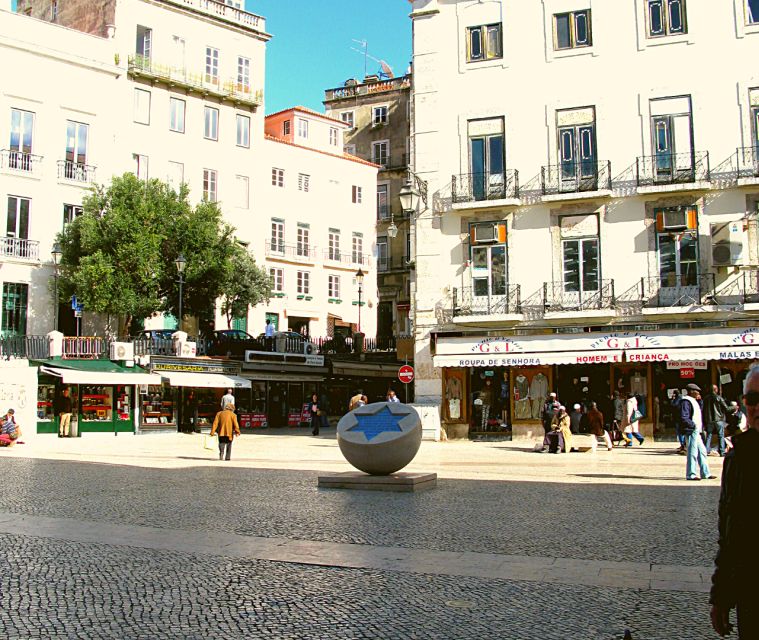
The route then reaches Baixa, where the story turns sharply toward religious pressure and forced conversion. This section explains how Jewish people were compelled to become Christians and how that changed the public and private life of the community.
The term New Christians becomes important here. Your guide can explain the difference between outward religious conformity and family or communal memory. The subject is not just a single event. It is about how conversion policies affected names, identity, trust, inheritance, worship, and movement.
Baixa is also useful because its orderly streets contrast with Alfama’s older lanes. You can see how Lisbon’s urban center developed while discussing a community whose visible institutions and records were damaged or erased.
This is where a private guide adds real value. You can stop to ask how forced conversion affected families, what happened to people who left, or how Portuguese Jewish communities remained connected to communities abroad. A group tour with a fixed script might move on quickly. Here, you can spend more time on the parts that matter most to you.
The guide may also point out churches or other buildings that help explain the shift in religious power. The point is not to treat every church as a Jewish site. Instead, these places provide context for the society in which Jewish residents lived and the pressures they faced.
Praça da Figueira and Rossio’s 1506 Massacre
Praça da Figueira and Rossio bring the tour to some of its hardest history. Rossio is associated with the 1506 Pessah massacre, a major event in the story of Lisbon’s Jewish and New Christian communities.
Your guide presents the event as part of the wider pattern of hostility, religious suspicion, and violence. The square itself is a busy public space today, which can make the history feel especially stark. There is no preserved scene waiting to be photographed. Instead, the guide helps you understand what happened in the place beneath the modern city.
This is a good example of why the tour depends so heavily on narration. You will not leave with a folder of objects or a long series of preserved Jewish buildings. You will leave with a clearer sense of how public spaces can hold painful memory even when the physical traces have disappeared.
The pacing matters here. The best guides, including José and Filipa, were praised for keeping people engaged across the full three hours. That is no small task when the subject includes persecution, massacre, and forced conversion. A skilled guide makes the history understandable without rushing past its human cost.
From Portuguese History to a Worldwide Diaspora
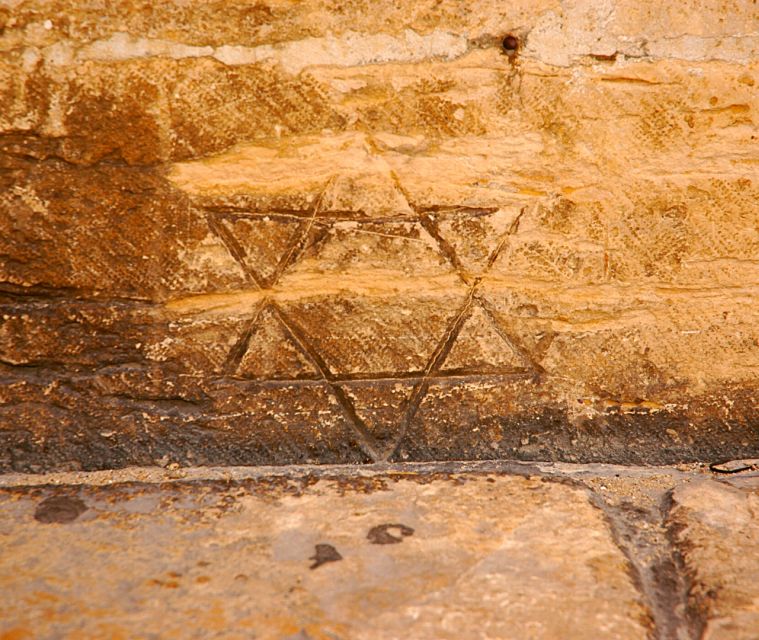
One of the tour’s strongest ideas is that Lisbon is not the end of the story. The experience follows the Jewish diaspora outward from Portugal, across the Atlantic, around the Mediterranean, into Asia, and toward northern Europe.
This wider view helps explain why Lisbon matters even when so little remains on its streets. People carried language, family links, religious practice, commercial knowledge, recipes, and memories with them. The city became one part of a much larger network.
The discussion of gastronomy is a welcome touch. Food can make migration easier to understand because it shows how culture survives in ordinary life. The tour also links Jewish life to Portuguese science and culture, giving you more than a record of victimhood.
You should still keep expectations realistic. The information provided does not promise visits to an active synagogue, a Jewish museum, or a collection of original artifacts. The focus is the city walk and the historical explanation. If those missing elements are essential to your plans, you may want to add a separate museum or synagogue visit on your own, but this tour itself is centered on streets and context.
Lisbon’s Jewish Presence in the 1940s
The tour does not stop in the medieval period. It also discusses Lisbon’s contemporary Jewish presence and the passage of refugees during the 1940s.
That modern section matters because it shows Lisbon as a place of transit as well as settlement. The city’s position connected people fleeing war with routes leading elsewhere. Your guide can place this episode alongside the older story of expulsion, conversion, and diaspora.
This link between centuries is one of the most useful parts of the experience. You see recurring questions about belonging, safety, identity, and movement, but you also learn that each period had its own political conditions.
The route’s reference to the Resistance Museum area supports this modern focus. Again, the main value is explanation rather than a large collection of Jewish objects. You are following a historical thread through the city and seeing how Lisbon’s public spaces relate to different periods of oppression and resistance.
What the Three-Hour Private Format Adds
The guided portion lasts three hours, though the booking is listed as valid for one day because availability and start times vary. The tour is for a private group, not a large shared party, and it can be adapted to different time frames and starting points.
That flexibility is useful if you have limited time in Lisbon or want the walk to fit around another appointment. It also lets the guide adjust the amount of time spent in Alfama, Baixa, Rossio, or the modern history section.
You should plan for a proper city walk, not a short set of roadside explanations. Comfortable shoes are essential. The route includes several districts and some historic streets, with walking and at least some uneven or inclined sections.
The tour is offered in English and Portuguese. A private English-language walk is especially useful if you want to ask detailed questions about Portuguese terms, family history, conversion, or the diaspora.
Hotel pickup and drop-off are not included. Food and drinks are also not included, so plan to meet at Praça do Comércio and arrange your own refreshments before or after the walk.
Is the $106 Price Fair?
At $106 per person, this is not a budget sightseeing stroll. The value depends on your group size and your interest in the subject.
For a private group that wants a focused history tour, the price can make sense. You are paying for three hours with a live guide, a route through several central districts, and the ability to shape the conversation around your questions. A strong guide can also add Roman remains, churches, and other Lisbon history along the way, as one itinerary experience did.
For one person or a very small group, the cost feels harder to justify, especially because you are not entering a major museum or visiting a large set of preserved Jewish sites. The experience is primarily interpretive.
I would book it if Jewish Portuguese history is a main reason for your Lisbon visit, or if you want to understand the city beyond its famous viewpoints. I would think twice if you mainly want photographs, restored buildings, or a compact museum visit.
Free cancellation up to 24 hours before the tour and the option to reserve now and pay later reduce the risk of booking. Still, the main decision is not the policy. It is whether you value expert explanation enough to pay for a private three-hour walk.
Who Should Book This Lisbon Jewish History Walk?
This tour suits you if you:
- Want a focused introduction to Jewish life in Lisbon and Portugal
- Prefer a private guide who can answer questions
- Enjoy history told through streets and urban setting
- Want to connect medieval events with the 1506 massacre and the 1940s
- Are comfortable walking across several central districts
- Have an interest in the worldwide Portuguese Jewish diaspora
It may not suit you if you need many surviving artifacts, preserved synagogues, or a museum-style experience. The physical evidence is limited, and several people who enjoyed the tour still recognized that limitation.
The strongest part of the experience is the guide. José was praised for his clear storytelling and command of Portuguese history. Filipa was noted for explaining the subject well and adjusting the pace in hot weather. Jorge, Rita, Sofia, and others have also led the walk, so the exact style can vary, but the tour calls for someone who can make an almost invisible past feel present.
Should You Book It?
Book this tour if you want to understand where Jewish life fitted into Lisbon’s medieval, early modern, and modern story. The route covers important places, but the real substance comes from the guide’s explanation of segregation, forced conversion, the 1506 massacre, diaspora, and wartime refugees.
Skip it if you are looking for a large collection of physical remains. Lisbon offers few of those, and no guide can change that. For an interested history-minded visitor, though, the absence of monuments is not a reason to dismiss the walk. It is the reason a thoughtful guide matters.
FAQ
How long is the guided tour?
The guided walking tour lasts three hours. The activity is listed as valid for one day, with starting times available according to the booking schedule.
Where does the tour meet?
Meet your guide under the large triumph arch at Praça do Comércio in Lisbon.
How will I recognize the guide?
The guide will carry an orange backpack or a tote bag with the large Lisbon Walker logo.
Which languages are available?
The tour is offered in English and Portuguese.
Is this a private tour?
Yes. The activity is arranged for a private group.
Which Lisbon areas does the tour cover?
The route includes Praça do Comércio, Praça do Município, Rua do Comércio, Casa dos Bicos, Ribeira, the Resistance Museum area, Mouraria, Praça da Figueira, Rossio, Alfama, Baixa, and the castle hill.
Does the tour include hotel pickup?
No. Hotel pickup and drop-off are not included.
Are food and drinks included?
No. You need to arrange your own food and drinks.
What should I bring?
Bring comfortable shoes. The experience involves walking through several Lisbon districts and historic streets.
The newest listings around Lisbon
- The Real Lisbon Street Art Private Guided Tour by Minivan★ 4.8 · 49 reviews
- Lisbon: Historical Walking Tour with Jeronimos Monastery★ 4.5 · 71 reviews
- Lisbon: Port Wine Tasting at Taylor’s Shop and Tasting Room★ 4.6 · 490 reviews
- Lisbon: Tagus River Cruise With Brunch★ 3.2 · 73 reviews
- South Lisbon: 3-Hour Christ the King Electric Bike Tour★ 4.8 · 97 reviews
- Oeiras Coast: Stand Up Paddleboarding near Lisbon★ 4.9 · 56 reviews
- Small Group Walking Tour of Belém★ 4.9 · 80 reviews
- Lisbon: 3-Hour Secret Food Tour★ 4.7 · 53 reviews
Historical Tours, compared.
Historical Sites, Wine Experience, Lunch & Cruise
Read our review →
Live Fado Show with Port Wine in Historic Center
Read our review →

Browse the lists this tour appears in