

Reviewed · HISTORICAL TOURS
Lisbon: 3-Hour The Slave Trade – An Historical Walking Tour
Lisbon’s handsome squares and grand buildings tell only part of the city’s story. This three-hour walk with Rui Fernandes, an African guide trained in history, political science, and economics, connects familiar sights with Portugal’s role in the Atlantic slave trade and the lives of enslaved Africans in Lisbon. It is a serious subject, handled through places you might otherwise pass without a second thought.
I like two things here. First, the tour brings history into the streets rather than leaving it in a textbook. Second, the small group format gives you room to ask questions and follow a subject that matters to you. The main consideration is the amount of information: the walk can last three to three and a half hours, and the subject is painful as well as complex.
Key points to know before booking
- Start in Alfama: Meet at Largo do Chafariz de Dentro, in Lisbon’s oldest district.
- Follow the money and power: Learn how slavery, Brazil, colonial trade, religion, and politics shaped Portugal.
- Expect a thoughtful guide: Rui Fernandes explains the subject clearly and welcomes questions.
- See familiar Lisbon differently: Streets, churches, monuments, public squares, and grand buildings gain new context.
- Small groups matter: The tour is described as limited to six participants in one section of the booking details, and eight in another, so confirm the exact number when reserving.
- Plan for a gentle walk: You need comfortable shoes, but the route is described as mostly flat or only mildly inclined.
Starting at Largo do Chafariz de Dentro in Alfama

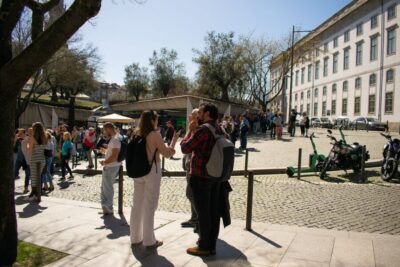
The meeting point, Largo do Chafariz de Dentro, puts you in Alfama, Lisbon’s oldest district. This is a useful place to begin because the neighborhood’s narrow streets and old buildings show how history is layered into ordinary city life.
You will not spend the whole tour looking at famous monuments from the outside and moving on. The guide uses streets, building features, past uses of important structures, and public spaces to explain how Lisbon was connected to slavery. Some details may be visible in a name or architectural feature. Others come through the story attached to a place.
That approach gives the walk its purpose. You are not simply hearing that Portugal played a role in the Atlantic slave trade. You are learning how that role appeared in the capital, how wealth was created and displayed, and how the lives of enslaved people were part of the city’s daily life.
The meeting square is also practical. Since the route begins in Alfama, you can combine the experience with time in the district before or after the walk. The tour itself is not a hotel pickup excursion, so you must make your own way to the square.
More Walking Tours in Lisbon
- Lisbon: History, Stories and Lifestyle Walking Tour
★ 4.8 · 10,902 reviews - Best of Lisbon Small-Group Guided Walking Tour
★ 5.0 · 4,869 reviews - Lisbon: Food and Wine Small Group Walking Tour
★ 4.9 · 4,082 reviews
The story begins before the Atlantic trade
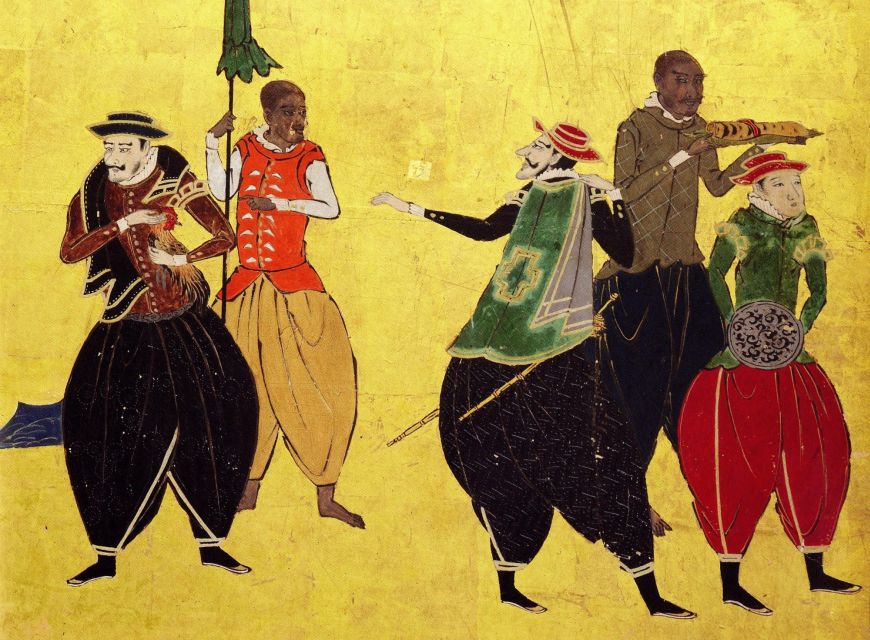
The tour sets Portugal’s role in context rather than treating the Atlantic slave trade as an isolated event. You learn about the earlier history of slavery in the Iberian Peninsula, then move toward the changes that took place in the first half of the 15th century.
Under the guidance of Prince Henry the Navigator, Portugal began the process now known as the Atlantic slave trade. Over roughly four centuries, between 12 and 14 million Africans were sold into slavery and transported across the ocean to the Americas. The scale is difficult to grasp as a number alone, so tying it to Lisbon’s streets gives the subject a human and physical setting.
The walk also places the trade within the Age of Discovery. That phrase can sound polished and harmless when it is used without context. Here, you examine the economic and political systems behind Portuguese expansion, including the human cost of the wealth that followed.
Rui’s background in history, political science, and economics suits this part of the walk. You are not given only dates and names. The discussion also covers power, money, religion, law, and the institutions that allowed slavery to continue.
Lisbon’s monuments and the lives behind them
The route moves through back streets and main avenues, with stops at monuments, churches, and public squares connected to this past. The exact sequence can vary, but the method is consistent: look at a place, then ask what happened there, who benefited, and who was forced to live within that system.
One useful feature is the attention to daily life. The tour addresses what it meant to be an enslaved person living in historical Lisbon, rather than focusing only on kings, explorers, merchants, and government decisions. That shift is important. It keeps the subject from becoming a story about Portuguese achievement alone.
You may also use the walk to rethink some of the city’s most attractive areas. Lisbon’s beauty and prosperity are real, but they did not appear without a cost. The tour explains how trading in human lives helped support Portugal’s economic development and how that past shaped the city you see today.
The guide sometimes uses relevant pictures to help explain key points. That can be especially useful when a building has changed function or when an older scene is difficult to picture from the modern street.
Brazil, Africa, and the wider Portuguese system

Lisbon was one part of a much larger network. The discussion includes Brazil’s importance, Portuguese colonies in Africa, and the way trade across the Atlantic linked European, African, and American economies.
Brazil receives particular attention because of its role in Portugal’s colonial system. The tour helps you connect events in Lisbon with developments far beyond Portugal. That wider frame prevents the history from being reduced to a local story about a few streets.
You also learn about Portugal’s abolition of the slave trade and the later struggle for liberation by African nationalists. These subjects bring the walk into the modern period and show that colonial rule did not end when the Atlantic slave trade was abolished.
The result is a long timeline, from the origins of slavery in Iberia through the Atlantic trade, colonial rule, abolition, and liberation movements. You should come ready to listen. Three hours gives the guide time to make connections, but it also means this is not a quick orientation walk.
More history walks in Lisbon:
- Lisbon: Live Fado Show with Port Wine in Historic Center
★ 4.7 · 4,166 reviews - Lisbon: Fado Show with Wine in a Historic Venue
★ 4.8 · 1,294 reviews - Explore Lisbon by Tuk Tuk: History and Viewpoints
★ 5.0 · 840 reviews - Lisbon: Daytime or Sunset Boat Cruise with History and Wine
★ 4.9 · 819 reviews
A guide who welcomes questions
Rui Fernandes is central to the experience. His delivery is described as clear and even-paced, and he makes time for questions during the walk. That matters here because the topic raises moral, political, and personal questions that a fixed script cannot always answer.
He also brings his own connection to African history and, at times, links the subject to family history. That personal context does not replace research. It adds another perspective to the facts and helps keep the discussion connected to people rather than abstract figures.
The guide’s approach is patient and inclusive. If someone in your group has ancestors affected by slavery, the subject may feel especially personal. The walk is designed to handle that weight with care while still addressing Portugal’s responsibility directly.
Rui also offers advice about Lisbon beyond the tour. You can ask about public transportation, places to visit in other parts of the city, food, shops, and nearby recommendations. That is a useful bonus, particularly if you take the walk early in your stay and use his suggestions to shape the rest of your visit.
The pace, break, and physical effort
The walk lasts about three hours, though some accounts place it closer to three and a half. A coffee break and one restroom stop are included. The break is more than a convenience: it gives you time to absorb the first half of the discussion before continuing.
The stop may include a café and a pastel de nata, though this is not listed as a guaranteed included food item. Treat it as a pause rather than a promised tasting. The practical point is that you do not need to remain on your feet without interruption for the full route.
The pace is generally relaxed. The route is described as mostly flat or made up of places with only mild inclines, which makes it suitable for a broad range of ages. Still, Lisbon’s streets can be uneven, and comfortable shoes are specifically recommended.
This is not a tour for pets. Hotel pickup and drop-off are not included, so allow time to reach Largo do Chafariz de Dentro and to continue to your next stop after the walk.
Why the small group changes the experience
The tour is marketed as a small-group experience, with the information giving both six and eight as the maximum size. That inconsistency is worth checking when you book, but either limit is far more personal than a large coach tour.
A small group is especially useful for this subject. You can ask about a specific building, clarify a point about Brazil or Africa, or discuss how Portugal remembers this history today without trying to speak over dozens of people.
The guide can also adjust the pace. On a hot day, the group may seek shade, and the walk can pause when a question opens an important line of discussion. The tradeoff is that the tour may feel slower than a standard sightseeing circuit. That is a benefit if you want context, but less so if your priority is covering many attractions quickly.
What the $35 price really buys you
At about $35 per person, this is reasonably priced for a three-hour guided walk, especially with a small group and a specialist subject. You are paying for interpretation, not entry tickets or transport. The value depends on how much you want to understand Lisbon beyond its postcard views.
The tour can also save you time later. Once you understand the historical links between Portugal, Africa, Brazil, and the Atlantic trade, churches, squares, monuments, and old buildings become easier to place in context. That is a lasting benefit that a basic city orientation may not provide.
The price does not include hotel transportation, meals, or a formal printed map. One useful improvement would be a take-home map showing the stops and their significance. You may want to make notes during the tour if you hope to retrace the route afterward.
Who should book this Lisbon history walk
I would choose this tour if you have a serious interest in Portugal, colonial history, African history, economics, or the Atlantic slave trade. It also suits anyone who wants to understand why Lisbon’s prosperity cannot be separated from the trade in human beings.
It is a good choice for visitors who have already seen the major sights and now want a more focused way to read the city. It can also work early in a stay, since Rui offers suggestions for transportation, food, shopping, and other places to visit.
Families with older children and teenagers may find the walk useful if they can stay focused for three hours. The subject is not light entertainment, and younger children may not have the background or patience for the full discussion.
You should skip it if you want a quick tour with constant photo stops, little talking, or only celebratory stories about the Age of Discovery. This walk asks you to think about Portugal’s past and its effects on the present.
Should you book it?
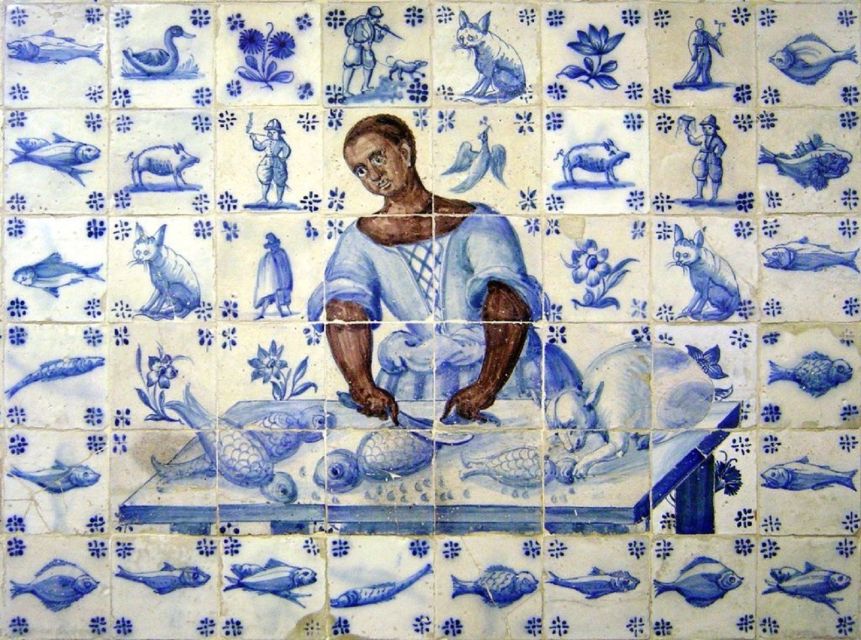
Yes, if you want a more honest understanding of Lisbon. The tour connects visible places with a history that is often left out of standard sightseeing, and Rui Fernandes brings patience, clear explanations, and strong command of the subject.
Book it early in your visit if you want local suggestions afterward, or choose a cooler part of the day if possible. Wear comfortable shoes, allow at least three hours, and expect difficult material presented with care. At $35, the small group and focused subject make this a strong value for history-minded visitors who want more than a pleasant walk through the city.
FAQ
Where does the Lisbon slave trade walking tour meet?
The tour meets at Largo do Chafariz de Dentro, a square in Lisbon’s Alfama district.
How long does the tour last?
The stated duration is three hours. Some tour details and experiences place it closer to three and a half hours, so allow extra time in your schedule.
What language is the tour conducted in?
The live tour is conducted in English.
Who leads the tour?
The guide is Rui Fernandes, an African guide with a background in history, political science, and economics. The experience is led by a licensed local guide.
What subjects does the tour cover?
It covers slavery in the Iberian Peninsula, the beginning of the Atlantic slave trade, the Age of Discovery, daily life for enslaved people in Lisbon, Brazil, abolition in Portugal, Portuguese colonies in Africa, and African nationalist liberation movements.
How large is the group?
The experience is described as a small-group tour. One detail gives a maximum of six participants, while another gives a maximum of eight, so confirm the exact group limit when booking.
Is a break included?
Yes. One coffee break and one restroom break are included during the tour.
What should I bring?
Bring comfortable shoes. The walking route is described as mostly flat or with only mild inclines.
Can I cancel the booking?
You can cancel up to 24 hours in advance for a full refund. The reserve-now, pay-later option lets you hold a place without paying immediately.
More 3-Hour Experiences in Lisbon
- Lisbon: 3-Hour Tour by E-Bike
★ 4.8 · 1,150 reviews - 3-Hour Lisbon 7 Hills Electric Bike Tour
★ 5.0 · 818 reviews - Lisbon: 3-Hour Segway Sailor Tour to Belém
★ 4.9 · 140 reviews - Lisbon: 3 Hour Private Segway Streets of Hills
★ 4.9 · 113 reviews
The newest listings around Lisbon
- The Real Lisbon Street Art Private Guided Tour by Minivan★ 4.8 · 49 reviews
- Lisbon: Historical Walking Tour with Jeronimos Monastery★ 4.5 · 71 reviews
- Lisbon: Port Wine Tasting at Taylor’s Shop and Tasting Room★ 4.6 · 490 reviews
- Lisbon: Tagus River Cruise With Brunch★ 3.2 · 73 reviews
- South Lisbon: 3-Hour Christ the King Electric Bike Tour★ 4.8 · 97 reviews
- Oeiras Coast: Stand Up Paddleboarding near Lisbon★ 4.9 · 56 reviews
- Small Group Walking Tour of Belém★ 4.9 · 80 reviews
- Lisbon: 3-Hour Secret Food Tour★ 4.7 · 53 reviews
Historical Tours, compared.
Historical Sites, Wine Experience, Lunch & Cruise
Read our review →
Live Fado Show with Port Wine in Historic Center
Read our review →

Browse the lists this tour appears in