
Reviewed · SURF LESSONS
Ribeira Grande, Azores: Group Surf Lessons
The best part of this São Miguel surf lesson is the careful progression from sand to sea. You begin with ocean safety, a warm-up, equipment practice, and the take-off before attempting small waves. Constantino, Pedro, and João are among the instructors praised for clear coaching and steady encouragement.
I like the small groups of up to six, which give you a real chance to receive personal pointers. I also like that the beach is chosen for the day’s conditions rather than fixed in advance. The trade-off is that you may not know your meeting point until the day before, and two hours of paddling, pushing up, and falling can leave you sore.
Key points
- Beginner-first teaching: Practice the take-off on sand before entering the water.
- Three possible beaches: Praia das Milícias, Praia de Monte Verde, or Areal de Santa Bárbara may be selected for suitable conditions.
- Small class size: No more than six participants, with instruction in English or Portuguese.
- All main gear included: Board, wetsuit, leash, licensed instructor, and insurance are covered.
- Useful first-session goal: Several beginners have stood and ridden waves during their first two hours.
- Plan for a workout: Bring water, a towel, spare clothes, beachwear, and biodegradable sunscreen.
Why a São Miguel surf lesson works for first-timers

Surfing looks simple from the beach. Lie on the board, catch a wave, stand up. The sea quickly shows you why a good first lesson matters. Timing, balance, board control, wave direction, and safety all arrive at once.
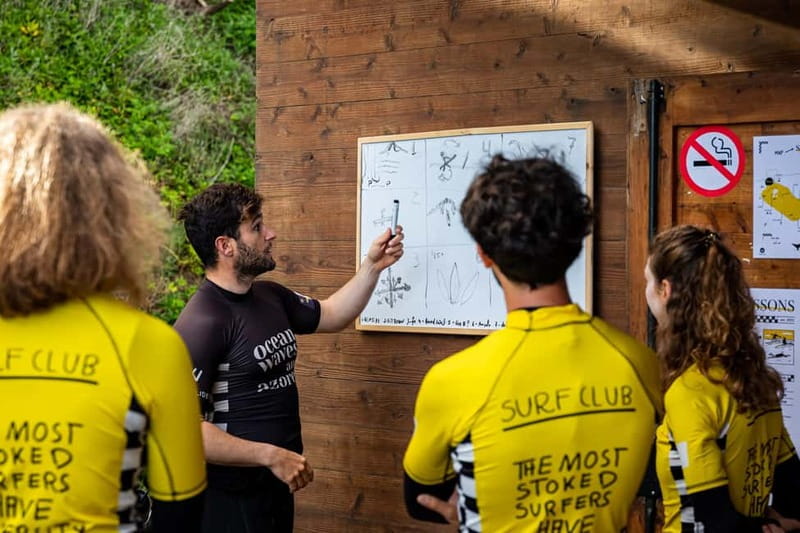
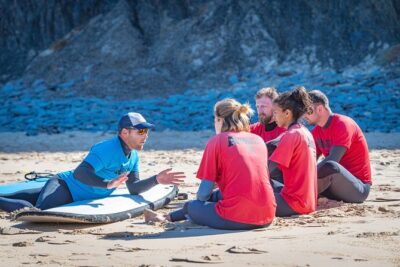
This class breaks the task into manageable pieces. You first learn how the ocean behaves and what to do around other people. Then you warm up, handle the board, and rehearse the movement needed to stand. Only after that do you try to catch white water.
That order is more important than it may sound. A first-time surfer who starts in the water without knowing how to position the board or protect the head can spend the session confused and tired. Here, the land practice gives you a simple routine to repeat when a wave approaches.
The class is aimed at beginners, but it can also suit you if you tried surfing once and never found your footing. The instruction is adjusted to different ability levels, so a stronger member of the group can work on paddling and positioning while a total beginner focuses on balance and timing.
The activity has a 4.9 rating from 198 bookings, and the strongest pattern is clear: people value the patient teaching, friendly tone, and safety briefing. That does not guarantee perfect waves or a stand-up ride for every person. It does suggest that the instruction is built around helping beginners make progress, not showing off for experienced surfers.
More Surf Lessons in Azores:
- Lisbon Surf Experience
★ 4.9 · 876 reviews - Matosinhos: Surfing Lesson with Equipment
★ 4.8 · 704 reviews - Albufeira: Surf Lesson
★ 4.7 · 699 reviews
The lesson begins with safety, movement, and board basics

Your two-hour session starts with an explanation of ocean knowledge and basic safety rules. You learn how to enter the water, manage the board, and approach the waves. This is the part many people are eager to rush through, but it sets the tone for the whole class.
The warm-up follows. Expect movement designed to loosen the body, improve flexibility, and reduce the chance of injury. Surfing uses more effort than a casual swim. You paddle, push your upper body up, twist, balance, and repeat the same movements many times.
You then get an overview of the surf equipment. The board, wetsuit, and leash are included, so you do not need to arrange the central gear yourself. Knowing what each item does helps you feel less awkward once you reach the water, especially when handling a board in waves.
The take-off is practiced on the sand. This is the key move: from lying on the board, you bring your feet underneath you and rise into a stable stance. It is not about looking graceful at first. It is about learning a repeatable sequence before the water adds speed and movement.
I like this teaching order because it gives you something concrete to remember. When the instructor pushes you into a small breaking wave, you are not inventing the movement from scratch. You are repeating the pattern you already practiced.
Choosing the beach for the day’s conditions
The lesson may take place at Praia das Milícias, Praia de Monte Verde, or Areal de Santa Bárbara. The choice is made according to the conditions best suited to the class, rather than promising one beach regardless of the weather.
That flexibility is a real advantage in the Azores. Ocean conditions can vary, and a location that works well for beginners one day may not be the right choice the next. A calmer, more manageable beach gives you a better chance to focus on technique instead of simply trying to stay upright.
The exact meeting point arrives one day before the lesson by WhatsApp message, email, or phone call. It may be at the Watergliders school and shop on the north side of the island or at Milícias Beach on the south side, depending on conditions and arrangements.
This is the main planning wrinkle. If you are organizing a full day around São Miguel, keep the morning or afternoon flexible until you receive the message. Check your phone and email the day before, and do not assume that a beach shown in a search result is the final location.
The beaches also give you the scenic part of the experience. Once you are out on the water, you get a different view of the island than you would from a road, lookout, or walking path. The sea becomes your viewpoint, even while you are concentrating on the next wave.
From the shoreline to your first white-water wave

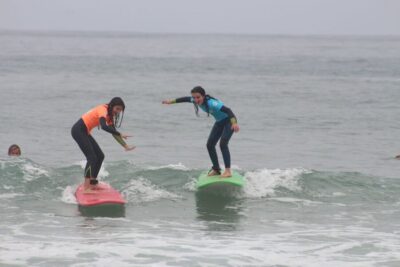
After the sand practice, the class moves into the water. The first goal is not a dramatic ride across an unbroken wave. You work in white water, the foamy water left after a wave breaks. This is a sensible place for a beginner to learn because it offers a more predictable push.
You practice entering the water with the board and controlling it as the waves arrive. The leash helps keep the board connected to you, but you still need to handle it properly and listen closely to the instructor’s directions.
Next comes paddling. You learn how to move the board and prepare for a wave. Then the instructor helps you try to catch the white water, often giving timing instructions from nearby. Each attempt teaches something, even when you miss the take-off.
The coaching seems especially active during this stage. Constantino is repeatedly praised for staying involved and offering specific tips. Pedro is singled out for adapting his help to different bodies and ability levels. João is also noted for explaining the basics clearly. The point is not the name of one star instructor. It is that you can expect hands-on guidance rather than a quick briefing followed by being left alone.
Some people may stand during the first lesson. Several beginners have managed to stand and ride multiple waves within two hours, including first-timers who arrived nervous about the process. Others may only kneel, balance, or catch waves lying down. That is still useful progress.
Do not measure the session only by the number of times you stand. You are learning ocean timing and board control, and those skills often take longer than one afternoon. The instructors can give you other ways to improve when standing does not happen right away.
A few more Azores options worth putting side by side
- From Ponta Delgada: Whale and Dolphin Watching Trip
★ 4.7 · 4,109 reviews - Azores Whale Watching & Islet Boat Tour
★ 4.6 · 2,146 reviews - São Miguel West: Full-Day Van Tour with Lunch
★ 4.9 · 1,948 reviews - São Miguel West Full Day Tour with Setes Cidades Including Lunch
★ 5.0 · 1,391 reviews
What the small group size means in practice
The group is limited to six participants. That is small enough for an instructor to notice how each person is moving and offer corrections. It also means you are not simply one person in a large line waiting for a turn.
The class still has a group rhythm. You listen together, practice together, and share the beach with other surfers. The benefit is that you can watch other beginners attempt the same steps. That can make the process feel less intimidating and help you spot what the instructor means.
The instruction is available in English and Portuguese. The teaching style is described as relaxed, cheerful, and encouraging, but the safety rules are treated seriously. Instructors congratulate progress and keep morale up, which matters after a few failed attempts.
This is a physical activity, not a sightseeing stop with a quick photo opportunity. One participant described aching for days afterward and suggested wearing a wetsuit to protect against sun and scrapes around the knees. The wetsuit is supplied, but you still need to bring suitable beachwear underneath.
If your group includes people at very different fitness levels, the session may feel uneven. Stronger participants may catch on quickly, while others need more time. The instructor’s ability to adjust the coaching helps, but everyone should expect some waiting and repeated practice.
The gear, clothing, and small things that matter

The $53 price includes a surfboard, wetsuit, leash, licensed instructor, and insurance. For a first lesson, that is a useful package. You do not need to buy or pack a board, and the insurance adds a practical layer of reassurance for an activity in moving water.
Bring a towel, water, a change of clothes, beachwear, and biodegradable sunscreen. The sunscreen matters both for your own comfort and for the marine setting. Apply it before the lesson, and remember that you can still burn on a cloudy day.
A wetsuit helps with more than water comfort. It can provide a little padding when you kneel or fall, though it is not protection against every scrape or bruise. Wear clothing that is comfortable under it and easy to change out of afterward.
The optional pick-up and drop-off service costs 15 euros per person. If you already have a rental car or are staying close to the confirmed meeting point, you may prefer to make your own way there. If you would rather avoid sorting out transport, the extra charge may be reasonable, but it raises the total cost beyond the advertised lesson price.
There is also an optional regional food experience after surfing for about 20 euros. This can turn the lesson into a fuller half-day, but it is not part of the core surf session. If your priority is learning to surf, treat it as an add-on rather than a reason to choose the activity.
Is $53 good value for two hours?

At $53 per person, the lesson is not the cheapest way to spend two hours at the beach. You are paying for instruction, equipment, insurance, and a class planned around suitable conditions. For a first attempt, that removes several obstacles at once.
The strongest value comes from the instructor access. A board rental alone would not teach you how to read the white water, position yourself, or stand safely. A small class gives you a better chance of receiving useful corrections before fatigue sets in.
The price also protects you from buying equipment for a sport you may try only once. If you catch a few waves and decide surfing is not for you, you can walk away without a board, wetsuit, or leash taking up space in your luggage.
Your value calculation should include the extra costs. Transport is 15 euros per person, and food afterward is about 20 euros. Neither is required, but both can change the final budget. The meeting point may also be north or south of the island, so factor in driving time and fuel if you arrange your own transport.
For someone keen to try surfing in São Miguel, I consider the base price fair. It is particularly sensible if you want a guided first session rather than a rental with little support.
Who should book this class, and who should skip it
This experience suits adults and teenagers aged 13 and over who can swim, enjoy physical activity, and want a structured first introduction to surfing. It also works for friends, couples, and families with older children who want an active break from inland sightseeing.
You do not need prior surfing experience. The class starts from the beginning, and the sand rehearsal gives you a clear first step. If you have already surfed, you may still appreciate the coaching, but an advanced surfer could find the pace basic.
The activity is not suitable for children under 13, pregnant women, people with back problems, wheelchair users, or people over 60. The ability to swim is required, even though one participant with limited swimming ability felt comfortable under close instruction. Follow the stated swimming requirement rather than relying on an individual exception.
You should also avoid alcohol and drugs before the lesson. Surfing demands attention, balance, and sensible reactions around moving water.
Practical timing and cancellation advice
The session lasts two hours, but allow extra time for changing, receiving the location message, and getting to the beach. The exact start time depends on availability, so check the booking calendar before building the rest of your day.
Book early if your São Miguel schedule is tight, but keep an eye on the weather and your own energy. You can cancel up to 24 hours ahead for a full refund, and you can reserve now and pay later. That flexibility helps if your island plans may change.
Once the meeting point is confirmed, plan around it. If you are sent to Milícias Beach, do not assume the Watergliders shop is the place to report. If the message is unclear, contact the provider before setting off.
My call: book it if you want a real first try

I would book this class if surfing is on your São Miguel wish list and you want patient instruction rather than a quick equipment handoff. The small group, safety-first structure, and beach choice based on conditions give beginners a sensible start.
I would skip it if you dislike strenuous activities, need a fully fixed schedule, or are hoping for a guaranteed long ride on your first attempt. The sea decides how much you can do, and two hours can be tiring.
For the best chance of enjoying it, keep your expectations modest: learn the safety rules, catch some white water, and treat standing up as a bonus. Bring water, sunscreen, and spare clothes. Check the day-before message carefully. If you do those things, this is one of the more active and memorable ways to see São Miguel from the water.
FAQ
Where does the surf lesson take place?
The class may be held at Praia das Milícias, Praia de Monte Verde, or Areal de Santa Bárbara. The beach is chosen according to the most favorable conditions for beginners.
When will I know the exact meeting point?
You will be told the exact location one day before the lesson by WhatsApp message, email, or phone call. The meeting point may also be the Watergliders school and shop on the north side of the island.
Is previous surfing experience required?
No. The lesson is designed for beginners and first-time surfers. You need the ability to swim, and the instructor guides you through the process.
What equipment is included?
The price includes a surfboard, wetsuit, leash, a licensed instructor, and insurance.
What should I bring?
Bring beachwear, a towel, water, a change of clothes, and biodegradable sunscreen.
How many people are in each group?
The group is limited to six participants. Instruction is offered in English and Portuguese.
Can I cancel or pay later?
You can cancel up to 24 hours in advance for a full refund. You can also reserve your place and pay later, keeping your plans flexible.
The newest listings around Azores
- Full-Day Private Tour of Faial★ 5.0 · 40 reviews
- Faial Island: Half Day Tour★ 5.0 · 99 reviews
- Faial Island: Full Day Tour – Nature and Local Culture★ 5.0 · 213 reviews
- Wines and Moonshines of Terceira★ 5.0 · 55 reviews
- UNDERGROUNDTOUR (Full Day Private Tour)★ 5.0 · 52 reviews
- PHOTO TOUR (Full Day Private Tour- Sunrise to sunset)★ 5.0 · 68 reviews
- Terceira Island: Full Day Tour★ 5.0 · 63 reviews
- Private Terceira Island Full Day Tour★ 5.0 · 250 reviews
Surf Lessons, compared.


Beginner Surf Lesson at the Beautiful Algarvian West Coast
Read our review →Browse the lists this tour appears in