
Reviewed · DOLPHIN WATCHING
Horta: University Startup Whale and Dolphin RIB Boat Trip
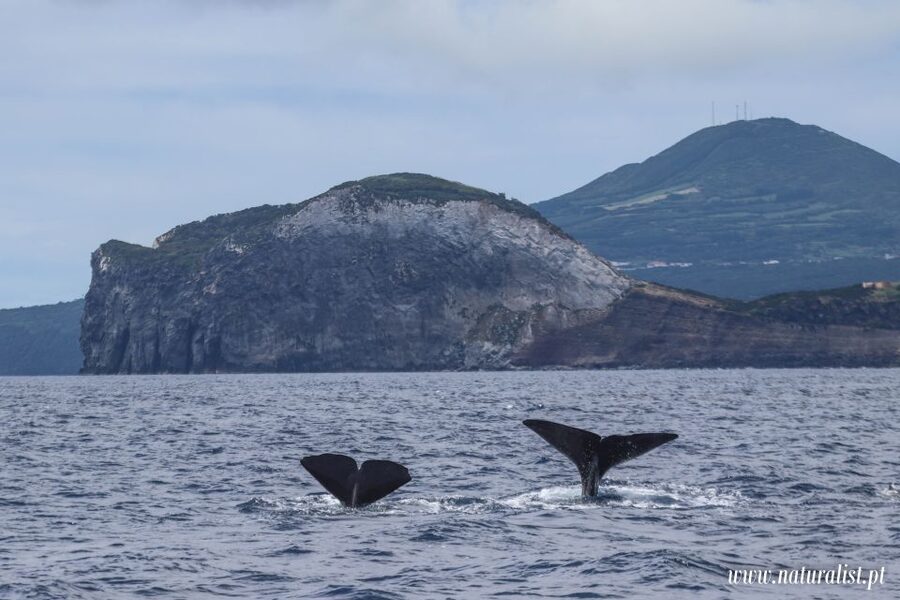
The big draw here is the chance to watch whales with a university marine researcher beside you, not simply a boat driver pointing at distant blows. From Horta, you head into the waters around Faial and Pico in a fast, open RIB, looking for sperm whales, dolphins, turtles, seabirds, and whatever else the Atlantic offers that day.
I especially like two things: the crew uses land-based whale spotters to help locate animals, and the trip supports marine research through the onboard biologist. The waterproof gear is another welcome touch. The catch is simple: this is wild nature, not a zoo, so you may see several whale species and hundreds of dolphins, or you may have a quieter outing.
Key points to know
- University researchers ride onboard: You get current information about animal behavior and help support ongoing marine research.
- Sperm whales are possible year-round: Blue, fin, humpback, sei, and Bryde’s whales appear at different times of year.
- The 16-passenger RIB feels fast and close to the water: That makes wildlife viewing exciting, but rough seas can make the ride bumpy.
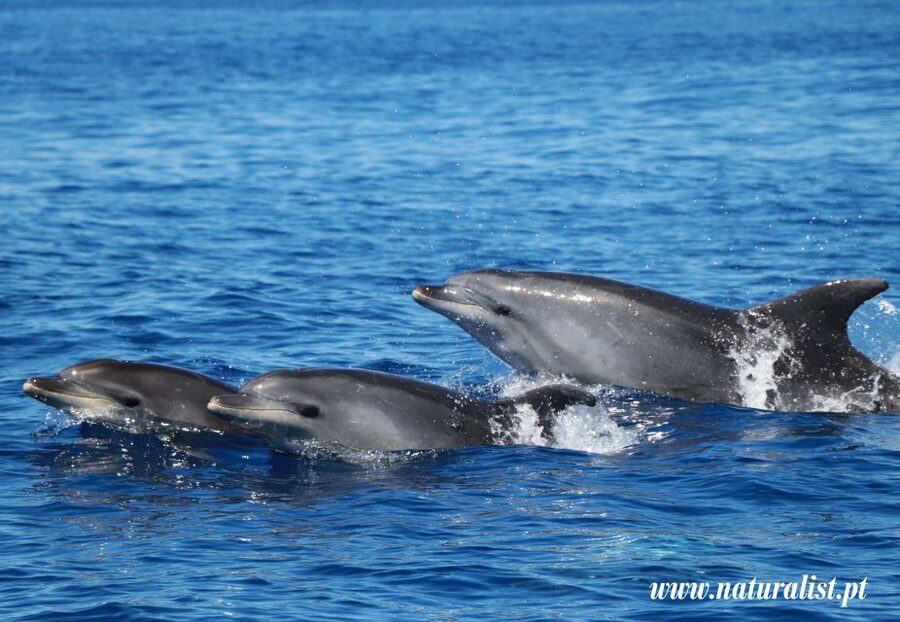
- Dolphins and seabirds add variety: Bottlenose, Risso’s, and common dolphins are resident, while shearwaters and terns often add action overhead.
- The boat may be wet: Waterproof jacket and trousers are supplied, but wear shoes that can handle spray or dry quickly.
- Sightings are never guaranteed: The crew can search carefully and respectfully, but no operator controls the Atlantic.
A research-minded whale trip from Horta Marina
Naturalist Science and Tourism operates this three-hour excursion from Horta, on Faial in the Azores. You meet at the company’s whale-watching base in the marina, arriving 15 minutes before departure. Morning trips leave at 9:00 a.m., and afternoon trips leave at 2:00 p.m.
The outing uses a semi-rigid inflatable boat carrying up to 16 passengers. That is a small enough group for the marine researcher to speak with you directly, while the RIB gives you a low, open view of the sea. You are not sitting behind glass or several rows back from the action.
The experience has a clear scientific purpose. A marine researcher or biologist from the University of Lisbon and the University of the Azores travels with the group, sharing current information and collecting data. Anna and Cristiana are among the biologists who have guided recent trips, and their role goes well beyond naming a whale. You learn about feeding, surfacing, social behavior, identification, and the care needed when approaching marine animals.
The official languages are English and Portuguese. Spanish trips are also described as available, while French needs to be requested ahead of time and depends on staff availability. Confirm the language you need when booking.
More Boat Tours in the Azores
- Azores Whale Watching & Islet Boat Tour
★ 4.6 · 2,146 reviews - Azores Whale Watching & Islet Boat Tour
★ 4.5 · 1,059 reviews - São Miguel: Glass Bottom Boat Tour with Snorkeling
★ 4.7 · 633 reviews
The ten-minute briefing before you leave
The first formal part of the outing is a safety briefing of about 10 minutes. This is when you receive basic instructions for the RIB, learn how to move around safely, and get an introduction to the day’s plan.
You also receive waterproof clothing. That usually means a jacket and trousers, a practical benefit when the boat picks up speed or spray blows across the bow. Bring footwear that is waterproof or dries quickly. The supplied clothing protects your main layers, but your shoes can still get wet.
The boat’s open design is part of the appeal. It gives you a broad view and makes the ride feel lively, but it also means the ocean’s motion reaches you directly. One recent spring outing had turbulent conditions during the ride, while other trips found calmer water. If you are prone to motion sickness, think carefully about the RIB format and the weather forecast.
Searching for whales between Faial and Pico
The crew does not simply motor out and hope for the best. On land, whale spotters scan the sea and communicate information that helps the boat find animals. This old-fashioned partnership between shore observers and boat crew matters in the Azores, where the search area is large and the animals move constantly.
The route is not a fixed sightseeing circuit. The captain adjusts the trip according to sea conditions, reports from the spotters, and the movement of the animals. That flexibility is good for wildlife viewing, though it means you cannot expect a precise route or a guaranteed whale encounter at a particular time.
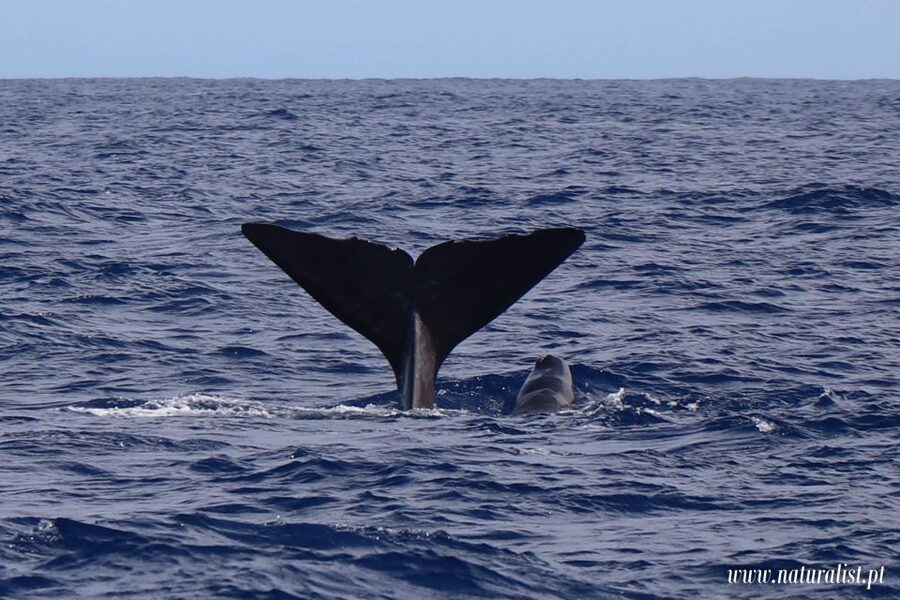
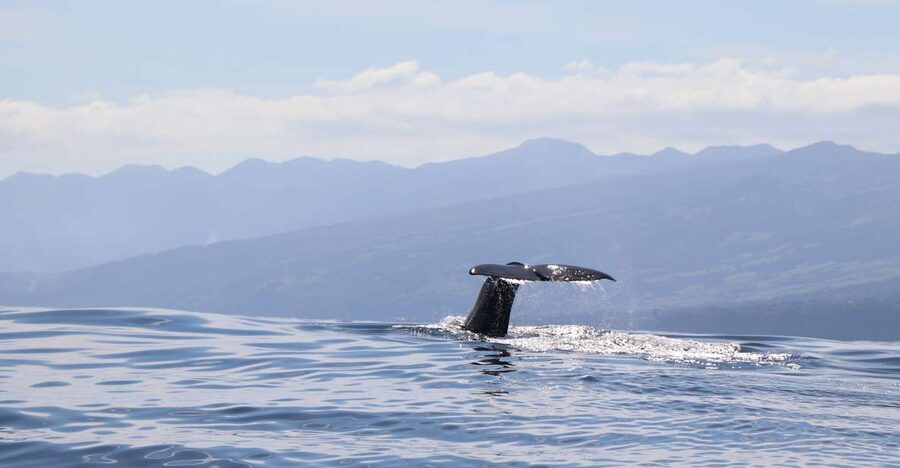
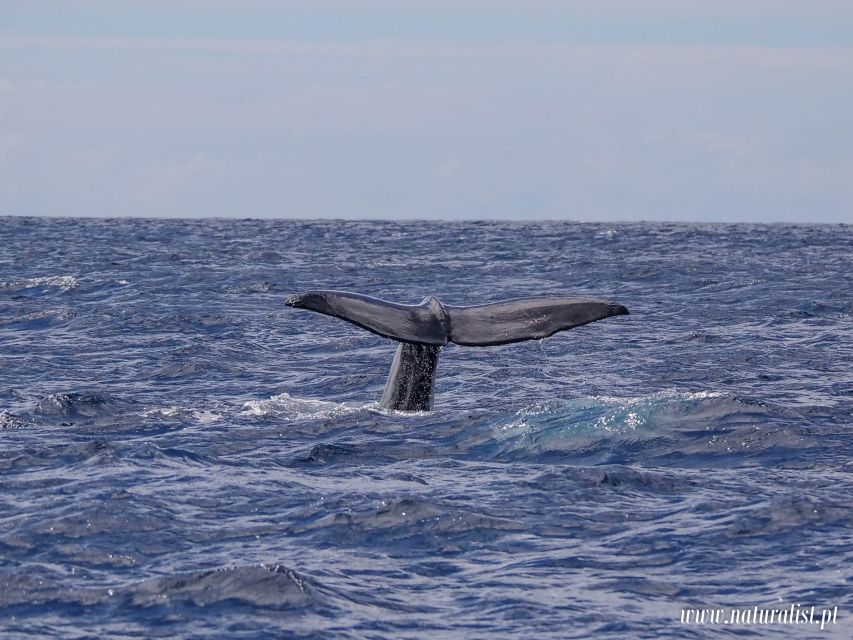
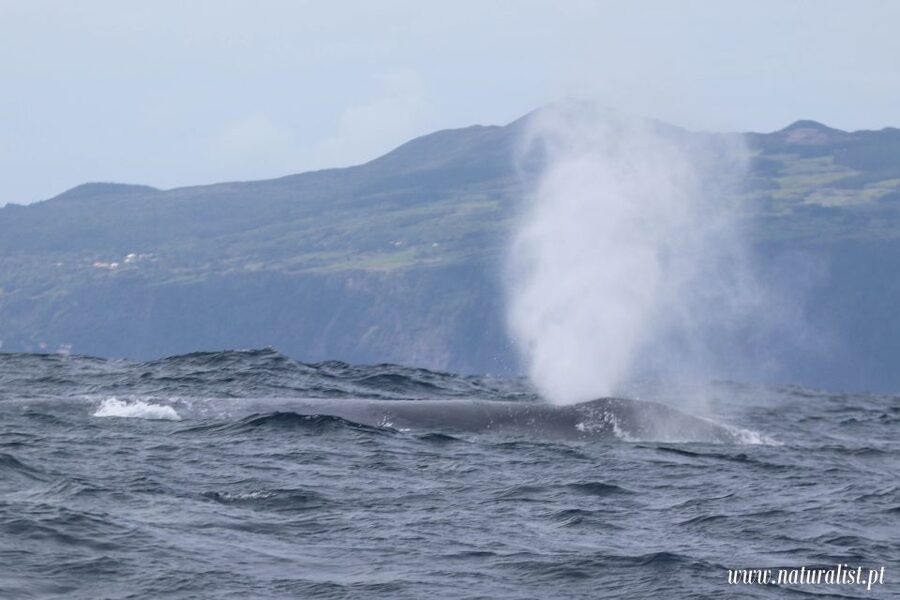
Sperm whales are the main year-round possibility. The Azores are also visited by blue and fin whales in spring, while humpback and sei whales are migratory. Bryde’s whales can appear in summer, and sightings have included sperm, sei, humpback, Bryde’s, and fin whales at different times.
The normal target is two or three cetacean species on a trip, but nature can be generous. One autumn outing produced three whale species, dozens of dolphins, tuna, and shearwaters. Another included sperm, sei, and humpback whales, hundreds of dolphins, and large numbers of seabirds feeding in the same area.
That range is what makes the trip worth considering. You are not paying only for a chance to see one named animal. You are entering a productive Atlantic environment where the cast can change by season and even by hour.
What whale watching looks like from the RIB
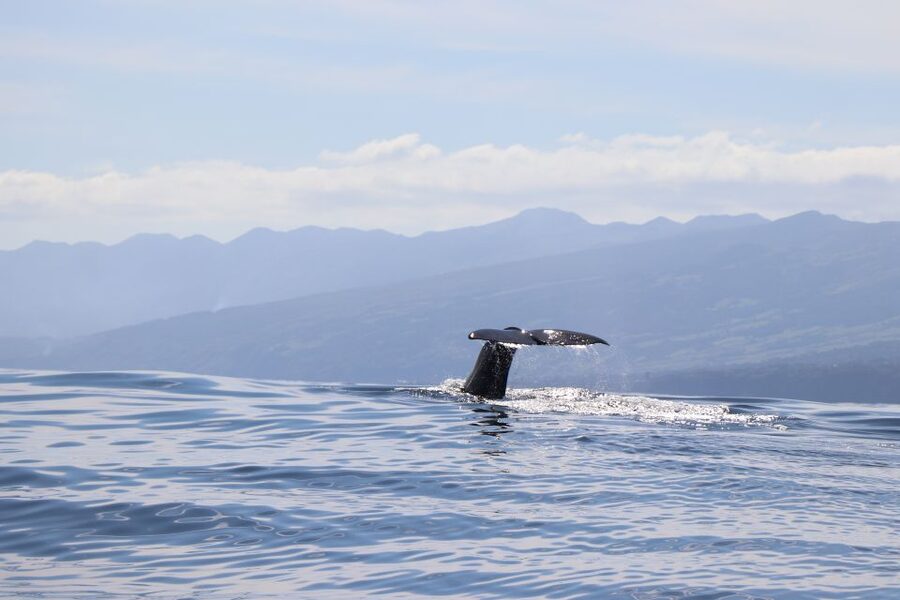
The wildlife viewing portion includes whale watching, dolphin watching, scenic views, and stops or slow periods for photographs. The actual time spent watching animals depends on where they are and how long they remain near the boat.
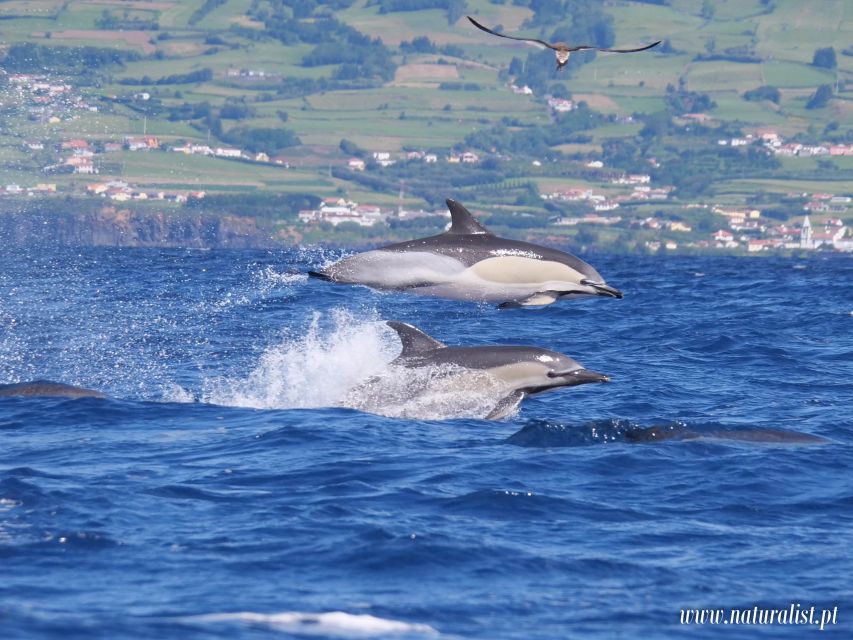
A good encounter may involve a whale surfacing, breathing several times, and then disappearing before the captain repositions the boat. Dolphins can be more active, sometimes traveling in groups near the boat and moving through the waves. The RIB’s low position gives you a strong sense of speed and proximity, but you need to keep your eyes moving. A whale may appear behind you or several boat lengths away.
The crew’s approach is intended to respect the animals. Captains have been praised for moving carefully and keeping a suitable distance, even while trying to place the boat where you can see. That balance matters. The best wildlife outings do not turn an animal into a prop for a photograph.
Bring patience. A quiet stretch is not wasted time. The biologist can explain how to identify a distant blow, why a whale surfaces in a certain pattern, or how dolphin species differ. When an animal finally appears, you have more context for what you are seeing.
More Dolphin Watching in the Azores
- From Ponta Delgada: Whale and Dolphin Watching Trip
★ 4.7 · 4,109 reviews - Pico Island: Azores Whale & Dolphin Watching on Zodiac Boat
★ 4.8 · 408 reviews - Terceira: Whale and Dolphin Watching in a Zodiac Boat
★ 4.8 · 230 reviews - São Miguel: Wild Swimming with Dolphins
★ 4.7 · 222 reviews
Dolphins, turtles, sharks, and the smaller surprises
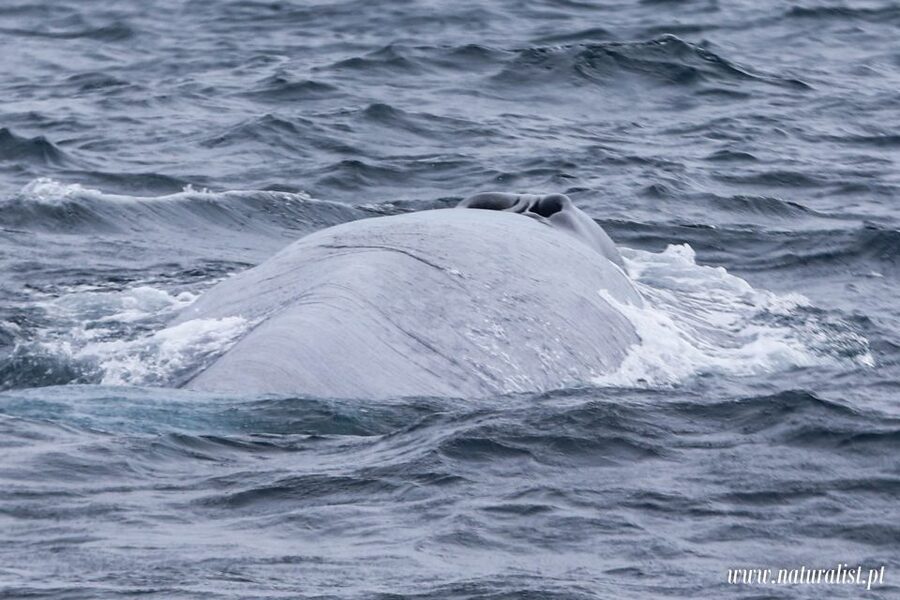
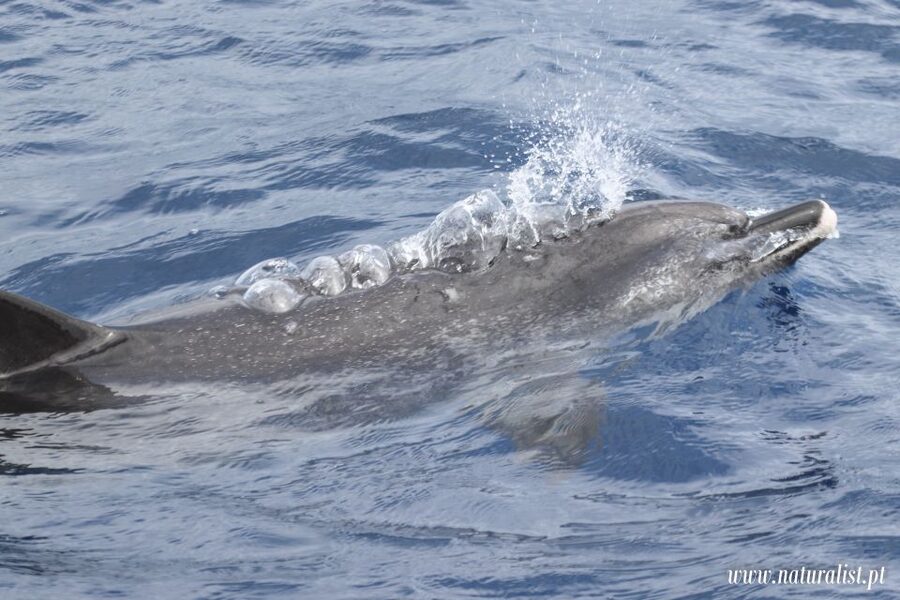
Dolphins are among the most likely highlights. Bottlenose, Risso’s, and common dolphins live in the region, and several migratory species can also pass through. The crew may find a small group, a large pod, or dolphins feeding alongside whales.
Turtles are another possible bonus. Loggerhead and green turtles live in the Azores, while leatherback and Kemp’s ridley turtles can also occur. A past trip produced two loggerheads, a reminder that the ocean can add something unexpected between whale sightings.
You might also see flying fish, squid, octopus, sunfish, tuna, hammerhead sharks, or blue sharks. The wording here matters: these animals can appear, but none should be treated as a promise. The same is true of birdlife.
Cory’s, great, and Manx shearwaters are among the seabirds associated with the region. Common and roseate terns may also pass through. Birds can help reveal where fish are schooling, and a feeding scene may bring together whales, dolphins, tuna, and shearwaters. That kind of mixed wildlife activity can be as memorable as a single large whale.
Why the biologist changes the experience
A standard boat trip can give you a sighting and a photograph. Here, the researcher helps you understand what happens before, during, and after that sighting.
You may learn how sperm whales use the waters around the Azores, how resident dolphins differ from migratory visitors, or how researchers record species and behavior. The information is tied to what is happening in front of you, so it feels useful rather than like a lecture delivered apart from the trip.
The guides also answer the practical questions you tend to have at sea. How far away is that whale? Is the animal feeding or simply traveling? Why did the captain turn the boat? What makes one dolphin a Risso’s dolphin rather than a bottlenose dolphin?
The research link gives the trip extra value. Part of the money supports research work, and the boat is not just selling a fast ride. If you care about marine conservation, this is a meaningful reason to choose this operator over a trip focused only on speed and spectacle.
Some excursions also provide photographs afterward. This has happened when a biologist or guide photographed the animals during the trip, with selected images shared at no extra cost. Treat that as a useful possibility rather than a guaranteed package feature.
Sea conditions, comfort, and who should skip it
The RIB is exciting in calm water and demanding in rough water. You may bounce over waves, especially near the front, and spray can reach you even in waterproof clothing. One passenger compared the high-speed ride to a theme-park attraction, while another noted that the sea was quite turbulent during a spring trip.
That contrast tells you what to expect. The boat is not a gentle harbor cruise. If you have severe back problems, are pregnant, have had recent surgery, or have a child under five, this activity is not suitable. The operator also advises against it for people with significant back issues.
Children aged five and above are not automatically guaranteed a comfortable ride. Consider the child’s tolerance for wind, noise, spray, and a long period seated in a moving boat. If you are unsure, ask the operator before booking.
Food and drinks are not included. Pack what you need before meeting at the marina, but keep it practical and secure. A small bottle of water and a snack can be sensible for three hours at sea. There is no hotel pickup, so you need to make your own way to the marina.
Is $101 a fair price for three hours?
At $101 per person, this is not the cheapest way to spend a morning in Horta. The value comes from the small boat, the marine researcher, the shore-based spotting system, the supplied waterproof clothing, and the chance to support research rather than simply paying for transport.
The price makes more sense if you care about explanation as much as sightings. You get a guided wildlife experience with current scientific context, not just a captain pointing toward a blow. The included safety insurance and clothing also reduce the number of extras you need to arrange.
Still, you should judge the price against your expectations. It does not buy a guaranteed whale, a calm sea, or a particular species. One outing did not produce a whale sighting, even though the overall rating for the activity is 4.9 from 225 reviews. That is an important reminder that the price pays for a serious search in the animals’ environment.
Free cancellation up to 24 hours before departure and the option to reserve now and pay later give you some planning flexibility. Weather can force a change. When that happens, trips may be rescheduled, and a cancellation caused by conditions comes with a full refund. One storm-related change was handled by moving the outing to another date and even arranging a departure from Pico.
How to make the most of your three hours
Arrive at 8:45 a.m. for the morning departure or 1:45 p.m. for the afternoon departure. The extra time avoids a rushed check-in and gives you a chance to locate the correct marina office.
Wear quick-drying clothes beneath the supplied waterproof layers. Keep your phone or camera protected, and do not assume the front seat is best. The bow can give you a clear view, but it also takes the most spray and movement.
Listen carefully during the briefing, then ask the biologist questions throughout the outing. The scientific side is one of the strongest reasons to choose this trip, so do not treat it as background noise while waiting for a whale.
Keep your eyes on the full waterline. Dolphins may appear close to the boat, while a whale could surface farther away. Look for birds, floating debris, and changes in the sea that may signal feeding activity.
Finally, allow room in your schedule for weather changes. The trip depends on Atlantic conditions, and a flexible booking is especially useful if your time in the Azores is limited.
Should you book the Naturalist RIB trip?
Book it if you want a serious wildlife outing with a marine researcher onboard, a small group, and a crew that treats animal encounters with care. It suits adults, older children, photographers, birdwatchers, and anyone who wants to understand the Azores marine world rather than simply collect a whale photograph.
You may want a different activity if you need a smooth ride, guaranteed sightings, or a sheltered boat. The RIB can be wet and rough, and the wildlife is never scheduled.
For most visitors who can handle three hours on an open boat, the mix of science, searching, and real uncertainty is the point. Choose a season that fits the species you hope to see, keep your schedule flexible, and let the Atlantic decide what appears.
FAQ
Where does the whale-watching trip depart from?
The meeting point is Naturalist Science and Tourism Whale Watching at the marina in Horta, Faial. You should arrive 15 minutes before departure.
How long does the experience last?
The expedition takes about three hours. Morning departures are at 9:00 a.m., and afternoon departures are at 2:00 p.m., subject to availability.
What languages are available?
The regular tour languages are English and Portuguese. Spanish is also listed for the expeditions, while French must be requested in advance and depends on availability.
What is included in the price?
The trip includes a marine researcher from the university, waterproof clothing, safety insurance, and a briefing about the tour and marine animals. Food, drinks, and hotel pickup are not included.
Is the boat suitable for everyone?
No. The activity is not suitable for children under five, pregnant women, people with back problems, or people who have had recent surgery. The semi-rigid boat can be bumpy, especially in rough conditions.
Can I cancel or change the booking?
You can cancel up to 24 hours before departure for a full refund. Trips depend on weather conditions and may be rescheduled. If the operator cancels because of conditions, a full refund is available.
More Whale Watching in the Azores
- São Miguel Azores: Half-Day Whale Watching Trip
★ 4.5 · 983 reviews - Azores Whale Watching Tour – Ponta Delgada
★ 4.5 · 740 reviews - Pico Island: Whale Watching Experience from Lajes
★ 4.9 · 492 reviews - Terceira: Half-Day Dolphin and Whale Watching Tour
★ 4.6 · 219 reviews
The newest listings around Azores
- Full-Day Private Tour of Faial★ 5.0 · 40 reviews
- Faial Island: Half Day Tour★ 5.0 · 99 reviews
- Faial Island: Full Day Tour – Nature and Local Culture★ 5.0 · 213 reviews
- Wines and Moonshines of Terceira★ 5.0 · 55 reviews
- UNDERGROUNDTOUR (Full Day Private Tour)★ 5.0 · 52 reviews
- PHOTO TOUR (Full Day Private Tour- Sunrise to sunset)★ 5.0 · 68 reviews
- Terceira Island: Full Day Tour★ 5.0 · 63 reviews
- Private Terceira Island Full Day Tour★ 5.0 · 250 reviews
Dolphin Watching, compared.
Benagil Caves & Dolphin Watching Speed Boat Tour
Read our review →
Dolphins Search and Benagil Caves from Albufeira
Read our review →
Benagil Caves & Dolphins Watching with Biologist
Read our review →Browse the lists this tour appears in