
Reviewed · BRAGA TOURS
Best of Braga and Guimaraes Day Trip from Porto
Northern Portugal packs a lot of story into two small cities. In Braga, you’ll climb the grand setting of Bom Jesus and visit Portugal’s first cathedral. In Guimarães, you’ll walk through the birthplace of the nation, where a castle, a tiny Romanesque church, and a beautifully preserved old town bring medieval Portugal close.
I like the mix of guided visits and free time, which lets you learn the essential story without spending every minute in a group. I also like the comfortable air-conditioned minibus, especially on a warm day or when rain makes the long ride back to Porto less appealing.
The main drawback is the schedule. Nine hours is a full day, and a bilingual tour may mean explanations take longer or feel less detailed. Heavy rain can also make the walking portions less enjoyable, so bring a coat and sensible shoes.
Key points to know before booking

- Bom Jesus has more than a church: Its famous staircase, symbolic fountains, and water-powered funicular make it one of Braga’s most memorable sights.
- Braga Cathedral reaches back before Portugal: It was consecrated in 1089, decades before Portugal became an independent kingdom.
- Guimarães connects directly to Portugal’s origin story: Afonso Henriques, the first king of Portugal, was born here.
- The old town is the real reward in Guimarães: Granite balconies, iron verandas, arches, and narrow lanes create a finely preserved medieval setting.
- Lunch is not included: You receive free time to eat and explore, so budget separately for your meal.
- Check the language arrangement: Tours are usually in one language, but English and Spanish may be combined.
Why this day trip works from Porto

Braga and Guimarães are close enough to visit from Porto, but public transport and local sightseeing can take more planning than the map suggests. This tour handles the driving and connects the major sights in one day.
You meet at 7:50 a.m. near S. Bento Train Station, at Calçada de Vandoma. From there, the guide introduces Portugal’s history, development, and cultural traditions during the drive north. That road time matters: you get context before arriving instead of trying to understand each monument from a plaque.
The vehicle is an air-conditioned minibus, with a maximum group size of 27. That is small enough for a more personal guide experience than a large coach, though it is not a private tour. Some tours also use two languages, so ask about the language setup if detailed English commentary is important to you.
The day lasts about nine hours and returns to the same meeting point. With an early start and a likely arrival around late afternoon, you still have the evening in Porto. The tradeoff is simple: you cover two cities efficiently, but you will not have time to explore either one at a slow, local pace.
More Day Trips in Braga:
- From Porto: Braga and Guimarães Full-Day Trip
★ 4.6 · 3,951 reviews - From Porto: Braga and Guimarães Full-Day Trip with Lunch
★ 4.9 · 54 reviews - From Porto: Wonders of Braga & Guimaraes Private Day Trip
★ 4.3 · 46 reviews
Bom Jesus and the water-powered funicular
Braga’s Bom Jesus do Monte is the day’s most dramatic opening. The sanctuary sits above a long ceremonial staircase, and the view from below is essential. Look up before climbing: the white church at the top, granite landings, fountains, and statues form a carefully planned composition.
The staircase has 17 landings. Its decoration follows religious themes, including the Stations of the Cross, the Five Senses, the Virtues, Moses receiving the Commandments, and biblical figures connected with Jesus’s condemnation. Even if you are not visiting for religious reasons, the arrangement gives the site an unusual blend of faith, art, and engineering.
The funicular adds another layer. Installed in 1882, it was the first of its kind in Portugal and still uses water power to move along its 300-meter route in about three minutes. That is a wonderfully concrete piece of local technology, not just another old transport system.
You have about 30 minutes here, with entrance to the sanctuary included. That is enough to take in the main view and hear the story, but it may feel short if you want to climb every section of the staircase or linger inside. Wear shoes with a good grip, especially after rain. The stone can be slippery, and the site involves slopes and steps.
Braga Cathedral and a useful city break
The next stop is Sé de Braga, the city’s cathedral and one of Portugal’s oldest major churches. Construction began at the end of the 11th century, and the cathedral was consecrated in 1089. That date gives you a sense of its age: the building predates the formal founding of Portugal.
The cathedral’s story is tied to the early ruling family. Dom Henrique and Dona Teresa, the parents of Portugal’s first king, are buried in the Chapel of Kings. Your guide can help connect the building to the political and religious power of medieval Braga, which once competed in influence with Santiago de Compostela.
Admission is included, and the scheduled visit lasts about 30 minutes. That is enough for a focused introduction, but not a long architectural study. If you enjoy historic churches, you may wish you had extra time for the details. Still, the short visit works well within a day that must also include Guimarães.
After the cathedral, you receive about an hour of free time in Braga. This is one of the tour’s best choices. You can find lunch, walk the central streets, browse shops, or simply sit down after the morning’s sightseeing.
Lunch is not included, so this is where you control your spending. An hour gives you room for a quick meal and a little wandering, but not an elaborate restaurant experience. If food is a priority, ask the guide for a practical recommendation and keep an eye on the meeting time.
Guimarães and the beginning of Portugal

The drive from Braga to Guimarães is short, and the historical focus shifts. Guimarães is widely linked with the birth of Portugal because Afonso Henriques, who became the country’s first king, was born here.
That connection is more than a slogan. The castle, the small church beside it, and the old town all sit within the story of the early Portuguese kingdom. A guide adds real value here because the stones alone do not explain how a regional stronghold became part of a national origin story.
You receive roughly two hours in Guimarães, including the castle, São Miguel do Castelo, and the historic centre. The timing is fairly generous for the main sights, but it is not enough to explore every lane or museum at leisure. If you want to shop, eat, and study the monuments, you will need to divide your time carefully.
A few more Braga options worth putting side by side
- Waterfall, Lagoon and Old Village in Peneda-Gerês National Park
★ 5.0 · 1,132 reviews - From Porto: Peneda-Gerês National Park Tour with Lunch
★ 4.9 · 886 reviews - Small Group Geres National Park Full Day with picnic from Porto
★ 5.0 · 846 reviews - Porto: Guimarães & Braga Tour with Entry Tickets and Lunch
★ 4.8 · 602 reviews
Guimarães Castle: history with limited access

Guimarães Castle is the most direct link to the city’s early military past. The first fortification on the site was ordered around 968 by Mumadona, Countess of Galicia, to protect local people from attacks by Vikings and Muslim forces. Later, Count Henry ordered a larger and stronger construction, helping create the defensive complex you see today.
The castle’s square keep and four corner towers give it a strong outline. Tradition also links the building near the northern wall with Count Henry’s residence and the birthplace of Afonso Henriques, though that point is not firmly documented.
Admission is included, and the scheduled visit lasts about 30 minutes. Set your expectations correctly: access inside the castle is limited, and access to the walls is currently prohibited. You will still get the setting, the major exterior structure, and the early national story, but this is not a full castle walk with unrestricted rampart views.
That limitation matters if you are booking mainly for castle interiors or panoramic wall views. The site can feel spare, and some of its appeal comes from what it represents rather than from furnished rooms or elaborate displays. I would treat it as an important historical stop, not the day’s richest visual attraction.
São Miguel do Castelo and the city walls

Next comes Igreja de São Miguel do Castelo, a tiny Romanesque church built in the 13th century, with tradition placing its construction in the 12th century. Local tradition also says that Afonso Henriques was baptized here.
The church is plain and compact, with little decoration. Beneath its floor are said to be the graves of warriors from the period when Portugal was taking shape. You have about ten minutes, so this is a brief stop rather than a full church visit.
Its value lies in the connection between modest buildings and major events. The church does not overwhelm you with decoration. Instead, it gives a quiet counterpoint to the castle nearby. Listen closely to the guide here, since the historical explanation matters more than the size of the building.
Guimarães old town, the day’s most atmospheric walk

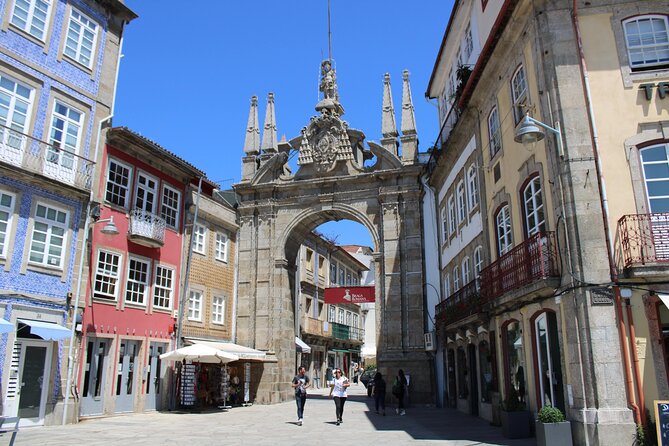
The historic centre is where Guimarães becomes more than a list of national monuments. The area inside the old city walls has been carefully preserved, with narrow paved streets, granite balconies, iron verandas, towers, cloisters, and arches joining buildings across the lanes.
You may pass old houses and palaces such as the Mota Prego house, Vila Flor Palace, and Toural Palace. The architecture does not feel frozen into a museum display. It remains a town centre with shops, cafés, and daily movement, which makes the walk more engaging than a single isolated monument.
The guided walking tour lasts about 30 minutes, but your overall Guimarães time is longer. Use the extra minutes to look down side streets and notice the small details: worn paving, carved stone, balconies, and the way buildings fit tightly together.
This is also where the tour’s walking demand becomes clear. You will be on uneven paving and moving through sloped or narrow areas. The distance is manageable for most people, but comfortable shoes are a smart choice. Rain can change the experience quickly, so a waterproof layer is more useful than an umbrella in crowded lanes.
Guides, group size, and the bilingual question

The quality of the day depends heavily on the guide. Several guides associated with this experience receive especially strong praise for personal attention and storytelling, including Castro, Philip, Christian, José, Jorge Mendoza, and Pedro. Their styles vary, but the common strength is clear: the guide is expected to explain Portugal’s past during the drives and connect each stop to the wider story.
You may also have a separate driver. Carlos and Manuel are among the drivers singled out for smooth, reliable handling of the route. That division of duties helps the guide focus on the group rather than navigating traffic.
The maximum group size is 27. That is worth considering. A group of this size can move efficiently, but it will not have the intimacy of a private guide. Meeting points after free time also require attention. Listen for clear instructions and keep your watch handy.
The tour may operate in two languages, usually English and Spanish. This is stated in the tour conditions, but it can still surprise people who book an English departure. Bilingual guiding can make the day feel slower and reduce the amount of detail in each language. If you prefer a single-language experience, confirm the arrangement before booking.
Is $71.35 good value?
At $71.35 per person, this is a reasonable price for a nine-hour outing that includes transport, a professional guide, Bom Jesus, Braga Cathedral, Guimarães Castle, and the Guimarães walking tour. The price also saves you the work of arranging transport between two cities and coordinating several historic sites.
You still pay for lunch and personal purchases. Hotel pickup and drop-off are not included, so you must reach the meeting point near S. Bento Station on your own.
The value is strongest if you are staying in Porto for a limited time, want historical context, and prefer a structured day. It is weaker if you have already visited both cities, dislike group schedules, or want long museum visits and independent meals.
A free Porto walking tour is also available from the day after the experience, in English or Spanish, at 9:30 a.m. and 4:30 p.m. from the Living Tours agency on Rua Mouzinho da Silveira. That is a useful extra, but it should not be treated as part of the Braga and Guimarães day itself.
Who should book this day trip?
I would choose this tour if you want to see two important northern Portuguese cities without renting a car. It suits first-time visitors to Braga and Guimarães, history fans, couples, families, and solo visitors who want an organized day with some breathing room.
It is also a good match if you like a balance of walking, riding, and free time. The schedule gives you guided explanations, a lunch break, and independent exploration rather than keeping you in a group every minute.
I would think twice if your main goal is a slow food day, extensive shopping, or detailed interior access at Guimarães Castle. I would also check the weather forecast. The tour runs in rain, and heavy rain can make the walking portions uncomfortable.
Should you book it?
Book it if you want an efficient introduction to Braga and Guimarães, especially while based in Porto. Bom Jesus and the old town of Guimarães are the strongest visual stops, while the cathedral and castle provide the historical framework.
Before paying, confirm the meeting point, language arrangement, and current castle access. Bring lunch money, water, a rain layer, and shoes suited to stone streets and stairs. If you accept the full-day pace and possible bilingual commentary, the tour offers solid value and a useful first look at northern Portugal.
FAQ
Where does the tour begin?
It begins at Calçada de Vandoma near S. Bento Train Station in Porto.
What time does the tour start?
The scheduled start time is 7:50 a.m.
Where does the tour end?
The activity ends back at the original meeting point in Porto.
How long does the experience last?
The tour lasts approximately nine hours, though timing can change because of traffic and local visiting schedules.
Is hotel pickup included?
No. Hotel pickup and drop-off are not included, so you need to reach the meeting point yourself.
Is lunch included?
No. You receive free time for lunch in Braga, but the meal and personal expenses are your responsibility.
What is included in the price?
The price includes air-conditioned minibus transport, a professional guide, admission to Braga Cathedral, admission to Guimarães Castle, entrance to Bom Jesus Sanctuary, and a guided walk in Guimarães.
Is the tour offered in English?
Yes, English is offered. Tours are usually conducted in one language, but a second language may sometimes be used.
How large can the group be?
The maximum group size is 27 people.
Can I cancel for a full refund?
Yes, you can cancel for a full refund if you do so at least 24 hours before the local start time. Changes or cancellations made less than 24 hours before departure are not accepted for a refund.
The newest listings around Braga
- Peneda-Gerês Hiking & Sightseeing: Private Experience★ 5.0 · 67 reviews
- Water Canyoning★ 5.0 · 47 reviews
- Private Culture and Wine Tourism Tour★ 5.0 · 43 reviews
- KAYAK TOUR: Descend the Beautiful Lima River★ 5.0 · 82 reviews
- Full-Day Braga & Guimarães Guided Semi-Private Tour with Lunch from Porto★ 5.0 · 43 reviews
- Ponte de Lima Guided Buggy Tour★ 5.0 · 68 reviews
- Canyoning Tour★ 5.0 · 230 reviews
- 3 Wonderful Waterfalls in a Day★ 5.0 · 84 reviews
Braga Tours, compared.


Waterfall, Lagoon and Old Village in Peneda-Gerês National Park
Read our review →

Small Group Geres National Park Full Day with picnic from Porto
Read our review →
Guimarães & Braga Tour with Entry Tickets and Lunch
Read our review →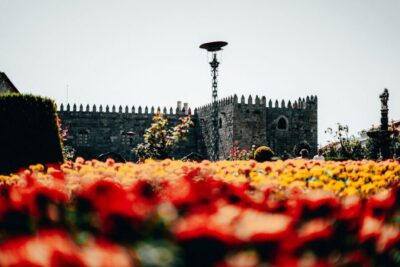

Braga & Guimarães Small Group Tour: Lunch & All Tickets Included
Read our review →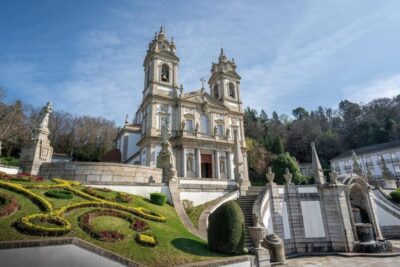
Browse the lists this tour appears in