

Reviewed · WHALE WATCHING
Azores Whale Watching Tour – Ponta Delgada
The real draw here is the wild Atlantic search. You leave Ponta Delgada with marine biologists, not a fixed sightseeing script, and follow recent sightings along São Miguel’s southern coast. One day may bring hundreds of dolphins; another may bring a sperm whale, sei whale, humpback, or no whale at all.
I like the choice between a thrilling rigid inflatable boat and a more settled catamaran, and I like the clear refund promise if you see neither a whale nor a dolphin. The main catch is the sea itself: wind, spray, and sharp turns are part of the outing, and the speedboat can be rough enough to trouble anyone prone to seasickness.
Key points at a glance
- A real wildlife search: The route changes with recent whale and dolphin activity rather than following a set coastal circuit.
- Two very different boats: Pick the close-to-the-water speedboat or the roomier catamaran with a covered cabin and toilet.
- Whale or dolphin guarantee: If you see neither, you receive a full refund.
- Marine biologists on board: The briefing covers species, safety, and local conservation work.
- Allow up to three hours: Much of the time may go toward reaching offshore wildlife, especially when animals are far from Ponta Delgada.
- Weather matters: Poor conditions can cancel the trip, and children may not be allowed on a small boat if the sea is rough.
Leaving Marina Pêro de Teive in Ponta Delgada
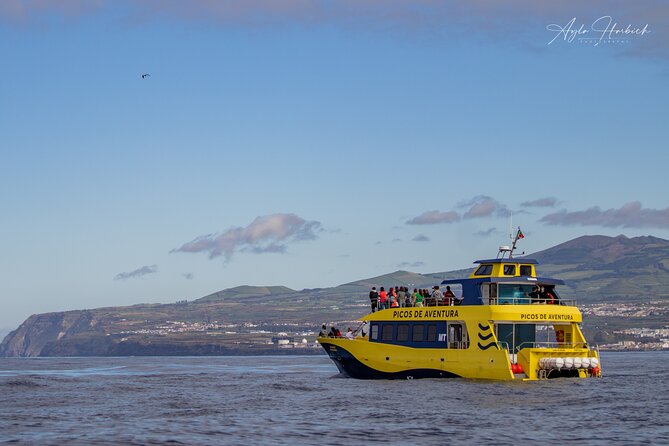
You start at the Picos de Aventura office in Marina Pêro de Teive, on Avenida João Bosco Mota Amaral. Arrive 15 to 20 minutes before departure. That gives you time to check in, collect your raincoat and life vest, and listen to the safety instructions without rushing.
The meeting point is in central Ponta Delgada and close to public transportation. There is no hotel pickup or drop-off, so plan to reach the marina on your own. The activity ends at the same place, which makes it easy to fit into a day based in the city.
The first 15 to 20 minutes are useful rather than ceremonial. The marine biologists explain how the boat operates, what species live around the Azores, and how the company approaches wildlife protection. You also learn what sort of ride to expect, an important point when the Atlantic is unsettled.
The exact route is not fixed. The crew uses several observation areas along the southern coast and adjusts the plan according to recent sightings. That flexibility improves your odds, but it also means you cannot predict where you will go or how long the outward run will take.
More Whale Watching in the Azores
- From Ponta Delgada: Whale and Dolphin Watching Trip
★ 4.7 · 4,109 reviews - Azores Whale Watching & Islet Boat Tour
★ 4.6 · 2,146 reviews - Azores Whale Watching & Islet Boat Tour
★ 4.5 · 1,059 reviews
Choosing between the speedboat and catamaran
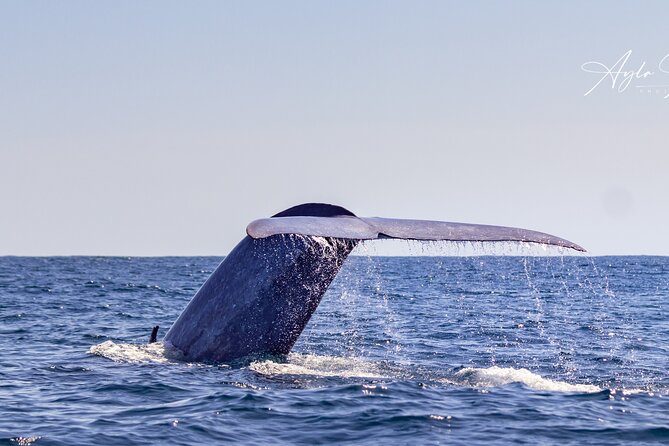
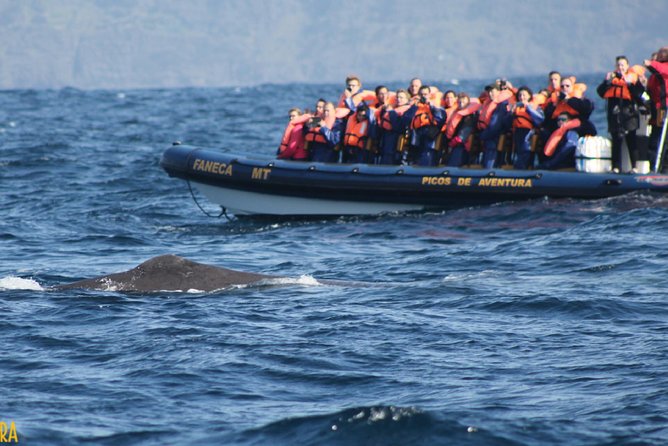
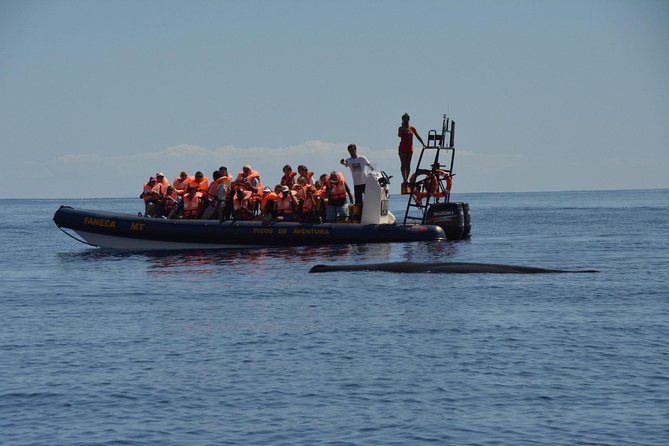
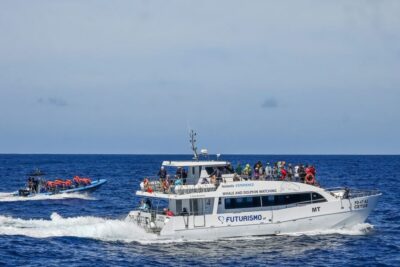
The rigid inflatable speedboat gives you the most energetic version of the trip. You sit close to the water, move quickly between sighting areas, and feel every change in the sea. It is a good match if you want excitement and a direct view of dolphins at water level.
It is also the boat that demands the most preparation. Wind and spray can leave you wet, even when the rain is not falling. Several outings have involved choppy water, hard turns, or a rough ride several miles offshore. Take the supplied raincoat, not only for rain but also as a windbreaker, and leave unnecessary bags in the available lockers.
If you get seasick, bring suitable medication or choose the catamaran. The speedboat is not a gentle platform for people who struggle on moving water. You may spend part of the ride gripping the rail instead of watching the sea.
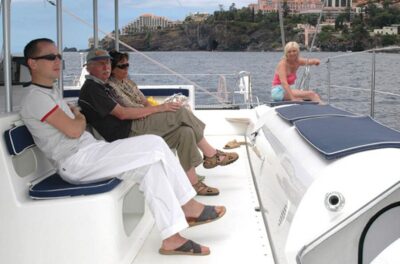
The catamaran is the calmer choice. It offers more room, a covered cabin, an open-air upper deck, and a toilet. You can move around, find a position with a better view, and get some shelter when the wind picks up.
The catamaran is especially practical for families with small children, although children must always be accompanied by an adult. It is not wave-proof, of course, but the larger platform softens the ride and makes long periods offshore easier. A catamaran outing can still feel like a proper wildlife trip, not a compromise. Dolphins can be seen well from the boat, including from the front of the lower deck.
The booking information does not promise a specific boat for every departure, so confirm the available option when arranging your trip. The two boats create noticeably different experiences, and this choice matters more than a small difference in departure time.
Spending two to three hours searching the Atlantic
Once the boat clears the marina, your job becomes simple: scan the water, listen to the guide, and stay ready. The crew watches for blows, fins, splashes, and changes in bird or dolphin activity. When wildlife appears, the boat slows and the biologists help identify what you are seeing.
The sea time can last from two to three hours. That range is not a sign of poor planning. Wildlife does not keep to a timetable, and the crew may need to travel farther before finding active animals. A large part of the outing can go toward reaching the right area, especially when dolphins or whales are offshore.
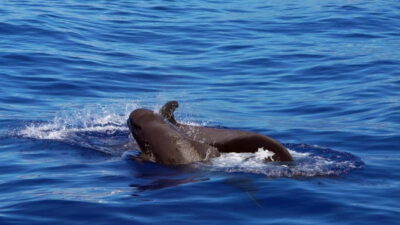
The payoff can be spectacular. The waters around the Azores support more than 20 kinds of cetaceans. You might see spotted dolphins or bottlenose dolphins close to the boat, and you could encounter common dolphins, pilot whales, sperm whales, humpback whales, sei whales, Bryde’s whales, or other baleen species.
Some species are easier to spot than others. Dolphins often travel in groups and may approach the boat, giving you repeated chances to watch them surface and move together. A whale can be a single distant blow followed by a long wait, so patience matters. Even a brief sighting may be memorable, but you should not expect a guaranteed close-up photograph.
The crew’s role adds value here. A good guide turns a distant fin into a useful lesson about behavior, size, and species. The strongest outings combine excitement with clear explanations about the animals and the Azores marine environment. The company also stresses giving wildlife room, an important part of a responsible encounter.
What you may see, and what the guarantee really means
The guarantee is specific: you receive a full refund if you see no whales and no dolphins. It does not promise both, and it does not promise a whale. A trip with several dolphin species but no whale meets the stated guarantee.
That distinction matters because the name of the activity can set an overly narrow expectation. Some departures produce dolphins for 20 minutes and no whales. Others bring several dolphin species, a sperm whale, a sei whale, or even humpbacks and right whales. Nature decides the mix.
There is no simple whale season that makes every departure identical. The Azores have a migratory period when more species pass through, while other months can still produce strong sightings. Summer outings may regularly find large whales, but a whale-free day remains possible. If whales are your only goal, accept that risk before booking.
I would treat the dolphin guarantee as the practical safety net, not as a promise of a particular show. Dolphins are often the more reliable sighting, while whales require more time, luck, and favorable conditions. The best attitude is to value the search itself and see a whale as an extra prize.
Same base, a completely different sort of day:
- São Miguel West: Full-Day Van Tour with Lunch
★ 4.9 · 1,948 reviews - São Miguel West Full Day Tour with Setes Cidades Including Lunch
★ 5.0 · 1,391 reviews - São Miguel East Van Tour with Lunch: Furnas & Nordeste
★ 5.0 · 1,210 reviews - São Miguel East: Full-Day Van Tour with Lunch
★ 4.9 · 1,124 reviews
Why the marine biologist briefing matters

The guides do more than point at animals. Before departure, they explain local species, basic safety, and conservation efforts. On the water, they help you identify what appears and answer questions about the animals and the region.
That information is especially helpful when a whale surfaces far away. Without guidance, you may see only a dark shape or a blow. With a trained eye beside you, you learn to watch for the shape of the dorsal fin, the timing of the surfacing pattern, or the difference between a dolphin species.
The quality of commentary can vary with the crew and the day. Most outings described here include strong, enthusiastic explanations, but at least one experience fell short on education. If learning is important to you, ask questions during the briefing and after returning to the marina. The crew is available for follow-up questions once the boat is back.
The conservation message is not decoration. The operators emphasize animal welfare and keep their distance from whales and dolphins. That restraint may mean you do not get the closest possible photograph, but it is the right trade for a wildlife outing.
Weather, sea conditions, and what to pack
This is an Atlantic boat trip, not a calm harbor cruise. Even a promising forecast can bring wind or chop once the boat reaches open water. One departure may be comfortable on the way out and blustery on the return.
Wear warm layers and use the raincoat supplied by the operator. The coat helps block spray and wind, even in dry weather. Bring water and a snack if you need them, since food and drinks are not included.
A phone or camera is useful, but protect it. On the speedboat, spray can reach you, and a rough ride makes handling expensive equipment awkward. Use the lockers for purses and items you do not need on deck.
If you are sensitive to motion, choose the catamaran if possible and consider your usual seasickness precautions. The catamaran has more shelter and a toilet, while the speedboat offers more thrill but less comfort. Weather can also affect children’s participation on the smaller boat, so families should ask about the conditions before departure.
Poor weather may cancel the trip. In that case, you can accept a new date or request a full refund. The operator may also cancel if the minimum number of participants is not met, with the same general choice of another date, another activity, or a refund.
How much value you get for $78.60
At $78.60 per person, this is not the cheapest way to spend a morning in Ponta Delgada. It is a fair price if you want a serious wildlife outing with marine specialists, safety equipment, a choice of boats, and up to three hours at sea.
The value depends heavily on what you expect. If you want a guaranteed whale close enough for a perfect photograph, no price can remove the uncertainty. If you want expert help finding wild animals in their natural setting, the cost includes more than a boat ride.
The refund promise also reduces the financial risk of a completely empty outing. You still need to accept the possibility of seeing dolphins but no whales, and you should not mistake the guarantee for a promise of rare species.
The tour is popular and is often booked about 23 days ahead. That lead time is worth noting if your dates are fixed or if you want a particular boat. A morning or afternoon departure gives you some flexibility, but weather and wildlife conditions may matter more than the clock.
Who will enjoy this Ponta Delgada tour most?

I would recommend this outing to families with older children, couples, solo visitors, and anyone who wants a guided introduction to Azores marine life. The catamaran is the sensible option for families with small children or anyone who values space, shelter, and a toilet.
The speedboat suits you if you want a lively ride and do not mind getting wet. It is also a good choice if being close to the water matters more than comfort. Just be honest about seasickness before choosing it.
This is less suitable for someone who dislikes open water, needs a completely calm ride, or has only one narrow chance to see a particular whale species. The schedule can shift with weather, and the wildlife may be far from shore.
The tour is offered in English, and the guide may be multilingual. Most people can participate, but the sea can limit children’s access to the smaller boat. Ask about the planned vessel and conditions if mobility, balance, or motion sickness is a concern.
Booking, cancellations, and the smart way to plan
You can cancel for a full refund up to 24 hours before the start time. Changes or cancellations inside that window are not accepted for a refund, so leave room in your schedule if possible.
I would book this early, especially during the busier months, then avoid placing an important flight or fixed appointment immediately afterward. A two to three hour activity can run toward the longer end, and weather may force a change of date.
Keep the next day or another flexible time available if seeing whales matters to you. If the first outing is canceled for poor weather, a rebooking option is more useful when your itinerary has breathing room.
Should you book the Azores Whale Watching Tour?
Book it if you want a well-organized wildlife search, enjoy learning from marine biologists, and can accept that nature controls the result. The best reasons are the changing route, the two boat choices, the strong chance of dolphins, and the possibility of several whale species in one outing.
Choose the catamaran if comfort, family practicality, or seasickness is your concern. Choose the speedboat if you want a faster, wetter, more physical ride. Either way, bring layers, prepare for waves, and judge success by the quality of the wild encounter, not by a guaranteed whale photograph.
FAQ
Where does the whale watching tour start?
It starts at Picos de Aventura in Marina Pêro de Teive, Avenida João Bosco Mota Amaral, Ponta Delgada. You should arrive 15 to 20 minutes before departure.
How long does the tour last?
The full boat experience lasts about two to three hours. The initial safety and wildlife briefing takes about 15 to 20 minutes before departure.
Are whale sightings guaranteed?
No specific whale species or whale sighting is guaranteed. You receive a full refund only if you see neither a whale nor a dolphin during the outing.
Which boats are available?
The operator uses either a rigid inflatable speedboat or a catamaran. The speedboat offers a close-to-the-water ride, while the catamaran has more space, a covered cabin, an open-air upper deck, and a toilet.
Is the tour suitable for children?
Children must be accompanied by an adult. Weather conditions may prevent children from joining the smaller boat, and the catamaran is described as the better option for families with small children.
What happens if bad weather cancels the tour?
You can choose another date or receive a full refund if poor weather causes cancellation. The same type of alternative or refund applies if the minimum number of participants is not reached.
The newest listings around Azores
- Full-Day Private Tour of Faial★ 5.0 · 40 reviews
- Faial Island: Half Day Tour★ 5.0 · 99 reviews
- Faial Island: Full Day Tour – Nature and Local Culture★ 5.0 · 213 reviews
- Wines and Moonshines of Terceira★ 5.0 · 55 reviews
- Terceira Island: Full Day Tour★ 5.0 · 63 reviews
- UNDERGROUNDTOUR (Full Day Private Tour)★ 5.0 · 52 reviews
- PHOTO TOUR (Full Day Private Tour- Sunrise to sunset)★ 5.0 · 68 reviews
- Private Terceira Island Full Day Tour★ 5.0 · 250 reviews
Whale Watching, compared.

Funchal Bay: Dolphin & Whale Watch Luxury Catamaran Cruise
Read our review →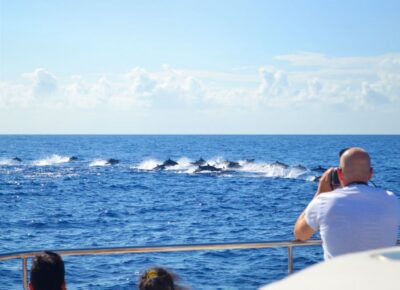
All Inclusive Whale and Dolphin Watching Luxury Tour
Read our review →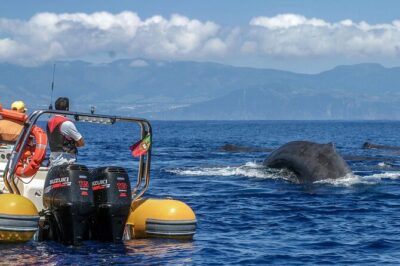
Madeira Dolphin and Whale Watching on a Ecological Catamaran
Read our review →
Dolphin and Whale Watching by Luxury Catamaran
Read our review →Browse the lists this tour appears in