
Reviewed · DOURO RIVER CRUISES
Porto: Six Bridges Cruise
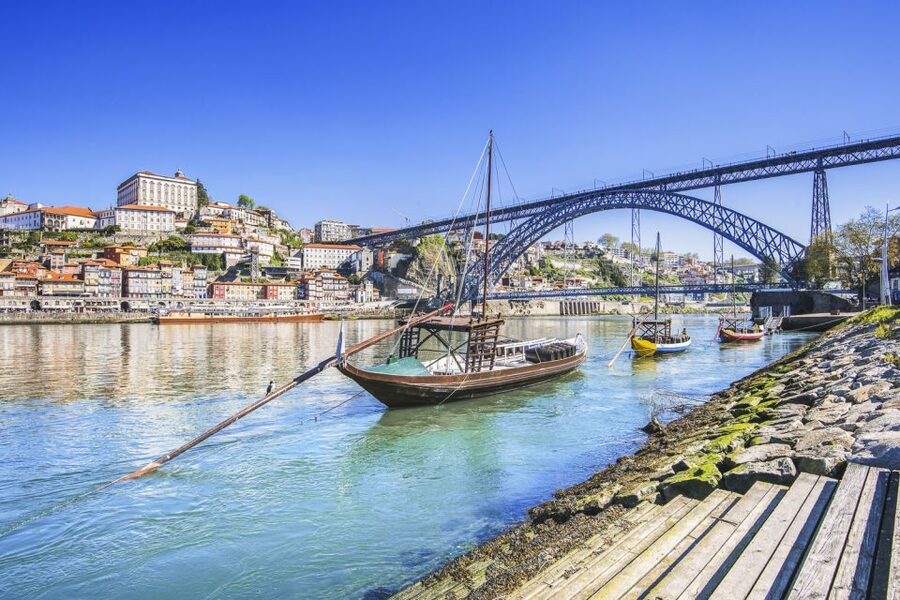
The best reason to take Porto’s Six Bridges Cruise is simple: the city makes more sense from the Douro. From the water, you see Porto’s steep riverfront, Vila Nova de Gaia’s port lodges, red roofs, and the bridges that tie the two cities together. The traditional Rabelo boat adds a nice local touch, even if the trip is brief.
I like the 50-minute length, which gives your feet a rest without taking half a day. I also like the views beneath the Dom Luís I Bridge and toward the Gustav Eiffel-designed Maria Pia Bridge. The main drawback is the recorded commentary. It can be hard to hear, and the four-language rotation may distract from the information.
Six things to know before you board
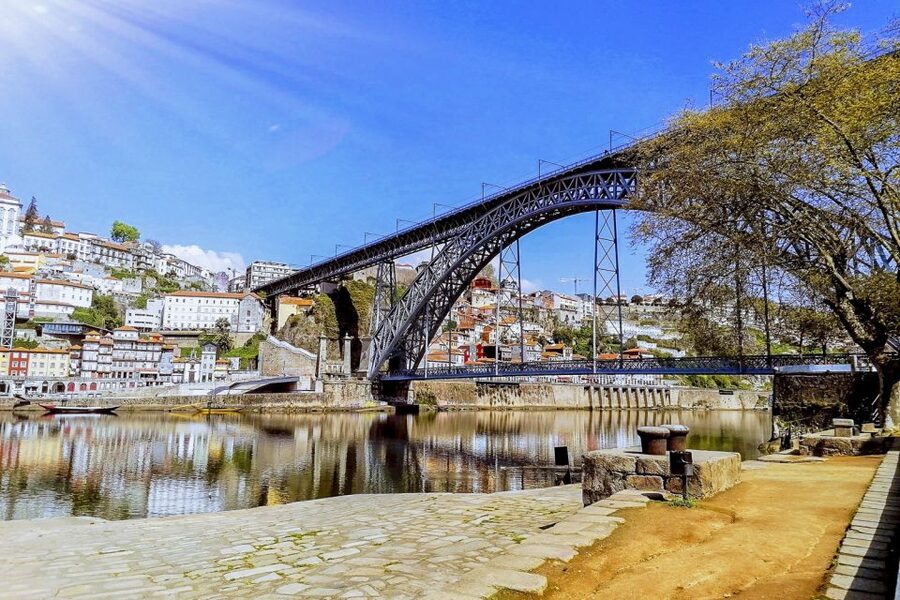
- Six famous bridges: You’ll see Ponte da Arrábida, Ponte Luís I, Ponte Infante D. Henrique, Ponte Maria Pia, Ponte São João, and Ponte do Freixo.
- A river-level view: Porto and Vila Nova de Gaia look quite different from the Douro, especially around the old waterfront.
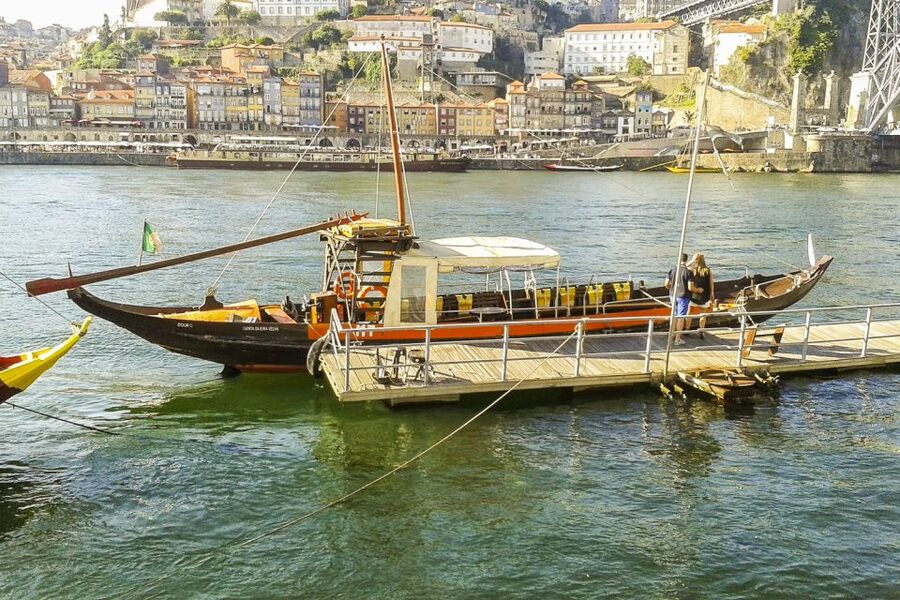
- Traditional boat: The cruise uses a typical Rabelo boat, the vessel historically associated with transport on the Douro.
- Short and easy: The ride lasts 50 minutes, with the ticket valid for one hour from activation.
- Outside seats go first: Arrive early and aim for a side seat if photographs matter to you.
- Multilingual audio: Commentary is provided in English, French, Portuguese, and Spanish, though volume and timing can vary.
Why the Douro is the right place to see Porto
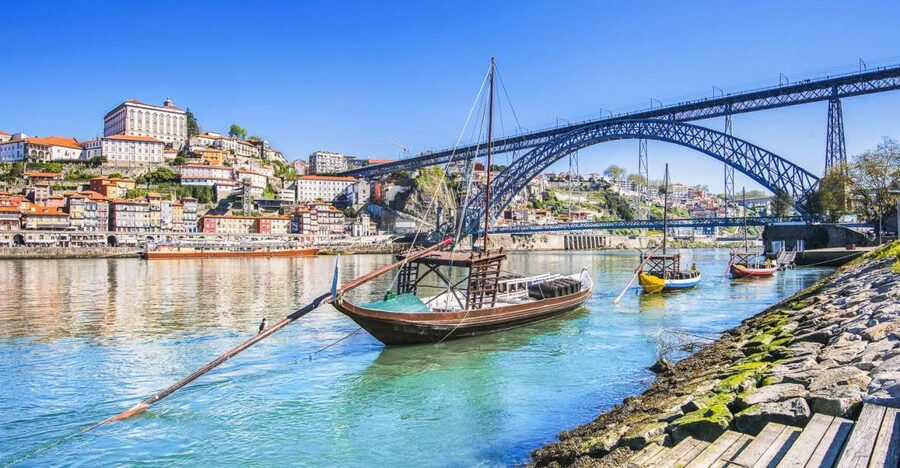
Porto is a city of slopes, walls, towers, and narrow streets. Walking gives you close views of its churches and tiled buildings, but it can also leave you looking up at one facade at a time. On the Douro, you get the wider picture.
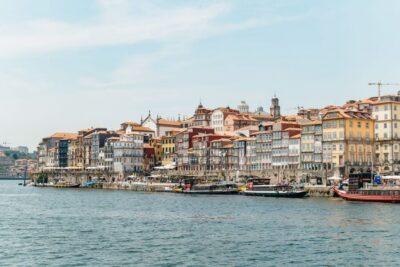
The cruise runs along the river between Porto and Vila Nova de Gaia. These are separate cities, but from the boat their old waterfronts form one dramatic scene. Porto rises on one bank, while Gaia spreads along the other. You can see the changing heights of the buildings, the bridges overhead, and the way the river has shaped trade and daily life.
I especially like this trip after a morning of walking. You sit, watch the riverbanks move past, and let the city present itself at a slower pace. It also works well early in a stay, because the view helps you understand where Porto ends, where Gaia begins, and how the river connects the two.
The scenery is the main event. The audio adds useful background, but this is not a personal guiding experience with a host narrating every moment. Think of it as a scenic cruise with bridge information, not a full historical tour of Porto.
More Boat Tours in Porto
- Porto: 6 Bridges Douro River Cruise
★ 4.3 · 6,472 reviews - Porto: Guided Tour by Tuk-Tuk & Optional Douro River Cruise
★ 4.5 · 5,980 reviews - Porto: River Douro 6 Bridges Cruise
★ 4.3 · 4,168 reviews
Starting at Av. de Diogo Leite 408 in Vila Nova de Gaia
The departure point is at Av. de Diogo Leite 408, on the Gaia side of the Douro. This places you close to the riverfront, where the cruise begins and ends.
Have your QR code ready when you board. You must show it before getting onto the boat. The host or greeter may speak English, French, Portuguese, or Spanish, but the main information during the ride comes through the recorded audio system.
Give yourself extra time to find the meeting point and get settled. Several people found the location easy to locate, but arriving early still matters for seating. The boat can fill up, and outside seats are the first to disappear. If you want photographs, sit along the side rather than in the middle rows. A side position gives you a clearer view of the riverbank and bridges.
You must remain seated while the boat is moving. That is worth remembering if you are hoping to walk around for different views. The best approach is to choose a good seat at the start and keep your camera ready.
What the 50-minute route shows you
The cruise follows a straightforward route from Gaia, out along the Douro, and back to Av. de Diogo Leite 408. The ride lasts about 50 minutes, although the ticket validity is listed as one hour from activation. That extra time is not an additional sightseeing period, so plan around the 50-minute cruise itself.
The route is compact but well chosen. You see both riverbanks, pass beneath several bridges, and gain a useful sense of Porto’s shape from the water. The boat does not stop at each bridge. Instead, it continues along the river while the audio explains the structures and their architects.
You pass under five of the six bridges. The sixth is viewed from a distance, so the name Six Bridges Cruise describes the full bridge view rather than six separate passages directly underneath. This is an important detail if you are booking mainly to sail under every bridge.
The pace is gentle. It is not a high-speed ride, and that is part of the appeal. You have time to look toward the old buildings, watch the changing angle of the riverfront, and take photographs when the boat reaches a good position.
The six bridges, from Arrábida to Freixo
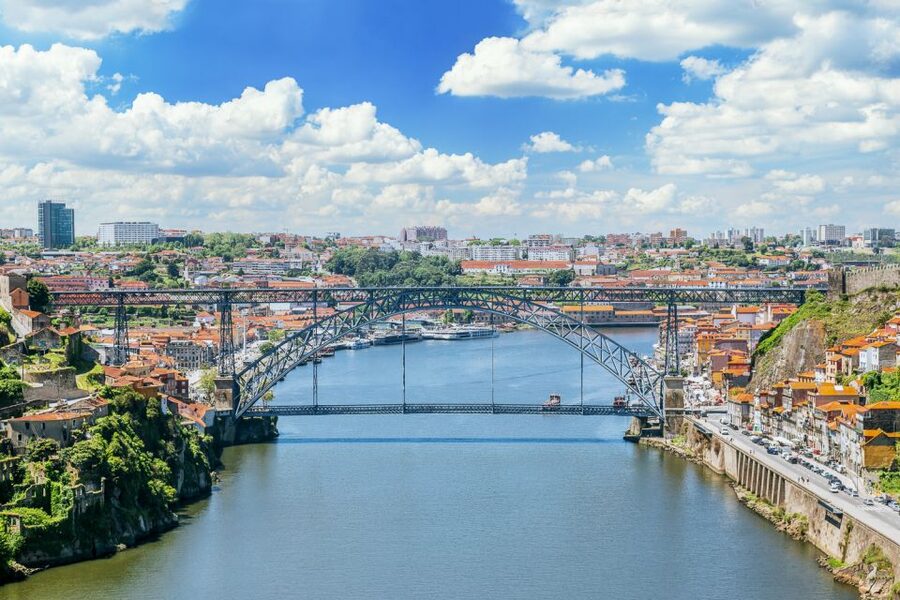
The bridge sequence gives the trip its structure. Each bridge has a different design and place in Porto’s transport network, so the route feels more varied than a simple ride up and down the river.
Ponte da Arrábida is the westernmost bridge on the listed route. It carries traffic across the Douro and has a broad, sweeping form. From the boat, it gives you a sense of how the city opens out as you move away from the historic center.
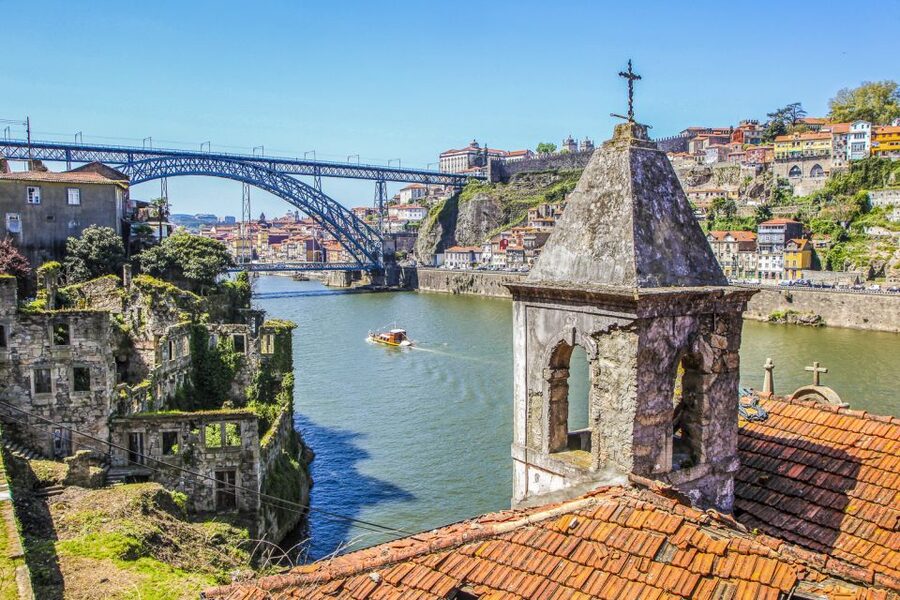
Ponte Luís I is the star of the cruise. Its two-level metal structure dominates the central riverfront, and sailing beneath it gives you a close look at its engineering. This is the bridge most people associate with Porto, and the river view shows its height and scale better than a quick crossing on foot.
Ponte Infante D. Henrique has a cleaner, more modern profile. It replaced the old road use of the lower level of Ponte Luís I and now carries traffic farther upstream. Its shape contrasts nicely with the older metal bridges.
Ponte Maria Pia is the bridge linked with Gustave Eiffel. It opened in the nineteenth century and is no longer used for regular rail traffic, but its single arch remains one of the river’s most elegant structures. Seeing it from the water makes the arch easy to read from end to end.
Ponte São João is a railway bridge with a strong concrete form. It is less ornamental than Maria Pia, but the contrast helps you see how bridge design changed over time.
Ponte do Freixo is the easternmost bridge on the route. It carries road traffic and sits farther from the compact old center. By this point, the cruise has shown you how the Douro corridor changes as it leaves the historic waterfront.
The recorded commentary covers the bridges in several languages. When the sound is clear, it gives you useful context about the structures and the people behind them. The information is most effective when you treat it as an extra layer, not the sole reason to book.
More Douro river cruises from Porto:
- Porto: Douro River Party Boat with Sunset Option & 6 Bridges
★ 4.7 · 2,040 reviews - Porto: Douro River Boat Cruise with Port Wine Tasting
★ 4.8 · 1,627 reviews - Porto: 6 Bridges Cruise & Port Wine with Sunset Option
★ 5.0 · 997 reviews - Porto Six Bridges Panoramic Cruise on the Douro River
★ 3.5 · 838 reviews
The Rabelo boat and the riverfront view
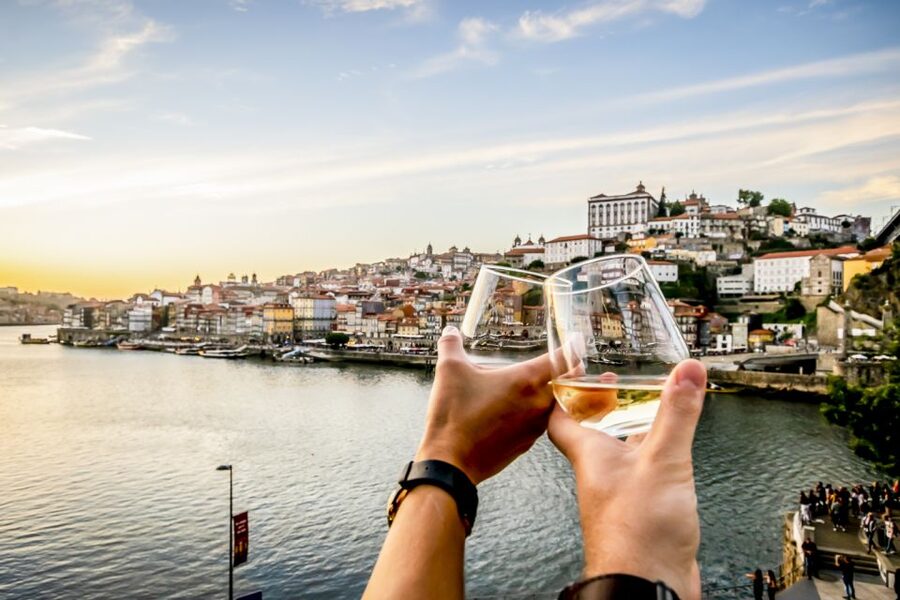
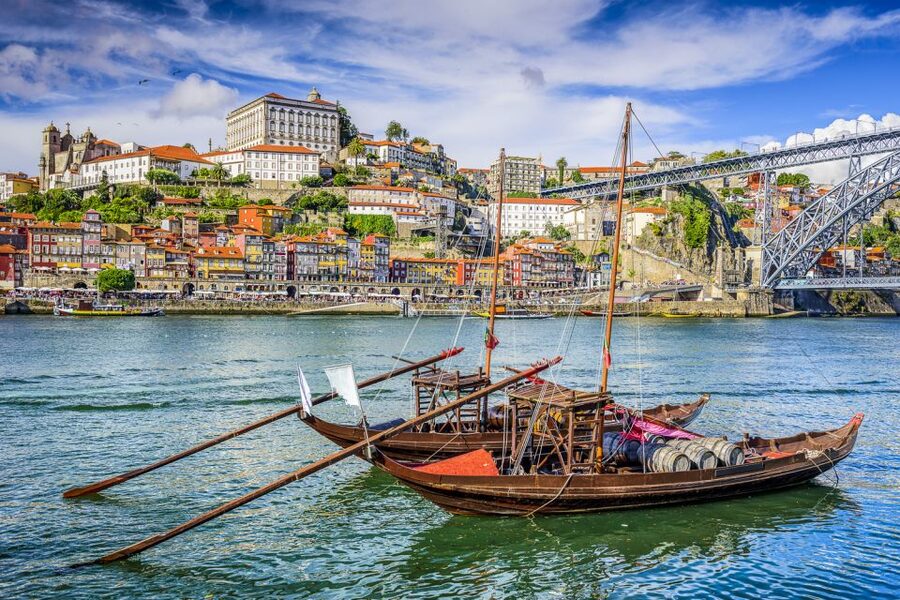
A Rabelo boat is a traditional Douro vessel, historically used to carry barrels of port wine from the upper Douro Valley toward Vila Nova de Gaia. The cruise boat is adapted for sightseeing, but its shape connects the outing with the river’s working past.
That connection matters because the riverfront is not just pretty scenery. The Douro helped make Porto a trading city, while Gaia became closely tied to port wine storage and shipment. From the water, those commercial links are easier to understand than when you are moving through streets and shops.
Look toward both banks rather than only at the bridges. Porto’s side rises sharply, with layers of buildings climbing away from the river. Gaia’s side gives you a different view of the waterfront and the old port-related district. The changing angle is one of the strongest parts of the cruise.
Sun makes a major difference. On a bright morning or late afternoon, the pale buildings and red roofs photograph well, and the river adds a clean line through the center of the scene. Cloudy weather does not ruin the ride, but the views can feel less dramatic. If you have flexibility, a morning sailing can help you avoid the strongest heat and some of the day’s crowds.
Audio guide: useful, but not always easy to hear
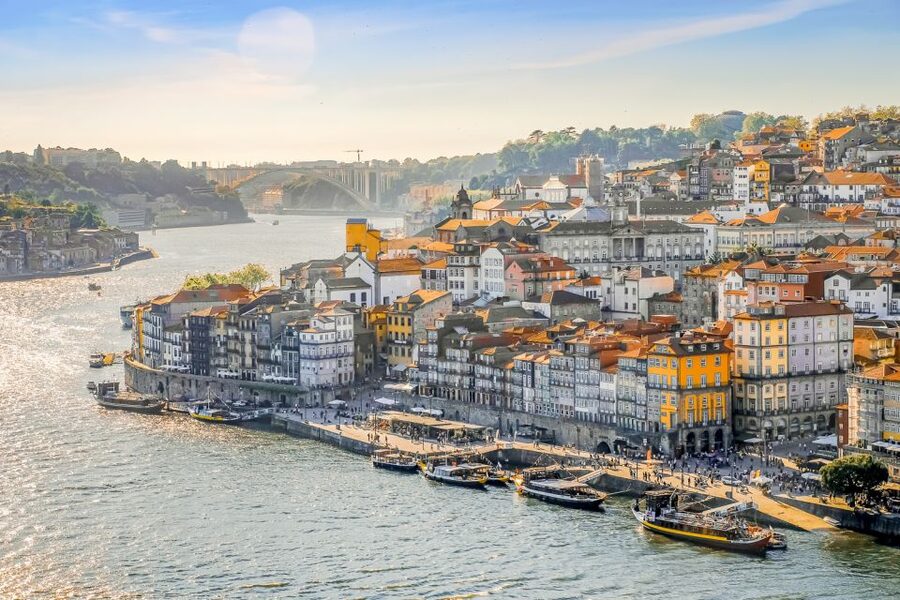
The included audio guide is available in Portuguese, English, Spanish, and French. That makes the trip workable for a broad range of visitors, and the commentary runs during the cruise rather than requiring a separate guide or app.
The quality is inconsistent. Some people found the audio clear and helpful, while others had trouble hearing it through the speaker. The recording can also fall out of sync with the view, or become muted partway through. Since you cannot control the commentary, you may hear information about a bridge just before or just after the boat reaches it.
The multilingual format can also feel busy. Several languages are played in sequence, so there may be pauses between useful explanations. If you prefer a quiet ride, the repeated commentary may be more distracting than helpful.
I would not let this stop me from booking, but I would set realistic expectations. The river views remain available even when the sound is weak. Bring your own interest in Porto’s bridges, sit where you can see clearly, and treat the audio as a bonus.
Seating, photographs, and getting off the boat
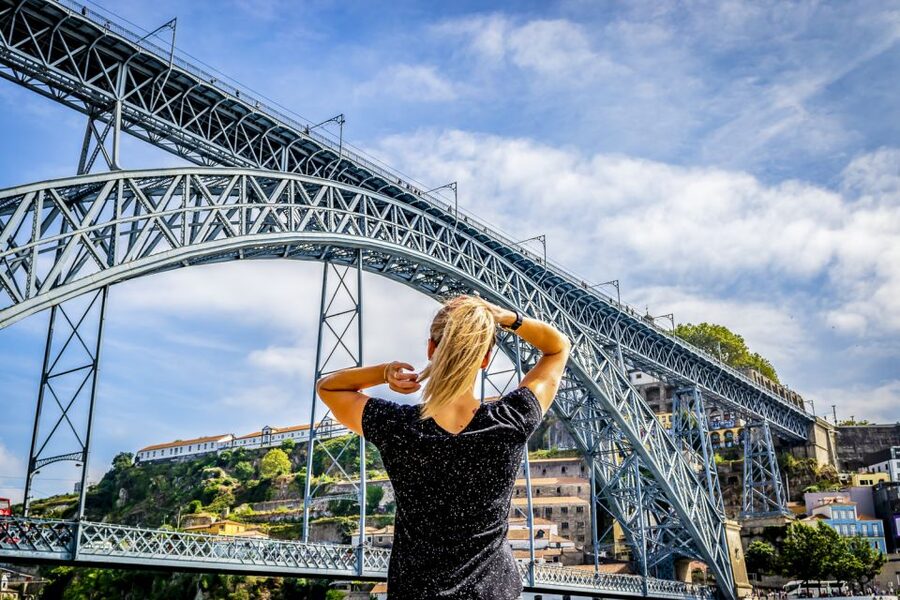
Outdoor seating is the best choice for most people. It gives you clearer views of the bridges and riverbanks and makes it easier to take photographs. Arrive early if you want that option, since the boat may be packed by departure time.
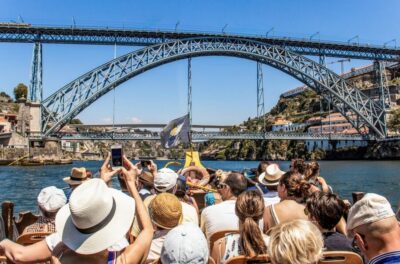
A side seat is better than a central seat for photographs. You can frame the riverbank without heads directly in front of you, and you are more likely to catch a clean view as the boat passes under a bridge. Keep in mind that you must stay seated, so your starting position matters.
The boat returns to the same area on Av. de Diogo Leite. Getting off may be less polished than boarding. One account describes having to walk through water at the end, so pay attention as you leave and wear footwear you do not mind getting damp. This is not a reason to avoid the cruise, but it is a useful practical warning.
Pets are not allowed. Children up to age three can go free, but you need to mention them when purchasing. Minimum numbers apply, so the operator can cancel if too few people book and offer an alternative.
Is $21 a fair price?
At $21 per person, this is a reasonably priced way to add a river view to a Porto visit. You are paying for a short scenic outing, a traditional-style boat, and basic bridge commentary. You are not paying for a small private boat, a live historian, or a long cruise into the Douro Valley.
The value is strongest if you are already planning to walk around Porto. Fifty minutes on the water gives your legs a break and shows you the city from an angle you cannot get from the streets. It is also a useful choice after an overnight flight, when you want fresh air and an easy activity without committing to a full-day excursion.
The price feels less attractive if you mainly want detailed history or personal attention. The audio may be difficult to hear, and the ride is short. If you expect a rich cultural talk about every building along the banks, this may seem thin.
For a first visit, I think the cost makes sense, especially if the weather is good and you arrive early enough for an outside seat. It is a simple experience, but it covers the main riverfront sights without taking much time.
Who should book this Porto cruise?
I would recommend it to you if you want:
- A calm break from Porto’s steep streets
- Broad views of Porto and Vila Nova de Gaia
- A close look at Ponte Luís I and the other five listed bridges
- A short activity that fits neatly into a busy sightseeing day
- A family-friendly outing for children older than three
- A photo opportunity in morning light or near sunset
- A first look at the city’s geography before more walking
I would be more cautious if you need live commentary, dislike recorded announcements, or want to move freely around the deck. The boat has a fixed route, you must remain seated, and the audio may not always be clear.
The ride also suits people who want a low-effort activity after arriving in Porto. You can sit back, watch the riverbanks, and get your bearings without climbing more hills. That is a small benefit, but after a day on Porto’s cobbled streets, it can feel like the right kind of luxury.
My recommendation
Book the Six Bridges Cruise if you want a short, scenic introduction to Porto from the Douro. The best parts are the views, the contrast between Porto and Gaia, and the chance to see Ponte Luís I and the other bridges from river level.
Book it with the right expectations. This is not a deep historical tour, and the audio system can let it down. Arrive early, choose a side seat outside, keep your QR code ready, and think of the commentary as a useful extra rather than the main attraction.
At $21, it earns its place in a Porto itinerary for most people, especially after a morning of walking or when the sun is out.
FAQ
How long does the Six Bridges Cruise last?
The boat ride lasts 50 minutes. The ticket is listed as valid for one hour from first activation.
Where does the cruise depart?
The starting point is Av. de Diogo Leite 408 in Vila Nova de Gaia. The boat returns to the same location.
Which bridges can I see?
The cruise includes Ponte da Arrábida, Ponte Luís I, Ponte Infante D. Henrique, Ponte Maria Pia, Ponte São João, and Ponte do Freixo.
Does the boat pass under all six bridges?
The route passes beneath five bridges and views the sixth from a distance.
What languages are available for the audio guide?
The recorded commentary is available in Portuguese, English, Spanish, and French.
Do I need to show anything when boarding?
Yes. You must show the QR code when boarding.
Are children under three charged?
Children up to age three are free, but you must mention them when purchasing the activity.
The newest listings around Porto
- Canyoning Tour From Porto★ 5.0 · 79 reviews
- Porto: Tuk tuk Tours with Port Wine Tasting★ 4.5 · 65 reviews
- The Beautiful Story of Porto: Guided Tour with Entry Tickets★ 4.8 · 111 reviews
- Porto: Small Group Surfing Experience with Transportation★ 4.9 · 40 reviews
- Porto: Royal Oporto Tour na Real Companhia Velha★ 4.8 · 395 reviews
- Porto: WOW Daily Ticket★ 4.7 · 42 reviews
- Porto Wine Tasting Experience with Portuguese Tapas Plate★ 4.7 · 356 reviews
- Porto: 6 Bridges Port Wine River Cruise with 4 Tastings★ 4.8 · 182 reviews
Douro River Cruises, compared.
Guided Tour by Tuk-Tuk & Optional Douro River Cruise
Read our review →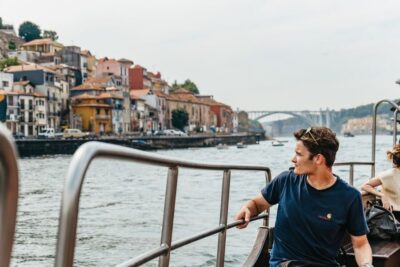
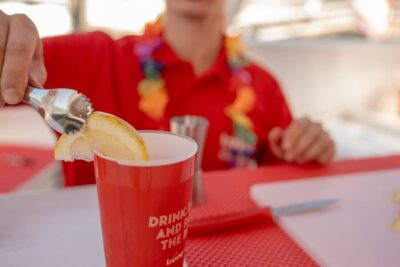
Douro River Party Boat with Sunset Option & 6 Bridges
Read our review →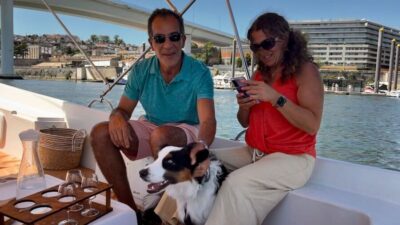
Douro River Boat Cruise with Port Wine Tasting
Read our review →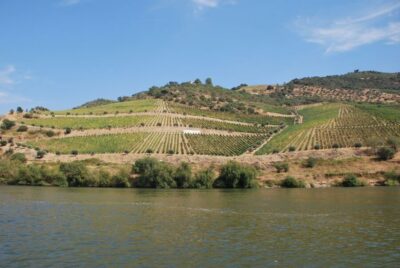
Pinhão: 2-Hour Rabelo Boat Tour with Audio Guide
Read our review →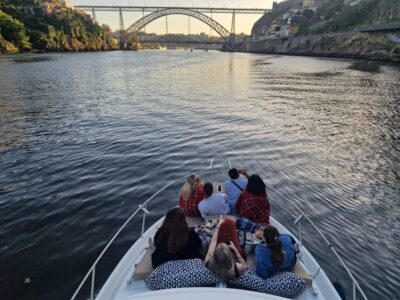
6 Bridges Cruise & Port Wine with Sunset Option
Read our review →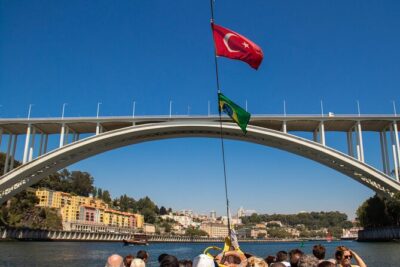
Porto Six Bridges Panoramic Cruise on the Douro River
Read our review →Browse the lists this tour appears in