
Reviewed · PORT WINE CELLAR TOURS
Vila Nova de Gaia: Port Wine Tasting with Cheese Pairing
Three Port styles, three Portuguese cheeses, and a friendly guide make this a smart first tasting in Vila Nova de Gaia. The strongest part is the clear explanation of how aging changes Port, followed by the practical lesson in how cheese can alter what you taste in the glass. Miguel, Fernando, Bruna, and Inês are among the guides praised for making technical details easy to follow.
I like the small groups of up to eight and the relaxed Quevedo setting, where you can ask questions instead of simply sipping in silence. I also like the price: at $30 per person, three 40 ml pours with cheese pairings offer good value beside the larger, more commercial Port houses. The main consideration is that this is a tasting, not a cellar tour, so you will not visit the bodega or see a full production operation.
Key points to know before you book

- Three distinct Port styles: Crusted Port, 10-Year-Old Tawny, and a 2009 White Colheita Port give you very different points of comparison.
- Cheese is part of the lesson: Each pour comes with a carefully selected Portuguese cheese, plus local jam with the White Port.
- A family-owned producer: Quevedo has worked with Port for more than five generations and began bottling under its own name in 1993.
- A genuinely small group: The tasting is limited to eight people, allowing time for questions and conversation.
- One hour well spent: It fits neatly before dinner, after a walk along the Douro, or between visits to Gaia’s Port houses.
- A tasting, not a winery tour: You learn about production and aging, but the experience does not include a bodega visit.
A compact introduction to Port in Vila Nova de Gaia
Port tasting can be confusing at first. The names sound familiar, but the wines differ in sweetness, color, texture, age, and the way they are made. This experience gives you three useful reference points in one sitting, rather than presenting a long list of similar pours.
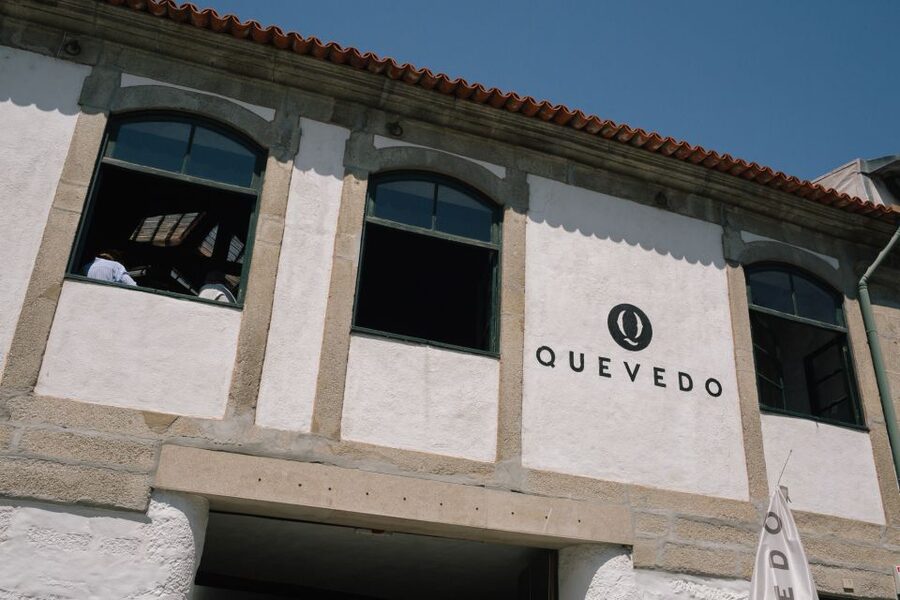
You meet at Quevedo Port Wine in Vila Nova de Gaia, across the river from central Porto. The setting is described as cozy, open, airy, and peaceful, with a welcoming feel rather than the grand scale of some of the famous Port houses. That smaller setting matters because the tasting is built around explanation and conversation.
Your guide introduces Quevedo and places the wines in the context of the Douro Valley. The company farms 100 hectares of vineyards and 25 hectares of organic olive groves across five properties. That variety of sites supplies grapes with different aromas and flavors, which helps explain why the producer offers several distinct Port styles.
The company’s family background is also part of the story. Quevedo traces its Port-making tradition through five generations, but it is a comparatively new name on the bottle. Portugal’s entry into the European Union in 1993 allowed the family to bottle and sell wine under its own brand. That combination of old family practice and newer independent production gives the introduction a useful human angle.
More Wine Tours in Porto
- Porto: Live Fado Show with Glass of Port Wine
★ 4.8 · 6,498 reviews - Porto: Cálem Cellar Tour, Interactive Museum & Wine Tasting
★ 4.5 · 4,113 reviews - Porto: Cálem Cellar Tour, Fado Show & Wine Tasting
★ 4.4 · 3,530 reviews
What happens during the one-hour tasting
The format is simple. You sit down, receive a small glass of Port, and hear how that particular wine was made, aged, and matched with its cheese. The tasting pours are 40 ml unless otherwise noted, so you receive enough to compare the wines without turning a short afternoon activity into a heavy drinking session.
The guide usually begins with the basics: where Port comes from, how the Douro Valley shapes the grapes, and what happens during production and aging. You can expect the talk to cover the history of Port, viticulture, and the differences between the styles in front of you.
The experience works best when you taste slowly. Try the Port on its own first, then take a bite of the cheese and sip again. The pairing is not just a snack on the side. It shows how salt, fat, acidity, spice, sweetness, and age can change the flavor of the same wine.
Several guides have been singled out for their clear and personable approach. Miguel is praised for explaining Port and viticulture in an easy way. Fernando is known for answering detailed questions and connecting the wine to the Douro Valley. Bruna, Inês, Rafael, Marcia, Dima, and Antonio have also led tastings, with an emphasis on friendly conversation and practical explanations.
The tone is informal. You may hear extra information about a style you are curious about, and the group format leaves room for questions. One tasting even included live fado music, though you should not treat that as a guaranteed part of every session.
The three Port and cheese pairings
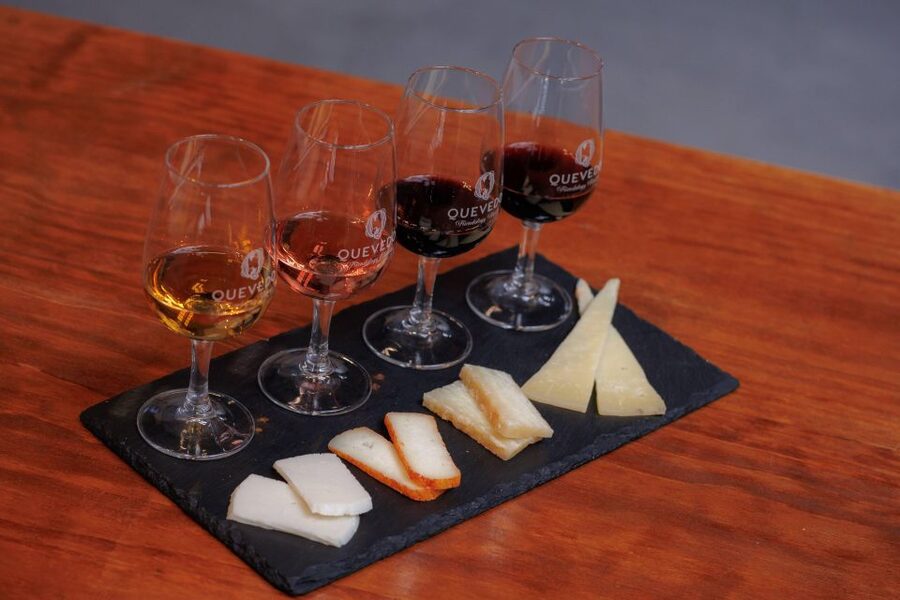
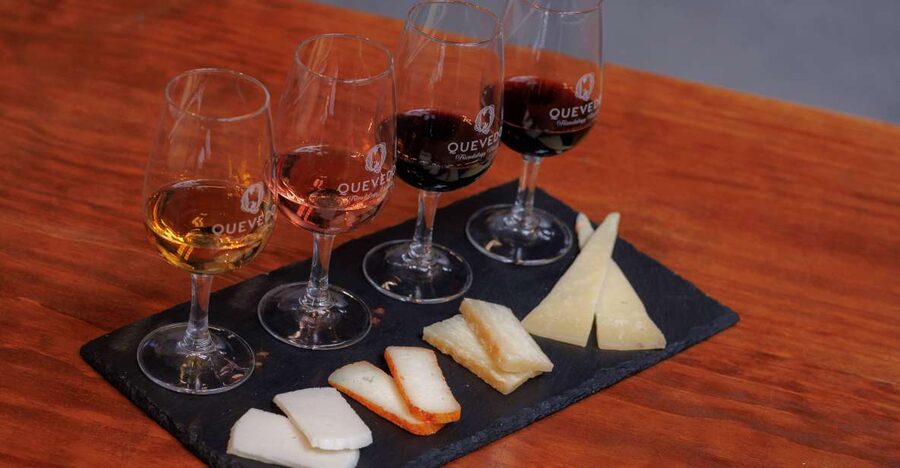
Crusted Port with aged sheep cheese
The first pairing is Crusted Port with local-aged sheep cheese. Crusted Port is a bottle-aged style that is not filtered before bottling, so sediment can form over time. That makes it a useful introduction to the idea that Port is not one single type of sweet red wine.
The sheep cheese brings a firm, savory counterpoint. Its salt and age can make the Port seem rounder and less sweet, while the wine gives the cheese a fruitier finish. Your guide explains why the two were selected together, and you can judge the effect for yourself.
This is a good opening pairing because it gives you a strong contrast. If you are new to Port, pay attention to the balance between sweetness and salt. If you already know Port, the Crusted pour gives you a chance to think about texture, bottle aging, and sediment.
More port lodges and cellar tastings:
- Porto: Taylor’s Port Cellars & Tasting
★ 4.6 · 3,374 reviews - Porto: Cockburn’s Port Lodge Tour and Tasting
★ 4.8 · 3,360 reviews - Porto: Bridges Cruise with Wine Cellar Tour or Sunset Option
★ 4.1 · 2,758 reviews - Porto: Authentic Fado Show, Port Wine & Handmade Instruments
★ 4.8 · 2,737 reviews
10-Year-Old Tawny Port with paprika cheese
Next comes 10-Year-Old Tawny Port with a mixed cow, goat, and sheep cheese aged with paprika. Tawny Port is aged in wood, and the ten-year designation refers to an average age category rather than a single harvest year. Compared with a younger ruby-style wine, it typically offers a softer, more developed profile.
The cheese adds another layer. Its blend of milks gives it more than one character, while the paprika brings gentle spice. This pairing is especially useful if you want to learn how a food can shift the way a Port tastes. The spice and salt can make the Tawny seem less heavy and bring out different notes in the wine.
The Tawny was frequently singled out as a favorite, but you should not assume it will be yours. Some people prefer the fresher fruit of the other pours, while others enjoy the smoother, older character here. That is one reason the three-wine structure works well: you have room to discover your own preference.
2009 White Colheita Port with Azores cheese and local jam
The final pour is a 2009 White Colheita Port paired with a traditional Azores cheese aged for seven months and served with local jam. This is the most unusual pairing of the three because it moves away from the dark fruit and nutty flavors many people expect from Port.
A Colheita is a tawny-style Port from a single harvest year. The 2009 date gives you a specific vintage point of reference, while the White Port shows that Port can be fresh, aromatic, and pale rather than simply dark and sweet.
The Azores cheese has enough age to hold its own against the wine. The jam adds sweetness and fruit, making this a useful demonstration of how a condiment can alter both the cheese and the Port. If you are unsure about sweet wine with cheese, this final combination may change your mind.
Why the cheese pairings matter

A Port tasting without food can teach you about the wine. A Port tasting with cheese teaches you how to use the wine at the table. That is the practical advantage of this experience.
The three cheeses are not random samples. They move through different milk types, ages, textures, and flavors. You taste a local sheep cheese, a mixed-milk paprika cheese, and an aged cheese from the Azores. Local jam adds a separate sweet element in the final pairing.
You do not need a trained palate to benefit. The guide leads you through what to notice, then lets you decide what works. One pairing may make the wine taste sweeter. Another may soften a sharp edge. A third may make the cheese seem creamier or bring out fruit in the Port.
The pairings also make the tasting more accessible if you are not a serious wine drinker. You can approach each glass through familiar food rather than trying to identify every aroma. Several explanations focus on why the food was chosen, not just on naming technical wine terms.
The setting and group size at Quevedo

The Quevedo venue is in the heart of Vila Nova de Gaia, close to the riverfront and the cluster of Port houses. That makes it easy to combine with a walk across the Dom Luís I Bridge, a riverside meal, or another Gaia stop.
The room is described as cozy, open, and airy. It is not presented as a grand historic cellar, and that is worth keeping in mind. You are choosing a personal tasting room and direct conversation rather than a large-scale showpiece.
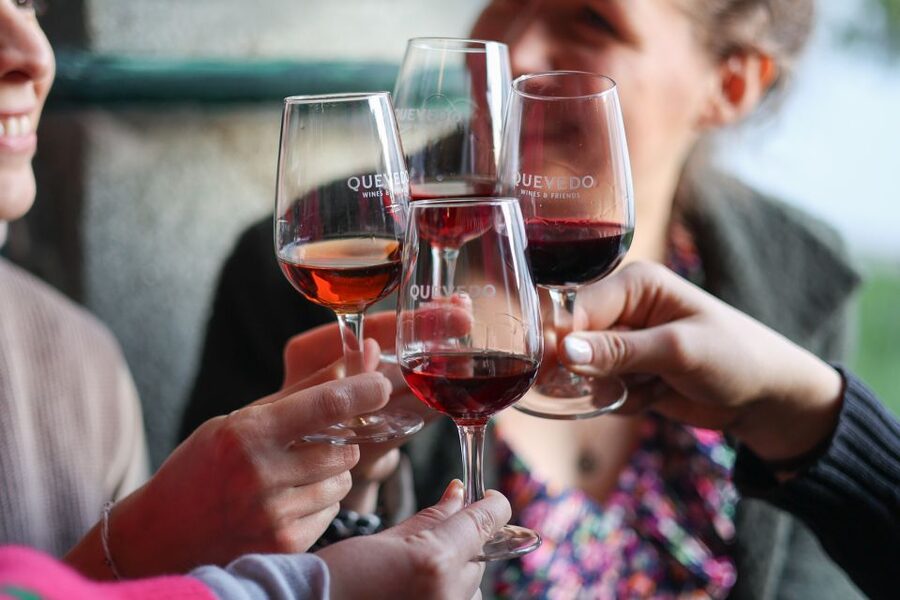
The group limit is eight people. Some sessions may be smaller, even just a few people, which gives you more time to ask about bottles, styles, buying Port, or visiting the Douro Valley. A small group also helps the guide explain the wines at a pace that suits the people at the table.
The atmosphere is usually relaxed, but this is still a public tasting. Children may be present in another group, so do not book expecting an adults-only environment. The tasting is wheelchair accessible, and the staff can host in Portuguese, English, Spanish, or Russian.
The Port-making story behind the glasses
The family’s vineyards in the Douro Valley are an important part of the presentation. Port begins with the grapes and the growing conditions, not in the tasting room. Quevedo’s five properties provide different exposures and soils, giving the winemaking team several sources of fruit.
The company also maintains 25 hectares of organic olive groves. You will not be touring those groves during this one-hour experience, but the detail helps explain the scale and agricultural focus of the family business.
A useful point in the introduction is the difference between family tradition and commercial history. The family has made Port for more than five generations, but Quevedo could only bottle under its own name from 1993. That means you are tasting wines from a newer independent Port house with older family knowledge behind it.
The guides explain the production process in plain language. You learn how Port is made, how the wines age, and why different styles develop distinct colors and flavors. For anyone who has always liked Port but never understood the categories, this is the main value of the hour.
Is $30 a fair price?

At $30 per person, the tasting sits in a useful middle ground. You receive three 40 ml glasses, three cheese pairings, a local jam with the final course, and a guided explanation of the wines and producer.
The value is strongest if you want instruction rather than just a drink. You are paying for the chance to compare three styles side by side and ask questions in a small group. The food also makes the tasting feel more complete than three unaccompanied samples.
It may feel less like a bargain if your main goal is to see production rooms, barrels, or a historic cellar. This activity does not include a bodega visit, and additional wines and snacks cost extra. If you want a full winery tour, you should compare this with a longer Port-house visit.
For a one-hour introduction, I consider the price fair. It is cheaper than some major Gaia houses, while still offering a structured tasting and personal guidance. One person described it as slightly pricier than expected, but still less expensive than the larger Port brands. That is a fair way to view it: good value, especially when you use the information later to choose a bottle or order Port at dinner.
Who will enjoy this Port tasting most?
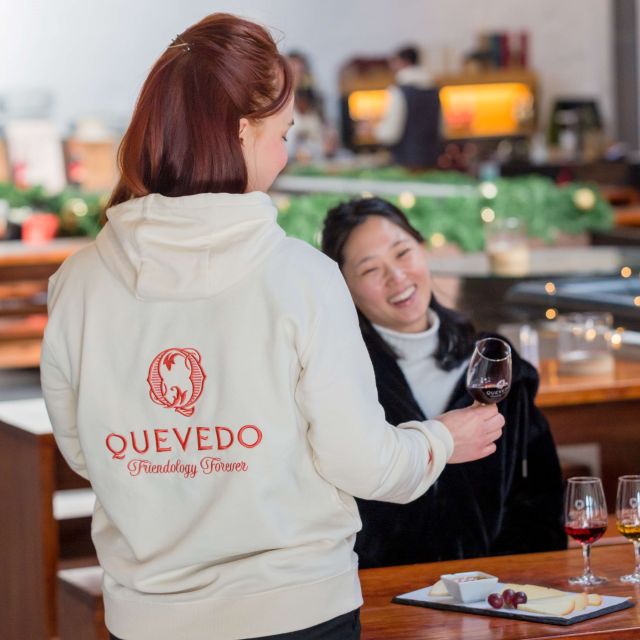
I would recommend it first to anyone new to Port. The three wines are different enough to give you a useful foundation, and the guide explains the categories without assuming prior wine knowledge.
It also suits people who already enjoy wine but want to understand Portuguese styles. The conversation can move into grape growing, aging, bottle choices, food pairing, and the Douro Valley. The small group gives experienced drinkers room to ask more detailed questions.
Cheese lovers have an obvious reason to book. The pairings are thoughtful and varied, and the tasting shows how the same wine can change with food. The experience also suits couples, friends, and solo visitors who like a social table without committing to a long tour.
I would be less likely to recommend it if you want a full-day trip into the Douro, a vineyard walk, or a tour of barrels and production equipment. This is a focused tasting in Gaia. Its strength is clarity and conversation, not a large itinerary.
Practical details for planning your visit
Plan for one hour, but allow a little extra time if you want to browse or ask about other wines. The official tasting includes three pours and cheese, while additional wines and snacks are not included.
You meet at Quevedo Port Wine and speak with a local staff member. Starting times vary, so check availability when booking. Free cancellation is available up to 24 hours before the activity for a full refund, and you can reserve now and pay later.
The language options are Portuguese, English, Spanish, and Russian. The small-group format is limited to eight participants, and the venue is wheelchair accessible.
Because each pour is only 40 ml, you can fit this into a full day of sightseeing. It works particularly well as a mid-afternoon stop, when you want a seated break but still have time for dinner or another Gaia visit afterward.
Should you book Quevedo’s Port and cheese tasting?
Book it if you want a friendly, compact introduction to Port with enough explanation to make the wines meaningful. The combination of Crusted, 10-Year-Old Tawny, and 2009 White Colheita gives you three clear styles, while the cheese pairings turn the tasting into a useful food lesson.
The strongest reason to choose it is the guide. Miguel, Fernando, Bruna, Inês, Rafael, and others are known for making Port history and production easy to understand. The small group also means you are not lost in a crowd.
Skip it if your priority is a cellar tour or a trip into the Douro Valley. For almost everyone else spending time in Vila Nova de Gaia, $30 buys a well-paced hour, three distinct wines, good Portuguese cheese, and a better understanding of what to order next.
FAQ
Where does the Port tasting take place?
The tasting takes place at Quevedo Port Wine in Vila Nova de Gaia, in Portugal’s Norte Region.
How long does the experience last?
The tasting lasts one hour.
How many Port wines are included?
You receive three glasses of Port wine.
What Port wines will I taste?
The tasting includes Crusted Port, 10-Year-Old Tawny Port, and a 2009 White Colheita Port.
What food comes with the Port?
Each Port comes with a cheese pairing. The final White Port pairing also includes local jam.
How much wine is poured?
The standard tasting pour is 40 ml per glass unless otherwise noted.
Is this a winery or cellar tour?
No. This is a guided tasting with an explanation of Port production and aging, but it does not include a bodega visit.
What languages are available?
The hosts and guides can provide the experience in Portuguese, English, Spanish, or Russian.
How large is the group?
The tasting is limited to eight participants.
Is the venue wheelchair accessible?
Yes, the experience is wheelchair accessible.
More Food and Drink in Porto
- Porto Food & Wine Tasting Tour with Lunch or Dinner Option
★ 5.0 · 2,303 reviews - Porto Craft Beer Tour: 7 Beers + 3 Food Pairings in a Small Group
★ 5.0 · 1,725 reviews - Porto: Douro River Boat Cruise with Port Wine Tasting
★ 4.8 · 1,627 reviews - Porto: Wine Tasting with Tapas Walking Tour
★ 4.4 · 1,541 reviews
More Cheese in Porto
- Porto: Cálem Cellar with Chocolate, Cheese, and Wine Tasting
★ 4.6 · 310 reviews - Lisbon: Portuguese Wine and Cheese Tasting with Lunch
★ 4.7 · 353 reviews - Terceira: Half-Day Island Tour with Cheese Tasting
★ 4.4 · 106 reviews
The newest listings around Porto
- Canyoning Tour From Porto★ 5.0 · 79 reviews
- Porto: Tuk tuk Tours with Port Wine Tasting★ 4.5 · 65 reviews
- The Beautiful Story of Porto: Guided Tour with Entry Tickets★ 4.8 · 111 reviews
- Porto: Small Group Surfing Experience with Transportation★ 4.9 · 40 reviews
- Porto: Royal Oporto Tour na Real Companhia Velha★ 4.8 · 395 reviews
- Porto: WOW Daily Ticket★ 4.7 · 42 reviews
- Porto: 6 Bridges Port Wine River Cruise with 4 Tastings★ 4.8 · 182 reviews
- Porto Wine Tasting Experience with Portuguese Tapas Plate★ 4.7 · 356 reviews
Port Wine Cellar Tours, compared.
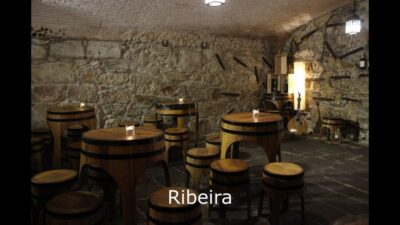
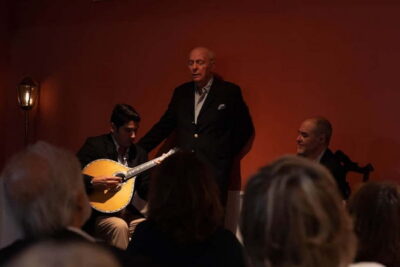
Live Fado Show with Port Wine in Historic Center
Read our review →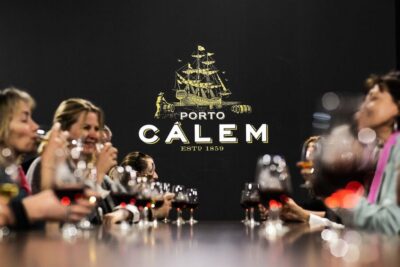
Cálem Cellar Tour, Interactive Museum & Wine Tasting
Read our review →
Bridges Cruise with Wine Cellar Tour or Sunset Option
Read our review →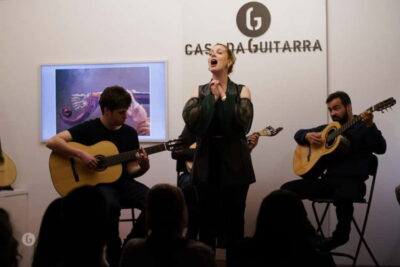
Authentic Fado Show, Port Wine & Handmade Instruments
Read our review →Browse the lists this tour appears in